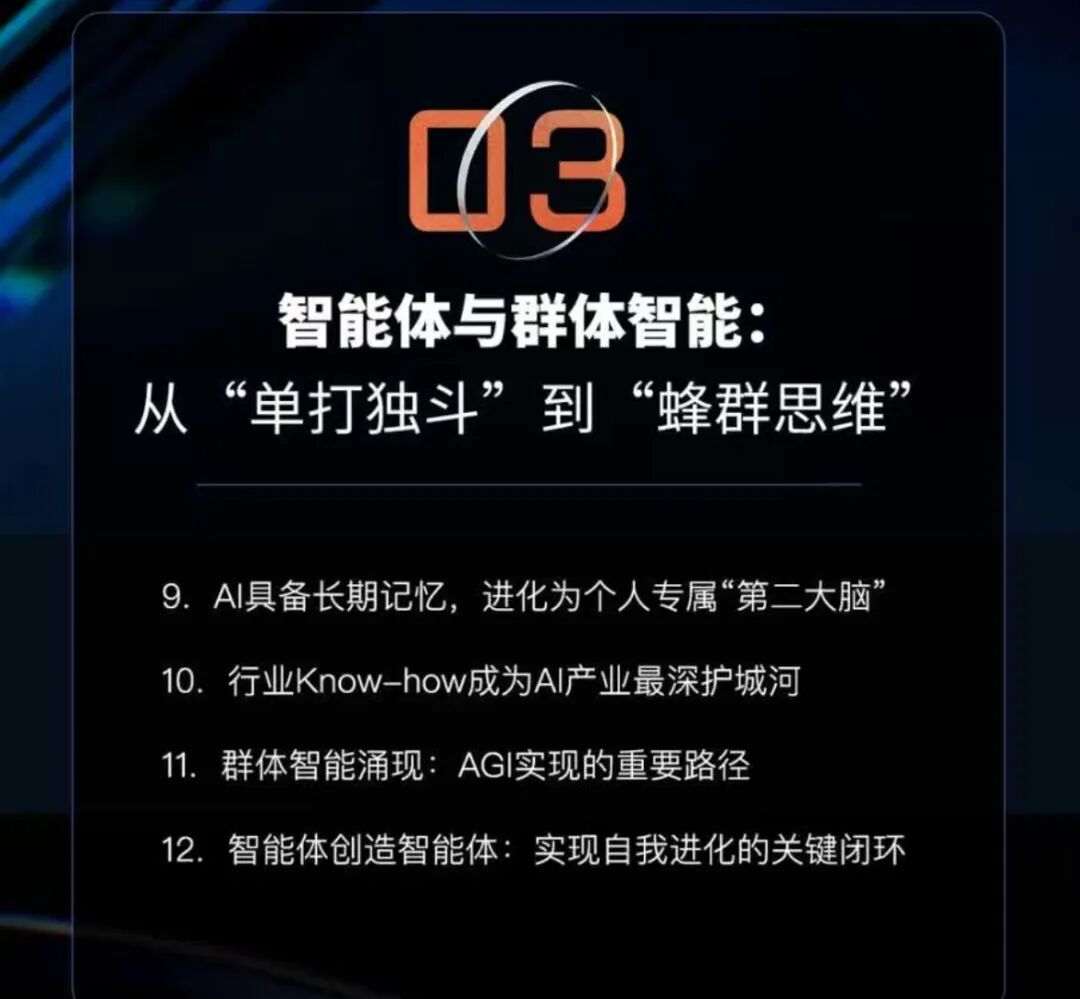
行业Know - how

Search documents
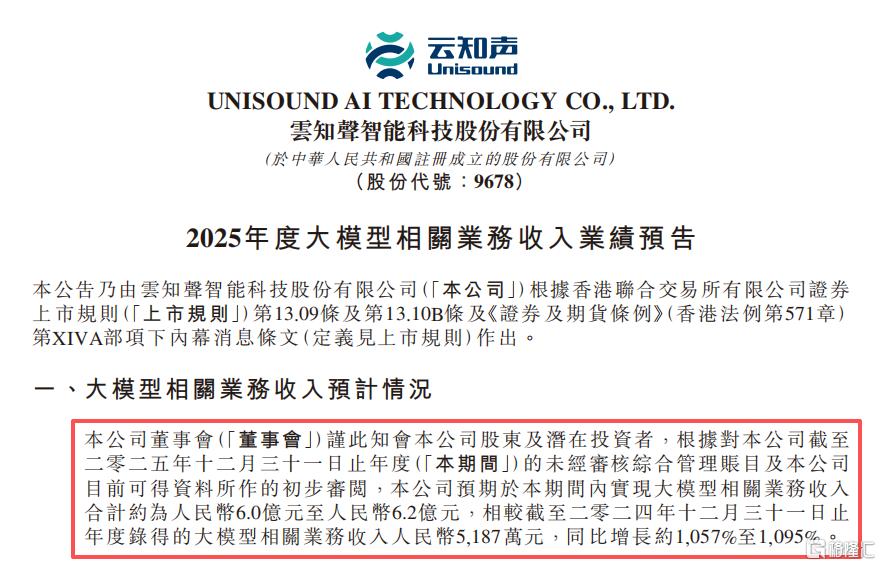
大模型都在亏,凭什么它赚了1亿美金?
Ge Long Hui· 2026-01-31 03:29
Core Insights - The article highlights the stark contrast between the financial performance of leading AI companies and that of Yunzhisheng, which has achieved significant revenue while others are heavily in debt due to high operational costs [1][2][3] Group 1: Financial Performance - Major AI companies are experiencing a "giant baby prosperity," with revenues in the range of several hundred million but net losses reaching tens of billions, indicating a high burn rate [1][2] - Yunzhisheng's projected revenue for its large model-related business is nearing $100 million, approximately 600 to 620 million RMB, showcasing a successful business model [1][2] Group 2: Business Model Comparison - Yunzhisheng has successfully created a commercial closed loop in vertical markets, unlike many competitors who are stuck in a cycle of high capital expenditure without clear returns [2][3] - The company focuses on specific, high-value applications in sectors like healthcare and automotive, which are often overlooked by larger general model players [2][3] Group 3: Market Positioning - Yunzhisheng's revenue comes from practical applications, such as private deployments in hospitals and customized solutions for automotive companies, rather than from generic software fees [3][5] - The company has established itself as a critical player in the healthcare sector, directly involved in essential processes like medical record generation, which adds significant value compared to general models [3][5] Group 4: Competitive Advantage - The article emphasizes the importance of industry-specific knowledge and the challenges faced by general models in complex environments, such as healthcare, where accuracy is crucial [3][10] - Yunzhisheng's approach to AI is likened to "repairing water channels," effectively directing AI capabilities to areas with high demand and specific needs, ensuring sustainable cash flow [12] Group 5: Future Outlook - The article suggests that while the costs of general models may decrease, the barriers created by industry-specific knowledge will continue to rise, positioning Yunzhisheng favorably in the market [12] - The company is seen as a potential leader in its field, aiming to become a significant player in healthcare and transportation, rather than merely a software vendor [10][12]

周鸿祎2026年20大AI预测:当“硅基员工”与“超级个体”成为现实
3 6 Ke· 2026-01-09 12:39
Core Insights - The article presents a comprehensive forecast by Zhou Hongyi titled "2026 AI Panorama Prediction: 20 Development Trends Towards the Era of 100 Billion Intelligent Agents" which spans six dimensions including computing power, models, security, and economy [1][2] Group 1: AI Integration in the Workplace - The introduction of "silicon-based digital employees" signifies a shift in the workforce, where AI will be considered part of the employment system alongside human workers, creating a "carbon-silicon" hybrid team [3][4] - The role of management will evolve from traditional oversight to that of a "business coach," focusing on problem definition and resource mobilization, including AI resources [8] Group 2: Industry Knowledge as a Competitive Advantage - Zhou emphasizes that "industry know-how" will become the most significant competitive moat for AI industries, highlighting the importance of unique, tacit knowledge that cannot be easily digitized [9][10] - Companies must focus on converting their tacit knowledge into formats that AI can understand and learn from, as this will be the most valuable skill in the coming years [12] Group 3: The Rise of the "Super Individual" - The future workplace will be dominated by individuals who can define core problems and direct intelligent agents, blurring the lines between roles such as product managers and programmers [13] - The disparity between individuals may widen as AI amplifies personal capabilities, leading to a shift in educational focus towards cultivating skills to effectively manage AI [15] Group 4: Traditional Enterprises' Path Forward - Traditional industries should not compete with tech companies on general AI models but should instead deepen their industry-specific knowledge to maintain relevance [16] - A trend is emerging where manufacturing companies are prioritizing practical applications of AI to encapsulate the expertise of seasoned workers rather than developing their own large models [16] Group 5: Management Challenges and New Skills - The traditional directive management style will gradually become obsolete, presenting new challenges for managers in assessing AI contributions and team dynamics [17][18] - Future leaders will need to design effective collaboration rules and responsibility boundaries for mixed teams of humans and AI [18] Group 6: Legal and Ethical Considerations - The integration of AI into the workplace raises significant questions regarding labor laws, contract laws, and ethical standards, necessitating a reevaluation of existing frameworks [21][22] - The concept of "AI safety" is elevated to a critical concern, encompassing not just technical aspects but also institutional and ethical dimensions [21] Group 7: Societal Implications and Future Outlook - The transition to a workplace with "silicon colleagues" is already underway, with various AI tools being utilized in different capacities [22] - While the complete realization of a "100 billion intelligent agents" workplace by 2026 may not be fully achieved, the direction of this trend is clear, indicating a shift from AI as a tool to AI as a partner [25][26]