
西红柿价格上涨

Search documents
“鸡蛋依旧配不上西红柿!”苏州商户:预计节前西红柿零售价还要涨
Yang Zi Wan Bao Wang· 2026-01-22 10:23
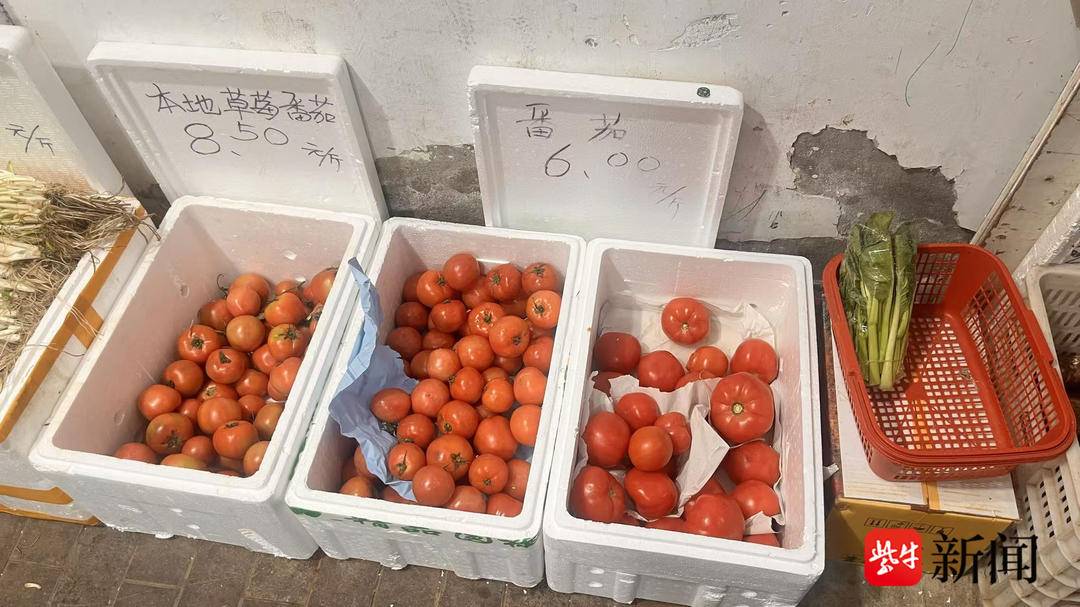
最近,西红柿零售价居高不下的现象,引发了网友"鸡蛋配不上西红柿"的热议。上周以来,苏州市场普通西红柿批发价降至"3元区",然而,扬子晚报/紫 牛新闻记者走访多家农贸市场了解到,目前西红柿零售价依旧保持每斤7—7.5元,多家商户表示"自去年入秋以来没降过",受北方强冷空气与暴雪天气影 响,春节前可能引发新一轮涨价。有网友感慨:"鸡蛋配得上西红柿,还得再等等!" 在苏州吴中区郭巷集贸市场蔬果区,红彤彤的西红柿被摆放在多个摊位的中间,大多数摊主将不同品种的西红柿分区码放。记者了解到,目前苏州市场上 的普通西红柿零售价稳定在7元至7.5元一斤,精品普罗旺斯西红柿则在8元至9.5元一斤,这一价格自2025年入秋后未出现明显波动。摊主徐老板给记者算 了一笔账:"去年同期普通西红柿才5.5元--6元一斤,今年直接贵了1.5元左右,同比涨幅大概30%左右。" 价格上涨的核心原因,商户们一致指向北方产区的供应量。"西红柿主要靠山东、东北地区的货源,今年北方先是持续降雨,接下来又要有强冷空气,产 量受天气影响很大。"苏州工业园区车坊农贸市场的摊主文老板解释,产区天气异常导致供货量收紧,推高了进货成本,零售价自然降不下来。徐老板补 ...

市场最前沿丨西红柿“身价暴涨”,背后原因几何?
Xin Hua Wang· 2026-01-16 14:03
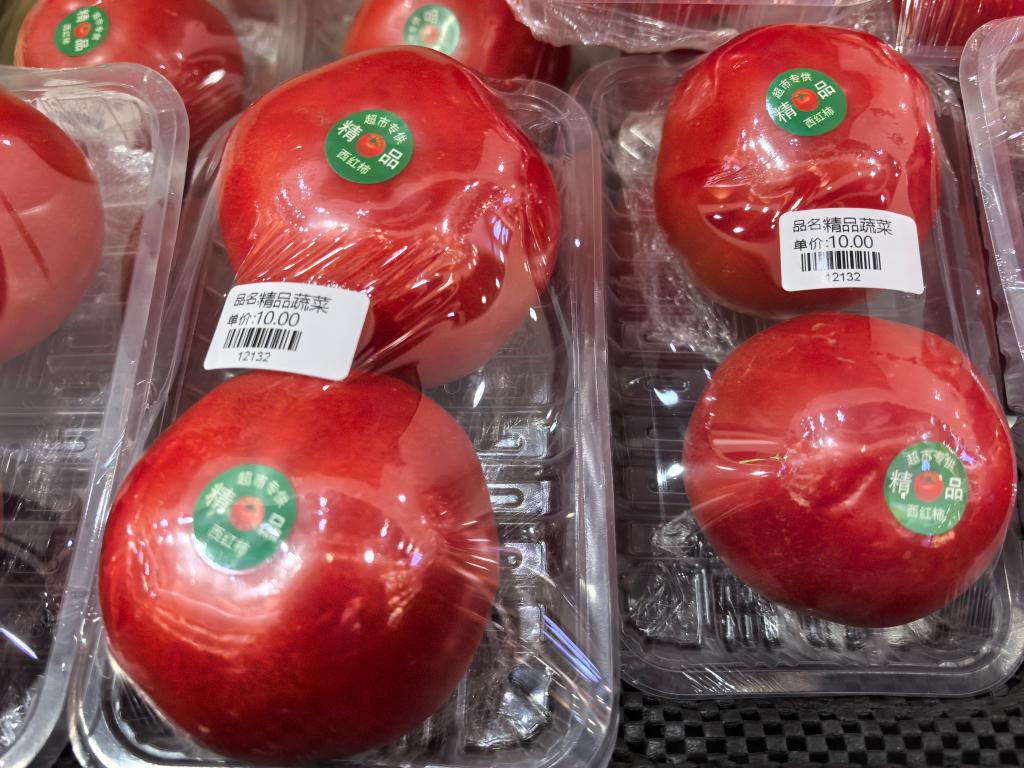
Core Viewpoint - The recent significant increase in tomato prices across various regions in China has raised market concerns, with prices for tomatoes reaching as high as 10 to 18 yuan per kilogram in some areas [1][3]. Price Trends - The average wholesale price of tomatoes rose to 8.61 yuan per kilogram from 4.76 yuan per kilogram year-on-year, marking an 80.9% increase [3]. - Retail prices for bulk tomatoes are reported to be around 5 to 7 yuan per kilogram, while packaged tomatoes are priced between 10 to 18 yuan [1]. Supply Chain Dynamics - The price surge began in the second half of the previous year, influenced by a combination of factors including reduced planting areas due to previous low prices and adverse weather conditions affecting production [3][4]. - Continuous rainfall in northern production areas led to reduced yields and increased reliance on more expensive greenhouse vegetables and long-distance transportation, further driving up costs [4]. Future Price Expectations - Experts predict that high tomato prices will continue until late March, after which a seasonal decline is expected [6]. - The upcoming Spring Festival is anticipated to increase demand for premium tomatoes, while adverse weather conditions may keep production costs high, providing price support [6]. Broader Market Implications - The price increase in tomatoes is attributed primarily to climate factors rather than seasonal or cyclical fluctuations, with similar impacts expected on other vegetables like carrots and cabbages [6]. - The overall supply of vegetables in China remains stable, and consumers are advised not to panic regarding the price hikes [6].
西红柿价格大幅上涨 为何涨价?目前产地供应如何?
Jing Ji Ri Bao· 2026-01-13 06:31
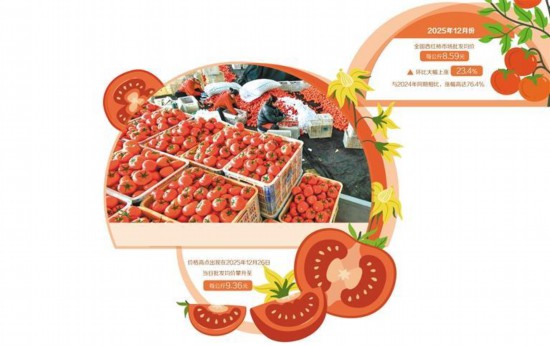
Core Viewpoint - The price of tomatoes has significantly increased, driven by multiple factors including reduced planting area, adverse weather conditions, and seasonal cost increases, leading to a tight supply situation in the market [4][5][6]. Price Trends - As of January 8, 2026, local prices for tomatoes in Shandong's Yanggu County reached 5 to 6.5 yuan per jin, nearly double compared to the previous year [2]. - The average wholesale price of tomatoes in December 2025 was 8.59 yuan per kilogram, marking a 23.4% increase month-over-month and a 76.4% increase year-over-year [3]. - The highest recorded price was 9.36 yuan per kilogram on December 26, 2025, with a slight decrease to 8.4 yuan per kilogram by January 4, 2026 [3]. Supply Factors - The decline in tomato planting area due to previous low prices has led to a reduction in supply, with farmers opting to plant other crops [4]. - Adverse weather conditions, including excessive rainfall and temperature drops, have severely impacted the growth and yield of tomatoes, delaying their market availability [5][6]. - The transition to winter production has increased costs due to reliance on high-cost greenhouse production and long-distance transportation [6]. Future Price Outlook - Experts predict that tomato prices will likely remain high in the short term, especially with the upcoming Spring Festival driving demand [7]. - The recovery of damaged production capacity will take time, and the market supply is expected to remain tight [7]. - A potential easing of supply constraints may occur with the upcoming harvests from regions like Hebei, which could help stabilize prices [7]. Supply Management Efforts - Agricultural departments in Shandong are providing technical support to farmers for water and fertilizer management, as well as pest control [8]. - Farmers are also establishing direct supply channels with supermarkets to reduce intermediaries and alleviate supply pressure [8].
比去年贵了近一倍?西红柿为何涨价,何时能降?
Jing Ji Ri Bao· 2026-01-13 05:55
Core Viewpoint - The price of tomatoes has significantly increased, becoming a focal point in the vegetable market, driven by multiple factors including reduced planting area, extreme weather, and seasonal cost increases [5][6][10]. Price Trends - As of January 8, 2026, local prices for tomatoes in Yanggu County, Shandong, reached 5 to 6.5 yuan per jin, nearly double compared to the previous year [1]. - The average wholesale price of tomatoes in December 2025 was 8.59 yuan per kilogram, marking a 23.4% increase month-on-month and a 76.4% increase year-on-year [4]. - The highest price recorded was 9.36 yuan per kilogram on December 26, 2025, with a slight decrease to 8.4 yuan per kilogram by January 4, 2026 [4]. Supply Factors - The planting area for tomatoes has decreased due to low prices in previous years, leading to a contraction in supply [6][8]. - Adverse weather conditions, including excessive rainfall and temperature drops, have severely impacted tomato yields and delayed market entry [8][9]. - The transition to winter production has increased costs, as supply shifts from open-field to high-cost greenhouse production [9]. Market Dynamics - The demand for tomatoes is expected to remain high due to the upcoming Spring Festival, which will likely support elevated price levels [10][11]. - Experts predict that the market will experience high price fluctuations leading up to the festival, with a potential return to normal levels around late March 2026 [13]. Supply Chain Insights - There is a reliance on regions like Hebei for potential relief in supply, as they have replanted after adverse conditions [13]. - Local agricultural departments are providing support to farmers to improve yield and reduce supply chain pressures [13].
西红柿价格为何走高
Jing Ji Ri Bao· 2026-01-13 01:03
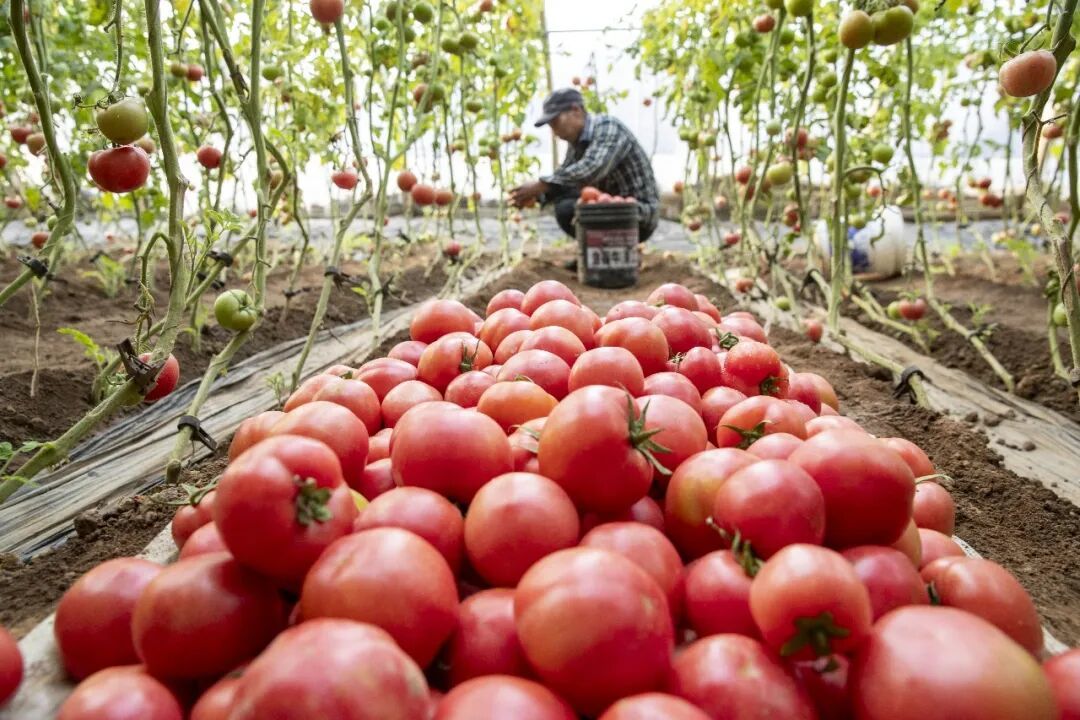
Core Viewpoint - The price of tomatoes has significantly increased, driven by multiple factors including reduced planting area, adverse weather conditions, and seasonal cost increases, leading to a tight supply situation in the market [5][6][9]. Price Trends - As of January 8, 2026, local prices for tomatoes in Shandong's Yanggu County reached 5 to 6.5 yuan per jin, nearly double compared to the previous year [2]. - The average wholesale price of tomatoes in December 2025 was 8.59 yuan per kilogram, marking a 23.4% increase month-on-month and a 76.4% increase year-on-year [4]. - The highest price recorded was 9.36 yuan per kilogram on December 26, 2025, with a slight decrease to 8.4 yuan by January 4, 2026 [4]. Supply Factors - The planting area for tomatoes has decreased due to low prices in previous years, which discouraged farmers from planting [5]. - Adverse weather conditions, including excessive rainfall and temperature drops, have severely impacted tomato yields and delayed market entry [6][7]. - The transition to winter production has increased costs due to reliance on high-cost greenhouse production and long-distance transportation [7]. Future Price Outlook - Experts predict that tomato prices may remain high in the short term, especially with the upcoming Spring Festival driving demand [8][9]. - The recovery of damaged production capacity will take time, and supply is expected to remain tight until new crops are harvested [9]. - A potential easing of supply constraints may occur with the upcoming harvests from regions like Hebei, which could help stabilize prices [9].
鸡蛋都快配不上番茄了!我国现存近2800家西红柿相关企业
Qi Cha Cha· 2025-12-26 07:53
Core Insights - The price of tomatoes has significantly increased, with retail prices ranging from 7 to 10 yuan per pound, and some premium varieties reaching 13 yuan per pound, which is nearly one-third higher than previous years. In contrast, the average price of eggs is only 3 to 6 yuan per pound [2]. Group 1: Industry Overview - As of December 26, there are 2,795 existing companies related to tomatoes in China, with the majority located in the East China region, accounting for 35.7% of the total [3]. - The North China region follows with 27.7% of the companies, while the Northeast region has the least, with only 3.0% [3]. Group 2: Company Age Distribution - The tomato industry is predominantly composed of established companies, with over 80% of the related enterprises having been established for more than five years. Companies that have been in operation for over ten years make up 42.5% of the total [4]. - Companies established between five to ten years account for 40.7% of the total [4].