视觉理解

Search documents
梁文锋和杨植麟,第四次撞车
3 6 Ke· 2026-01-29 08:24
Core Insights - The article discusses the simultaneous advancements in AI models by DeepSeek and Moonlight, particularly focusing on their new models Kimi K2.5 and OCR-2, which both enhance visual understanding capabilities [1][4][11]. Group 1: Model Developments - Moonlight released the Kimi K2.5 model on January 27, 2025, which integrates various capabilities including visual understanding, coding, and multi-modal functions [1]. - DeepSeek launched its OCR-2 model on the same day, introducing a novel "visual causal flow" mechanism that allows for dynamic reading of images based on semantic content [1][11]. - Both models aim to address the industry pain points in visual understanding, indicating a shared focus on enhancing AI's capabilities in this area [5][11]. Group 2: Technical Innovations - DeepSeek's model employs a new visual encoder, DeepEncoder V2, which mimics human visual processing by breaking away from fixed scanning orders [11]. - Moonlight's K2.5 model features an Agent Swarm architecture, allowing for the creation of multiple sub-agents to enhance task execution efficiency by up to 4.5 times [12][13]. - Both companies are addressing the challenges of long-context processing and computational efficiency in their respective models, with DeepSeek focusing on hardware optimization and Moonlight on flexible innovations within the Transformer framework [2][11]. Group 3: Industry Context - The advancements in visual understanding are critical for the commercial viability of AI models, as they transition from language interaction to full-scene interaction [5]. - The competition between DeepSeek and Moonlight reflects a broader trend in the AI industry, where companies are racing to overcome similar technical challenges and capture market opportunities [4][5][7].

DeepSeek发布DeepSeek-OCR 2 让AI学会“人类视觉逻辑”
Zhi Tong Cai Jing· 2026-01-27 07:53
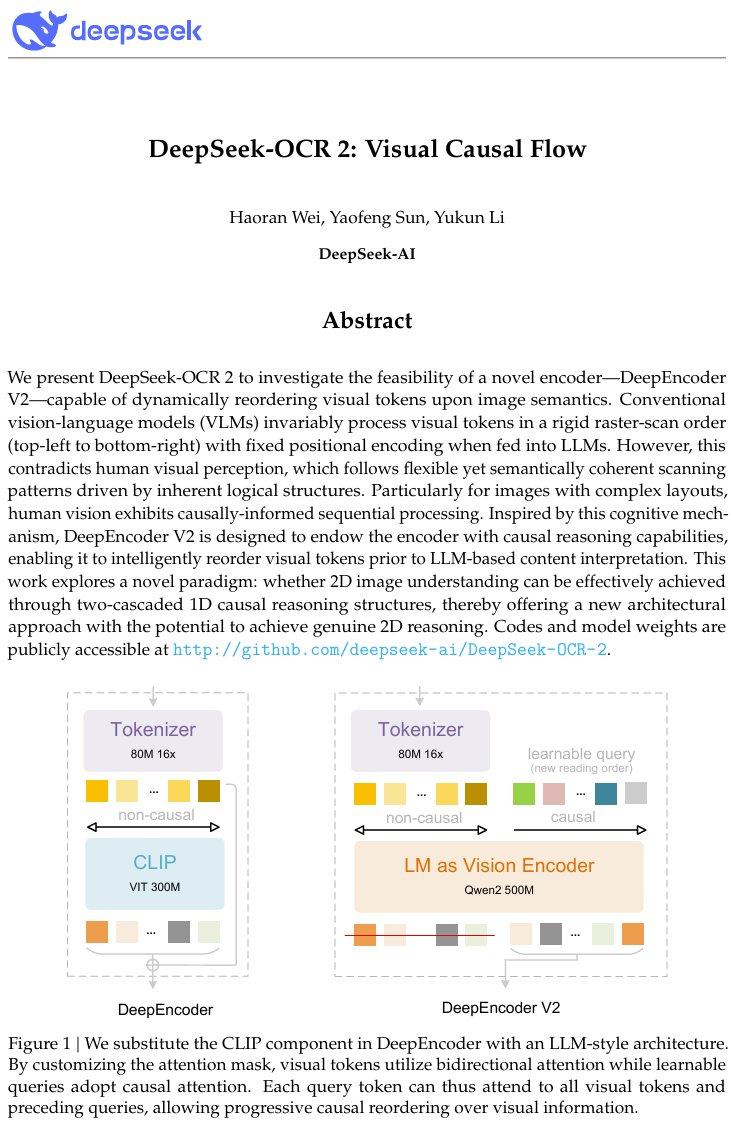
Core Insights - DeepSeek has launched the new DeepSeek-OCR2 model, which utilizes the innovative DeepEncoder V2 method to dynamically rearrange image components based on their meaning, enhancing visual understanding beyond traditional left-to-right scanning methods [1][2] - The model significantly outperforms traditional visual-language models (VLM) in processing complex layouts, achieving a score of 91.09% on the OmniDocBench v1.5 benchmark, which is a 3.73% improvement over its predecessor [1] Group 1 - The DeepSeek-OCR2 model maintains high accuracy while controlling computational costs, with visual token counts limited between 256 and 1120, aligning with Google’s Gemini-3Pro [2] - In practical applications, the model shows a reduction in repetition rates of 2.08% for online user logs and 0.81% for PDF pre-training data, indicating high practical maturity [2] Group 2 - The release of DeepSeek-OCR2 represents not only an upgrade in OCR performance but also significant architectural exploration, validating the potential of using language model architectures as visual encoders [2] - The DeepEncoder V2 architecture inherits advancements from the LLM community, such as mixture of experts (MoE) architecture and efficient attention mechanisms [2]

分割/识别/解说一个模型搞定!3B参数刷新视觉理解SOTA,图像视频全适配
量子位· 2025-06-14 08:32
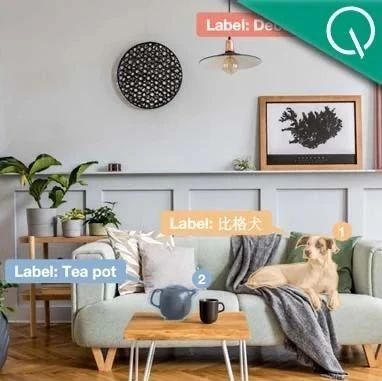
Core Viewpoint - The PAM (Perceive Anything Model) introduces a powerful model capable of segmentation, recognition, explanation, and description in a single interaction, supporting images, videos, and long videos while outputting both text and masks simultaneously [1][8]. Group 1: Model Capabilities - PAM retains the segmentation and tracking capabilities of SAM2 while providing rich semantic information, allowing users to obtain detailed descriptions of selected objects in images and videos with a single click [5][8]. - For images, PAM can output the category, explanation, and detailed description of a selected object, enhancing the understanding of visual content [11]. - In short videos, PAM tracks and segments selected objects while providing event descriptions, and for long videos, it dynamically outputs streaming descriptions based on event changes, similar to real-time subtitles [13][14]. Group 2: Training and Data - The PAM team constructed a large-scale, high-quality training dataset comprising 1.5 million image regions and 600,000 video regions, enabling the model to achieve state-of-the-art performance with only 3 billion parameters [2][21]. - The dataset includes multi-dimensional semantic annotations covering classification, explanation, description, and temporal events, allowing for precise object localization and rich semantic output [21][24]. Group 3: Performance Metrics - PAM-3B outperforms previous best models by over 3.2% in the PACO benchmark and surpasses the current state-of-the-art model DAM-8B in semantic IoU on the LVIS benchmark [25][26]. - In various benchmarks such as ImageCaption and VideoCaption, PAM demonstrates superior performance with a smaller parameter scale compared to larger models [28]. Group 4: Innovative Features - PAM introduces a novel capability for streaming video subtitles at the regional level, maintaining high semantic consistency across continuous events, showcasing significant practical application potential [30].