触觉反馈

Search documents
如何让机器人学会使用螺丝刀、拧紧螺母?加州伯克利给出了答案!
机器人大讲堂· 2025-12-08 09:03
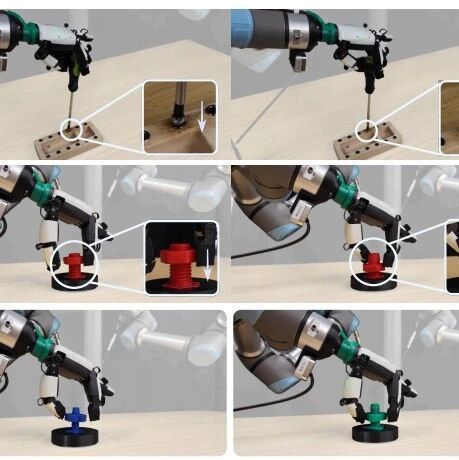
Core Insights - The article discusses the challenges robots face in performing precise tasks like screwing and fastening, which are relatively easy for humans due to complex friction and tactile feedback issues [1] - A new framework called DexScrew has been developed by a research team from UC Berkeley, which allows robots to perform these tasks without visual reliance, using tactile and temporal information instead [3] Summary by Sections Research Method Overview - The DexScrew framework consists of a three-step process: simplified simulation to develop core skills, remote operation to collect real-world data, and behavior cloning to train precise tactile strategies [4][12] Step 1: Simplified Simulation - The first step involves creating a highly simplified model of the screws and nuts, focusing on the core rotational skills rather than complex details like thread structure [5][8] - The training uses a "prophet strategy + sensory-motor strategy" approach to quickly find optimal rotational actions and prepare for real-world deployment [8][9] Step 2: Remote Operation for Real-World Data - The second step involves using remote operation to gather real-world multi-sensory data, which includes joint movement data and tactile signals from the robot's fingertips [11][12] - A total of 50 trajectories for nut tasks and 72 for screwdriver tasks were collected, creating a comprehensive dataset for training [11] Step 3: Behavior Cloning for Tactile Strategies - The final step employs behavior cloning to allow the robot to mimic successful actions from the remote operation while integrating tactile feedback and temporal information [12][13] - The strategy's neural network is designed to predict future actions based on past movements and tactile signals, enhancing the robot's ability to adjust in real-time [13] Performance Testing - The DexScrew strategy was tested on various shapes of nuts and showed a fastening progress ratio exceeding 95%, with the cross-shaped nut reaching 98.75% [16][17] - In screwdriver tasks, the DexScrew strategy achieved a progress ratio of 95% with an average completion time of 187.87 seconds, significantly outperforming traditional methods [19][20] Robustness and Adaptability - The strategy demonstrated strong resistance to disturbances, quickly readjusting the robot's position and maintaining task continuity even under external forces [24][25] - The article emphasizes the importance of tactile feedback in enhancing performance, particularly in complex or slippery scenarios [25][27] Conclusion and Future Directions - DexScrew not only addresses specific tasks but also provides a scalable solution for dexterous operations, avoiding the pitfalls of traditional high-fidelity simulations [28] - The framework lays the groundwork for future applications in industrial assembly, home services, and precision manufacturing [28]

从“嗡嗡震”到“啪嗒感”,线性马达是如何决定手机高级感的?
3 6 Ke· 2025-11-13 08:20
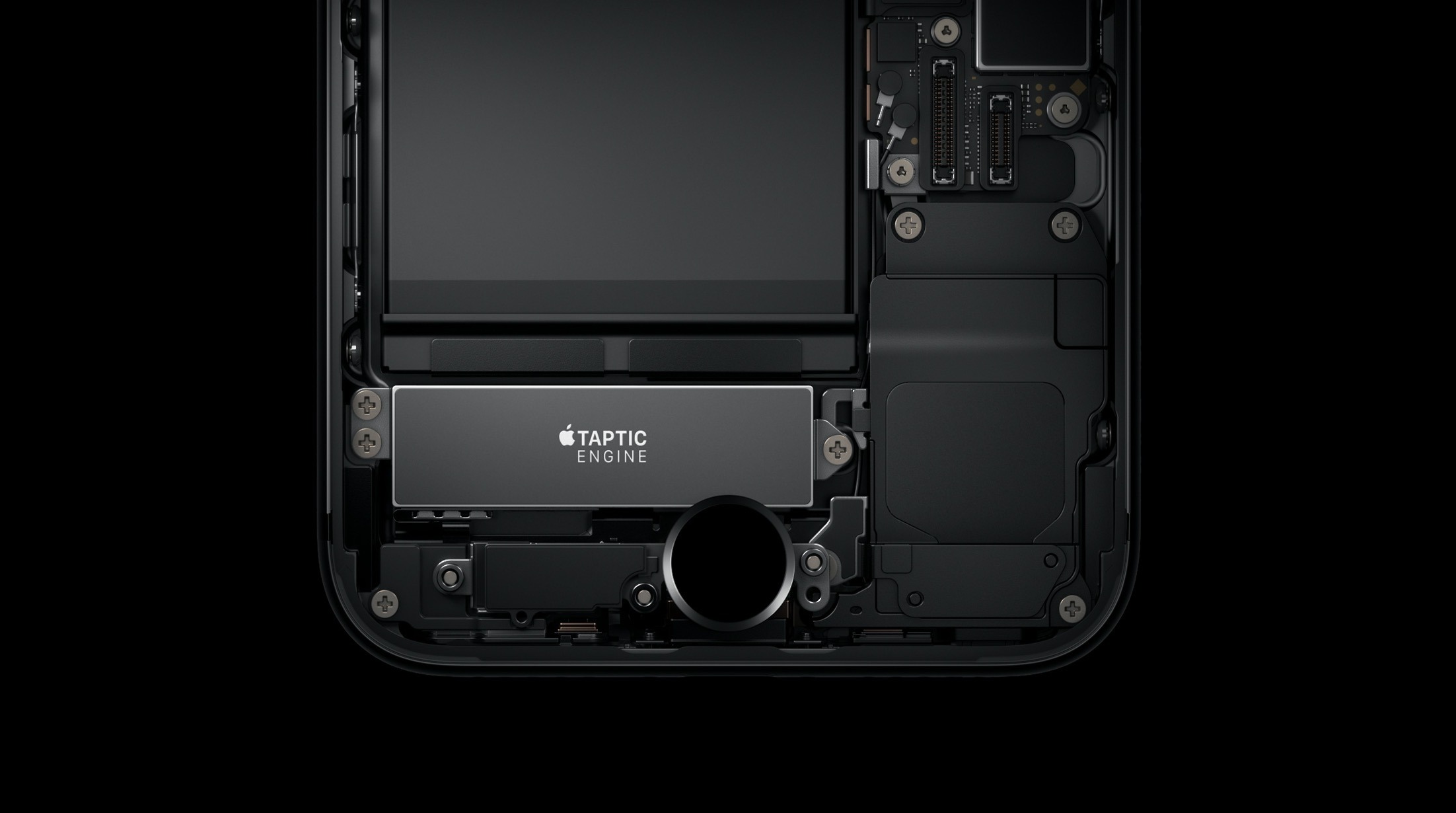
Core Insights - The tactile feedback of flagship smartphones is significantly influenced by the linear vibration motor, which has become a key differentiator in user experience amidst increasing product homogeneity [1][4][19] Group 1: Evolution of Vibration Motors - The transition from rotary motors to linear motors has improved the precision and responsiveness of smartphone vibrations, allowing for a more refined user experience [4][5] - Linear motors operate through linear reciprocating motion rather than circular rotation, resulting in faster response times and adjustable vibration frequencies [5][7] Group 2: Types of Linear Motors - Common types of linear motors include Z-axis, X-axis, and Y-axis, with X-axis motors being the preferred choice for flagship models due to their superior vibration strength and responsiveness [7][8] - The effectiveness of a linear motor is not solely determined by its type but also by the calibration performed by manufacturers, which can significantly affect the tactile feedback quality [8][12] Group 3: Calibration and User Experience - Calibration of the linear motor involves the integration of mechanical actions and algorithmic control, impacting the quality of tactile feedback experienced by users [8][13] - Companies like Apple have set industry standards with their Taptic Engine, which utilizes system-level algorithms to manage vibration feedback across various interactions [10][16] Group 4: Market Trends and Brand Differentiation - The emphasis on vibration feedback has transformed it from a mere functional feature to a critical aspect of brand identity and user experience, influencing consumer perceptions of smartphone quality [14][16] - As competition in the smartphone market intensifies, the quality of linear motors is becoming a focal point, with brands striving to enhance tactile feedback to improve overall product appeal [19]