计算机模拟

Search documents
黄仁勋点赞的AI制药公司,英矽智能今日港股IPO
Hua Er Jie Jian Wen· 2025-12-30 02:24
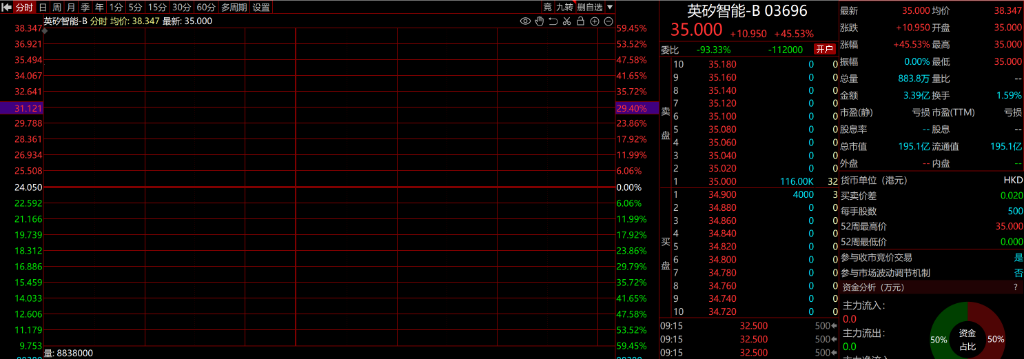
Core Viewpoint - The future of biology is shifting from experimental science to predictive, programmable data science, with Insilico being a key player in this transformation [1]. Group 1: Company Overview - Insilico officially listed on the Hong Kong Stock Exchange on December 30, 2025, with an opening price of HKD 35, a 45% increase from the issue price, resulting in a market capitalization of HKD 19.5 billion [1]. - Insilico is the first AI biopharmaceutical company to list under the main board rules of the Hong Kong Stock Exchange, demonstrating its commercial viability through rigorous profitability or revenue tests [3]. Group 2: Market Reception - The IPO was the largest in the Hong Kong biopharmaceutical sector in 2025, raising a total of HKD 2.277 billion, marking a significant test of the "AI + Biotech" business model in the capital market [2]. - The public offering was oversubscribed by approximately 1,427.37 times, with subscription funds exceeding HKD 328.349 billion, setting records for non-18A healthcare IPOs in Hong Kong [5]. Group 3: Strategic Partnerships - Notable cornerstone investors included Eli Lilly and Tencent, indicating strong confidence from multinational corporations in Insilico's technology platform and potential for future collaborations [6]. - The involvement of Tencent also highlights the tech giant's recognition of the "AI + Science" convergence trend, suggesting potential synergies in computational infrastructure [6]. Group 4: Business Model - Insilico operates a unique "dual-engine" business model combining AI with innovative drug discovery, generating predictable recurring revenue through its Pharma.AI platform [7]. - The company has established a global network of partnerships, with 13 out of the top 20 pharmaceutical companies having licensed its software, enhancing customer retention and data feedback loops [7]. Group 5: Innovation and Efficiency - Insilico's AI-driven drug discovery process significantly reduces the time from target identification to preclinical candidate nomination from an average of 4.5 years to 12-18 months, allowing for more attempts and higher success rates [9]. - The success of ISM001-055, the first AI-discovered drug candidate to enter clinical trials, exemplifies the effectiveness of Insilico's approach, demonstrating both safety and efficacy in human trials [10]. Group 6: Future Outlook - The company aims to disrupt traditional drug development costs, potentially breaking the "Eroom's Law" that states drug development costs increase exponentially over time, as it leverages AI for more efficient processes [11].

一家明星药企崩塌
投资界· 2025-12-15 07:34
Core Viewpoint - The article discusses the rise and fall of Merrimack Pharmaceuticals, highlighting the unexpected success of its drug MM-398 (Onivyde) amidst the company's mismanagement and eventual dissolution [3][4][26]. Group 1: Company Overview - Merrimack Pharmaceuticals was once a promising biotech company with a strong founding team from prestigious institutions like Harvard and MIT, focusing on "network biology" as a novel approach to drug development [9][10]. - The company acquired the rights to MM-398 from Hermes Biosciences, which was initially undervalued and overlooked by Merrimack's management [11][15]. Group 2: Drug Development Journey - MM-398 was developed as a liposomal formulation of irinotecan for treating metastatic pancreatic cancer, and it eventually became the company's only successful drug, significantly extending patient survival [17][26]. - Despite its success, Merrimack's management made critical errors, including rejecting lucrative buyout offers and failing to recognize the drug's potential, leading to financial strain [18][19]. Group 3: Management and Cultural Issues - The management structure at Merrimack favored computer modelers over traditional scientists, leading to conflicts and poor decision-making regarding drug development strategies [13][14]. - The company invested heavily in antibody projects based on the "network biology" narrative, which ultimately failed, while MM-398, a more traditional approach, succeeded [14][17]. Group 4: Financial Transactions and Outcomes - In 2017, Ipsen acquired MM-398 for an upfront payment of $575 million, plus potential milestone payments, which temporarily saved Merrimack from financial collapse [19][20]. - Following the acquisition, Merrimack's board decided to dissolve the company and distribute the remaining cash to shareholders, marking the end of its operations [4][26]. Group 5: Lessons and Reflections - The story of Merrimack serves as a cautionary tale about the importance of respecting biological principles in drug development and the dangers of over-relying on theoretical models [27]. - The article concludes with a reflection on the potential for similar mistakes to recur in the biotech industry, especially with the rise of AI-driven drug development narratives [27].