
Pharma.AI

Search documents
英矽智能连签4笔大单,年内股价接近翻倍
Jin Rong Jie· 2026-02-11 06:32
Core Insights - The collaboration in the AI pharmaceutical sector has significantly accelerated entering 2026, with notable partnerships being formed, including a recent agreement between Insilico Medicine and Kangzheng Pharmaceutical for AI-driven drug development [1][3]. Company Overview - Insilico Medicine, founded in 2014, is an AI-driven innovative pharmaceutical company that relocated from the U.S. to Hong Kong in 2019. It has developed over 20 clinical or IND assets through its generative AI platform, Pharma.AI [2]. - The company successfully went public on the Hong Kong Stock Exchange in December 2025, marking the largest biotech IPO in the Hong Kong market for that year [2]. Recent Collaborations - The recent partnership with Kangzheng Pharmaceutical is the fourth deal Insilico Medicine has secured in 2026, with total payments from previous collaborations amounting to $42 million, contributing to a cumulative total exceeding $1 billion across various therapeutic areas [3]. - Other collaborations include partnerships with Shiweya, Hengtai Biotech, and Qilu Pharmaceutical, focusing on oncology, central nervous system, and autoimmune diseases [3]. Industry Trends - The surge in collaborations indicates a shift from "proof of concept" to "commercial realization" in AI pharmaceuticals, with traditional pharmaceutical companies increasingly adopting AI technologies due to their efficiency and cost advantages [3][4]. - Insilico Medicine's AI platform significantly reduces the time required to identify clinical candidates from an average of 4.5 years to 12-18 months, while also decreasing the number of synthesized molecules and associated costs [4]. Cost Efficiency - Traditional drug development requires synthesizing hundreds to thousands of molecules, whereas Insilico Medicine only needs to synthesize dozens to a few hundred, reducing costs from over $10 million to approximately $2-3 million [4]. Industry Sentiment - A report cited by Guosheng Securities indicates that 85% of surveyed company leaders are increasing investments in AI, with 70% considering it a top priority. There is a notable shift towards collaboration or acquisition of external AI solutions rather than in-house development [4].
猜想谁是26年"易中天"系列——英矽智能
Ge Long Hui· 2026-01-30 17:40
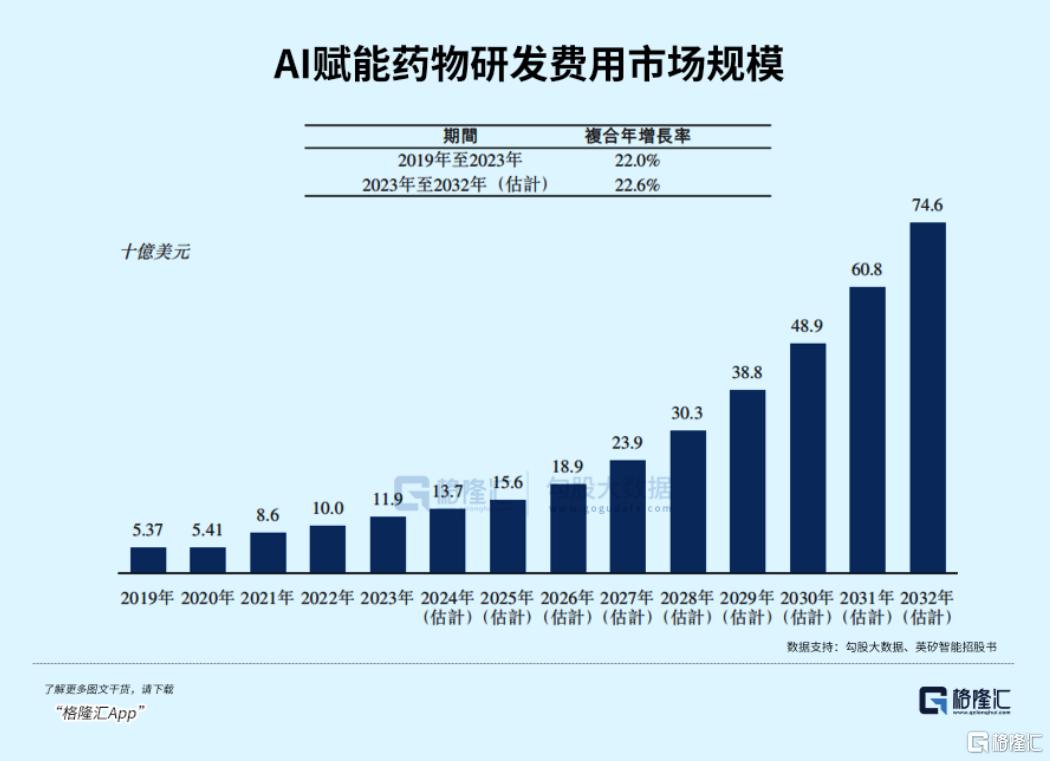
Core Insights - InSilico Medicine leverages its generative AI platform, Pharma.AI, to enhance drug discovery efficiency, having developed multiple promising pipelines and established collaborations with several multinational pharmaceutical companies, creating a significant competitive advantage [1][14]. Industry Background - AI-driven drug discovery and development (AIDD) is becoming an increasingly important trend in the pharmaceutical industry, with AI technology applicable in both early and late stages of drug development, improving efficiency in target identification, molecular design, and clinical trial optimization [2][5]. - The global AIDD market is projected to grow from $11.9 billion in 2023 to $74.6 billion by 2032, with a compound annual growth rate (CAGR) of 22.6% [2]. Business Model - InSilico Medicine operates a dual CEO structure, integrating generative AI with drug discovery and development through a collaborative operational model, focusing on prioritizing targets, molecular design, and optimizing experimental protocols [14]. - The company’s revenue model includes drug discovery and pipeline development, software solutions, and other discovery-related businesses, primarily generating income through licensing and collaboration agreements [14]. Pipeline Development - The company has developed a robust pipeline with over 20 assets in clinical or IND application stages, covering areas such as fibrosis, oncology, immunology, metabolism, and pain management [18][20]. - InSilico Medicine has established partnerships with 13 of the top 20 global pharmaceutical companies, reflecting strong confidence in its platform and pipeline [21][22]. Financial Performance - InSilico Medicine's revenue has shown rapid growth, reaching $30.15 million in 2022, $51.18 million in 2023, and $85.83 million in 2024, although the company remains in a loss position [25][26]. - The company’s R&D expenses were $35.57 million in the first half of 2025, a 22% decrease year-on-year, indicating a focus on cost management [25]. Conclusion - The application of AI in drug discovery allows companies to explore previously overlooked targets at lower costs, increasing opportunities for first-in-class drugs [28]. - Despite challenges in the industry, AI in drug development holds significant potential, with InSilico Medicine positioned as a key player in the Chinese AI pharmaceutical market, continuously enhancing its pipeline and expanding its licensing efforts [32].

从巨头布局到全场景渗透,AI+医药迈入竞争新阶段
2 1 Shi Ji Jing Ji Bao Dao· 2026-01-30 11:34
Group 1 - The global pharmaceutical industry is experiencing a surge in AI initiatives, with major companies like Eli Lilly and NVIDIA collaborating to establish an AI innovation lab, and AstraZeneca acquiring Modella AI to enhance its capabilities in biomedical AI [1][4] - AI's role in drug development is evolving from a supportive tool to a core innovation engine, as evidenced by its prominence at the 2026 JPM Healthcare Conference [1][4] - The AI wave is impacting not only drug development but also permeating various sectors within the healthcare industry, with hospitals and tech giants entering the AI healthcare space [1][2] Group 2 - Deloitte's report indicates that the innovation return on investment (IRR) for the top 20 global pharmaceutical companies is only 5.9%, with the average cost of drug development rising from $2.12 billion in 2023 to $2.229 billion in 2024 [4] - AstraZeneca's AI initiatives include the AIDA system aimed at reducing development time by 50%, while Eli Lilly and NVIDIA plan to invest $1 billion over five years in their AI lab [4][5] - Domestic AI pharmaceutical companies are also making strides, with companies like InSilico Medicine and CrystalClear Technology forming significant partnerships to enhance drug development using AI [5] Group 3 - The global AI healthcare market is projected to grow at a compound annual growth rate (CAGR) of 43% from 2024 to 2032, with generative AI in healthcare expected to grow at an even higher CAGR of 85% [6][7] - AI is anticipated to save the U.S. healthcare system approximately $150 billion annually by 2026, with long-term investment returns in AI healthcare reaching 10%-15% [7] - Companies are increasingly integrating AI across the entire pharmaceutical value chain, from drug discovery to marketing and patient services, enhancing operational efficiency [7][8] Group 4 - Innovative companies are focusing on specific scenarios to launch AI products, gaining attention from the capital market, with examples including Hangzhou Quanzhen Medical Technology and its AI application "Quanzhen Tong" [8][9] - Many domestic AI healthcare products are still in the data accumulation phase, with those that can effectively integrate into real medical processes and address industry pain points emerging as the future mainstream [9]

猜想谁是26年"易中天"系列——英矽智能
格隆汇APP· 2026-01-29 10:08
Core Viewpoint - InSilico Medicine leverages its generative AI platform to enhance drug discovery efficiency, developing multiple promising pipelines and establishing collaborations with several multinational pharmaceutical giants, thereby creating a certain competitive moat through a combination of in-house development and external licensing [5][6]. Industry Background - AI-driven drug discovery and development (AIDD) is becoming an increasingly important trend in the pharmaceutical industry, with AI technology applicable in both early and late stages of drug development to improve efficiency in identifying targets, designing molecules, and optimizing clinical trials [10][11]. Market Potential - The global AIDD market is projected to grow from $11.9 billion in 2023 to $74.6 billion by 2032, representing a compound annual growth rate (CAGR) of 22.6% [12]. Advantages of AI in Drug Discovery - AI can significantly enhance efficiency across various stages of drug discovery, addressing key challenges by analyzing large and complex datasets to identify potential drug candidates, discover biomarkers and therapeutic targets, predict pharmacological properties, and optimize clinical trial outcomes [15][16]. Company Overview - Founded in February 2014 by Dr. Alex Zhavoronkov, InSilico Medicine is an AI-driven drug discovery and development company that has generated over 20 clinical or IND-stage assets through its Pharma.AI platform, with three assets licensed to international pharmaceutical and healthcare companies, totaling a contract value of up to $2.1 billion [6][24]. Business Model - The company operates under a dual CEO structure, integrating generative AI with drug discovery and development through a collaborative operational model. The business model includes drug discovery and pipeline development, software solutions, and other non-pharmaceutical discovery businesses, with primary revenue sources from licensing and collaboration agreements [23][25]. Pipeline Development - InSilico Medicine has developed a robust pipeline of 20 clinical or IND-stage assets across various therapeutic areas, including fibrosis, oncology, immunology, metabolism, and pain management [28][30]. Collaborations and Partnerships - The company has established collaborations with 13 of the top 20 global pharmaceutical companies, with significant agreements totaling over $2 billion, reflecting strong confidence in its platform and pipeline [33][34]. Financial Performance - InSilico Medicine's revenue has shown rapid growth through external licensing, with revenues of $30.15 million, $51.18 million, $85.83 million, and $27.46 million for the years 2022, 2023, 2024, and the first half of 2025, respectively. However, the company remains in a loss position [37][39]. Future Outlook - The company is expanding the application of its Pharma.AI platform to various industries, including advanced materials, agriculture, nutritional products, and veterinary medicine, indicating a broadening of its operational scope [26].

港股异动 | 英矽智能(03696)涨超11%再创新高 开年仅一个月公司已达成三笔重磅合作
智通财经网· 2026-01-29 02:12
Core Viewpoint - The stock of Insilico Medicine (03696) has surged over 11% in early trading, reaching a new historical high of 66.45 HKD, driven by significant collaborations and advancements in AI-driven drug development [1] Group 1: Collaborations - Insilico Medicine has secured three major collaborations within the first month of the year, including an 888 million USD R&D partnership with Schwabe focused on innovative anti-tumor therapies [1] - On January 20, the company partnered with Shenzhen Hengtai Biopharmaceutical on the ISM8969 project to accelerate global development, with both parties holding 50% equity, and Insilico leading the IND application and Phase I clinical trials [1] - A collaboration with Qilu Pharmaceutical was established on January 27, valued at over 931 million HKD, focusing on novel small molecule drug design and optimization in the metabolic disease sector [1] Group 2: AI Drug Development - According to a report from Zheshang Securities, the core value of AI in drug development lies in significantly enhancing early-stage research efficiency, exemplified by Insilico's Pharma.AI, which reduces the time from target discovery to clinical candidate confirmation from 4.5 years to 12-18 months [1] - The report highlights that the return on investment during the early research phase has greatly improved, indicating a strong potential for growth in the AI pharmaceutical sector [1] - Domestic AI pharmaceutical platforms are noted to have globally leading service capabilities, with ongoing rapid expansion in overseas markets, emphasizing the importance of companies like Insilico Medicine [1]
英矽智能涨超11%再创新高 开年仅一个月公司已达成三笔重磅合作
Zhi Tong Cai Jing· 2026-01-29 02:11
Core Viewpoint - The stock of Insilico Medicine (03696) surged over 11% in early trading, reaching a historic high of 66.45 HKD, driven by significant collaborations and advancements in AI-driven drug development [1] Group 1: Collaborations - Insilico Medicine has secured three major collaborations within the first month of the year: - On January 5, a partnership with Schwabe was established for an 888 million USD R&D collaboration focused on innovative anti-cancer therapies [1] - On January 20, a collaboration with Shenzhen Hengtai Biotech was formed for the ISM8969 project, aimed at accelerating global development, with both parties holding 50% equity, while Insilico leads the IND application and Phase I clinical trials [1] - On January 27, a partnership with Qilu Pharmaceutical was announced, valued at over 931 million HKD, focusing on novel small molecule drug design and optimization in the metabolic disease sector [1] Group 2: AI Drug Development - According to a report by Zheshang Securities (601878), the core value of AI in drug development lies in significantly enhancing early-stage research efficiency. For instance, Insilico's Pharma.AI can reduce the time from target discovery to clinical candidate confirmation from 4.5 years to 12-18 months, greatly improving the return on investment during the early research phase [1] - The report highlights that several domestic AI drug development platforms possess globally leading service capabilities, with ongoing rapid expansion in overseas markets, emphasizing the potential of companies like Insilico Medicine [1]
对话独角兽 | 英矽智能的破局之路:加快管线推进,巩固数据优势
Di Yi Cai Jing· 2026-01-27 09:44
Core Insights - The emergence of AI technology is expected to significantly enhance the efficiency of drug development in the biopharmaceutical industry, potentially leading to a transformative impact on investment returns in the sector [1][3][4] Industry Overview - The global AI-enabled drug development market has grown from $5.37 billion in 2019 to $11.9 billion in 2023, with a compound annual growth rate (CAGR) of 22%. It is projected to reach $74.6 billion by 2032, with a CAGR of 22.6% [4] - AI is increasingly integrated into the entire drug development process, from target discovery to clinical trial design and even production and sales [3][4] Company Insights - Insilico Medicine is a leading company in the AI drug development field, focusing on validating the commercial viability of AI in drug discovery. It has made significant progress in clinical trials compared to its peers in the AI+Biotech sector [1][4] - The company has developed an integrated AI drug discovery platform, Pharma.AI, which covers the entire drug development process and has produced 27 preclinical candidate compounds and 13 drug pipelines that have received clinical trial approval [7] - Insilico Medicine's typical pipeline products can advance from discovery to preclinical stages in 12-18 months, compared to the traditional 3-6 years, showcasing a clear efficiency advantage [7] Challenges and Future Directions - Despite advancements, no drug designed by AI has yet been approved for commercialization, which remains a significant challenge for the AI drug development industry [8] - Insilico Medicine is actively working to accelerate drug development processes and is exploring collaborations to expedite the approval of its drug candidates [8] - The competition among AI drug companies is expected to shift from algorithm superiority to data resource advantages, emphasizing the need for extensive data accumulation for model training [10][11] Data Utilization - Data is crucial for AI technology, and the ability to leverage real-world medical data from hospitals is seen as highly valuable for both traditional and AI drug companies [11] - There are regulatory challenges in accessing and utilizing medical data in China, which limits its commercial potential [12] - Suggestions have been made to separate data ownership and usage rights to facilitate the flow of medical data for pharmaceutical use, drawing on examples from the U.S. [12]
AI应用的“妖风”还能吹多久?
虎嗅APP· 2026-01-23 10:16
Core Viewpoint - The article discusses the volatility and potential of AI application stocks, highlighting the recent surge and subsequent decline in their prices, emphasizing the need for logical investment rather than speculative trading [3][4][6]. Group 1: AI Application Market Dynamics - The AI application market saw a significant surge starting January 9, driven by the IPO of MiniMax, which rose over 90%, boosting market confidence in AI commercialization [3][4]. - Following the initial excitement, many AI companies issued announcements clarifying their limited revenue from AI, leading to a sharp price correction in the sector [4][5]. - The article suggests that while the current market may present opportunities, investors should focus on companies with genuine value and sustainable business models [4][7]. Group 2: GEO Model in Advertising - The article introduces the GEO (Generative Engine Optimization) model as a transformative approach in advertising, allowing users to input specific demands and receive optimized product recommendations directly from AI [9][11]. - The GEO market is projected to grow significantly, with estimates of $2.9 billion in China and $11.2 billion globally by 2025, indicating a shift from traditional SEO to AI-driven marketing strategies [11][12]. - Companies that own AI models and user behavior data are expected to be the primary beneficiaries of the GEO model, similar to how Google and Baidu benefited during the SEO era [12][13]. Group 3: AI in Healthcare - The AI healthcare sector has shown strong performance, with companies like 泓博医药 and 迪安诊断 seeing over 50% gains year-to-date, driven by increasing market interest [22][24]. - Government policies are increasingly supportive of AI in healthcare, with initiatives aimed at integrating AI into medical services and diagnostics [24][25]. - The article notes that advancements in AI healthcare applications, such as OpenAI's ChatGPT Health, are enhancing market sentiment and could lead to further growth in the sector [26][29]. Group 4: AI in Financial Technology - The financial technology sector has also experienced growth, with a 14% increase in the financial technology ETF as of January 14, 2026 [37]. - AI is expected to enhance the capabilities of both internet finance companies and financial IT firms, improving customer engagement and operational efficiency [38][39]. - However, the article cautions that while AI can improve operational efficiencies, it may not fundamentally change the poor business models prevalent in financial IT companies [40].

AI医疗爆发,多股年内涨超30%
21世纪经济报道· 2026-01-23 04:53
Core Viewpoint - The AI healthcare sector is experiencing significant growth and interest in 2026, with the AI healthcare index rising over 11% in just 14 trading days, indicating a clear trend in capital market enthusiasm for this sector [1][2]. Market Performance - As of January 22, 2026, the AI healthcare index increased by over 11%, while the CSI Medical Index and Hang Seng Healthcare Index rose by 7.68% and 10.65%, respectively [1]. - Companies like Di'an Diagnostics and Baolait have seen their stock prices surge over 60%, with others like Weining Health and Chengdu Xian Dao also experiencing gains exceeding 30% [1]. Industry Growth Projections - According to Frost & Sullivan, the AI healthcare market in China is projected to grow from 8.8 billion yuan in 2023 to 315.7 billion yuan by 2033, with a compound annual growth rate (CAGR) of 43.1% [1]. Technological Advancements - Major tech companies are actively entering the AI healthcare space, with OpenAI launching a healthcare version of ChatGPT and other firms like Ant Group, Tencent, JD, and ByteDance developing AI healthcare models and applications [5][6]. - AI drug development is identified as the fastest-growing segment within AI healthcare, with companies like Insilico Medicine and WuXi AppTec significantly reducing drug development timelines [6][7]. Commercialization Challenges - Despite the enthusiasm, the commercialization of AI healthcare products is facing challenges, with many companies reporting losses. For instance, 24 out of 47 biomedicine companies forecasted losses or reduced profits for 2025 [10]. - Companies like KingMed Diagnostics and Anbiping are experiencing significant revenue declines, with Anbiping reporting a 28.29% drop in revenue year-on-year [10][11]. Regulatory Developments - Recent government policies are seen as a positive signal for the AI healthcare sector, with initiatives aimed at promoting and standardizing AI applications in healthcare [15][16]. - The National Healthcare Security Administration has clarified pricing for AI-assisted diagnostic services, which is expected to facilitate the integration of AI into routine clinical practice [15][16]. Future Outlook - Industry experts predict that 2026 will be a pivotal year for AI healthcare, with clearer payment structures and stronger financial backing expected to enhance commercialization prospects [16].

AI医疗爆发三重奏:亢奋、焦虑与希望
2 1 Shi Ji Jing Ji Bao Dao· 2026-01-22 08:03
Core Viewpoint - The AI healthcare sector is experiencing significant growth and interest in 2026, with substantial increases in various healthcare indices and notable stock performance among key companies in the sector [1][2]. Market Performance - As of January 21, 2026, the AI healthcare index surged over 11%, while the CSI Medical Index and Hang Seng Healthcare Index rose by 8% and 11.67% respectively [1]. - Companies like Dean Diagnostics and Baolite have seen stock increases exceeding 60%, with others like Weining Health and Chengdu Xian Dao also showing gains over 20% [1]. Market Trends and Projections - The AI healthcare market in China is projected to grow from 8.8 billion yuan in 2023 to 315.7 billion yuan by 2033, reflecting a compound annual growth rate of 43.1% [2]. - The rapid advancement in AI healthcare applications is driven by technological breakthroughs, favorable policies, and increasing market demand [2]. Technological Developments - Major tech companies are actively entering the AI healthcare space, with OpenAI, Google, and domestic firms like Ant Group and Tencent launching various AI healthcare applications [4]. - Significant advancements have been made in AI-assisted diagnostics, medical imaging, and drug development, indicating a trend towards more efficient healthcare solutions [5][6]. Commercialization Challenges - Despite the enthusiasm, the commercialization of AI healthcare products faces challenges, including ethical concerns, regulatory risks, and slow progress in translating technological advancements into financial performance [10][11]. - As of January 21, 2026, over half of the 47 biomedicine companies that disclosed earnings forecasts reported losses or reduced earnings, highlighting the disparity between market excitement and actual financial results [10]. Regulatory Developments - Recent government initiatives aim to promote and standardize the application of AI in healthcare, with a focus on establishing high-quality data sets and clinical models by 2027 [13][14]. - The National Healthcare Security Administration has clarified pricing for AI-assisted diagnostic services, which is expected to enhance the commercial viability of AI healthcare products [14]. Future Outlook - Industry experts predict that 2026 will be a pivotal year for the commercialization of AI healthcare, driven by clearer payment structures and stronger market demand [13][14]. - The focus will likely be on AI applications in drug development, diagnostics, and operational efficiency, with expectations for rapid growth in the sector [14].