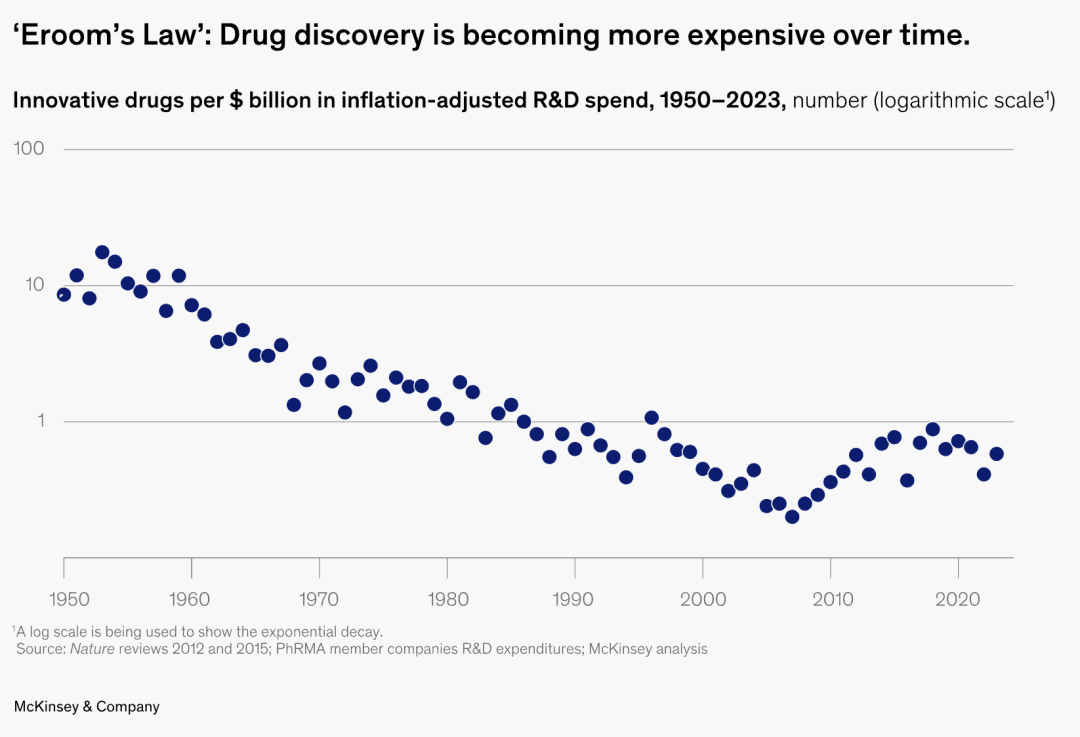
Eroom定律

Search documents
黄仁勋点赞的AI制药公司,英矽智能今日港股IPO
Hua Er Jie Jian Wen· 2025-12-30 02:24
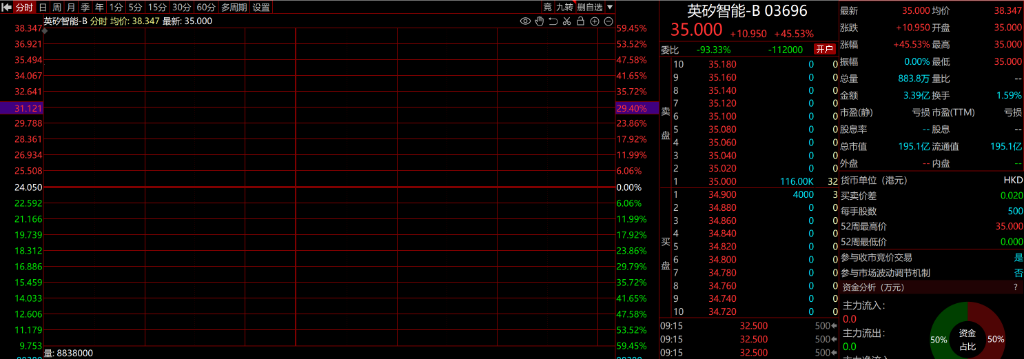
Core Viewpoint - The future of biology is shifting from experimental science to predictive, programmable data science, with Insilico being a key player in this transformation [1]. Group 1: Company Overview - Insilico officially listed on the Hong Kong Stock Exchange on December 30, 2025, with an opening price of HKD 35, a 45% increase from the issue price, resulting in a market capitalization of HKD 19.5 billion [1]. - Insilico is the first AI biopharmaceutical company to list under the main board rules of the Hong Kong Stock Exchange, demonstrating its commercial viability through rigorous profitability or revenue tests [3]. Group 2: Market Reception - The IPO was the largest in the Hong Kong biopharmaceutical sector in 2025, raising a total of HKD 2.277 billion, marking a significant test of the "AI + Biotech" business model in the capital market [2]. - The public offering was oversubscribed by approximately 1,427.37 times, with subscription funds exceeding HKD 328.349 billion, setting records for non-18A healthcare IPOs in Hong Kong [5]. Group 3: Strategic Partnerships - Notable cornerstone investors included Eli Lilly and Tencent, indicating strong confidence from multinational corporations in Insilico's technology platform and potential for future collaborations [6]. - The involvement of Tencent also highlights the tech giant's recognition of the "AI + Science" convergence trend, suggesting potential synergies in computational infrastructure [6]. Group 4: Business Model - Insilico operates a unique "dual-engine" business model combining AI with innovative drug discovery, generating predictable recurring revenue through its Pharma.AI platform [7]. - The company has established a global network of partnerships, with 13 out of the top 20 pharmaceutical companies having licensed its software, enhancing customer retention and data feedback loops [7]. Group 5: Innovation and Efficiency - Insilico's AI-driven drug discovery process significantly reduces the time from target identification to preclinical candidate nomination from an average of 4.5 years to 12-18 months, allowing for more attempts and higher success rates [9]. - The success of ISM001-055, the first AI-discovered drug candidate to enter clinical trials, exemplifies the effectiveness of Insilico's approach, demonstrating both safety and efficacy in human trials [10]. Group 6: Future Outlook - The company aims to disrupt traditional drug development costs, potentially breaking the "Eroom's Law" that states drug development costs increase exponentially over time, as it leverages AI for more efficient processes [11].

AI正重塑整个研发文明
Hu Xiu· 2025-06-24 06:17
Core Insights - The article posits that while we are in an era of unprecedented technological prosperity, innovation is becoming increasingly difficult to achieve, with AI potentially serving as the key to overcoming this bottleneck [1][8]. Group 1: Innovation Challenges - The cost and difficulty of innovation have escalated globally, affecting various industries [3][5]. - R&D spending in the chip industry is projected to be 18 times higher than in the 1970s by 2024, while the pharmaceutical industry has seen an 80-fold decrease in the number of new drugs developed per $1 billion invested over decades [4][5]. - The overall productivity of R&D in U.S. companies has been declining since the 1950s, a trend observed globally [5][8]. Group 2: AI as a New Pathway - AI is positioned as a transformative force that can propose "questions humans would not think of" and "paths humans would not choose" in the innovation process [11][17]. - AI's ability to generate numerous design candidates and explore unconsidered paths is highlighted, with examples from various fields such as protein synthesis and retail space design [15][16]. Group 3: Revolutionizing Validation - The validation phase of R&D, often the most time-consuming, can be expedited through AI, which can simulate and predict outcomes much faster than traditional methods [19][24]. - AI models, known as surrogate models or digital twins, can replicate complex physical processes with minimal computational resources, significantly reducing the time and cost of validation [26][30]. Group 4: AI's Role in Knowledge Integration - AI is redefining the management of implicit knowledge within organizations, enabling the aggregation of insights from various sources, including social media and internal communications [40][41]. - The ability of AI to process vast amounts of data allows for the identification of trends and user needs that may not be immediately apparent to human researchers [42][44]. Group 5: Industry-Specific Applications - In software and gaming, AI is automating code generation and content creation, significantly reducing development time [54][55]. - In life sciences, AI is being utilized to identify molecular targets and predict protein structures, enhancing drug discovery processes [57][60]. - In materials science, AI accelerates the discovery of new materials by predicting properties without physical experiments [62][63]. - In aerospace and complex manufacturing, AI integrates multi-disciplinary engineering processes, improving design accuracy and efficiency [66][67]. - In consumer goods, AI analyzes consumer feedback to inform product development, reducing the risk of market failure [70][71]. Group 6: Future of Innovation - The article concludes that AI is not just a tool but a collaborative partner in the innovation process, transforming R&D into a co-creative ecosystem rather than a linear workflow [74][80]. - The potential for AI to reverse the decline in innovation rates could significantly impact economic growth and societal well-being in the future [81][82].