诉讼保全

Search documents
公司欠款连带老板“背锅”,萃华珠宝控股股东100%持股被冻结
Shen Zhen Shang Bao· 2026-02-04 14:07
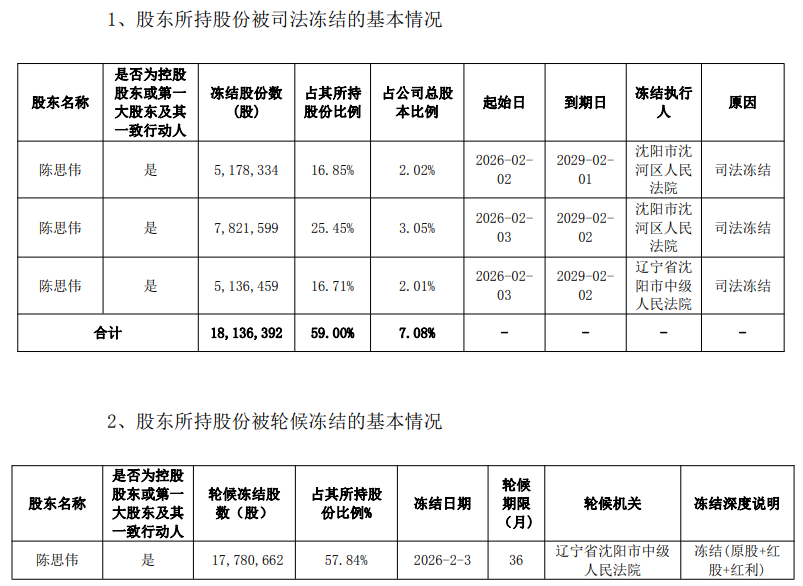
Core Viewpoint - The announcement reveals that the controlling shareholder of Cuihua Jewelry, Chen Siwei, has had a significant portion of his shares frozen due to overdue bank loans, which he guaranteed for the company. This situation raises concerns about the company's financial stability and potential legal implications for the shareholder [1][5]. Group 1: Shareholder Share Freeze Details - Chen Siwei's shares frozen amount to 18.14 million shares, representing 59% of his holdings and 7.08% of the company's total share capital [1][2]. - An additional 17.78 million shares are under provisional freeze, accounting for 57.84% of his holdings [2]. - In total, 30.74 million shares have been frozen, which is 100% of his holdings and 12% of the company's total share capital [3]. Group 2: Reasons for Share Freeze - The shares were frozen due to overdue bank loans for which Chen Siwei provided a joint liability guarantee, leading to a lawsuit for preservation of creditor rights [5]. - The freezing of shares is part of a legal process initiated by creditors, and the company is monitoring the situation closely [5]. Group 3: Company Financial Performance - For the fiscal year 2025, the company forecasts a net profit attributable to shareholders of between 21 million and 31 million yuan, a decrease of 85.69% to 90.31% year-on-year [7][8]. - Conversely, the net profit after excluding non-recurring gains and losses is expected to be between 162 million and 242 million yuan, reflecting an increase of 154.81% to 280.64% year-on-year [7][8]. - The performance is attributed to improved operations in the jewelry segment due to rising gold prices and a turnaround in the lithium salt segment [9].


律所主任“借款”数亿后失联 “诉讼保全”成幌子?
Di Yi Cai Jing· 2026-01-08 12:23
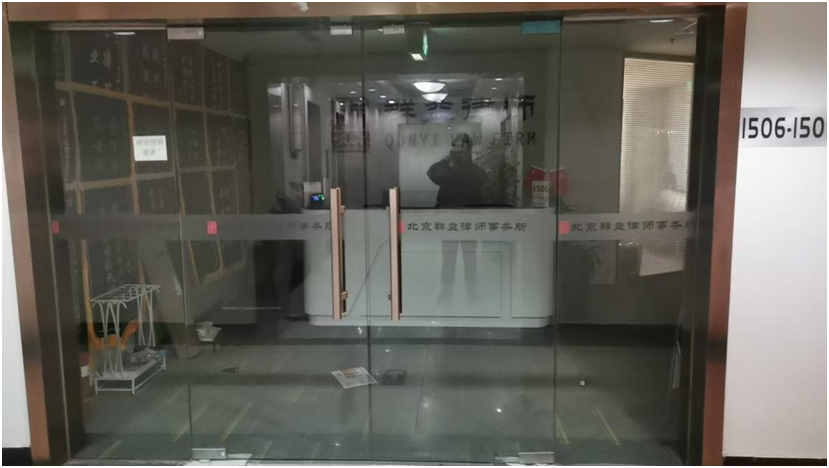
Core Viewpoint - The article discusses the disappearance of Wang Zhi, the head of Beijing Qunyi Law Firm, who allegedly operated a fraudulent investment scheme targeting elderly individuals, resulting in significant financial losses for hundreds of victims [1][2]. Group 1: Business Model and Operations - Wang Zhi promoted a "litigation preservation" business model, attracting funds through high-interest loans and family legal service contracts, promising monthly returns and using lottery incentives to encourage further investments [1][2]. - The law firm primarily targeted elderly clients, offering legal services and promoting investment opportunities that were perceived as stable and secure, leading many to invest their retirement savings and other funds [3][4]. - The firm had a dual structure with a sales team soliciting investments and lawyers handling legal cases, with a focus on simple legal matters such as wills and marriage [4]. Group 2: Financial Details and Contracts - The total amount involved in the outstanding loans is reported to exceed 900 million yuan, with hundreds of victims already registered [1][5]. - The loan contracts initially had interest rates as high as 16%, which were later reduced to 11% before Wang's disappearance, with terms allowing for extensions up to five years [5]. - The firm’s promotional materials claimed a 70.235% fund utilization rate and a gross profit of approximately 5.93 million yuan from their operations [8]. Group 3: Legal and Ethical Concerns - Legal experts have raised concerns about the legitimacy of the "litigation preservation" model, suggesting it may be fundamentally flawed and akin to a Ponzi scheme [2][9]. - The law firm’s claims regarding the safety and legality of their operations have been challenged, with indications that the funds were not being used as stated and that the firm lacked proper legal authority to operate in the manner described [9][10]. - The insurance policy mentioned as a safety net for clients is unrelated to the actual legal processes involved in litigation preservation, further questioning the firm's practices [10].
北京一律所主任“借款”数亿后失联
第一财经· 2026-01-08 12:09
Core Viewpoint - The article discusses the fraudulent activities of Wang Zhi, the head of Beijing Qunyi Law Firm, who has been reported missing after allegedly defrauding hundreds of investors, primarily elderly individuals, through a scheme involving high-interest loans and legal service contracts [3][4]. Group 1: Business Model and Operations - Wang Zhi promoted a "litigation preservation" business model, attracting funds from the public by offering high returns and claiming the funds would be used for legal purposes [3][11]. - The law firm operated for over a decade, initially attracting clients through legal education seminars and promoting the idea of having a family legal advisor [6][7]. - The firm had a dual structure with a sales team soliciting investments and lawyers handling legal cases, primarily focused on simple legal matters [7][8]. Group 2: Financial Details and Contracts - The total amount involved in the fraudulent scheme is estimated to exceed 900 million yuan, with many victims investing their life savings [3][6]. - The loan contracts stipulated an annual interest rate of 11%, with penalties for early withdrawal, which discouraged investors from retrieving their funds [8][12]. - The law firm's promotional materials claimed a high operational interest rate of 36% and a gross profit of approximately 59.28 million yuan for the previous year [12]. Group 3: Legal and Ethical Concerns - Legal experts have raised concerns about the legitimacy of the "litigation preservation" model, suggesting it may be a facade for a Ponzi scheme [4][13]. - The law firm’s claims regarding the safety and legality of their operations have been challenged, with experts indicating that legitimate legal processes do not require such funding arrangements [13][14]. - The insurance policy mentioned as a safety net for investors is unrelated to the actual legal services provided, further questioning the firm's ethical practices [14].
律所主任“借款”数亿后失联,“诉讼保全”成幌子?
Di Yi Cai Jing· 2026-01-08 11:58
Core Viewpoint - The "litigation preservation" business model created by Wang Zhi is fundamentally flawed and resembles a Ponzi scheme, where new investments are used to pay returns to earlier investors [1][3]. Group 1: Business Model and Operations - Wang Zhi, the head of Beijing Qunyi Law Firm, has been using the "litigation preservation" business model for over a decade, attracting funds through high-interest loans and family legal service contracts [1][4]. - The firm has reportedly attracted hundreds of investors, with outstanding loan contracts exceeding 900 million yuan, primarily from elderly individuals who viewed it as a stable investment [3][4]. - The law firm operates with a dual structure, where the marketing department engages potential investors while lawyers handle legal cases, primarily focusing on simple legal matters [4]. Group 2: Financial Agreements - The loan contracts stipulate a fixed annual interest rate of 11%, with repayment terms allowing for delays of three to seven working days without interest penalties [5][6]. - The contracts underwent a change in 2019, shifting the borrowing entity from the law firm to Wang Zhi, which was reportedly a requirement from the judicial bureau [6]. - Early contracts had interest rates as high as 16%, which decreased over time, and investors faced significant penalties for early withdrawal [6]. Group 3: Legal and Regulatory Concerns - Legal experts have raised concerns about the legitimacy of the "litigation preservation" claims, suggesting that the model may be entirely fabricated and does not align with standard legal practices [9][10]. - The law firm’s assertion that it could manage court refunds on behalf of clients is legally questionable, as courts typically only recognize the original applicants for refunds [10]. - The insurance policy presented as a safety net for investors is unrelated to the actual legal services provided and does not cover the risks associated with the investment model [10].