语言教学

Search documents
这些宝藏“洋老师”,在中国高校课堂上都教些啥?
Ren Min Ri Bao Hai Wai Ban· 2025-12-15 05:49
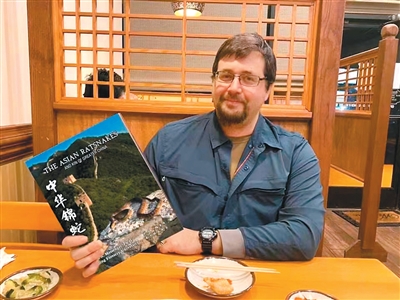
Core Viewpoint - The article highlights the contributions of foreign teachers in Chinese higher education, showcasing their roles in cultural exchange and their impact on students' learning experiences [1]. Group 1: Kevin, the American Teacher - Kevin, an American zoologist, has dedicated his life to wildlife research in China, particularly in Shennongjia, where he engages in field studies and teaches animal geography and behavior [2][3]. - He emphasizes hands-on learning, taking students to observe animals in their natural habitats to deepen their understanding of ecological concepts [3]. - Kevin has witnessed a growing interest among Chinese youth in animal protection, with more students choosing to study related fields compared to previous years [4]. Group 2: Ma Tianyu, the French Teacher - Ma Tianyu, a French language teacher in Changchun, believes in the importance of engaging students through practical activities rather than traditional textbook methods [5][6]. - He incorporates drama into language learning, allowing students to perform Chinese stories in French, which enhances their understanding and enjoyment of the language [6][7]. - Ma has adapted to Chinese culture, enjoying local cuisine and technology, and aims to inspire his students with his passion for teaching [7][8]. Group 3: Abed, the Iraqi Teacher - Abed, an Iraqi professor at Wuhan University, focuses on integrating cross-cultural perspectives into his teaching, particularly in the context of energy solutions for countries involved in the Belt and Road Initiative [11][12]. - He emphasizes practical experience, organizing internships for students to work on real-world energy projects, fostering critical thinking and problem-solving skills [13]. - Abed aims to cultivate "bridge-type talents" who can facilitate energy transition and cooperation between China and countries like Iraq [14][15].

那些宝藏“洋老师”(我在中国·行耕记)
Ren Min Ri Bao Hai Wai Ban· 2025-12-12 22:00
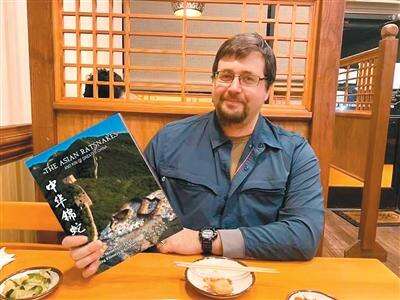
Group 1: Core Perspectives - The article highlights the increasing presence and impact of foreign teachers in Chinese higher education, showcasing their contributions to cultural exchange and education [1] - It emphasizes the personal stories of three foreign educators, Kevin, Ma Tianyu, and Abou, illustrating their dedication to teaching and their unique approaches to engaging students [1][6][11] Group 2: Kevin's Contributions - Kevin, an American zoologist, has dedicated his career to wildlife conservation and education in China, inspiring students to appreciate and protect biodiversity [2][4] - He utilizes hands-on experiences in nature to enhance students' understanding of animal behavior and ecology, demonstrating the importance of practical learning [2][4] - Kevin has observed a growing interest among Chinese youth in animal protection, indicating a shift in career aspirations towards environmental sciences [2][4] Group 3: Ma Tianyu's Teaching Methodology - Ma Tianyu, a French language teacher, employs interactive and creative teaching methods, such as drama and performance, to engage students and enhance their language skills [6][7] - He encourages students to explore Chinese literature through the French language, fostering a deeper cultural understanding [7][8] - Ma's approach balances traditional textbook learning with innovative practices, aiming to develop students' language proficiency progressively [8][9] Group 4: Abou's Focus on Energy Transition - Abou, an Iraqi professor, emphasizes the importance of practical experience in engineering education, organizing internships for students to work on real-world energy solutions [11][12] - He is actively involved in international cooperation projects related to energy transition, particularly in the context of the Belt and Road Initiative, aiming to address energy challenges in Iraq [12][14] - Abou aspires to cultivate "bridge-type talents" who possess both technical expertise and cross-cultural communication skills, contributing to global energy solutions [14][15]