课程综合化

Search documents
教育部:职业教育教学应加强STEM教育、人工智能等方面通识课程设置与建设
Bei Jing Shang Bao· 2026-02-12 03:25
Core Viewpoint - The Ministry of Education has issued an opinion on deepening the reform of key elements in vocational education, emphasizing the need for scientific design of course combinations to align with industry upgrades and technological advancements [1] Group 1: Curriculum Design - The opinion calls for timely integration of the latest standards, technologies, and processes into professional courses [1] - It emphasizes the need to establish clear goals for new and upgraded programs, including a comprehensive list of courses and content for both new and modified curricula [1] - There is a focus on collaborating with leading enterprises to conduct vocational analysis and identify relevant skills and knowledge points [1] Group 2: Course Structure - The initiative promotes the construction of integrated, modular, and project-based courses, ensuring logical relationships and competency requirements among different professional courses [1] - It highlights the importance of incorporating ideological and political elements that reflect industry characteristics and vocational traits into the curriculum [1] Group 3: General Education and Course Expansion - The opinion stresses the enhancement of general education courses in areas such as STEM, cultural foundations, and artificial intelligence [1] - It suggests that programs in arts, management, and services should include engineering and technical courses, while production, manufacturing, and engineering programs should incorporate humanities and social sciences [1] - The continuous development of national quality courses is also emphasized [1]
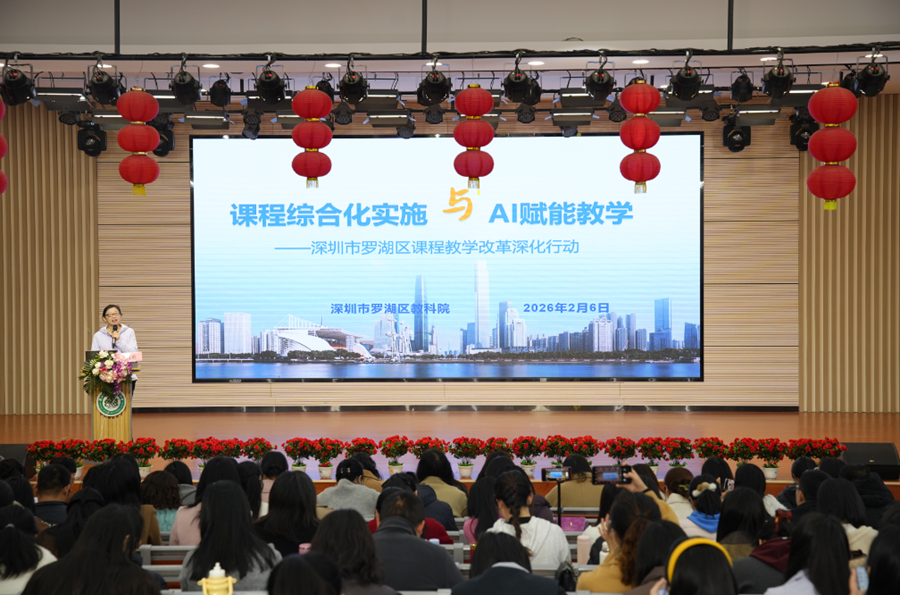
课程综合化+AI赋能 解锁教育新范式
Xin Lang Cai Jing· 2026-02-06 14:47
Core Insights - The article discusses the integration of curriculum reform and AI technology in education, highlighting a training session held in Zhanggong District aimed at enhancing educational quality through innovative teaching methods [1]. Group 1: Curriculum Integration - Curriculum integration is not merely about merging subjects but breaking down disciplinary barriers to transform students from "standard answerers" to "problem solvers" [3]. - The approach in Luohu District involves two forms: using subject-based courses for interdisciplinary project exploration and creating "expansive courses" to transition learning from "fragmented" to "integrated" [3]. Group 2: Project-Based Learning - The five-step method of "realistic context - driving questions - collaborative inquiry - results presentation - competency transfer" allows students to integrate knowledge from various subjects, enhancing their ability to solve real-world problems [4]. Group 3: AI Empowered Teaching - The RAT framework for AI application in teaching includes automating repetitive tasks to free teachers, personalized teaching through intelligent agents, and using large models and diagnostic tools to shift classrooms towards "competency cultivation" [5]. - The training session fostered active discussions among teachers regarding the development of school-based curricula and the practical implementation of AI tools, providing a clear path and practical tools for advancing educational quality in Zhanggong District [5].