资产权属规范

Search documents
14家中小行密集更新上市辅导材料 IPO“马拉松”何时冲线?
Sou Hu Cai Jing· 2025-11-13 23:14
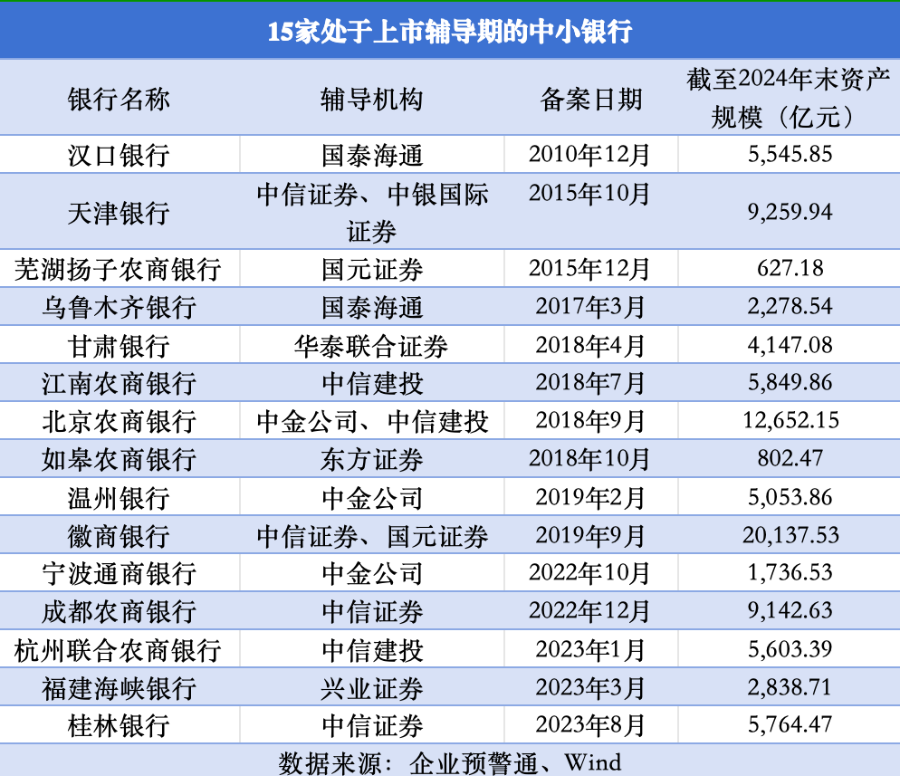
Core Insights - The A-share banking sector has not seen new listings for over two years since Lanzhou Bank's IPO in 2022, with the listing process for small and medium-sized banks significantly slowing down [1] - Despite the slowdown, there are still 15 banks in the preparatory phase for listing, with 14 banks recently disclosing their latest progress reports [1][2] - Common issues among these banks include asset ownership irregularities, the need for optimized equity management, and capital replenishment challenges [1][2][10] Asset Ownership Issues - Asset ownership problems are prevalent among the banks, with issues such as unregistered properties and non-compliance in leasing agreements [3][4] - For instance, Gansu Bank reported ongoing efforts to complete ownership documentation for properties valued at approximately 143 million yuan [3] - Other banks like Wenzhou Bank and Guilin Bank also face similar asset ownership challenges, including unregistered properties and incomplete leasing contracts [4] Equity Management Challenges - Many banks are struggling with complex equity structures, unqualified shareholders, and instances of illegal shareholding [5][6] - For example, Urumqi Bank has a complicated equity structure due to historical reasons and is working on capital expansion to rectify this [6] - Jiangsu Jiangnan Rural Commercial Bank has exceeded the permissible shareholding limit for individual employees, which violates regulatory requirements [6][7] Capital Replenishment Pressures - Capital adequacy remains a critical issue for many small and medium-sized banks, with ongoing pressures despite some banks issuing capital tools and expanding capital [10][11] - HanKou Bank, for instance, has implemented capital expansion measures but still faces challenges in maintaining adequate capital levels, with a capital adequacy ratio of 14.38% as of the end of 2024 [11] - The need for additional capital sources is emphasized as these banks aim to enhance their ability to serve the real economy and mitigate risks [10][12] Listing Process and Regulatory Environment - The regulatory environment has intensified scrutiny on the authenticity and completeness of information disclosure, particularly under the new registration system [1][9] - Banks must address issues related to asset ownership, equity structure, and capital replenishment before they can progress to the IPO application stage [12] - Currently, only five banks remain in the A-share IPO queue, with some at various stages of the application process [12]


IPO冲线在即,14家中小行密集更新上市辅导材料
2 1 Shi Ji Jing Ji Bao Dao· 2025-11-13 02:30
Core Viewpoint - The IPO process for small and medium-sized banks in A-shares has significantly slowed down, with 15 banks currently in the listing guidance period, facing common issues related to asset ownership, equity management, and capital supplementation [1][10]. Group 1: Listing Progress and Challenges - Since the listing of Lanzhou Bank in 2022, no new banks have entered the A-share market, indicating a stagnation in the listing process for small and medium-sized banks [1]. - 14 banks, including Beijing Rural Commercial Bank and Guilin Bank, have recently disclosed their guidance progress reports, highlighting ongoing issues that have been repeatedly mentioned in previous rounds of guidance [1][10]. - The registration system has intensified the requirements for the authenticity, accuracy, and completeness of information disclosure, further amplifying the institutional deficiencies accumulated during the early development of these banks [1][9]. Group 2: Common Issues Faced by Banks - Asset ownership issues are prevalent among various banks, with examples including Gansu Bank and Wenzhou Bank, where property rights have not been properly documented [4][5]. - Specific problems include unregistered self-owned properties and non-compliant leased assets, with Gansu Bank reporting ongoing efforts to rectify ownership documentation for properties valued at approximately 143 million yuan [4][5]. - Equity management issues are also significant, with complex ownership structures and non-compliant shareholding practices identified in banks like Urumqi Bank and Fujian Haixia Bank [6][7]. Group 3: Capital Challenges - Many small and medium-sized banks face pressure on capital adequacy ratios, despite some having issued capital tools and conducted capital increases to supplement their capital [10][11]. - For instance, Hankou Bank reported a capital adequacy ratio of 14.38% as of the end of 2024, an increase of 2.54 percentage points from the end of 2023, but still faces ongoing capital consumption pressures [11]. - The need for additional capital channels remains critical, as the IPO process is seen as a key opportunity for these banks to enhance their capital levels and support economic activities [10][11].
IPO冲线在即,14家中小行密集更新上市辅导材料
21世纪经济报道· 2025-11-13 02:25
Core Viewpoint - The article discusses the challenges faced by small and medium-sized banks in China regarding their IPO processes, highlighting common issues such as asset ownership, equity management, and capital adequacy that hinder their progress in the capital market [1][10]. Group 1: Asset Ownership Issues - Asset ownership problems are prevalent among the banks undergoing IPO preparations, with several institutions like Gansu Bank and Wenzhou Bank disclosing ownership flaws in their reports [3][5]. - Two main types of asset ownership issues are identified: self-owned assets lacking proper ownership certificates and non-compliant leased assets [4]. - For instance, Gansu Bank is still in the process of obtaining ownership certificates for properties valued at approximately 143 million yuan, while also facing issues with unregistered leased properties [4][5]. Group 2: Equity Management Challenges - Many banks are struggling with equity management, including complex ownership structures and non-compliant shareholding [6][7]. - Urumqi Bank has a complicated equity structure due to historical reasons, and is working on capital increase to optimize its equity structure [7]. - Violations of shareholding regulations are noted in several banks, such as Huishang Bank and Jiangnan Rural Commercial Bank, where individual employee holdings exceed the regulatory limit [8][9]. Group 3: Capital Adequacy Pressures - Capital adequacy remains a significant challenge for many small and medium-sized banks, with some banks like Hankou Bank needing to supplement capital through various channels [10]. - Hankou Bank's capital adequacy ratio improved to 14.38% by the end of 2024, but ongoing business development continues to exert pressure on capital levels [10]. - The article emphasizes that addressing asset ownership, equity structure, and capital adequacy issues is crucial for these banks to progress towards their IPO goals [10].