资产隐匿

Search documents
黄金和AI,谁是泡沫?
Sou Hu Cai Jing· 2026-02-02 08:39
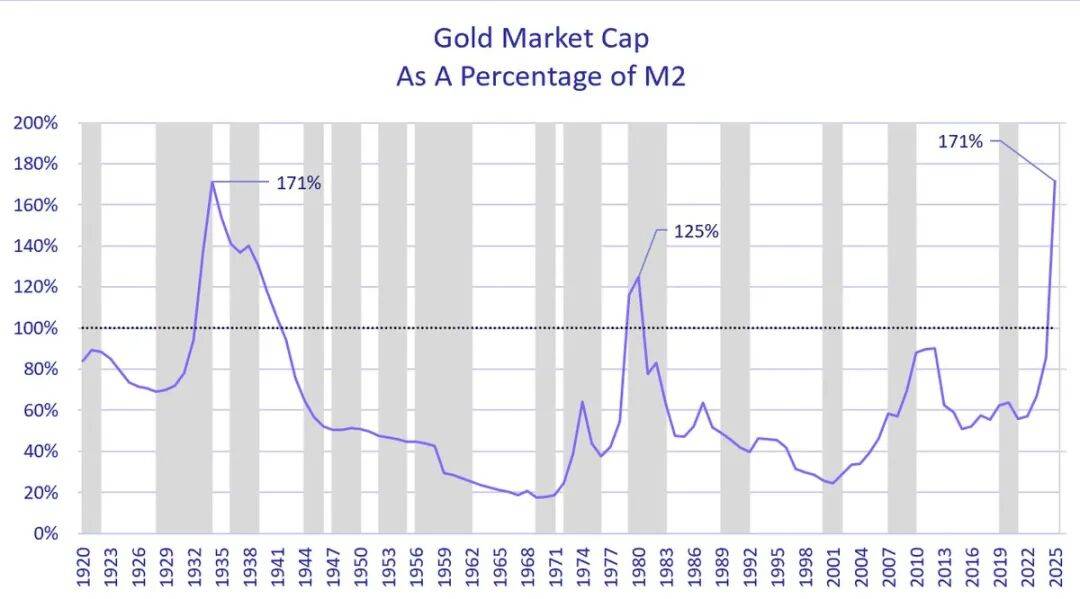
Group 1 - Recent significant decline in gold prices, with London gold dropping to $4,865.35 per ounce on January 31, marking a 9.45% decrease, the largest single-day drop in nearly 40 years [1] - As of February 2, London gold further decreased to $4,658.5 per ounce, down over 4% [1] - Cathie Wood, known as the "female Buffett," predicts an imminent bubble burst in gold, citing that gold's market value now exceeds historical highs relative to the U.S. money supply (M2) [2][4] Group 2 - The current U.S. economy differs significantly from the high inflation of the 1970s and the deflationary depression of the 1930s, with a decline in market inflation expectations as the 10-year U.S. Treasury yield fell from 5% to 4.2% [4][5] - Wood argues that the recent surge in gold prices is characteristic of a market cycle's end, predicting a strengthening dollar could lead to a significant drop in gold prices, similar to the 60% decline from 1980 to 2000 [6][7] Group 3 - Global central banks, particularly in emerging markets, are the primary buyers of gold, with a notable increase in demand, including a 225-ton increase by the People's Bank of China in 2023 [9][10] - Central banks have net purchased gold for 15 consecutive years, with annual purchases exceeding 1,000 tons from 2022 to 2024, driven by trends of "de-dollarization" and geopolitical risks [9][10] Group 4 - The argument against Wood's assessment highlights a critical flaw in using U.S. monetary supply metrics to evaluate a global reserve asset like gold [8][11] - Citigroup's assessment of historical gold allocation norms fails to account for the new geopolitical landscape, which includes high debt and fragmented global trade [12] Group 5 - The U.S. financial institutions' bearish stance on gold is influenced by their interests in maintaining dollar dominance, as increased gold holdings by central banks often come from selling U.S. debt [14][15] - The U.S. government and financial entities are likely to suppress gold prices to prevent any challenge to the dollar's status [22][23] Group 6 - Despite recent declines, the fundamental value of gold remains supported by expectations of U.S. interest rate cuts and geopolitical risk management [24][27] - Countries with strained relations with the U.S., such as China and Russia, continue to increase their gold reserves as a hedge against potential currency risks [28] Group 7 - The demand for physical gold is also driven by individuals seeking asset privacy and protection from government oversight in an era of advanced data tracking [29] - The comparison between gold and AI highlights that while both may experience fluctuations, their underlying market dynamics are fundamentally different, with AI showing tangible profit potential [30][32]