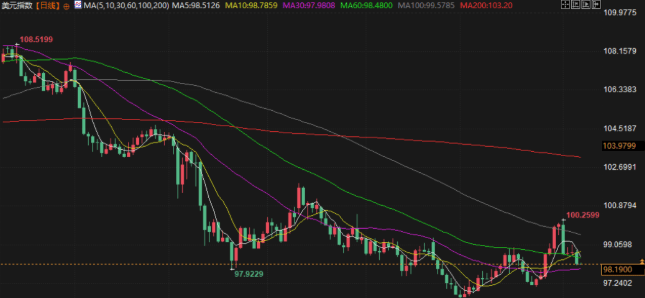
美元降息预期

Search documents
黄金和AI,谁是泡沫?
Sou Hu Cai Jing· 2026-02-02 08:39
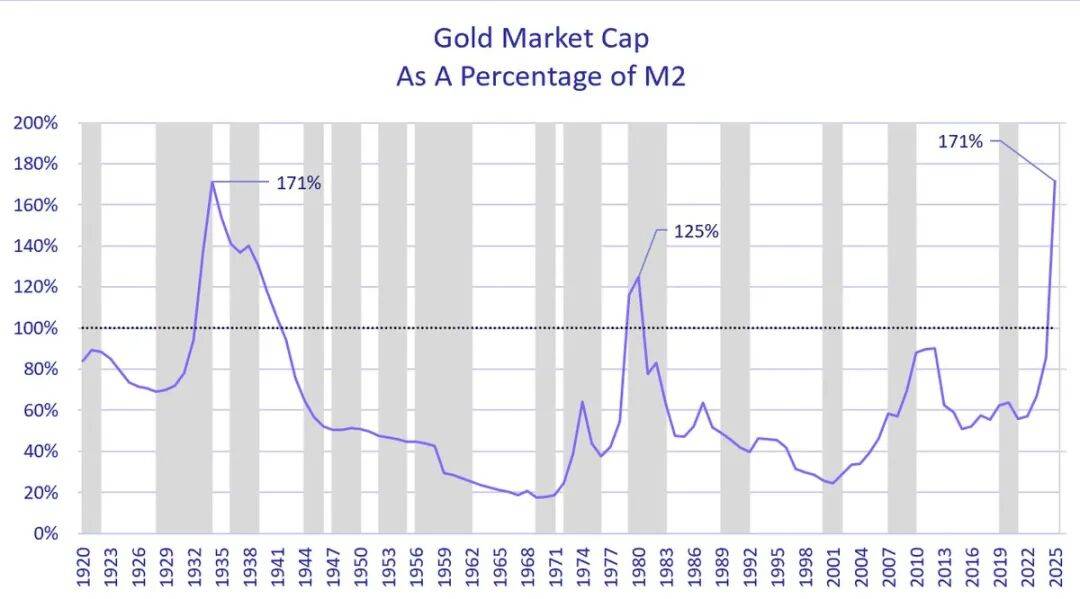
Group 1 - Recent significant decline in gold prices, with London gold dropping to $4,865.35 per ounce on January 31, marking a 9.45% decrease, the largest single-day drop in nearly 40 years [1] - As of February 2, London gold further decreased to $4,658.5 per ounce, down over 4% [1] - Cathie Wood, known as the "female Buffett," predicts an imminent bubble burst in gold, citing that gold's market value now exceeds historical highs relative to the U.S. money supply (M2) [2][4] Group 2 - The current U.S. economy differs significantly from the high inflation of the 1970s and the deflationary depression of the 1930s, with a decline in market inflation expectations as the 10-year U.S. Treasury yield fell from 5% to 4.2% [4][5] - Wood argues that the recent surge in gold prices is characteristic of a market cycle's end, predicting a strengthening dollar could lead to a significant drop in gold prices, similar to the 60% decline from 1980 to 2000 [6][7] Group 3 - Global central banks, particularly in emerging markets, are the primary buyers of gold, with a notable increase in demand, including a 225-ton increase by the People's Bank of China in 2023 [9][10] - Central banks have net purchased gold for 15 consecutive years, with annual purchases exceeding 1,000 tons from 2022 to 2024, driven by trends of "de-dollarization" and geopolitical risks [9][10] Group 4 - The argument against Wood's assessment highlights a critical flaw in using U.S. monetary supply metrics to evaluate a global reserve asset like gold [8][11] - Citigroup's assessment of historical gold allocation norms fails to account for the new geopolitical landscape, which includes high debt and fragmented global trade [12] Group 5 - The U.S. financial institutions' bearish stance on gold is influenced by their interests in maintaining dollar dominance, as increased gold holdings by central banks often come from selling U.S. debt [14][15] - The U.S. government and financial entities are likely to suppress gold prices to prevent any challenge to the dollar's status [22][23] Group 6 - Despite recent declines, the fundamental value of gold remains supported by expectations of U.S. interest rate cuts and geopolitical risk management [24][27] - Countries with strained relations with the U.S., such as China and Russia, continue to increase their gold reserves as a hedge against potential currency risks [28] Group 7 - The demand for physical gold is also driven by individuals seeking asset privacy and protection from government oversight in an era of advanced data tracking [29] - The comparison between gold and AI highlights that while both may experience fluctuations, their underlying market dynamics are fundamentally different, with AI showing tangible profit potential [30][32]

美元降息预期升温风险资产涨势延续:大类资产运行周报(20251201-20251205)-20251208
Guo Tou Qi Huo· 2025-12-08 14:17
1. Report Industry Investment Rating - Not provided in the content 2. Core Viewpoints of the Report - From December 1st to December 5th, the important data released by the US boosted the expectation of a US dollar interest rate cut. The Russia-Ukraine negotiations showed no significant progress. The US dollar index continued to decline weekly. Stocks and commodities rose, while the bond market declined. Overall, in US dollar terms, commodities > stocks > bonds [4][7]. - In China, the November RatingDog manufacturing PMI was 49.9, falling into the contraction range, and the November RatingDog service industry PMI was 52.1. Stocks and commodities rose, while the bond market declined. Overall, commodities > stocks > bonds [4][21]. - The Fed is likely to cut interest rates in December, and the market's focus will shift to the operation of the US dollar monetary policy next year. Attention should be paid to the overall performance of the Fed's interest rate - setting meeting this week [4][30]. 3. Summary According to the Directory Global Large - scale Asset Performance Global Stock Market Overview - From December 1st to December 5th, the market expected a high probability of a US dollar interest rate cut in December. Global major stock markets generally rose. The Asia - Pacific region led the gains, and emerging markets outperformed developed markets. The VIX index declined weekly [9]. - Specific stock market performance data for different regions are provided, such as the MSCI Asia - Pacific region rising 1.10% weekly, the South Korea Composite Index rising 4.42% weekly, etc. [12][13][14] Global Bond Market Overview - From December 1st to December 5th, the US November ADP employment decreased by 32,000. The September core PCE price index year - on - year met market expectations. Medium - and long - term US Treasury yields rose, with the 10 - year US Treasury yield rising 12BP weekly to 4.14%. The bond market declined weekly. Globally, high - yield bonds > credit bonds > government bonds [16]. Global Foreign Exchange Market Overview - From December 1st to December 5th, the US November ISM manufacturing index was 48.2, lower than expected and the previous value, and the November ISM service industry index was 52, better than expected and the previous value. The Bank of Japan governor signaled a possible interest rate hike, and the US dollar index declined weekly. Most major non - US currencies against the US dollar rose, and the RMB exchange rate fluctuated. The US dollar index fell 0.46% weekly [17]. Global Commodity Market Overview - The slow progress of the Russia - Ukraine negotiations led to a weekly rise in international oil prices. Supply - side disturbances drove up international copper and silver prices significantly. Major agricultural product prices declined, and non - ferrous metal prices generally rose [18]. Domestic Large - scale Asset Performance Domestic Stock Market Overview - During the domestic policy window period, the market sentiment was positive. A - share major broad - based indexes generally rose. The average daily trading volume of the two markets decreased compared with the previous week. The growth style performed better. Sectors such as non - ferrous metals and communications led the gains, while real estate and media performed poorly. The Shanghai Composite Index rose 0.37% weekly [22]. Domestic Bond Market Overview - From December 1st to December 5th, the central bank's open - market operations had a net withdrawal of 84.8 billion yuan. The capital market remained stable overall. The bond market was weak weekly. Overall, corporate bonds > credit bonds > government bonds [24]. Domestic Commodity Market Overview - The domestic commodity market rose weekly. Among major commodity sectors, precious metals led the gains, while the chemical industry performed poorly [26]. Large - scale Asset Price Outlook - The Fed is likely to cut interest rates in December, and the market's focus will shift to the operation of the US dollar monetary policy next year. Attention should be paid to the overall performance of the Fed's interest rate - setting meeting this week [30].
东海研究 | 资产配置:美元降息与日元加息预期,资产再平衡下寻找确定性
Xin Lang Cai Jing· 2025-12-08 12:27
Group 1: Global Asset Overview - Global stock markets mostly rose in the week of December 5, with A-shares performing relatively well [10] - Major commodity futures saw copper, crude oil, and aluminum prices increase, while gold prices declined [10] - The US dollar index fell slightly, leading to appreciation in non-US currencies [10] Group 2: Domestic Equity Market - In the week of December 5, the average daily trading volume was 16,843 billion yuan, down from 17,254 billion yuan [14] - Among the 31 primary industries, 17 rose while 14 fell, with the top gainers being non-ferrous metals (+5.35%), communications (+3.69%), and defense industry (+2.82%) [14] - The sectors with the largest declines included media (-3.86%), real estate (-2.15%), and beauty care (-2.00%) [14] Group 3: Interest Rates and Currency - Short-term liquidity turned ample at the beginning of the month, with the central bank increasing short-term reverse repos [17] - The sentiment in the bond market turned cautious, leading to a general rise in yields, particularly in long-term bonds [18] - The US dollar index fell, while the offshore RMB appreciated by 0.03% against the dollar [10][24] Group 4: Economic Data and Market Expectations - The upcoming week will focus on the Federal Reserve's monetary policy meeting, with a nearly 87% probability of a 25 basis point rate cut [9] - Key economic data to be released includes US job vacancies, UK GDP, and China's inflation data [9] - The market anticipates further rate cuts in 2026, with the potential for two to three additional cuts next year [7] Group 5: Commodity Tracking - As of December 5, WTI crude oil prices rose by 2.6% to $60.08 per barrel, with US crude production increasing by 302,000 barrels per day year-on-year [25] - Gold prices fell by 0.5% to $4,197.41 per ounce, with expectations of a Fed rate cut influencing market sentiment [31] - Copper prices increased by 3.6% week-on-week, with SHFE copper averaging 89,808 yuan per ton [37]

英镑暴涨近9.5!英国500年名校首招女生,凯特王妃国宴王冠藏大瓜
Sou Hu Cai Jing· 2025-12-05 16:36
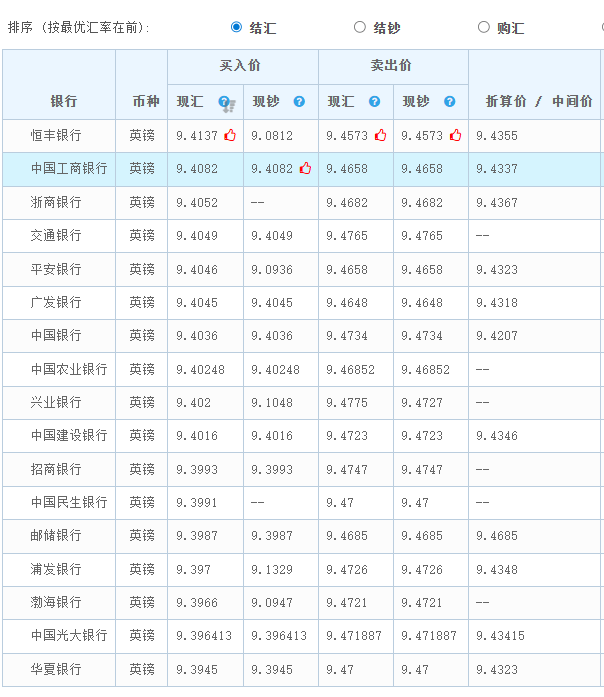
Currency Exchange - The British pound (GBP) has surged to a five-week high against the Chinese yuan (CNY), reaching a selling price of 9.47 CNY [3][10] - The exchange rate for GBP to USD is currently at 1.33, while it has risen to 1.14 against the euro, marking significant increases [3][6] Economic Factors - The rise in GBP is attributed to improved market expectations for UK economic growth following the announcement of the autumn budget policy, coupled with a weakening dollar due to anticipated interest rate cuts [10] Exchange Rate Strategies - Recommendations for currency exchange include a phased approach to avoid risk by spreading out currency exchanges over time and utilizing bank services to set target exchange rates for automatic transactions [12]
美元因降息预期下降而升至三个月高位
Sou Hu Cai Jing· 2025-11-04 13:11
Core Viewpoint - The US Dollar Index (DXY) has risen to a three-month high due to decreased market expectations for further immediate interest rate cuts by the Federal Reserve [1] Group 1: Federal Reserve Actions - The Federal Reserve lowered interest rates as expected last week, but Chairman Jerome Powell indicated that another cut in December is not guaranteed [1] - Analysts from Monex Europe noted that the lack of new negative news has kept market volatility low while maintaining strong demand for the dollar [1] Group 2: Market Conditions - The ongoing government shutdown in the US has led to missing official data, with the October employment report likely to be delayed [1] - The absence of adverse news has contributed to a stable market environment, supporting the dollar's strength [1]
商品的分化与权益的韧性 - 节后大类资产行情展望_
2025-10-09 02:00
Summary of Key Points from Conference Call Records Industry Overview - **AI Industry Trends**: Recent changes in the AI industry include price pressure on optical modules and declining profits for Oracle, which are significant variables affecting the sector. The performance of companies like Oracle and AMD highlights the competitive dynamics within the industry [1][2][3]. - **Market Performance**: The global capital market is currently performance-driven, with sectors like electronics and computing showing strong results, while traditional industries such as real estate are underperforming. The A-share market is characterized by extreme concentration, with the top 5% of companies accounting for over 45% of trading volume [1][2][3]. - **Gold Prices**: Gold prices are supported by expectations of a weaker dollar, but various factors, including global economic conditions and Federal Reserve policies, need to be monitored for future price movements [1][4][13]. Key Insights - **Sector Performance**: The electronics sector has seen a revenue growth rate of approximately 20%, the highest among all industries. In contrast, sectors like real estate and coal have shown poor performance [2][3]. - **AI Industry Leverage**: The AI industry exhibits a high degree of leverage, where small performance improvements can lead to significant market capitalization increases. Collaborations among major players like OpenAI, Nvidia, and Oracle are crucial for understanding market dynamics [1][8][9]. - **Copper Market Outlook**: The copper market is expected to remain bullish due to supply constraints and strong domestic consumption. The forecast for LME copper prices has been adjusted to $11,000 per ton, reflecting ongoing supply issues and demand growth [21][22][23]. Additional Considerations - **Market Concentration**: The A-share market's trading is excessively concentrated, indicating potential risks associated with market volatility driven by a few high-performing companies [2][3]. - **Investment Opportunities**: Beyond AI, sectors such as new consumption, innovative pharmaceuticals, and energy storage are identified as having significant investment potential in the medium to long term [15]. - **Global Economic Factors**: Political uncertainties and macroeconomic indicators are influencing market dynamics, with a focus on how these factors will affect risk assets and commodities like gold and copper [16][19][20]. Conclusion The conference call highlighted the significant shifts in the AI industry, the performance disparities across various sectors, and the implications of macroeconomic factors on investment strategies. The focus on high-performing sectors and the potential for future growth in emerging industries presents opportunities for investors to navigate the current market landscape effectively.
建信期货锌期货日报-20250912
Jian Xin Qi Huo· 2025-09-12 01:49
Report Information - Report Title: Zinc Futures Daily Report [1] - Date: September 12, 2025 [2] - Researcher: Zhang Ping, Peng Jinglin, Yu Feifei [3][4] Industry Investment Rating - Not provided Core View - The low PPI in the US since June has strengthened the expectation of interest rate cuts, leading to a decline in the US dollar. The main contract of Shanghai zinc closed at 22,250 yuan/ton, up 80 yuan or 0.36%, with increased volume and decreased positions. The domestic fundamental weakness remains unchanged, and it will take time for the consumer side to improve. The inflection point of social inventory reduction has not appeared, and Shanghai zinc fluctuates in the middle and lower tracks of the Bollinger Bands [7]. Summary by Directory 1. Market Review - US PPI hit a new low since June, strengthening the expectation of interest rate cuts and causing the US dollar to fall. The main contract of Shanghai zinc closed at 22,250 yuan/ton, up 80 yuan or 0.36%, with increased volume and decreased positions. The 09 - 10 spread was -65 yuan/ton. In August, the refined zinc output was 626,200 tons, a year-on-year increase of 28.7%. The refined zinc output in September was slightly adjusted down but is still expected to be above 600,000 tons. The logistics and production restrictions in North and Central China have been lifted, and the galvanizing start - up rate is expected to increase month - on - month. The inventory in Tianjin has decreased slightly, while the inventory in Shanghai and Guangdong has increased. The total social inventory of zinc ingots in seven regions has increased by 0.21 million tons to 15.42 million tons. LME zinc inventory has decreased by 200 tons to 50,825 tons. The concern about overseas refined zinc supply has caused a spot premium, and the 0 - 3B has strengthened to $23.01/ton, supporting LME zinc [7]. 2. Industry News - On September 11, 2025, the mainstream transaction price of 0 zinc was concentrated between 22,205 - 22,265 yuan/ton, and that of Shuangyan was between 22,325 - 22,385 yuan/ton. The mainstream transaction price of 1 zinc was between 22,135 - 22,195 yuan/ton. In the morning, the market quoted a premium of 30 - 40 yuan/ton over the SMM average price. In the second trading session, the ordinary domestic zinc was quoted at a discount of 20 yuan/ton to the 2510 contract, Honglu - v was at par with the 2510 contract, Huize was at a premium of 60 yuan/ton to the 2510 contract, and the high - end brand Shuangyan was at a premium of 100 yuan/ton to the 2510 contract [8]. - In the Ningbo market, the mainstream transaction price of 0 zinc was around 22,205 - 22,255 yuan/ton. The regular brands in Ningbo were quoted at a discount of 35 yuan/ton to the 2510 contract and at a premium of 30 yuan/ton to the Shanghai spot price. In the first trading period, Qilin was quoted at a premium of 10 yuan/ton to the 2510 contract, Anning was at a discount of 30 - 20 yuan/ton to the 2510 contract, Honglu - v was at par with the 2510 contract, and Jiulong was quoted at a discount of 10 yuan/ton to the 2510 contract for delivery [8]. - In the Tianjin market, the mainstream transaction price of 0 zinc ingots was between 22,150 - 22,240 yuan/ton, and that of Zijin was between 22,200 - 22,260 yuan/ton. The transaction price of 1 zinc ingots was around 22,110 - 22,170 yuan/ton, and the price of Huludao was 22,980 yuan/ton. The ordinary 0 zinc was quoted at a discount of 40 - 80 yuan/ton to the 2510 contract, and Zijin was at a discount of 20 - 30 yuan/ton to the 2510 contract. The Tianjin market was at a discount of about 20 yuan/ton compared to the Shanghai market [8]. - In Guangdong, the mainstream transaction price of 0 zinc was between 22,090 - 22,190 yuan/ton. The mainstream brands were quoted at a discount of 105 yuan/ton to the 2510 contract and at a discount of 40 yuan/ton to the Shanghai spot price. The price difference between Shanghai and Guangdong has widened [9]. 3. Data Overview - The report provides figures on the price trends of zinc in two markets, the SHFE monthly spread, the weekly inventory of SMM seven - region zinc ingots, and LME zinc inventory, with data sources including Wind and SMM, and the research and development department of Jianxin Futures [13][14]
大类资产运行周报:鲍威尔表态偏鸽,美元指数偏弱运行-20250825
Guo Tou Qi Huo· 2025-08-25 11:41
1. Report Industry Investment Rating - Not provided in the given content 2. Core Viewpoints of the Report - During the week from August 18th to 22nd, at the Jackson Hole Central Bank Annual Meeting, Federal Reserve Chairman Powell released a dovish signal, causing the expectation of a September US dollar interest rate cut to rise. The US and the EU reached an agreement on the trade agreement framework, and the US dollar index declined weekly. Globally, stocks were divided, while bonds and commodities rose, with commodities > bonds > stocks in terms of US - dollar - denominated performance. In China, the stock market rose, while the bond and commodity markets were weak, with stocks > bonds > commodities. Liquidity and policy expectations resonated, driving the rise of the domestic equity market. With the Fed releasing a rate - cut signal, the subsequent market sentiment changes should be monitored [3][6][20]. 3. Summary by Relevant Catalogs 3.1 Global Major Asset Overall Performance: Stocks Divided, Bonds and Commodities Rising - **Global Stock Market Overview**: Due to the uncertainty of the market regarding Powell's speech, the global stock market first declined and then rose. European stocks had the highest increase, and emerging markets underperformed developed markets. The VIX index continued to fluctuate at a low level. For example, MSCI Europe rose 1.42% weekly, while MSCI Asia - Pacific fell 0.56% [7][11][13]. - **Global Bond Market Overview**: Powell signaled a cautious US dollar interest rate cut. His statement made it difficult for Fed officials to reach a broad policy consensus. The yields of medium - and long - term US bonds generally declined, with the 10 - year US bond yield dropping 7BP to 4.26% weekly. Globally, credit bonds > high - yield bonds > government bonds [15]. - **Global Foreign Exchange Market Overview**: The preliminary value of the US Markit Manufacturing PMI in August was better than expected and the previous value. The expectation of a September interest rate cut led to a 0.12% weekly decline in the US dollar index. Major non - US currencies against the US dollar had mixed performances, and the RMB exchange rate was oscillating strongly [17]. - **Global Commodity Market Overview**: The expectation of a US dollar interest rate cut weakened the US dollar index, promoting the rise of the international commodity market. Major industrial products and agricultural products generally rose [19]. 3.2 Domestic Major Asset Performance: Stock Market Rising, Bond and Commodity Markets Weak - **Domestic Stock Market Overview**: The positive momentum of market risk appetite remained unchanged. Major broad - based A - share indexes generally rose, and the average daily trading volume of the two markets increased compared to the previous week. The growth style was more prominent, and the communication and electronics sectors had the highest increases, with the Shanghai Composite Index rising 3.49% weekly [21]. - **Domestic Bond Market Overview**: The central bank's net investment in the open - market operations was 126.52 billion yuan. The capital supply tightened, and the bond market declined weekly. Overall, corporate bonds > credit bonds > government bonds [23]. - **Domestic Commodity Market Overview**: The domestic commodity market declined weekly. Among major commodity sectors, the energy sector rose, while the black sector performed poorly. For example, the Nanhua Commodity Index fell 0.44% weekly [25]. 3.3 Major Asset Price Outlook - Pay attention to the sentiment changes in the domestic equity market. The resonance of liquidity and policy expectations drove the rise of the domestic equity market. Coupled with the Fed's rate - cut signal, monitor the subsequent market sentiment changes [26].
美元降息预期引爆套利交易,资本涌入高利率新兴市场货币
Hua Er Jie Jian Wen· 2025-08-11 08:42
Core Insights - The return of carry trades is driven by expectations of Federal Reserve rate cuts, a weaker dollar, and higher interest rates in emerging markets [1][2][3] - Significant inflows into emerging market bonds have been observed, with a weekly inflow of $1.7 billion as of August 6 [1] - Eighteen out of twenty-three major emerging market currencies have appreciated against the dollar this year, indicating a favorable environment for investments in these markets [1] Group 1: Carry Trade Dynamics - Carry trade involves borrowing in low-interest currencies (like the dollar) and investing in high-interest currencies (like those in Brazil and Mexico) to earn interest rate differentials [2] - The attractiveness of carry trades has increased due to weak U.S. employment data, which has fueled expectations for a Fed rate cut, thereby reducing the cost of borrowing in dollars [3] - Emerging market central banks are maintaining or raising interest rates to combat inflation, with Brazil's rate at 15% and Colombia's at 9.25%, creating significant interest rate differentials [3] Group 2: Market Conditions - Reduced market volatility has made carry trades less risky, with the gap in expected volatility between emerging market currencies and G10 currencies at a 12-year high [3] - Latin American currencies are particularly benefiting from carry trades, with a carry yield of 3.7%, compared to 1.1% in Europe and Africa, and -1.1% in Asia [4] - Investors are showing increased bullish sentiment towards the Mexican peso, with leveraged funds' bullish bets reaching a one-year high following the central bank's decision to slow down monetary easing [4] Group 3: Future Considerations - While the current environment favors carry trades, some investors are locking in profits due to concerns over potential economic impacts from U.S. tariff policies and upcoming inflation data releases [4]
DLSM外汇:美元持续走软,降息预期是否已全面反映市场?
Sou Hu Cai Jing· 2025-08-07 09:52
Group 1 - The recent trend of a weakening US dollar has become more pronounced, particularly after July's employment data fell short of expectations, leading to increased market bets on interest rate cuts by the Federal Reserve this year [1][3] - The US dollar index dropped by 0.56%, reaching a new low since the end of July, reflecting deepening investor concerns about the US economic outlook [1][3] - The weak labor market and poor performance in Treasury bond auctions are contributing factors to the dollar's decline, indicating growing economic pressures [1][3] Group 2 - July's employment growth in the US was below expectations, and previous months' non-farm payroll data was significantly revised down, acting as a catalyst for shifting market expectations towards monetary easing [3] - The euro has emerged as the biggest beneficiary of the dollar's adjustment, with the euro to dollar exchange rate rising to 1.1662, the highest in nearly a week, due to a relatively stable policy path from the European Central Bank [3][4] - The Japanese yen has weakened, falling below 147 yen to the dollar, as concerns about US tariffs impact Japan's economy, suggesting a cautious stance from the Bank of Japan regarding interest rate decisions [3][4] Group 3 - Switzerland is actively pursuing a trade agreement with the US to avoid high tariffs on exports, which has positively influenced the Swiss franc despite a slight decline against the dollar [4] - The current weakening of the dollar reflects changes in economic fundamentals and market adjustments to the Federal Reserve's future policy path [4] - Future economic data and geopolitical developments will continue to evolve, necessitating close monitoring of Federal Reserve statements and global macro events that influence market sentiment [4]