黄金泡沫

Search documents
金价一度大跌1000美元!金店被挤爆 有人买入近1斤 有人卖金还房贷 “木头姐”精准“预言”大跌:黄金是泡沫 美元一涨就会破
Mei Ri Jing Ji Xin Wen· 2026-02-02 16:52
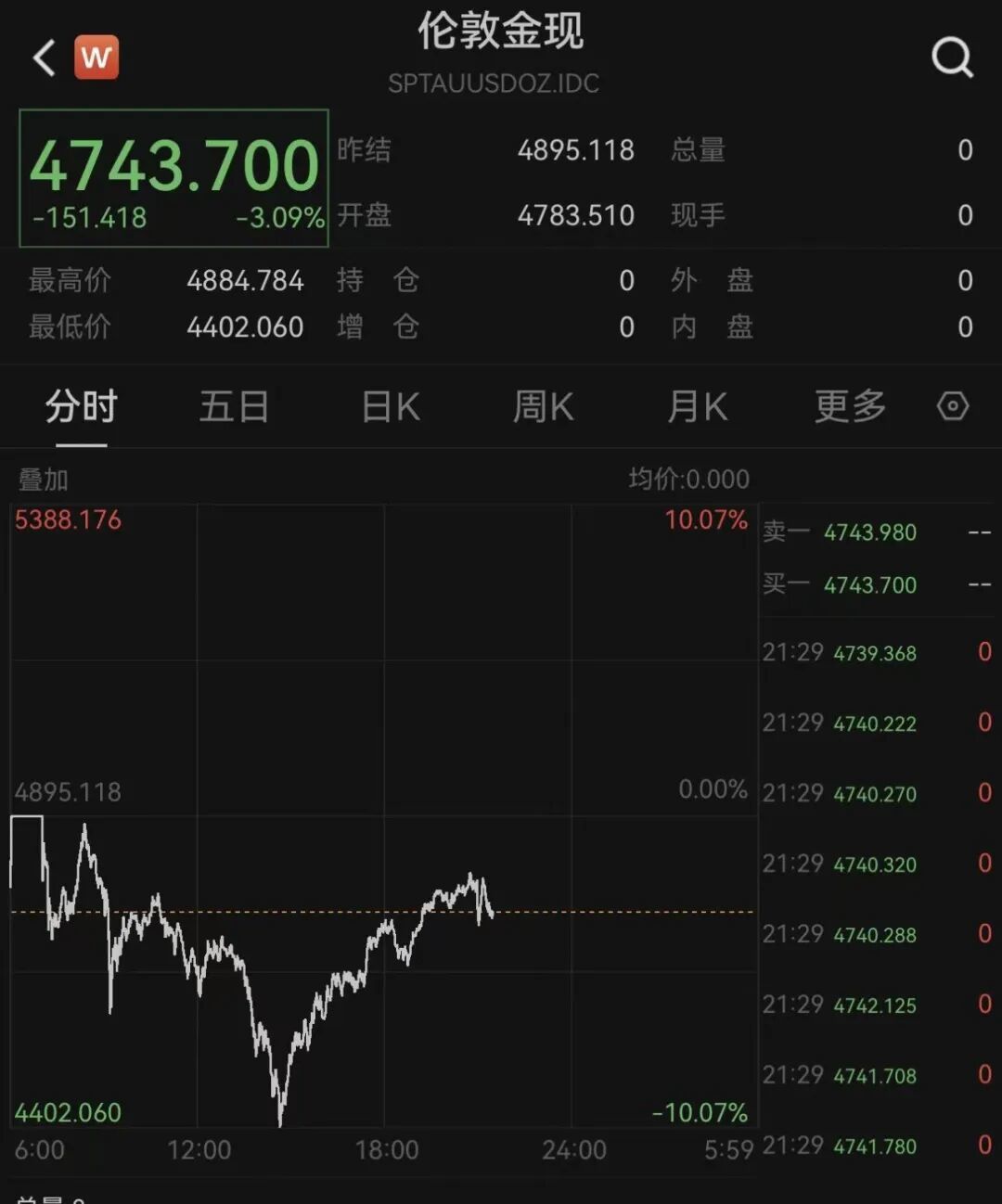
Group 1 - International gold prices experienced a significant drop, with spot gold falling by 10% to $4,402 per ounce, marking a new low since January 8, and a three-day decline exceeding 20% [1] - Spot silver prices also plummeted over 16% to $71.31 per ounce, with a three-day drop reaching 40%, nearly erasing January's gains [1] - The recent decline in precious metals was triggered by the nomination of Kevin Warsh as the next Federal Reserve Chairman, leading to a reassessment of the outlook for the dollar and dollar assets [1][2] Group 2 - Cathie Wood, a prominent fund manager, suggested that gold prices are nearing a peak, indicating a potential bubble, and highlighted the historical correlation between a strong dollar and falling gold prices [2] - Robin Brooks, a senior researcher, warned that the recent gold bubble was primarily driven by retail purchases, similar to previous market bubbles [4] - The surge in gold prices has led to increased consumer activity, with many individuals rushing to sell gold for cash, reflecting a shift in market sentiment [5][6] Group 3 - Major banks, including China Merchants Bank and Postal Savings Bank, have issued risk warnings regarding the volatility in precious metal prices, adjusting margin requirements for gold and silver trading [9][11] - The "Zhaocai Gold" business of China Merchants Bank, which facilitates individual participation in gold trading, has seen adjustments in its operations due to market fluctuations [11] - Analysts predict that gold prices will experience significant volatility in the short term, advising investors to wait for market stabilization before making new investments [13][14]

金价一度大跌1000美元!金店被挤爆:有人买入近1斤,有人卖金还房贷
Mei Ri Jing Ji Xin Wen· 2026-02-02 14:13
Core Viewpoint - The recent sharp decline in international gold and silver prices has raised concerns about a potential bubble in the precious metals market, driven by speculative buying and changes in monetary policy expectations following the nomination of Kevin Warsh as the next Federal Reserve Chair [4][20]. Price Movements - On February 2, international spot gold prices fell by 10% to $4,402 per ounce, marking a new low since January 8, with a three-day decline exceeding 20% and a drop of over $1,000 from the January 29 peak [1][4]. - International spot silver prices dropped over 16% to $71.31 per ounce, with a three-day decline reaching 40%, nearly erasing January's gains [1][4]. Market Reactions - The significant price drop on January 30 was attributed to a sudden reassessment of the dollar and dollar-denominated assets, leading to the largest single-day decline in gold prices since the early 1980s, with a total market value loss of $7.4 trillion [4][7]. - Retail interest in gold surged, with reports of long queues at gold shops for selling and buying, indicating a strong consumer response to the price fluctuations [9][10]. Institutional Insights - Analysts have warned of a "gold bubble," suggesting that recent price movements were largely driven by retail investors, similar to previous market bubbles [7]. - Major banks, including China Merchants Bank and Postal Savings Bank, have issued risk warnings regarding the volatility in precious metal prices, adjusting margin requirements for gold and silver trading [12][13][14]. Future Outlook - Industry experts predict continued volatility in gold prices, advising investors to wait for stabilization before making significant purchases, while maintaining a long-term bullish outlook on gold due to underlying economic factors [19][20].


金价一度大跌1000美元!金店被挤爆,有人买入近1斤,有人卖金还房贷,“木头姐”精准“预言”大跌:黄金是泡沫,美元一涨就会破
Mei Ri Jing Ji Xin Wen· 2026-02-02 13:53
Group 1: Market Overview - International gold prices experienced a significant drop, falling by 10% to $4,402 per ounce, marking a new low since January 8, with a three-day decline exceeding 20% and a drop of over $1,000 from the January 29 peak [1] - International silver prices also saw a sharp decline, dropping over 16% to $71.31 per ounce, with a three-day decline reaching 40%, nearly erasing January's gains [1] - As of the latest update, gold and silver prices narrowed their declines, with gold down 3.09% and silver down 5.8% [1] Group 2: Market Drivers - The recent decline in precious metals began after the nomination of Kevin Warsh as the next Federal Reserve Chair, prompting a reassessment of the outlook for the dollar and dollar-denominated assets [4] - The market experienced its largest single-day drop since the early 1980s, with a total market value loss of $7.4 trillion [4] - Cathie Wood, a prominent fund manager, indicated that gold prices might be nearing a peak, suggesting that the current bubble is in gold rather than artificial intelligence [4] Group 3: Investor Behavior - There has been a surge in retail investors buying and selling gold, with reports of long queues at gold shops in Beijing as people rush to sell their gold for cash [10][11] - Many individuals are looking to liquidate their gold holdings to pay off debts or invest in other opportunities, reflecting a shift in consumer sentiment towards gold [10][11] - Banks have reported that physical gold bars are sold out due to increased demand from investors [11] Group 4: Risk Management - Banks like China Merchants Bank and Postal Savings Bank have issued risk warnings regarding the volatility in precious metal prices, adjusting margin requirements for gold and silver trading [12][14] - The adjustments include increasing the margin ratio from 60% to 70% for certain gold and silver contracts, indicating a proactive approach to managing market risks [12][14] Group 5: Future Outlook - Analysts predict that gold prices will experience significant volatility in the short term, advising investors to wait for market stabilization before making new investments [16] - The fundamental support for gold prices remains intact, driven by a weak dollar and declining trust in U.S. debt and dollar assets, suggesting a potential for long-term price recovery [16] - The market is expected to fluctuate around the $5,000 per ounce mark, with ongoing demand for gold as a safe-haven asset [17]
黄金和AI,谁是泡沫?
Sou Hu Cai Jing· 2026-02-02 08:39
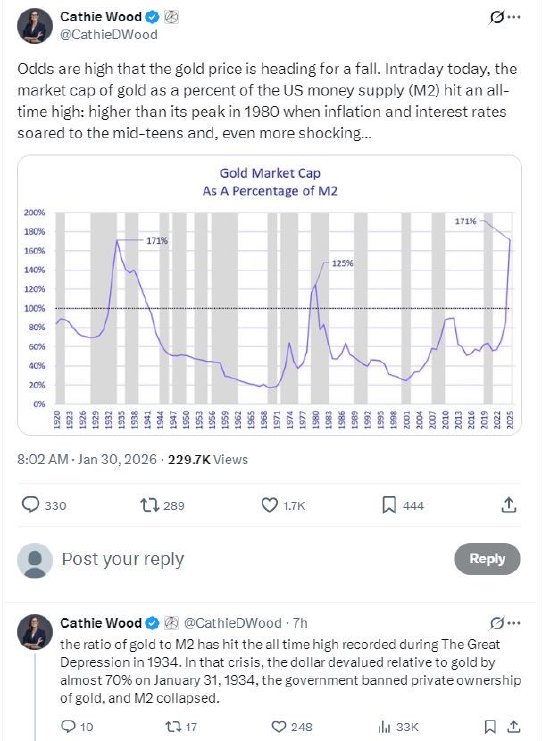
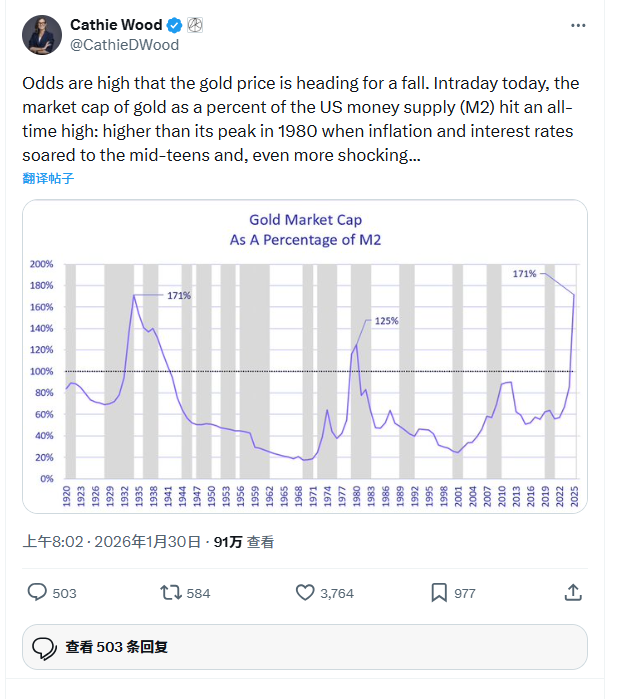
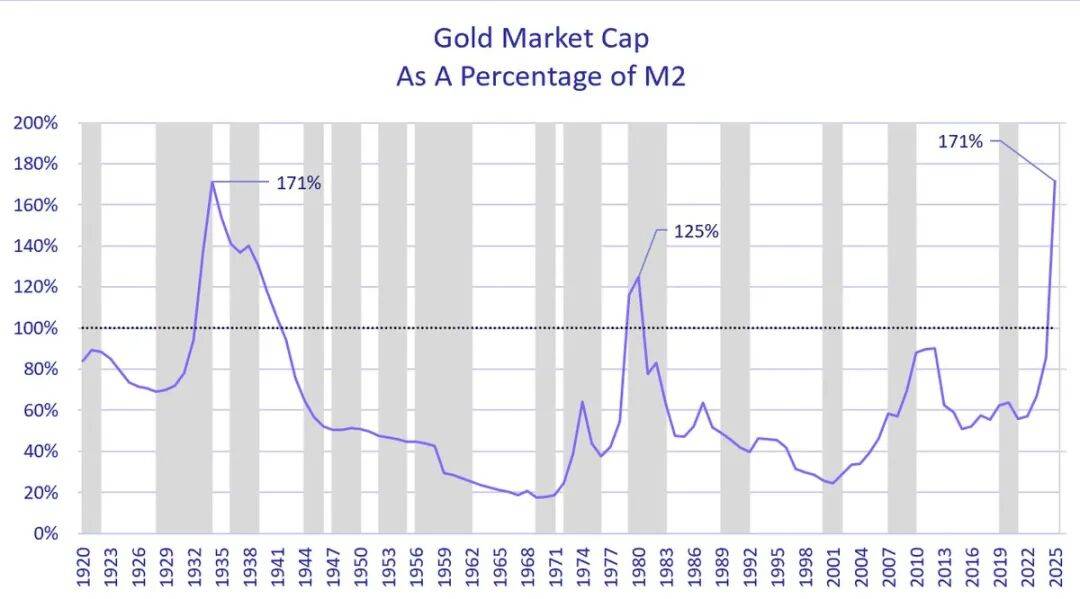
Group 1 - Recent significant decline in gold prices, with London gold dropping to $4,865.35 per ounce on January 31, marking a 9.45% decrease, the largest single-day drop in nearly 40 years [1] - As of February 2, London gold further decreased to $4,658.5 per ounce, down over 4% [1] - Cathie Wood, known as the "female Buffett," predicts an imminent bubble burst in gold, citing that gold's market value now exceeds historical highs relative to the U.S. money supply (M2) [2][4] Group 2 - The current U.S. economy differs significantly from the high inflation of the 1970s and the deflationary depression of the 1930s, with a decline in market inflation expectations as the 10-year U.S. Treasury yield fell from 5% to 4.2% [4][5] - Wood argues that the recent surge in gold prices is characteristic of a market cycle's end, predicting a strengthening dollar could lead to a significant drop in gold prices, similar to the 60% decline from 1980 to 2000 [6][7] Group 3 - Global central banks, particularly in emerging markets, are the primary buyers of gold, with a notable increase in demand, including a 225-ton increase by the People's Bank of China in 2023 [9][10] - Central banks have net purchased gold for 15 consecutive years, with annual purchases exceeding 1,000 tons from 2022 to 2024, driven by trends of "de-dollarization" and geopolitical risks [9][10] Group 4 - The argument against Wood's assessment highlights a critical flaw in using U.S. monetary supply metrics to evaluate a global reserve asset like gold [8][11] - Citigroup's assessment of historical gold allocation norms fails to account for the new geopolitical landscape, which includes high debt and fragmented global trade [12] Group 5 - The U.S. financial institutions' bearish stance on gold is influenced by their interests in maintaining dollar dominance, as increased gold holdings by central banks often come from selling U.S. debt [14][15] - The U.S. government and financial entities are likely to suppress gold prices to prevent any challenge to the dollar's status [22][23] Group 6 - Despite recent declines, the fundamental value of gold remains supported by expectations of U.S. interest rate cuts and geopolitical risk management [24][27] - Countries with strained relations with the U.S., such as China and Russia, continue to increase their gold reserves as a hedge against potential currency risks [28] Group 7 - The demand for physical gold is also driven by individuals seeking asset privacy and protection from government oversight in an era of advanced data tracking [29] - The comparison between gold and AI highlights that while both may experience fluctuations, their underlying market dynamics are fundamentally different, with AI showing tangible profit potential [30][32]
【UNforex财经事件】美元与利率同步走强 黄金在主席提名冲击下剧烈回调
Sou Hu Cai Jing· 2026-02-02 05:24
Core Viewpoint - The nomination of Kevin Walsh as the next Federal Reserve Chairman has led to significant market reactions, including a stronger dollar and rising long-term U.S. Treasury yields, while gold prices have experienced notable declines, raising discussions about a potential "gold bubble" [1] Group 1: Market Reactions - Following Walsh's nomination, the market quickly adjusted its expectations regarding future monetary policy, interpreting Walsh's critical stance on the Fed's balance sheet as a signal for tightening [1] - The dollar strengthened and long-term U.S. Treasury yields increased, putting pressure on precious metals, with gold prices dropping below $4,800 per ounce [1] - Gold's recent price volatility reflects a significant release of profit-taking from high levels, with a nearly historical daily decline observed on January 30 [1] Group 2: Valuation Concerns - Prior to the gold price fluctuations, concerns about gold's valuation were already emerging, with Cathie Wood of Ark Invest noting that the ratio of gold's market cap to the U.S. M2 money supply has reached extreme levels not seen since the Great Depression, indicating a potential trend reversal [2] - Wood emphasized that the current macroeconomic environment does not support such high gold valuations, especially if the dollar enters a recovery phase, which would exert further pressure on gold prices [2] - Robin Brooks, a senior researcher at Brookings, echoed similar sentiments, suggesting that the recent price increases in precious metals are primarily driven by retail trading rather than institutional investment, indicating bubble-like characteristics [2] Group 3: Future Policy Outlook - As gold prices retreat, the market is reassessing potential policy combinations from the Federal Reserve, with Walsh's framework prioritizing balance sheet reduction, which could tighten financial conditions and create upward pressure on long-term rates [3] - Analysts noted that if the Fed reduces support for the bond market, long-term rates may rise, structurally constraining gold and other non-yielding assets [3] - Despite Walsh's nomination, it is important to note that he holds only one vote on the Federal Open Market Committee, and significant policy shifts are unlikely in the short term, although uncertainty around policy has increased [3] Group 4: Overall Market Sentiment - The nomination of Walsh has prompted a reevaluation of the Fed's future policy direction, serving as a key trigger for gold's decline from recent highs [4] - In an environment of a stabilizing dollar and rising rate expectations, the previous logic of gold's unilateral rise is being reconsidered [4] - The interplay of policy uncertainty, market sentiment, and macroeconomic data is expected to maintain high volatility in precious metals and risk assets in the short term, with market pricing shifting towards a more cautious balance [4]
跌麻了!沃什风暴,金银“失血休克”
Ge Long Hui A P P· 2026-02-02 04:18
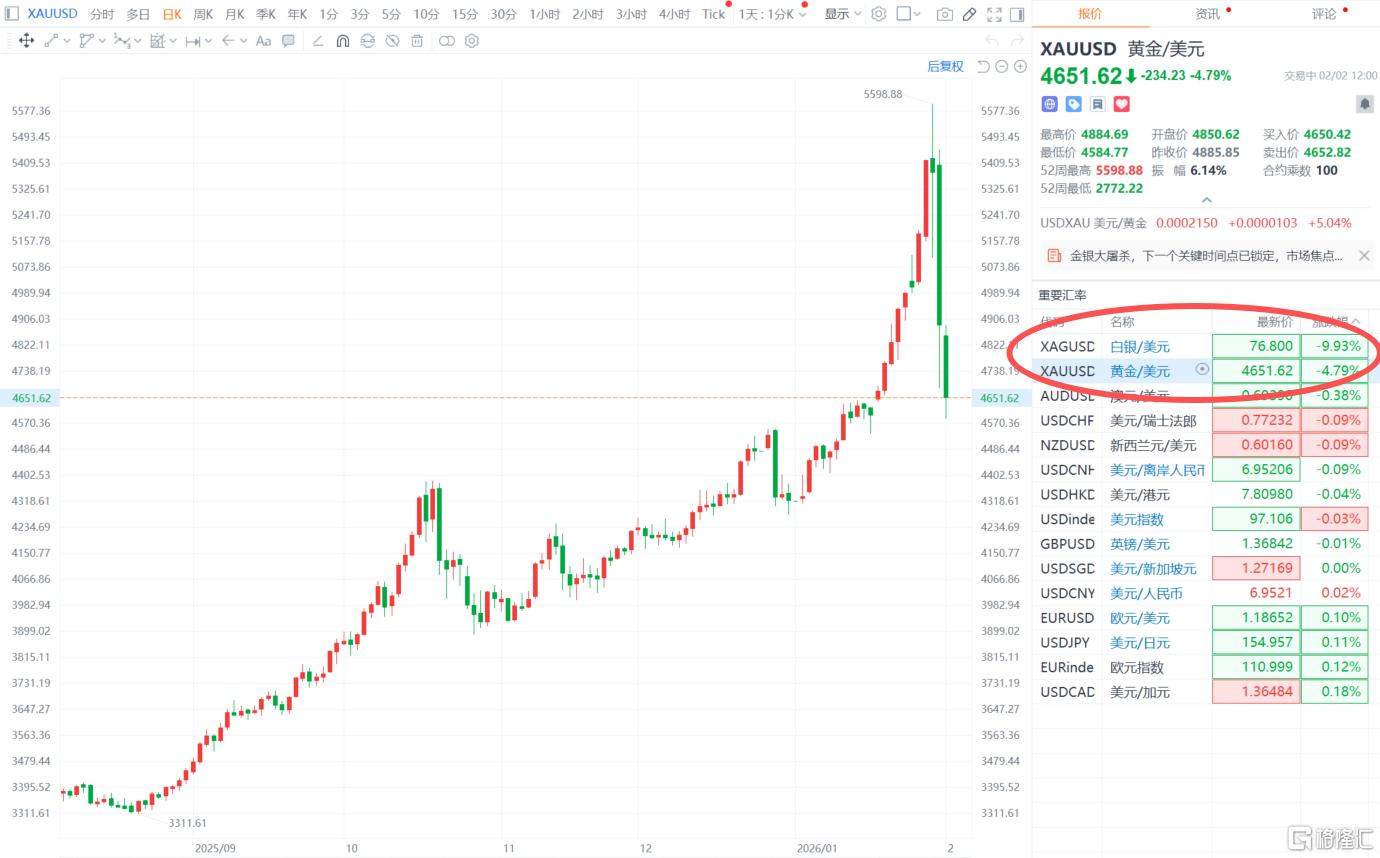
Group 1 - The core viewpoint of the article highlights a significant decline in gold and silver prices, with gold dropping over 6% to below $4600 per ounce, marking a decline of over $1000 from its historical high of $5598.88 per ounce set on January 29, representing the largest single-day drop in nearly 40 years [1][9][10] - Silver prices also experienced a sharp decline, with spot silver falling below $77 at one point, and later reported to be down over 9% to $76.8 per ounce [2][3] - Futures markets showed widespread declines, with various precious metals such as silver, platinum, and palladium hitting their daily limit down, and gold futures dropping over 11% [5][6] Group 2 - The article describes the "Walsh Storm" as a catalyst for the extreme market panic, with silver prices plummeting by 26% and gold by 9% on a single day, marking the worst performance in a decade [9][10] - The appointment of the hawkish Walsh as the Federal Reserve Chair led to a cooling of interest rate cut expectations, resulting in a strong dollar and a rapid reversal of the bullish trend in precious metals [10][11] - Major exchanges have responded to the volatility by raising margin requirements for gold and silver trading, indicating a tightening of market conditions [15][16] Group 3 - The article raises concerns about a potential bubble in the gold market, with warnings from analysts that the recent surge in gold prices may be speculative and could lead to a significant price correction [19][20][21] - Citigroup has cautioned that gold valuations have reached extreme levels, with global gold expenditure as a percentage of GDP hitting a 55-year high, suggesting a risk of a price halving if the allocation returns to historical norms [23][24] - Despite the bearish outlook, some analysts believe that the fundamental support for gold remains strong due to ongoing currency devaluation and geopolitical risks, suggesting a complex market environment [26][28]
金价“大跳水”?两大投资大佬:黄金才是泡沫而非AI 美元一涨就会破!
Sou Hu Cai Jing· 2026-02-02 02:31
Core Viewpoint - The recent surge in gold prices is viewed as a speculative bubble that is likely to burst, as indicated by Cathie Wood, the CEO of Ark Invest, based on historical valuation metrics and macroeconomic conditions [2][3]. Group 1: Gold Price Dynamics - Gold prices experienced a significant drop, with spot and futures gold falling below $4,800 per ounce after the nomination of Kevin Warsh as the new Federal Reserve Chairman [2]. - On January 30, gold prices plummeted by 12% to below $5,000, marking the largest single-day decline since the early 1980s [2]. Group 2: Historical Context and Valuation - Wood argues that the recent rise in gold prices is not indicative of economic stability but rather a typical "parabolic volatility" seen at the end of cycles [4]. - The market capitalization of gold relative to the U.S. money supply (M2) has reached its highest level since the Great Depression, exceeding the peak seen in 1980 during a period of rampant inflation and soaring interest rates [4][6]. Group 3: Bubble Warning - Wood warns that the current situation represents a "gold bubble," where parabolic price movements often signal a trend reversal [7]. - She emphasizes that while such volatility can push asset prices to unexpected heights, it typically occurs at the end of a cycle [7]. Group 4: Macroeconomic Environment - The macroeconomic environment does not support high valuations for gold, contrasting sharply with the inflationary periods of the 1970s and the deflationary Great Depression [10]. - Despite strong demand for gold, the bond market remains stable, with the 10-year U.S. Treasury yield peaking at 5% by the end of 2023 and currently at 4.2%, indicating that financial conditions are not at crisis levels [10]. Group 5: Implications of Dollar Strength - Both Wood and Robin Brooks, a senior fellow at the Brookings Institution, warn that if the dollar strengthens, the recent dramatic rise in gold prices could face a severe and painful reversal [11].
黄金涨势骤缓 市场热议“泡沫”与未来走向
Jin Tou Wang· 2026-02-01 00:17
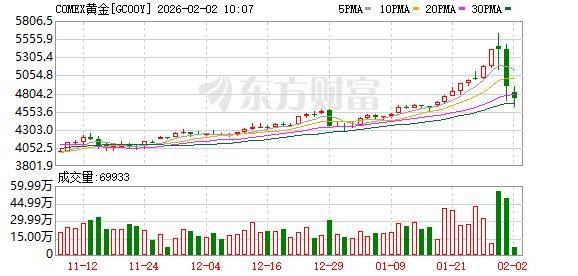
Core Viewpoint - The gold market has shown signs of volatility and correction after a rapid increase in prices, with gold rising from $5000 to $5500 per ounce in just three days, followed by a sharp decline below $5000 [1] Group 1: Market Sentiment - Despite recent volatility, optimistic views remain strong, with UBS raising its gold price target to $6200 per ounce, while Deutsche Bank and Goldman Sachs forecast prices between $5400 and $6000 [1] - The bullish outlook is supported by ongoing geopolitical risks, strong demand from central banks and ETFs, and a supply-demand imbalance, with a projected net demand increase of approximately 965 tons from 2022 to 2026, while supply is expected to rise by only about 479 tons [1] Group 2: Cautionary Perspectives - Rational viewpoints warn that current gold prices may contain speculative bubbles, with a significant portion of the recent price surge attributed to leveraged speculation [2] - The core driver of the recent gold price increase, expectations of Federal Reserve interest rate cuts, is believed to be nearing its peak, with 2026 potentially being a critical turning point for market dynamics [2] Group 3: Technical Analysis - The gold market has experienced significant fluctuations, with a monthly increase of approximately $1300, followed by a rapid decline of nearly $800 in the last two trading days of the month [3] - A long upper shadow on the monthly candlestick indicates a technical need for correction, with key support levels identified at approximately $4550 and $4310, where a breakdown could lead to further declines of up to $1000 [3] - Current market sentiment shows significant divergence, suggesting a cautious approach is advisable, with key resistance levels at $5030, $5150, $5240, and $5370, and support levels at $4700, $4600, and $4310 [3]
别慌,这次不一样!专家解析黄金、白银史诗级暴跌背后
凤凰网财经· 2026-01-31 07:04
Core Viewpoint - The recent sharp decline in gold and silver prices is attributed to a combination of previous rapid price increases and a market correction in liquidity expectations triggered by the news of Kevin Warsh's potential nomination as the next Federal Reserve Chair [2][4]. Group 1: Market Dynamics - Gold and silver experienced significant price drops, with gold seeing its largest single-day decline in nearly 40 years, falling over 12%, while silver recorded a historic drop exceeding 36% [1][2]. - The market's previous bullish sentiment was fueled by geopolitical tensions and uncertainties regarding the global monetary system, leading to a rapid price increase in precious metals [4][6]. - The nomination of Kevin Warsh is perceived as a hawkish move, which could slow down the Federal Reserve's liquidity release, causing market participants to reassess their positions and leading to a sharp correction [4][6]. Group 2: Price Behavior and Market Sentiment - The disparity in price movements between gold and silver is attributed to their differing market characteristics; gold has central banks as core buyers, providing price support, while silver is more speculative and lacks such stable purchasing power [6][8]. - Despite the recent downturn, the overall bubble in gold has not burst; it is viewed as a phase of adjustment rather than a complete collapse [7][8]. - The current market dynamics are compared to historical events, but the underlying drivers of the recent price increases are fundamentally different, focusing on global monetary uncertainty rather than a fixed price regime [9][10]. Group 3: Investment Strategies - Investors are advised to avoid chasing prices and instead maintain a balanced asset allocation, particularly in gold, which should constitute a fixed percentage of their portfolio [11][12]. - A "reverse operation" strategy is recommended, where investors sell gold at high prices and buy back at lower prices to maintain a target allocation, thus mitigating risks associated with market volatility [11][12]. - The importance of patience in investment is emphasized, as achieving long-term value requires time, and market fluctuations should be approached with caution to avoid impulsive decisions [13][14].

“木头姐”警告:真正的泡沫不是AI是黄金,美元上涨将戳破泡沫
Xin Lang Cai Jing· 2026-01-30 07:58
Group 1 - The founder of Ark Investment Management, Cathie Wood, warns about the bubble risk in gold, stating that the likelihood of a decline in gold prices is high [1][4] - The market capitalization of gold as a percentage of the U.S. money supply (M2) has reached a historical high, surpassing the peak in 1980, and is at its highest level since the Great Depression in 1934 [1][4] - In 1934, the U.S. dollar depreciated by nearly 70% against gold, and the government prohibited private ownership of gold while M2 significantly shrank [1][4] Group 2 - The current U.S. economy is markedly different from the high inflation period of the 1970s or the deflationary depression of the 1930s, with foreign central banks reducing their reliance on the dollar [3][5] - The yield on the 10-year U.S. Treasury bond peaked at 5% at the end of 2023 but has since decreased to 4.2% [3][5] - Wood believes that the current bubble is not in artificial intelligence but in gold, suggesting that a rise in the dollar could burst this bubble, similar to the period from 1980 to 2000 when gold prices fell over 60% [4][5]