资本市场结构转型

Search documents
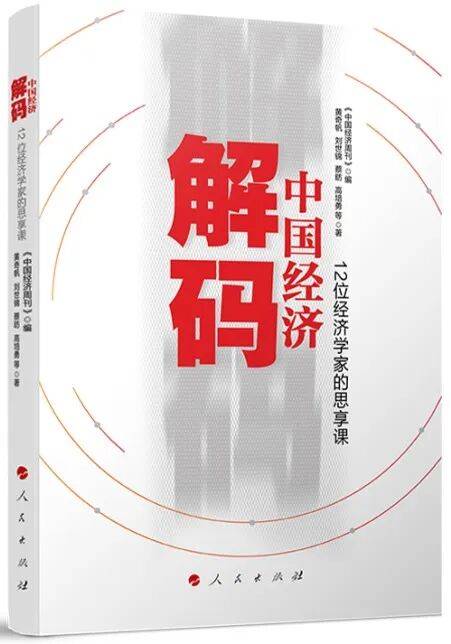
解码中国经济:12位经济学家的思享课 | 新书速递2025年12月第3期
Sou Hu Cai Jing· 2025-12-19 09:35
Core Viewpoint - The book "Decoding China's Economy: Insights from 12 Economists" aims to address fundamental questions regarding the future of China's economy, focusing on confidence, resilience, and vitality [3]. Group 1: Economic Analysis - The book is structured into twelve lectures, each led by a prominent economist, covering key areas of macroeconomics [3]. - Huang Qifan discusses new characteristics and tasks of China's opening-up, emphasizing the necessity of constructing a new development pattern [4]. - Liu Shijin highlights that the primary reason for the slowdown in economic growth is insufficient demand, advocating for consumption expansion through source governance and institutional development [4]. - Cai Fang addresses the challenges of declining birth rates and aging population, suggesting the creation of a family-friendly society and improvement of population development strategies [4]. - Gao Peiyong analyzes local fiscal issues, asserting that enhancing local fiscal autonomy is essential for implementing proactive fiscal policies [4]. - Wu Xiaoqiu points out that China's capital market is undergoing structural transformation and significant institutional changes, stressing that stabilizing the capital market is crucial for development confidence and expectations [4]. Group 2: Policy Recommendations - The book discusses various macroeconomic topics, including boosting consumption, developing new productive forces, and advancing the "AI+" initiative, while linking theoretical analysis with practical examples [5]. - The authors provide new research findings rather than rehashing old content, ensuring the book's authority and timeliness [5]. - The content balances professional depth with readability, addressing complex issues like tax-sharing systems and capital market transformations alongside case studies in cultural and digital economies [5]. - The collective insights from top economists reflect mainstream judgments on core policy issues in China's economic landscape, serving as a window into the evolving official economic thought [6].