资本纪律与回报率审查

Search documents
Exness: 货币正常化与AI资本开支周期的碰撞
Sou Hu Cai Jing· 2025-12-12 07:19
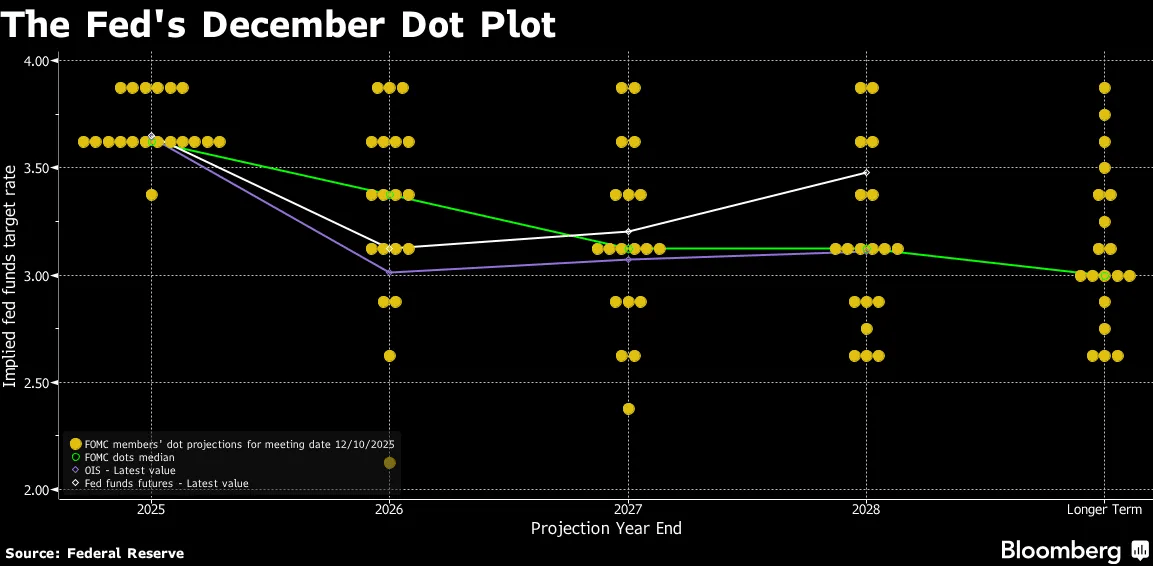
Group 1: Federal Reserve and Market Implications - The Federal Reserve lowered the federal funds rate target range by 25 basis points to 3.50%-3.75%, marking the third rate cut since September, but the accompanying economic projections and Powell's comments conveyed a hawkish tone regarding future rate paths [1] - The updated dot plot indicates that the median rate expectation for the end of 2026 remains at 3.25%-3.5%, suggesting limited room for further rate cuts in the coming year [1] - Higher terminal rates imply that discount rates will not decline as quickly as previously expected, which could create a valuation ceiling for high-growth tech stocks [3] Group 2: Nasdaq 100 Index and Liquidity Factors - The Fed's decision to end quantitative tightening (QT) and initiate a new plan to purchase $40 billion in Treasury Bills monthly is expected to inject significant liquidity into the market, which historically correlates positively with the Nasdaq 100 index [4][5] - This monthly liquidity increase translates to nearly $500 billion annually, providing a supportive environment for tech stocks by lowering short-term financing costs [5] - The Fed's dual approach of suppressing irrational valuation bubbles through rate guidance while injecting liquidity helps create a more stable trading environment for tech stocks [5] Group 3: Oracle's Financial Performance and AI Investment Cycle - Oracle's recent earnings report revealed a stark contrast between a 438% year-over-year increase in remaining performance obligations (RPO) and quarterly revenue of $16.06 billion, which fell short of market expectations [10] - This discrepancy highlights the physical bottlenecks in AI infrastructure, indicating that while demand is strong, supply constraints may hinder revenue realization [10] - Oracle's capital expenditures surged to $20.5 billion over the past six months, leading to negative free cash flow, raising concerns about the sustainability of its growth model in a higher interest rate environment [11] Group 4: Market Dynamics and Future Outlook - The Nasdaq 100 index's valuation is currently based on expectations of flawless AI execution, but Oracle's case illustrates the uncertainties in execution and the challenges posed by high capital expenditures [12] - The transition to a higher interest rate environment necessitates a focus on cash flow generation, shifting investor preferences from PEG ratios to free cash flow yield as a key valuation metric [11][12] - The market is expected to experience a divergence, favoring companies that demonstrate strong capital discipline and cash flow conversion capabilities in a high-rate environment [12]