起点收入

Search documents
28年有金融危机?我倒觉得你躺平拿钱的年代要来了
3 6 Ke· 2026-02-27 02:33
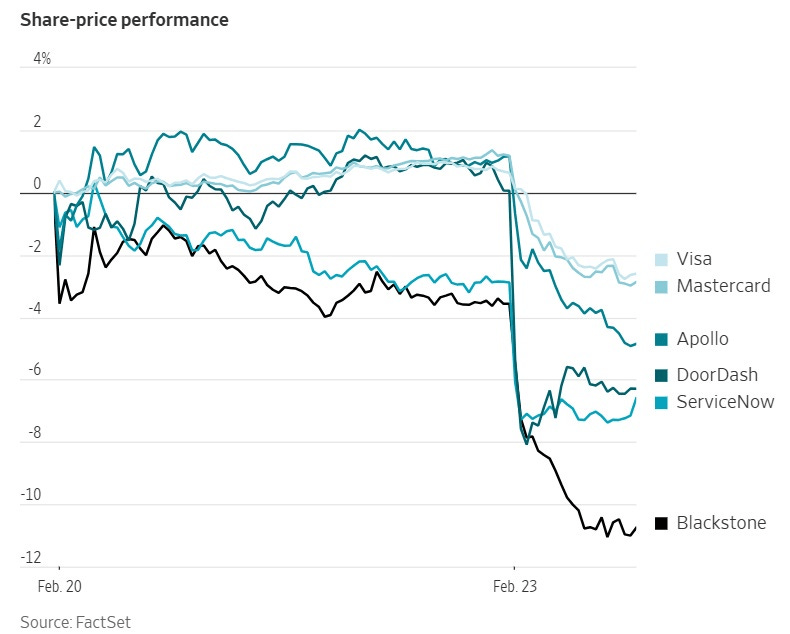
Core Viewpoint - The report titled "2028 Global Intelligence Crisis" suggests that if AI continues to advance, it could lead to an economic crisis where human consumption declines despite rising corporate revenues, creating a paradoxical "ghost GDP" [1][9][10]. Group 1: Impact on Companies - Companies like Visa, DoorDash, and ServiceNow have seen significant stock price drops following the report's release, indicating the immediate market reaction to the potential implications of AI [2][3]. - The report highlights that as AI becomes more capable, it will replace human roles in various sectors, leading to cost reductions for companies but also resulting in widespread job losses and reduced consumer spending [7][9]. - SaaS companies, traditionally benefiting from subscription models, may face challenges as clients explore AI alternatives, leading to price negotiations that could undercut their profitability [12][14]. Group 2: Economic Implications - The report outlines a cycle where increased corporate efficiency through AI leads to job cuts, reduced consumer spending, and ultimately a contraction in economic activity, which could spiral into a financial crisis [9][10][19]. - The concept of "ghost GDP" is introduced, where corporate revenues appear healthy while actual economic activity declines, creating a disconnect that could destabilize the financial system [9][10]. - The report suggests that the concentration of wealth and resources in the hands of a few could exacerbate economic inequality, leading to a stagnant economy where the majority lack purchasing power [15][30]. Group 3: Potential Solutions and Human Adaptation - The report discusses the idea of implementing an "AI tax" to redistribute wealth generated by AI, ensuring that the benefits of increased productivity are shared among the population [17][19]. - Historical perspectives, such as Jevons Paradox, suggest that increased efficiency from AI could lead to greater overall consumption rather than a decline, indicating that human adaptability may mitigate some negative impacts [21][23]. - The report emphasizes that the future economic landscape will depend not solely on AI's capabilities but also on the rules governing wealth distribution and responsibility in the face of technological advancement [30][31].


28年有金融危机?我倒觉得你躺平拿钱的年代要来了。
Sou Hu Cai Jing· 2026-02-26 16:58
Core Viewpoint - The report titled "2028 Global Intelligence Crisis" suggests that if AI continues to advance, it could lead to an economic crisis where human labor becomes obsolete, resulting in reduced consumer spending and a downward economic spiral [2][10]. Group 1: Impact on Companies - Companies like Visa, DoorDash, and ServiceNow experienced significant stock price drops following the report's release, indicating the immediate market reaction to the potential implications of AI on their business models [2]. - The report highlights a scenario where companies initially benefiting from AI may face declining revenues as consumer spending contracts due to job losses and reduced disposable income [8][10]. - A case study in the report illustrates how a Fortune 500 company's negotiation for a contract renewal resulted in a price reduction due to competition from AI solutions, showcasing the disruptive potential of AI on traditional business practices [10][12]. Group 2: Economic Implications - The report describes a phenomenon termed "ghost GDP," where corporate revenues may appear healthy while actual economic activity declines, leading to a vicious cycle of layoffs and reduced consumer spending [8][10]. - Financial institutions could face significant risks as rising defaults on loans and mortgages lead to asset devaluation, creating a broader financial crisis [10][12]. - The report suggests that the concentration of wealth among those controlling AI technology could exacerbate economic inequality, potentially leading to a stagnant economy where consumer spending halts [12][15]. Group 3: Future Considerations - The report raises questions about how society can adapt to an AI-driven economy, emphasizing the need for new distribution rules to ensure that wealth generated by AI benefits the broader population [15][25]. - Historical perspectives, such as Jevons Paradox, suggest that increased efficiency from AI could lead to greater consumption rather than a decrease, challenging the report's more pessimistic predictions [17][19]. - The potential for AI to create new job opportunities and the importance of human oversight in critical sectors like healthcare, finance, and law are highlighted as factors that could mitigate the negative impacts of AI [23][24].