超涨 - 超跌框架

Search documents
FOF投资进化论
Xin Lang Cai Jing· 2026-01-16 04:05
Core Insights - The performance of Guotai Multi-Asset Allocation Department has been outstanding, with Guotai Preferred Navigation One-Year Holding (013279) achieving a 66.14% return, ranking first in its category for the past one, two, and three years [1][20][21] - Guotai Ruiyue, a bond-type FOF fund, also performed well, ranking first in its category for 2025 and second over the past two years [1][20][21] Performance Summary - Guotai Preferred Navigation One-Year Holding (013279) has the following performance rankings: - 1st out of 78 for the past year - 1st out of 71 for the past two years - 1st out of 49 for the past three years [21] - Guotai Ruiyue (016644) has the following performance rankings: - 1st out of 17 for the past year - 2nd out of 13 for the past two years [21] - Guotai Stable Income (014067) has the following performance rankings: - 2nd out of 70 for the past year - 2nd out of 63 for the past two years - 2nd out of 39 for the past three years [21] Investment Philosophy - Investment Director Zeng Hui emphasizes that asset allocation should focus on the most aggressive opportunities rather than a simple average or static allocation, aiming to enhance returns while implementing timing strategies and strict risk control to manage drawdowns [2][22] - The traditional static allocation approach is deemed inadequate for addressing systemic risks, especially with the rise of quantitative methods and rapid ETF development, leading to a transformation in FOF investment strategies [2][22] Quantitative Rotation Model - Zeng Hui's Tai Chi Quantitative Rotation Model focuses on identifying extremes of overbought and oversold conditions, integrating macro risk control timing, industry rotation, and a robust quantitative risk management framework [3][23] - The model aims to capture market cycles by determining buy and sell points based on market fluctuations, with a focus on macroeconomic indicators to trigger alerts for selling during overbought conditions and buying during oversold conditions [3][23] Risk Control and Execution - Zeng Hui prioritizes drawdown control as a fundamental principle, stating that while seeking returns is an art, controlling drawdowns is a science that requires systematic execution [5][24] - A quantitative system is introduced to counteract human biases and ensure effective implementation of risk management strategies [5][24] Future of FOF Management - The future of FOF management is expected to evolve into a competitive environment where managers must excel in multiple asset classes, requiring deep knowledge of stocks, bonds, commodities, and international market rules [6][26] - Zeng Hui's extensive experience and dual approach of subjective and quantitative investment strategies position him well to navigate this evolving landscape [6][26] New Product Launch - Starting January 19, Guotai Multi-Asset Stable Navigation Six-Month Holding Period FOF (025798) will be launched, covering equity assets, Hong Kong Stock Connect targets, and QDII funds, with expectations for strong performance based on past successes [7][26]

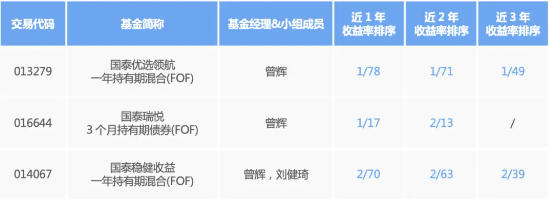
公募FOF投资发展的终局,将是残酷的“四项全能”
聪明投资者· 2025-12-09 03:45
Core Viewpoint - The article emphasizes the evolving landscape of multi-asset investment strategies, highlighting the importance of dynamic asset allocation and risk management in achieving superior returns in the current market environment [4][21][40]. Group 1: Investment Philosophy - The interviewee, Zeng Hui, advocates for a shift from static to dynamic asset allocation, focusing on timing and risk control to enhance returns and manage drawdowns effectively [8][10][11]. - Zeng Hui's investment framework is based on a "Tai Chi" philosophy, emphasizing the importance of identifying extreme market conditions (overbought and oversold) rather than adhering strictly to mean reversion [12][55]. - The approach includes enhancing four underlying asset classes, particularly commodities and international assets, which are seen as essential for public FOF (Fund of Funds) investments [13][80]. Group 2: Performance Metrics - Zeng Hui manages several funds with notable performance, including the Guotai Youxuan Lihang fund, which achieved a return of 52.59% over the past year, ranking first in its category [4][5]. - The Guotai Ruiyue fund, focusing on bonds, reported a return of 4.98%, ranking second in its category, showcasing the effectiveness of Zeng Hui's investment strategies [4][5]. Group 3: Market Trends and Future Outlook - The article discusses the significant changes in the FOF industry, driven by the rise of quantitative strategies and ETFs, which are reshaping traditional investment models [21][22][35]. - Zeng Hui predicts that the future of public FOF will involve a more integrated approach, reducing the layers of management and focusing on dynamic asset allocation to improve investment efficiency [21][35]. - The article highlights the anticipated performance of various asset classes in the coming year, with commodities expected to outperform equities and bonds, particularly gold and silver [99][100][106]. Group 4: Risk Management - Zeng Hui emphasizes the critical role of macro risk management, identifying it as the most significant risk factor in investment, accounting for 40% of the overall risk framework [41][46]. - The investment strategy incorporates a quantitative system to enforce discipline and mitigate human biases, ensuring adherence to risk management protocols [92][97]. - The article outlines the necessity of a robust macroeconomic model that integrates various factors, including fundamental, policy, liquidity, and market sentiment, to guide investment decisions [42][43][46].