车辆安全隐患

Search documents
理想汽车就MEGA 2024款车辆起火事件发文致歉:目前尚未形成最终技术结论
Di Yi Cai Jing· 2025-10-31 09:35
Core Viewpoint - Li Auto has publicly apologized for a fire incident involving the 2024 model of its MEGA vehicle that occurred on the evening of October 23 in Shanghai, indicating a commitment to cooperate with investigations and address safety concerns [1] Group 1: Incident Response - The company contacted the vehicle owner immediately after the incident and is actively cooperating with relevant authorities for the investigation [1] - The investigation process requires collaboration between the user, fire department, and related institutions, which is time-consuming and must adhere to strict procedures [1] Group 2: Internal Investigation Findings - An internal investigation and analysis were initiated by the company, which included a review of the cloud-based warning system records and specialized verification data [1] - Findings revealed that vehicles from the same batch as the incident had insufficient corrosion resistance in the coolant, which under specific conditions could lead to corrosion and leakage in the cooling aluminum plates of the power battery and front motor controller [1] - This issue could result in warning lights activating, limited power, and in extreme cases, thermal runaway of the power battery, posing safety risks [1]

已购车辆的这些安全隐患,谁来管一管?
3 6 Ke· 2025-10-24 03:38
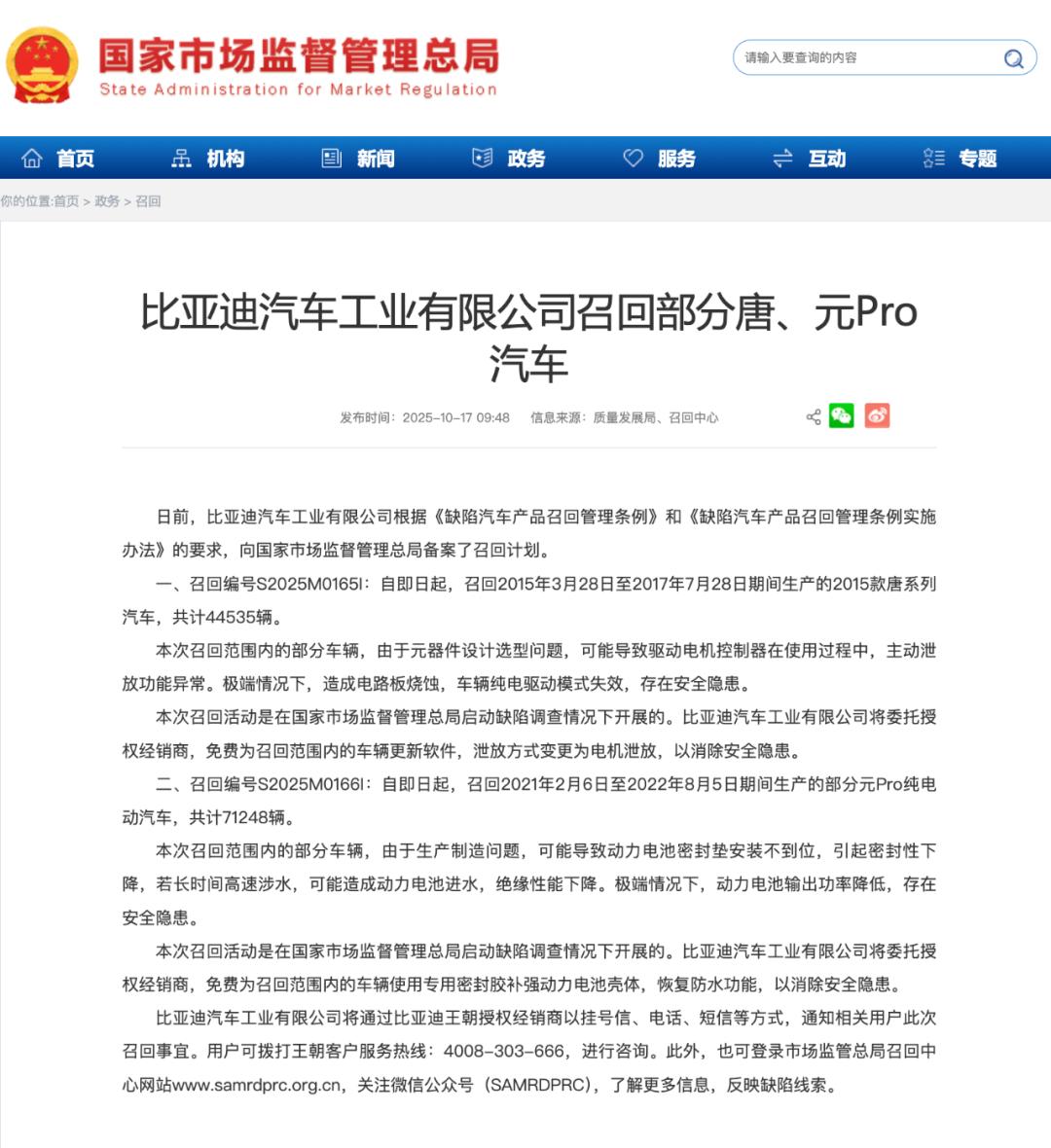
Core Viewpoint - The recent surge in recalls among electric vehicle manufacturers highlights significant safety concerns and the varying responses from companies, indicating a potential crisis in quality control within the industry [1][2][3]. Group 1: Recall Statistics and Implications - In the past two months, major recalls have been announced by companies such as BYD, Xiaomi, and XPeng, with BYD recalling 115,783 vehicles and Xiaomi recalling 116,887 vehicles [1][2]. - As of September 2025, a total of 3,230 recalls have been implemented in China, affecting 120 million vehicles, with 652 recalls influenced by regulatory investigations, accounting for 53.18% of total recalls [2]. Group 2: Specific Recall Issues - BYD's recalls involve the 2015 Tang series and Yuan Pro models, with issues ranging from design flaws in the drive motor controller to improper installation of battery seals, both posing serious safety risks [3][10]. - Xiaomi's recall of the SU7 is due to deficiencies in the L2 highway navigation assistance feature, while XPeng's P7+ recall addresses steering assist sensor issues [11][13]. Group 3: Quality Control Concerns - The frequency of recalls, particularly for BYD, raises questions about the company's quality management systems, especially as these models represent a significant portion of their sales [10][25]. - Complaints from consumers regarding various models, including the DM-i series, indicate ongoing quality issues that have not met recall standards but still affect vehicle safety [18][20]. Group 4: Industry Response and Future Considerations - The industry's rapid expansion has led to a neglect of quality control, with companies like BYD prioritizing market share over product safety, which may harm long-term growth [25][33]. - Regulatory bodies are beginning to impose stricter safety requirements, as seen in the recent ban on fully hidden door handle designs, reflecting a shift towards prioritizing consumer safety in automotive design [40][42].