轮毂电机技术

Search documents
东风奕派007完成申报:功率400千瓦,中国首款量产四轮毂电机车型
Feng Huang Wang· 2025-11-11 00:19
Core Insights - Dongfeng Yipai 007 Wheel Hub Motor Version has completed its declaration, becoming the first mass-produced four-wheel hub motor vehicle in China [1] Vehicle Specifications - The vehicle is based on the existing Dongfeng Yipai 007, maintaining the same dimensions: 4880mm in length, 1915mm in width, and 1476mm in height, with a wheelbase of 2915mm [1] - The design retains the current model's features, including a coupe-style body and a贯穿式 tail light [1] Powertrain and Efficiency - The vehicle is equipped with four hub motors produced by Shanghai Automotive Electric Drive Co., with each motor having a maximum power of 100 kW, resulting in a total system power of 400 kW [1] - Compared to traditional drive systems, the hub motor setup reduces mechanical losses by approximately 30% by eliminating components like drive shafts and differentials, leading to lower maintenance costs [1] Technical Advancements - The independent motor layout allows for precise torque distribution, reducing the turning radius by 10%-15% and supporting millisecond-level power response [1] - Optimized chassis layout increases space for battery capacity and enhances passenger comfort [1] - The energy recovery system can independently adjust for all four wheels, improving recovery efficiency by about 25% [1] Industry Implications - The approval of this declaration signifies the official entry of hub motor technology into mass production within the Chinese passenger vehicle sector [1]

雷诺推出纯电“小钢炮”新车 5 Turbo 3E:555 马力轮毂电机,漂移更轻松
Xin Lang Cai Jing· 2025-10-13 05:56
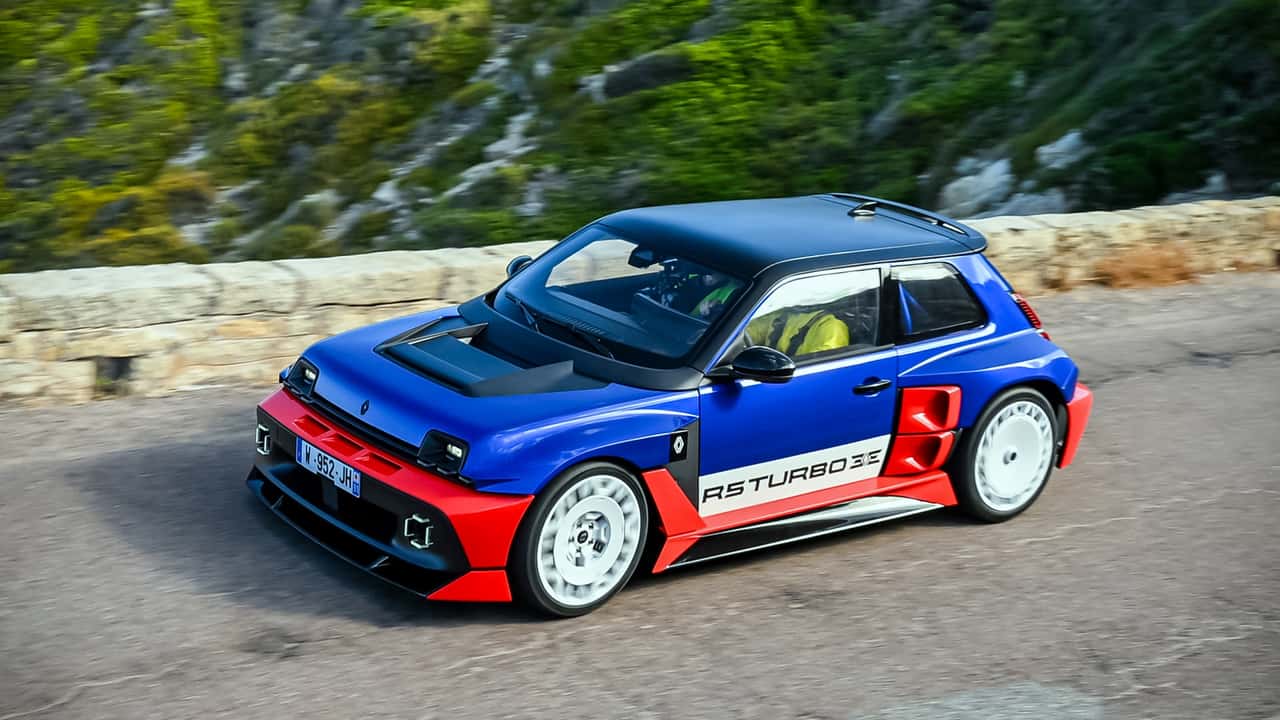
Core Insights - Renault showcased two Renault 5 Turbo 3E prototypes in Corsica, emphasizing their capabilities in drifting, circling, and stunt actions [1] Group 1: Vehicle Specifications - The Renault 5 Turbo 3E is described as "a machine born for passion," featuring a weight distribution of 43:57, which is close to that of mid-engine or rear-engine sports cars, making it suitable for entertaining driving [3] - The vehicle is equipped with two hub motors driving the rear wheels, delivering a power output of up to 555 horsepower, allowing for precise control of each wheel's output and facilitating easy and natural drifting [3] - The 3E is a completely independently developed vehicle with a carbon fiber body, weighing less than 1450 kg, and can accelerate from 0 to 100 km/h in just 3.5 seconds [6] Group 2: Production and Market Response - Renault plans to produce a limited run of 1980 units of the 5 Turbo 3E, with a starting price of €160,000 (approximately 1.324 million RMB), and offers options for customization [6] - The vehicle is based on an 800V platform, supporting 330 kW fast charging, allowing the 70 kWh battery to charge from 10% to 80% in just 15 minutes, with a WLTP range exceeding 400 km [6] - Despite being the most expensive model in Renault's history, it has received significant interest, with over 500 pre-orders on the first day of availability, and is expected to sell out quickly [9]

轮毂电机或带来电动汽车变革性创新,但为何尚未普及?
汽车商业评论· 2025-06-19 23:06
Core Viewpoint - The article discusses the potential and challenges of hub motors in electric vehicles, highlighting their advantages in design flexibility, efficiency, and performance, while also addressing the technical and practical issues that have hindered their widespread adoption [4][6][40]. Group 1: Advantages of Hub Motors - Hub motors can directly transmit power to the road, promising more efficient power transfer and design flexibility [6][16]. - Installing motors in the wheels can increase interior space for larger batteries or more passenger/cargo space [11]. - Hub motors simplify electric vehicle platform design, allowing for easier modifications to produce different drive configurations [12]. - They significantly reduce transmission losses compared to traditional internal combustion vehicles, enhancing overall efficiency [14][16]. - Hub motors enable precise torque control and distribution, improving traction and performance [17]. Group 2: Challenges of Hub Motors - Increased total mass at the wheels can negatively impact vehicle comfort, grip, and handling precision [20]. - Durability issues arise due to the severe impacts hub motors face compared to motors housed within the vehicle [22]. - Heat dissipation is a potential challenge, as effective cooling solutions must be developed to prevent overheating [23]. - Safety concerns exist regarding high-voltage cables in the event of accidents, which could pose electrocution risks [25]. Group 3: Current Developments and Future Prospects - Companies like Dongfeng and Renault are actively working on integrating hub motors into production vehicles, with notable models already introduced [29][31]. - Modern automotive manufacturers, including Hyundai, are exploring hub motor technology for various vehicle types [33]. - Innovative companies like DeepDrive are developing new hub motor technologies that promise improved efficiency and reduced costs, with plans for integration into mass production by 2028 [38]. - External hub motors offer advantages in mechanical stress handling and design flexibility, potentially enhancing traction and acceleration [39]. - Despite not being mainstream yet, hub motors hold significant potential for revolutionizing vehicle design and functionality in urban and hybrid applications [40].