轴子

Search documents
布下宇宙信号“监听系统” 暗物质探测新增更精准“量子神器”
Ke Ji Ri Bao· 2026-01-30 02:00
Core Insights - The research team from the University of Science and Technology of China has developed the world's first quantum sensing network based on atomic nuclear spins, significantly enhancing the sensitivity for dark matter detection, as published in the journal Nature [1][2] Group 1: Quantum Sensing Technology - The quantum sensors are equipped with two key innovations: storing fleeting signals in a nuclear spin coherence state for nearly a minute, which greatly extends the detection window, and a self-developed quantum amplification technology that enhances weak signals by 100 times [1] - The team has successfully deployed five ultra-sensitive quantum sensors in Hefei and Hangzhou, creating a distributed detection network synchronized by satellite time [2] Group 2: Dark Matter Detection - The research has provided the most stringent limits on dark matter models across a wide range of axion masses, with some precision limits exceeding astronomical observations by 40 times [2] - This breakthrough adds a more precise "quantum tool" to humanity's toolkit for searching dark matter, with potential future enhancements in sensitivity by four orders of magnitude through global networking and space deployment [2]
量子“捕手”为暗物质探测提供全新路径
Huan Qiu Wang Zi Xun· 2026-01-30 01:45
Core Insights - The research team from the University of Science and Technology of China has developed the world's first quantum sensing network based on atomic nuclear spins, significantly enhancing the sensitivity for dark matter detection [1][3] - Dark matter, which constitutes approximately 26.8% of the universe, interacts through gravity but not electromagnetically, making it challenging to detect [1] - The team has established a distributed detection network using five ultra-sensitive quantum sensors, achieving detection precision that surpasses astronomical observations by 40 times in certain mass ranges of axions, a leading candidate for dark matter [3] Group 1 - The quantum sensors are equipped with advanced features that allow for the storage of fleeting signals in a nuclear spin coherence state for nearly a minute, greatly extending the detection window [1] - The team has developed a self-research quantum amplification technology that enhances weak signals by a factor of 100, making it easier to detect subtle interactions [1] - The breakthrough adds a new, more precise tool to humanity's arsenal for searching for dark matter, with potential future enhancements in sensitivity through global networking and space deployment [3] Group 2 - The sensors are deployed in Hefei and Hangzhou, synchronized via satellite for precise timing, forming a distributed detection network [3] - After two months of continuous observation, the team has provided the strictest constraints on dark matter models across a wide range of axion masses [3] - Future collaborations with gravitational wave observatories could further increase detection sensitivity by four orders of magnitude [3]

暗物质探测新增更精准“量子神器”
Ke Ji Ri Bao· 2026-01-30 01:17
Core Viewpoint - The research team from the University of Science and Technology of China has developed the world's first quantum sensing network based on atomic nuclear spins, significantly enhancing the sensitivity for dark matter detection and providing a new pathway to unravel this cosmic mystery [1][2]. Group 1: Quantum Sensing Technology - The team has innovatively equipped quantum sensors with two key enhancements: storing fleeting signals in a nuclear spin coherence state for nearly a minute, which greatly extends the detection window [1] - They also developed a quantum amplification technology that increases weak signals by 100 times, making it easier to detect subtle interactions [1]. Group 2: Dark Matter Detection - The research team deployed five ultra-sensitive quantum sensors in Hefei and Hangzhou, synchronizing them via satellite to create a distributed detection network [2] - After two months of observation, the team established the most stringent limits on dark matter models across a wide range of axion masses, achieving precision 40 times greater than results obtained from supernova observations [2]. Group 3: Future Implications - This breakthrough adds a more precise "quantum tool" to humanity's toolkit for searching dark matter, with potential future enhancements in sensitivity by four orders of magnitude through global networking and space deployment [2].
量子“捕手”追踪星际暗物质
Xin Lang Cai Jing· 2026-01-29 17:44
Core Insights - The research team from the University of Science and Technology of China has developed a groundbreaking quantum sensing network based on atomic nuclear spins, marking the first of its kind internationally [1] - This quantum detection network, connecting Hefei and Hangzhou, significantly enhances the sensitivity for dark matter detection, providing a new pathway to unravel this cosmic mystery [1] Group 1: Quantum Sensing Technology - The team has equipped the quantum sensors with two key innovations: storing fleeting signals in a nuclear spin coherence state for nearly a minute, which greatly extends the detection window [2] - They also developed a self-research quantum amplification technology that enhances weak signals by a factor of 100, making it easier to detect subtle signals [2] Group 2: Network Deployment and Results - Five ultra-sensitive quantum sensors were deployed in Hefei and Hangzhou, synchronized via satellite time, creating a distributed detection network that significantly reduces false positives and enhances reliability [2] - Although the team did not capture clear signals of the "dark matter wall," they established the most stringent limits on dark matter models across a wide range of axion masses, achieving precision 40 times greater than results from supernova observations [2] Group 3: Future Prospects - The research opens new avenues for dark matter detection and the distributed detection approach could be integrated with gravitational wave observatories to explore more cosmic mysteries [2] - The team plans to expand the quantum detection network's coverage globally and through space deployment, aiming to enhance detection sensitivity by four additional orders of magnitude [2]
【新华社】量子“捕手”为寻找宇宙“隐形邻居”提供新工具
Xin Hua She· 2026-01-29 07:01
Core Insights - The research team from the University of Science and Technology of China has developed the world's first quantum sensing network based on atomic nuclear spins, significantly enhancing the sensitivity for dark matter detection [1][2] - Dark matter constitutes approximately 26.8% of the universe's total mass, yet it does not emit light or interact electromagnetically with ordinary matter, making it a critical component of the universe's structure [1] - The study introduces a new quantum sensor technology that can store fleeting signals for nearly a minute and amplify weak signals by 100 times, improving the chances of detecting dark matter interactions [1][2] Group 1 - The quantum sensing network connects Hefei and Hangzhou, utilizing satellite synchronization for precise time correlation, which enhances the reliability of detection results by filtering out noise [2] - Although the team did not capture a clear signal of the "dark matter wall," they established stringent limits on dark matter models across a wide range of axion masses, achieving a precision 40 times greater than astronomical observations using supernovae [2] Group 2 - This breakthrough adds a more precise "quantum tool" to humanity's arsenal for dark matter detection, paving the way for future collaborations with gravitational wave observatories to explore more cosmic mysteries [4] - The research team plans to expand the quantum detection network's coverage through global networking and space deployment to further enhance dark matter detection sensitivity [4]
假想粒子“轴子”,终于被找到了?
Hu Xiu· 2025-06-20 00:38
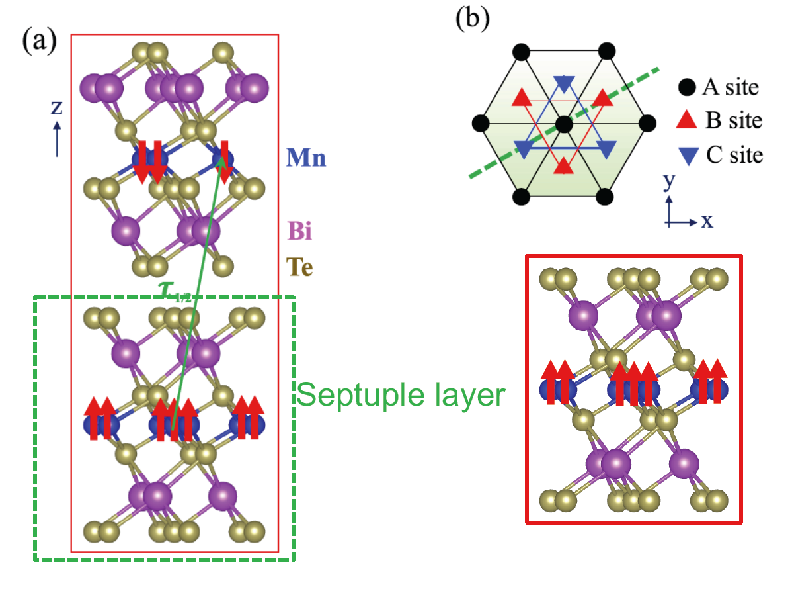
Group 1 - The axion is a hypothetical particle proposed to solve the strong CP problem in quantum chromodynamics, introduced by theorists Frank Wilczek and Steven Weinberg in 1978 [1][3] - Axions are extremely difficult to detect due to their weak interaction with other particles, yet they are considered a significant component of dark matter in the universe [4][6] - Recent advancements suggest that axions can exist in a quasi-particle form within solid-state materials, referred to as "axion insulators," which exhibit unique magnetic and electric properties [7][8] Group 2 - The material MnBi2Te4 has been predicted to be an axion insulator, featuring a layered structure with alternating magnetic properties, which may allow for the observation of axion quasi-particles [9][11] - Experimental results published in April 2025 demonstrated periodic oscillations of the magnetic-electric coupling coefficient in MnBi2Te4, indicating the presence of axion-like behavior [11][13] - The discovery of axion quasi-particles opens new avenues for applications in condensed matter physics and could lead to programmable quantum devices for detecting dark matter [13]