科研服务

Search documents
清华大学化学工程系戈钧教授课题组招聘博士后及科研助理
生物世界· 2026-03-16 10:30
Group 1 - The Tsinghua University Department of Chemical Engineering is recruiting 3 postdoctoral researchers and 2 research assistants for the 2025-2026 academic year, focusing on areas such as enzyme catalysis, metal-organic catalysis, perovskite solar cells, and polyolefin material synthesis [2][3] - Professor Ge Jun, a long-term professor and doctoral supervisor at Tsinghua University, leads the research group, which has developed innovative enzyme-metal cooperative catalysis technologies for applications in fine chemicals, nutritional chemicals, and new materials [2][4] - The research group has received numerous prestigious awards and funding, including the National Outstanding Youth Science Fund and the National Key R&D Program, and has published over 110 papers in high-impact journals [2][4] Group 2 - Applicants for postdoctoral positions must meet Tsinghua University's basic requirements, including holding a PhD or being close to graduation, being under 35 years old, and having relevant research experience in specified fields [4][5] - Research assistants are required to have a master's degree or equivalent, relevant research experience, and strong communication skills, with a preference for those with industrial project experience [7][9] - The benefits for postdoctoral researchers include a competitive salary, housing subsidies, and support for applying to various talent support programs, with potential funding up to 600,000 yuan for outstanding candidates [5][9]


永争第一!中国最强省,出手了
Xin Lang Cai Jing· 2026-02-24 04:55
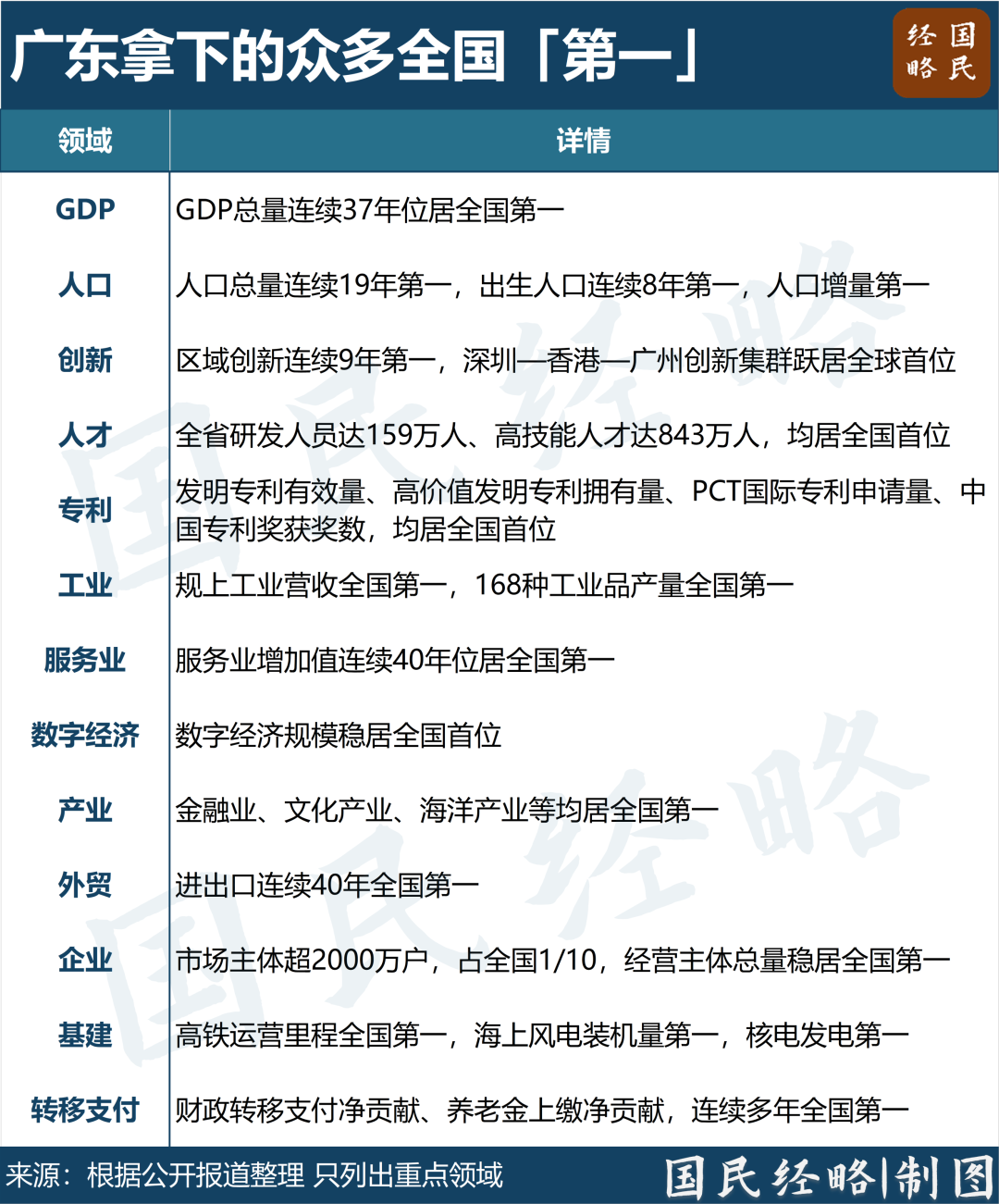
Core Viewpoint - Guangdong aims to double its economic output by 2035, reaching approximately 25.8 trillion yuan, showcasing its ambition to maintain its status as China's leading province in various sectors [1][11]. Economic Performance - Guangdong has maintained the highest GDP in China for 37 consecutive years, with a projected GDP of 14.58 trillion yuan by 2025, ranking 11th globally, surpassing countries like Australia and South Korea [3][11]. - The province's population reached 129 million in the previous year, with a net increase of 790,000 and a birth rate of 1.003 million, all ranking first in the nation [3][11]. Innovation and Competitiveness - Guangdong leads in regional innovation for nine consecutive years, with significant achievements in patent applications and awards, indicating a strong capacity for industrial technology integration [2][7]. - The "Shenzhen-Hong Kong-Guangzhou" innovation cluster is set to rank first globally by 2025, surpassing established tech hubs like Tokyo and San Francisco [8][7]. Industrial and Service Sector Leadership - The province's industrial revenue and service sector value added are both ranked first nationally, with Guangdong accounting for one-eighth of China's industrial scale [4][11]. - Guangdong has established ten trillion-yuan industrial clusters across various sectors, including electronics, information services, and new energy [4][11]. Fiscal Contributions - As the top fiscal contributor, Guangdong generates over 2 trillion yuan in domestic tax revenue annually, with a net contribution of approximately 800 billion to 1 trillion yuan after transfers [6]. - The province has contributed over 500 billion yuan in pension funds since 2018, exceeding the total contributions of all other provinces combined [6]. Future Growth Strategy - To achieve its 2035 GDP target, Guangdong needs to maintain an annual nominal growth rate exceeding 5%, which poses challenges given the current economic transition [11][13]. - The focus on the synergy between manufacturing and service industries is crucial for sustaining economic growth and enhancing competitiveness in a rapidly changing global landscape [9][11].
护企出海!广州开发区建成全国规模最大知识产权保险资金池
Nan Fang Du Shi Bao· 2026-02-15 12:47
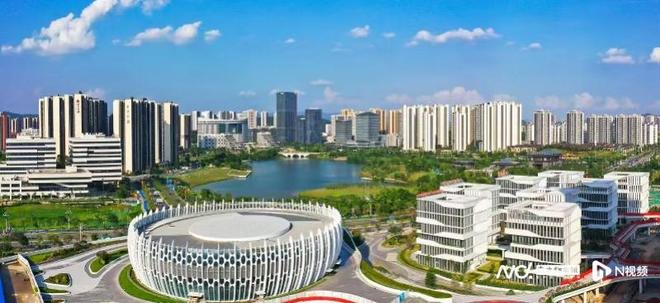
Group 1 - The core viewpoint of the news is that during the "14th Five-Year Plan" period, the Guangzhou Development Zone has launched an innovative intellectual property overseas infringement liability insurance, which has covered 484 cases with a total insured amount exceeding 1.03 billion yuan, establishing the largest intellectual property insurance fund pool in the country. This model has been promoted by the State Council for replication in free trade pilot zones [1][3]. Group 2 - The Guangzhou Development Zone serves as a "testing ground" for national intellectual property comprehensive reform, with the intellectual property insurance innovation being a representation of 40 pioneering measures at both national and provincial levels [3]. - The intellectual property comprehensive reform trial has progressed from version 1.0 to 2.0, aiming to build the first national benchmark area for intellectual property legal protection, creating a protection framework that includes "administrative + judicial + arbitration + mediation + insurance" [3]. - Intellectual property securitization has expanded from "pure patents" to include the first "pure trademarks" and "new energy vehicle" products, facilitating financing of 1.139 billion yuan for enterprises [3]. - The establishment of the first "Taobao-style" digital integrated service platform for intellectual property in the country allows for "one-click access" to intellectual property services [3]. - The number of high-value invention patents in the region has reached 50,558, representing a 191% increase compared to the end of the "13th Five-Year Plan," with a per capita ownership of 191 high-value invention patents, an increase of 2.53 times [3].
世界顶尖科学家协会发布OPENSCI项目,探索面向未来的开放科学基础设施新范式
Sou Hu Wang· 2026-02-06 08:29
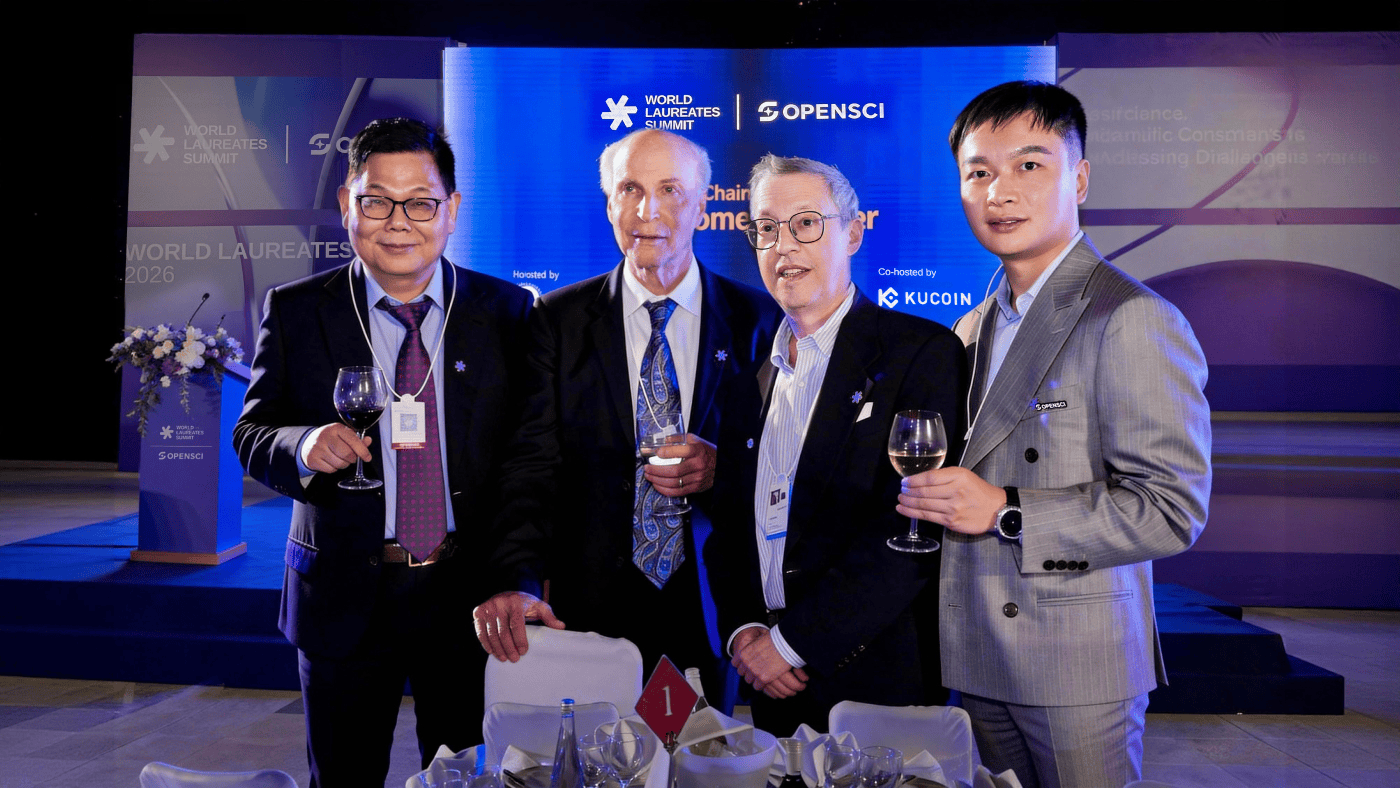
Core Insights - The World Laureates Association (WLA) has launched the OPENSCI project, aimed at establishing a sustainable path for the long-term preservation, verification, and collaboration of global scientific knowledge using next-generation digital technologies [1][3]. Group 1: Project Overview - OPENSCI was officially introduced during the World Laureates Summit 2026 in Dubai, which gathered top scientists, Nobel laureates, government representatives, and public institution leaders to discuss key issues in fundamental science and technology [3]. - The project is not merely a research platform or funding mechanism; it seeks to integrate established scientific research systems with decentralized and intelligent technologies to create a new model for the long-term preservation, trustworthy verification, and continuous accessibility of scientific knowledge [3][4]. - OPENSCI aims to provide a foundational and sustainable support for global research activities, enabling structured recording and verification of research results, scientific hypotheses, and datasets [3][4]. Group 2: Technological Integration - The project is guided by a global advisory network of Nobel laureates and supported by renowned international university laboratories and cutting-edge research institutions [3]. - OPENSCI utilizes artificial intelligence and blockchain technology to facilitate the long-term preservation, verification, and collaboration of scientific results, data, and knowledge [4][5]. - The initiative represents a shift in global scientific collaboration from a project and institution-centric approach to a focus on long-term infrastructure [4]. Group 3: Governance and Future Vision - OPENSCI is designed to be a decentralized scientific collaboration network, characterized by "scientist-led governance" and "autonomous value circulation" [5]. - The WLA envisions that by constructing an open, trustworthy, and sustainable scientific infrastructure, it can provide more stable collaboration conditions for the global scientific community, supporting the continuous accumulation and transmission of scientific knowledge across time and geography [4].
巧打“中国结”,给磁场拍高清照
Ren Min Ri Bao· 2026-02-02 09:41
Core Insights - A new low-temperature strong magnetic field detection method has been proposed by a research team led by Shanxi University, which enhances the spatial resolution of measurements to the micrometer level, overcoming limitations of traditional methods [1][2] Group 1: Research Methodology - The existing nuclear magnetic resonance method, while precise, requires a high degree of uniformity in the magnetic field, making it ineffective in complex environments [1] - The research team utilized a "building block" approach by precisely stacking two layers of single-crystal graphene at an angle and encapsulating them with high-quality hexagonal boron nitride to create a micrometer-scale device [1] Group 2: Quantum Characteristics - Under strong magnetic fields, the developed system exhibits unique quantization features, displaying clear rhombic patterns resembling "Chinese knots" in the electrical measurement spectrum when adjusting the vertical displacement field and carrier concentration [2] - The formation of the "Chinese knot" pattern results from competition and switching between electronic states, demonstrating high stability of the quantization features [2] Group 3: New Detection Scheme - The research team proposed a novel low-temperature magnetic sensing scheme that leverages the strict linear relationship between the peak spacing of the "Chinese knot" pattern and magnetic field strength, allowing for precise magnetic field strength determination by measuring the distance between two nodes in the pattern [2] - This new scheme effectively provides a micrometer-level "ruler" for magnetic field measurement, utilizing the quantum characteristics of micro-nano devices [2]
从“破四唯”到“立新标”科技评价改革风生水起
Xin Lang Cai Jing· 2026-02-01 21:21
Core Viewpoint - The article emphasizes the importance of reforming the technology evaluation system in China to enhance innovation capabilities and align research with industrial needs, aiming to break the rigid barriers that have historically constrained technological advancement [3][10]. Group 1: Reform Objectives - The reform aims to shift from a rigid evaluation system focused on "four whys" (papers, titles, degrees, awards) to a more flexible classification evaluation system that prioritizes innovation capability, quality, effectiveness, and contribution [3][5]. - The "14th Five-Year Plan" highlights the need for a new evaluation framework that encourages talent exchange between universities, research institutions, and enterprises, thereby stimulating innovation [3][10]. Group 2: Regional Initiatives - Shandong province is leading the way as the only pilot province for technology reward reform, shifting the focus of evaluations towards significant scientific discoveries and key technological breakthroughs [4][5]. - In 2024, Shandong's comprehensive reform plan will allow for differentiated evaluations based on the specific roles and contributions of various types of talent [5][6]. Group 3: Addressing Systemic Barriers - The article discusses the issue of "two skins" where research and industry needs are disconnected, leading to many valuable research outcomes remaining unutilized [7][8]. - In Shaanxi, reforms are being implemented to facilitate technology transfer and address deep-rooted issues that hinder the commercialization of research outcomes [7][8]. Group 4: Enhancing Research Environment - The article notes that frequent evaluations and lengthy processes create barriers for researchers, particularly young scientists, making it difficult for them to focus on long-term research [10][11]. - Initiatives like Tsinghua University's "Duxi Plan" aim to provide long-term support for basic research without the pressure of immediate publication or project application requirements [10][11]. Group 5: Evaluation Mechanisms - Various regions are broadening evaluation subjects and improving supervision mechanisms to create a more open and fair evaluation environment [11]. - Innovations in evaluation methods, such as integrating third-party assessments and performance evaluation mechanisms, are being adopted to ensure a more comprehensive and just evaluation process [11].
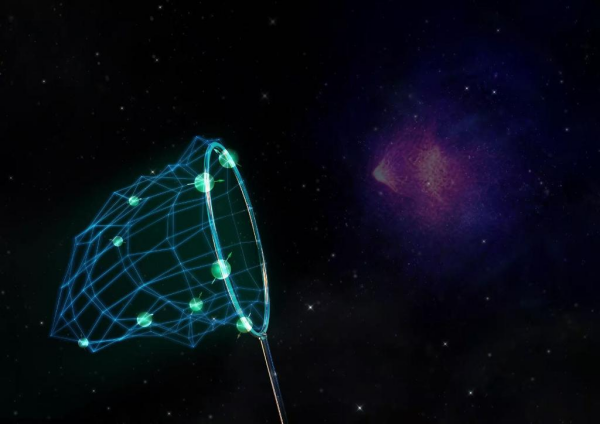
【新华社】量子“捕手”为寻找宇宙“隐形邻居”提供新工具
Xin Hua She· 2026-01-29 07:01
Core Insights - The research team from the University of Science and Technology of China has developed the world's first quantum sensing network based on atomic nuclear spins, significantly enhancing the sensitivity for dark matter detection [1][2] - Dark matter constitutes approximately 26.8% of the universe's total mass, yet it does not emit light or interact electromagnetically with ordinary matter, making it a critical component of the universe's structure [1] - The study introduces a new quantum sensor technology that can store fleeting signals for nearly a minute and amplify weak signals by 100 times, improving the chances of detecting dark matter interactions [1][2] Group 1 - The quantum sensing network connects Hefei and Hangzhou, utilizing satellite synchronization for precise time correlation, which enhances the reliability of detection results by filtering out noise [2] - Although the team did not capture a clear signal of the "dark matter wall," they established stringent limits on dark matter models across a wide range of axion masses, achieving a precision 40 times greater than astronomical observations using supernovae [2] Group 2 - This breakthrough adds a more precise "quantum tool" to humanity's arsenal for dark matter detection, paving the way for future collaborations with gravitational wave observatories to explore more cosmic mysteries [4] - The research team plans to expand the quantum detection network's coverage through global networking and space deployment to further enhance dark matter detection sensitivity [4]
首款等离子体工艺腔室仿真平台面世
Zhong Guo Hua Gong Bao· 2026-01-28 04:24
Core Viewpoint - The research team from Dalian University of Technology has developed China's first plasma process chamber simulation platform (MAPS) with independent intellectual property rights, which can replicate real manufacturing processes in a virtual environment to facilitate product development and performance prediction [1] Group 1: Technology Development - MAPS allows comprehensive simulation of atomic-level manufacturing equipment, including external control parameters and device geometric structures, providing final evolution results to save development time and improve efficiency [1] - The technology has been applied in several companies, including Tuojing Technology and Huawei, achieving a 15% reduction in economic costs and a 20% reduction in time costs compared to similar foreign products [1] Group 2: Collaboration and Talent Development - The team has established in-depth collaborations with many leading domestic enterprises, creating joint laboratories that enable students to participate in joint technology development projects during their studies, thus cultivating more high-end talent for the industry [1]
北京市政协常委、市科协常务副主席李昕建议:打造面向全球的“北京开放科学云平台”
Xin Lang Cai Jing· 2026-01-27 22:08
Core Viewpoint - Open science is increasingly recognized as an effective means to promote the sharing, communication, and collaboration of scientific knowledge, with major global innovation centers, including Beijing, placing significant emphasis on it [1][2]. Group 1: Achievements in Open Science - Beijing has seen a rise in the proportion of open access research papers from 26.1% in 2015 to 41.4% in 2024 [2]. - The establishment of the Beijing International Big Data Exchange has led to the creation of several scientific data centers, facilitating the reuse of scientific data [2]. - Collaborative efforts have resulted in the integration of 160 million academic papers into large academic models, showcasing initial success in AI data reuse [2]. Group 2: Areas for Improvement - Current regulations lack unified, clear, and specific guidance on optimizing research outcomes, infrastructure, and international cooperation [3]. - There is a need for standardized protocols regarding the structure, content, and quality of scientific data, as well as improved interoperability among different data centers and platforms [3]. - Recommendations include establishing a collaborative mechanism among institutions and creating a "Beijing Open Science Cloud Platform" to integrate key knowledge resources [3]. Group 3: Future Goals and Strategies - The goal is to increase the proportion of open access papers to 60%-80% by 2030, aligning with levels seen in developed countries [4]. - Emphasis will be placed on strengthening scientific data collection and exploring mandatory data submission systems for publicly funded research [4]. - The establishment of an international open science fund is proposed to support developing countries in utilizing Beijing's scientific facilities [5].
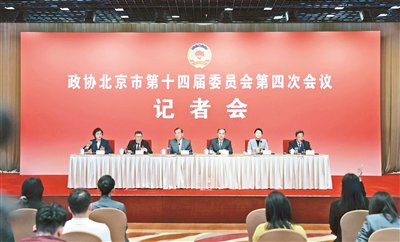
5位委员聚焦“十五五”建言献策
Bei Jing Qing Nian Bao· 2026-01-26 01:55
Core Viewpoint - The Beijing Municipal Political Consultative Conference is focusing on the implementation of the "14th Five-Year Plan," emphasizing contributions to urban development, education, technology, and cultural integration [2][11]. Group 1: Urban Development and Environmental Initiatives - The "14th Five-Year Plan" aims to advance the construction of a beautiful Beijing, promoting a green, low-carbon, and livable environment, exemplified by the new garden corridor over one kilometer long near the Guomao area [2][11]. - A task force has been established to study international best practices and domestic case studies, resulting in 25 key recommendations that have led to tangible benefits for residents, such as the development of greenways along major roads [3][12]. Group 2: Technology and Talent Integration - Beijing is positioned as a core engine for national technological advancement, facing challenges in integrating education, technology, and talent. The focus is on deepening the collaboration among these three areas [4][13]. - Recommendations include forming innovation alliances between universities, research institutions, and leading enterprises, along with establishing shared platforms for research resources and reforming talent evaluation systems [4][13]. Group 3: Urban Renewal Strategies - Urban renewal in Beijing is not merely about physical space updates but involves comprehensive strategies that align with national objectives, addressing various building types and public infrastructure [5][15]. - The approach emphasizes principles such as sustainable development, ecological priority, cultural heritage, and public welfare, while managing population and ecological limits [6][15]. Group 4: Sports and Cultural Integration - The "14th Five-Year Plan" highlights the importance of integrating cultural, sports, and tourism sectors, leveraging Beijing's status as a dual Olympic city to enhance its global appeal [7][16]. - There is a push for developing a robust sports event ecosystem, supported by policies that encourage cross-sector collaboration and the creation of new cultural and sporting IPs [7][16]. Group 5: Agricultural and Rural Development - Agricultural development is crucial for achieving modern socialist goals, with a focus on enhancing rural living conditions and promoting resilience against disasters [8][17]. - Strategies include developing smart agriculture, promoting health-oriented agricultural practices, and creating diverse consumption scenarios that blend rural charm with urban experiences [8][17].