轻因茶

Search documents
股价一度跌近15%,霸王茶姬发长文回应质疑
Xin Lang Cai Jing· 2025-12-26 15:07
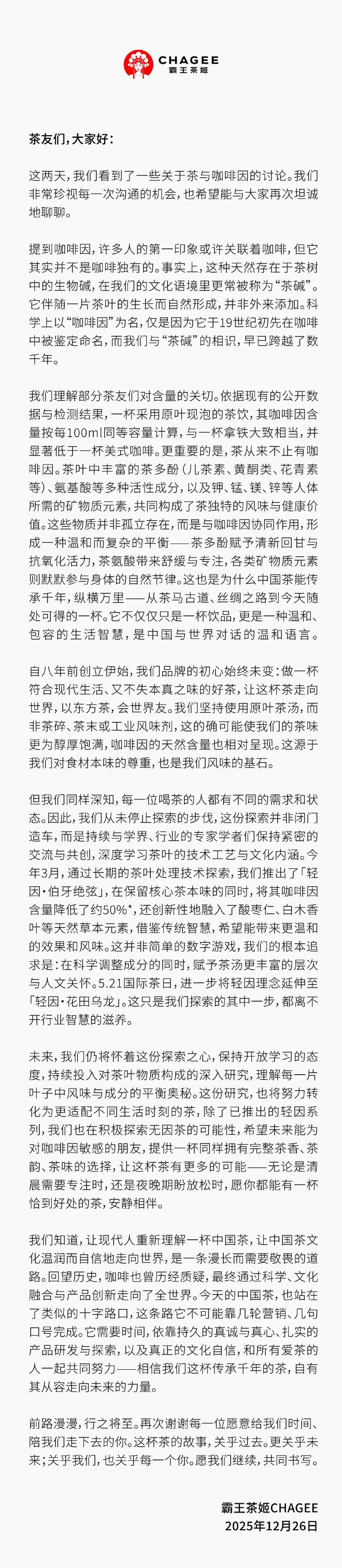
Core Viewpoint - The stock price of Bawang Tea Ji fell over 14% to a record low due to concerns about caffeine content in their tea products, prompting a public response from the company addressing these concerns [1][2]. Group 1: Company Response - Bawang Tea Ji acknowledged the concerns regarding caffeine levels, stating that their tea's caffeine content per 100ml is comparable to that of a latte and significantly lower than that of an Americano [1][4]. - The company emphasized that tea contains more than just caffeine, highlighting the presence of various active components such as tea polyphenols, amino acids, and essential minerals that contribute to its unique flavor and health benefits [1][4]. - Bawang Tea Ji has been committed to using whole leaf tea rather than tea fragments or artificial flavors, which may result in a richer flavor and a more natural caffeine content [5]. Group 2: Product Innovation - The company has introduced a new product line, "Light Caffeine," which reduces caffeine content by approximately 50% while incorporating natural herbal elements, aiming to cater to consumers with different needs [5][6]. - Bawang Tea Ji plans to continue exploring the potential for caffeine-free tea options, ensuring that these products maintain the full flavor and aroma of traditional tea [6]. Group 3: Cultural Perspective - The company believes that modern consumers need to re-understand Chinese tea, and it aims to promote Chinese tea culture globally through genuine product development and cultural confidence [7]. - Bawang Tea Ji recognizes that the journey to establish Chinese tea on the world stage is long and requires sustained effort, innovation, and collaboration with tea enthusiasts [7].

“喝奶茶失眠”上热搜后,霸王茶姬提出一个新方案
3 6 Ke· 2025-05-29 03:53
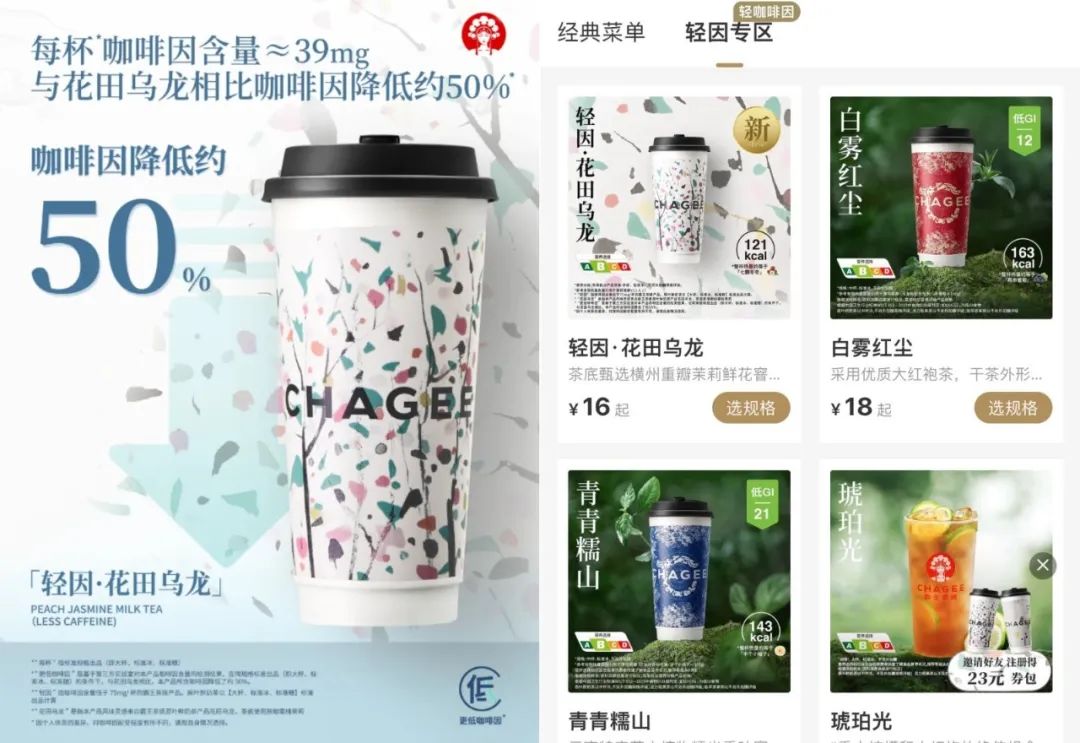
Core Viewpoint - The rise of "light caffeine" tea products is a response to consumer concerns about caffeine-induced insomnia, with major brands like Bawang Chaji and Heytea leading the trend by launching low-caffeine options [1][6][20]. Group 1: Product Development - Bawang Chaji recently launched "Light Caffeine · Light Tian Oolong," with caffeine content controlled at 39mg per cup, approximately 50% lower than the regular version [1][3]. - The "Light Caffeine" series utilizes supercritical carbon dioxide extraction technology to reduce caffeine without using organic solvents, preserving the natural quality and aroma of the tea [3][20]. - Heytea has implemented a "caffeine traffic light" system categorizing drinks based on caffeine content, with "green light" products containing less than 50mg of caffeine [5][14]. Group 2: Consumer Trends - The discussion around "milk tea insomnia" has gained significant traction, with over 9.8 million views on the topic on social media platforms [6][8]. - Research indicates that tea is the primary source of caffeine intake for Chinese adults, accounting for 74.8% of their caffeine consumption, with milk tea being the top source for minors [11][20]. - The demand for low-caffeine options is not limited to a niche market; it appeals to a broad demographic, including children, pregnant women, and the elderly [22][25]. Group 3: Market Insights - A report by Kamen indicates that the introduction of low-caffeine beverages could open new growth avenues for brands, extending operating hours and attracting a wider customer base [25]. - The lack of standardized definitions for "light caffeine" products presents challenges for the industry, as consumer understanding of these products remains vague [16][25]. - Other regions, such as Taiwan and Japan, have already seen successful implementations of similar low-caffeine products, suggesting a potential for growth in the Chinese market [23][25].