轻因·伯牙绝弦

Search documents
霸王茶姬,不止困在“失眠”里
3 6 Ke· 2026-01-09 10:07
Core Viewpoint - The recent controversies surrounding Bawang Chaji, including concerns over high caffeine content in its products, have led to significant market reactions, including a drop of over 14% in its stock price, marking the largest single-day decline since its IPO. The company is facing declining performance metrics, raising questions about its competitive strength and the overall market for new tea beverages [1][8]. Group 1: Caffeine Controversy - The debate over Bawang Chaji's caffeine levels has been ongoing since the popularity of its product "Boya Juexian" in 2021, which was associated with sleep disturbances due to its high tea polyphenol content [2]. - A recent post by a blogger highlighted the caffeine content in Bawang Chaji's drinks, leading to widespread discussions on social media about the brand's "sleep assassin" reputation [2][3]. - Bawang Chaji claims that its caffeine content is lower than that of a cup of Americano, but the caffeine levels in its drinks, such as 117.2 mg in "Boya Juexian" and 210 mg in "Wanli Mulian," are significantly higher than common energy drinks [3][4]. Group 2: Market Performance - Since its peak market value of approximately $76.7 billion in April 2025, Bawang Chaji's stock has declined over 70%, with its third-quarter revenue dropping by 9.4% year-on-year to 32.08 billion yuan and net profit falling by 35.8% [8][9]. - The brand's rapid expansion has led to a decline in single-store performance, with average monthly GMV decreasing for five consecutive quarters [8]. - The company has struggled to introduce new blockbuster products following the success of "Boya Juexian," which previously accounted for 60%-70% of its total revenue [9][10]. Group 3: Consumer Awareness and Brand Strategy - Bawang Chaji has attempted to address caffeine concerns by launching "light caffeine" versions of its products, but the impact on sales has been limited compared to its regular offerings [6][7]. - Other brands, such as Heytea, have begun to disclose caffeine content more transparently, which has been well-received by consumers, highlighting a shift in consumer expectations for information on beverage ingredients [6][7]. - The current market trend indicates that consumers are increasingly concerned about health implications, leading to a demand for clearer labeling and information regarding caffeine content in beverages [7].
喝奶茶,更易“咖啡因”过量?
3 6 Ke· 2025-12-30 02:09
Core Viewpoint - The controversy surrounding BaWang Tea Ji's high caffeine content in its beverages has sparked significant public discussion, leading to a notable drop in its stock price. The company clarified that caffeine is naturally present in tea, similar to coffee, and provided data to support its claims about caffeine levels in its drinks [1][4]. Group 1: Company Response and Market Reaction - BaWang Tea Ji's stock fell over 14% following public concerns about its caffeine content [1]. - The company issued a statement emphasizing that caffeine is not exclusive to coffee and is naturally occurring in tea, which is often referred to as "theine" in cultural contexts [1]. - BaWang Tea Ji introduced a new product with approximately 50% less caffeine, named "Light Caffeine · Bo Ya Jue Xuan" [1]. Group 2: Caffeine Content in Tea Beverages - Caffeine in tea is not a new concept, and many brands, including BaWang Tea Ji, openly disclose the caffeine content in their products [4]. - BaWang Tea Ji's drinks have caffeine levels ranging from 89.2 mg to 241.3 mg per cup, depending on the product [4][5]. - Other brands, such as Heytea, have implemented a "Caffeine Traffic Light" system to categorize their drinks based on caffeine content, with red indicating over 100 mg, yellow between 50 mg and 100 mg, and green below 50 mg [7][9]. Group 3: Caffeine in Tea and Its Sources - Caffeine is a natural compound found in about 100 plant species, including coffee and tea, and is chemically identical in both [18]. - Research indicates that tea leaves can contain higher caffeine levels than coffee beans, with the order of caffeine content being tea leaves > coffee leaves > coffee beans [18]. - Factors such as tea variety, harvesting time, and environmental conditions significantly influence the caffeine content in tea leaves [20]. Group 4: Consumer Awareness and Recommendations - BaWang Tea Ji's app provides information on caffeine content and advises consumers to manage their intake based on personal sensitivity [5]. - Other brands also provide caffeine content labels and recommendations for consumption timing to help consumers make informed choices [9][11]. - It is suggested that individuals sensitive to caffeine should limit their intake, especially close to bedtime, to avoid potential negative effects [25].

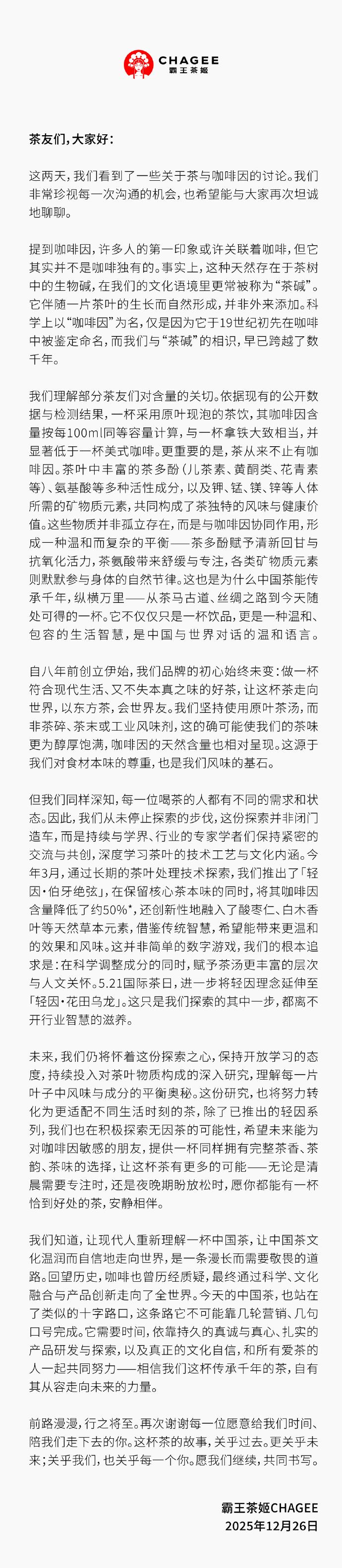
股价大跌,一度冲上热搜!有人称“喝了一晚上睡不着”,霸王茶姬发长文回应“咖啡因”争议
新浪财经· 2025-12-28 14:49
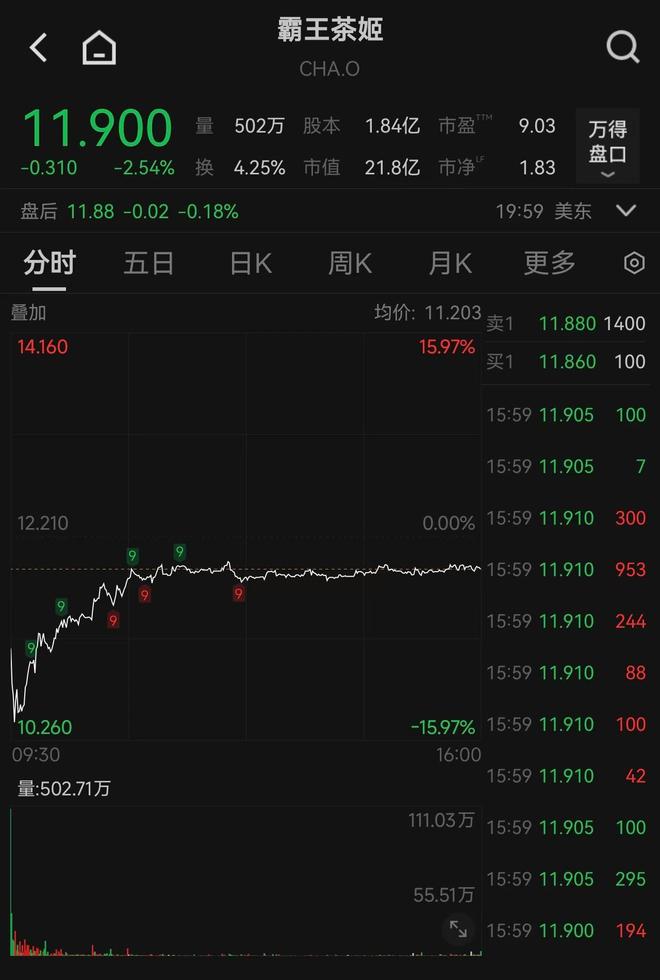
Core Viewpoint - Bawang Chaji is facing public scrutiny due to concerns over caffeine content in its beverages, leading to significant stock price fluctuations and discussions on social media platforms [2][4][21]. Group 1: Caffeine Controversy - A social media post claimed that high-caffeine drinks like Bawang Chaji's are akin to "quasi-drugs," sparking widespread debate among consumers [2]. - Bawang Chaji's stock fell over 15% on December 26, reaching a record low, before closing down 2.54% at $11.90 per share, with a total market value of $22.1 billion [4][22]. - The company responded to the controversy, asserting that the claims are malicious and have initiated legal action to protect its reputation [4]. Group 2: Product Information and Adjustments - Bawang Chaji disclosed that a large cup of its "Boya Juexian" drink contains 117.2 mg of caffeine, while the "Light Caffeine Boya Juexian" variant has 55.4 mg, significantly lower than the 184.4 mg in "Wanli Mulian" and 175.8 mg in "Yiqi Hongchen" [21]. - The company emphasizes that its tea drinks contain natural caffeine and are rich in other beneficial compounds, promoting a balanced consumption experience [14][17]. Group 3: Financial Performance - In Q3 2025, Bawang Chaji reported a total GMV of 79.3 billion yuan and net revenue of 32.08 billion yuan, with a net profit of 5.03 billion yuan [22]. - Despite the growth in overseas business, domestic same-store sales declined by 27.9%, attributed to increased competition and high base effects from the previous year [23]. - The company plans to focus on product innovation and strategic brand investments to enhance market share and operational efficiency [23].

霸王茶姬再陷咖啡因含量争议
Zhong Guo Xin Wen Wang· 2025-12-27 15:35
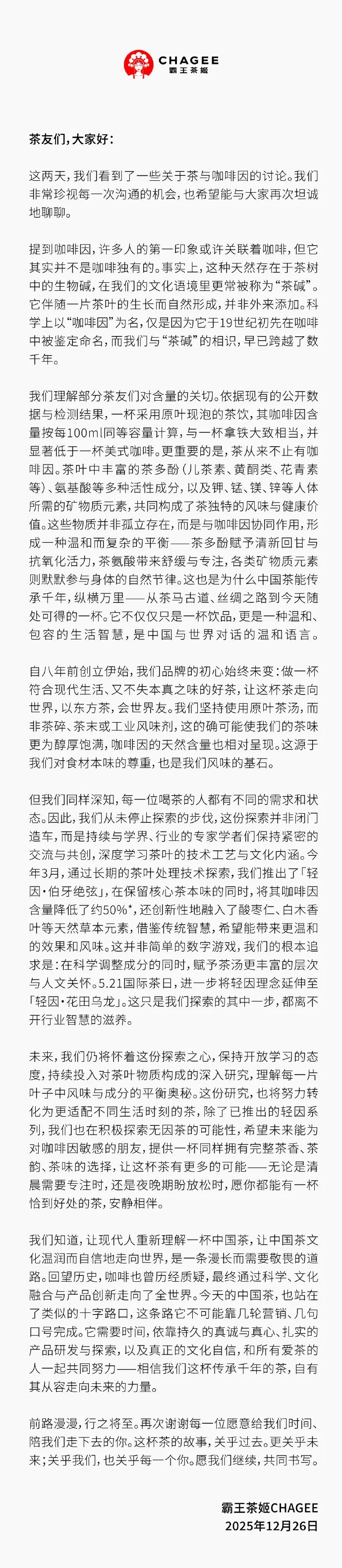
Core Viewpoint - Bawang Chaji is facing public scrutiny due to concerns over caffeine content in its beverages, leading to significant stock price fluctuations and legal responses from the company [2][4]. Group 1: Caffeine Controversy - A social media post claimed that high-caffeine drinks like Bawang Chaji's are akin to "quasi-drugs," sparking widespread discussion and complaints from consumers about insomnia and palpitations after consumption [2]. - Bawang Chaji responded by stating that the claims are malicious fabrications damaging to its reputation, and legal action has been initiated [2]. - Despite the company's response, its stock fell over 14% on December 26, marking the largest single-day drop since its IPO [2]. Group 2: Product Information - The caffeine content in Bawang Chaji's products varies, with a 580ml "Boya Jue Xuan" containing approximately 117.2 mg of caffeine, while the "Wanjie Mulan" drink has about 184.4 mg [3]. - To cater to consumer demand, Bawang Chaji launched low-caffeine versions of popular drinks in March and May, reducing caffeine content by about 50% compared to regular versions [3]. - The company has added warnings on its app, advising consumers to consider their own tolerance to caffeine when consuming its products [3]. Group 3: Market Impact - As of December 26, Bawang Chaji's stock price closed at $11.9 per share, down over 60% from its listing price on April 17 [4].
霸王茶姬发文回应
Xin Jing Bao· 2025-12-27 05:15
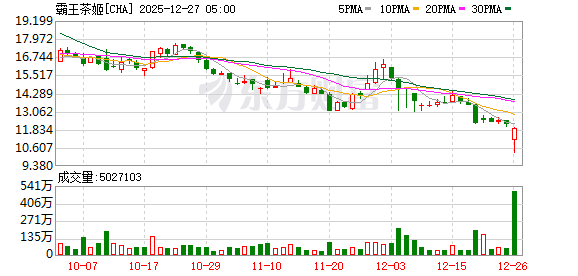
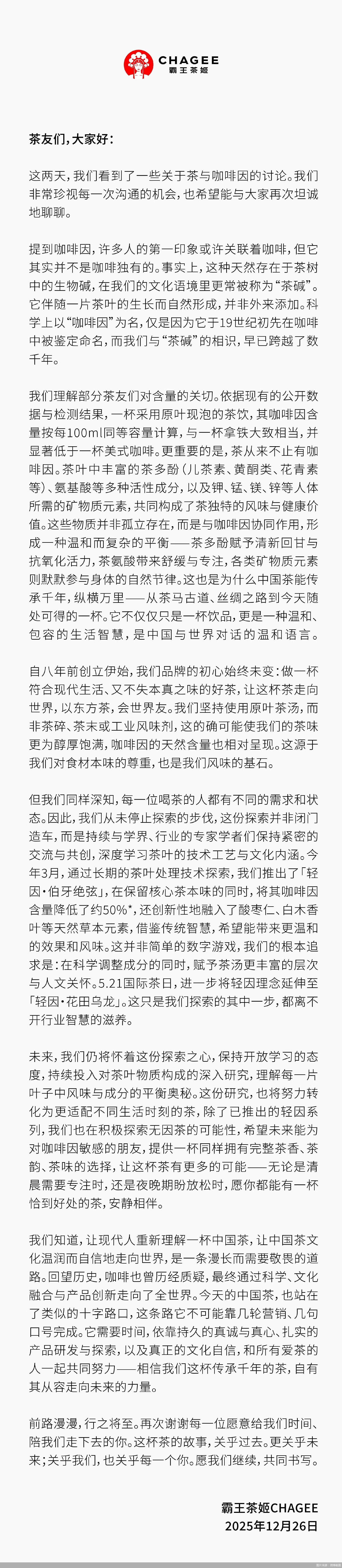
Core Viewpoint - The tea brand "霸王茶姬" (CHAGEE) has addressed concerns regarding caffeine content in its products, emphasizing that its tea drinks have caffeine levels comparable to lattes and significantly lower than American coffee, while also highlighting the health benefits of tea's various active components [2][4]. Group 1: Caffeine Content and Comparison - The company acknowledges the concerns of tea drinkers regarding caffeine levels, stating that a cup of its freshly brewed tea has caffeine content similar to that of a latte and significantly lower than that of an American coffee [2][4]. - The brand emphasizes that tea contains more than just caffeine, including rich polyphenols, amino acids, and essential minerals, which contribute to its unique flavor and health benefits [4][5]. Group 2: Product Innovation and Development - The company has introduced a product called "轻因 · 伯牙绝弦," which reduces caffeine content by approximately 50% while incorporating natural herbal elements, aiming to provide a milder effect and flavor [5][6]. - The brand is committed to ongoing research and development to create tea options that cater to different consumer needs, including exploring the possibility of caffeine-free tea [6][7]. Group 3: Cultural Significance and Future Vision - The company reflects on the historical journey of tea and its cultural significance, likening its current challenges to those faced by coffee in the past, and emphasizes the need for genuine product development and cultural confidence to promote Chinese tea globally [7][9]. - The brand expresses gratitude to its consumers for their support and emphasizes the importance of time and sincerity in building a lasting relationship with tea culture [7][9].
热搜第一!股价大跌,霸王茶姬回应“咖啡因”
中国基金报· 2025-12-27 03:53
Core Viewpoint - The article discusses the recent controversy surrounding Bawang Chaji due to caffeine content in its beverages, which has led to a significant drop in the company's stock price, reaching an all-time low since its IPO [1][7]. Group 1: Caffeine Controversy - Bawang Chaji has faced criticism regarding the caffeine levels in its drinks, with some consumers reporting negative effects such as insomnia and palpitations after consumption [2][10]. - The topic of "Bawang Chaji caffeine" gained traction on social media, leading to widespread discussion and concern among consumers [2][4]. Group 2: Stock Performance - Following the controversy, Bawang Chaji's stock price fell sharply, with a pre-market drop of 10% and an intraday decline of nearly 16%, closing at $11.90 per share, which is over 64% lower than its price on the first day of trading in April [7][8]. Group 3: Company Response - In response to the allegations, Bawang Chaji stated that it is aware of the rumors and misinformation circulating about the company and is committed to protecting its rights legally [4][10]. - The company emphasized that the caffeine content in its tea drinks is comparable to that of a latte and significantly lower than that of an Americano, highlighting its commitment to using whole leaf tea rather than lower-quality ingredients [10][11]. - Bawang Chaji has introduced a product called "Light Caffeine · Boya Juexian," which reduces caffeine content by approximately 50%, and is exploring the possibility of creating caffeine-free tea options for sensitive consumers [10][13].

霸王茶姬大跌登顶热搜!周五美股盘中股价一度暴跌近16%创历史新低,深夜发长文回应“咖啡因”质疑,收盘跌幅收窄至2.54%
Jin Rong Jie· 2025-12-27 03:39
Core Viewpoint - The stock price of Bawang Chaji (霸王茶姬) fell sharply, reaching a new low since its listing, primarily due to a controversy surrounding caffeine content in its products, which has led to consumer complaints about health issues [1][3]. Stock Performance - On December 26, Bawang Chaji's stock opened down nearly 16%, closing at a 2.54% decrease, with a market capitalization of approximately 2.18 billion [1][2]. Consumer Concerns - A significant number of consumers have reported symptoms such as palpitations and insomnia after consuming Bawang Chaji's products, leading to accusations that the caffeine content is dangerously high [3]. Company Response - Bawang Chaji issued a statement addressing these concerns, asserting that the caffeine content in their tea is comparable to that of a latte and significantly lower than that of an Americano [5][6]. - The company emphasized that tea contains various beneficial compounds, including polyphenols and minerals, which contribute to its health benefits and flavor, and that caffeine is not the only active ingredient [7][8]. Product Innovation - The company has been exploring ways to reduce caffeine content, having introduced a product line that lowers caffeine by approximately 50% while maintaining the core flavor of tea [8][9]. - Bawang Chaji is also investigating the possibility of creating caffeine-free tea options to cater to consumers sensitive to caffeine [9]. Cultural Significance - The company highlighted the cultural importance of tea and its historical journey, drawing parallels with coffee's evolution and emphasizing the need for genuine product development and cultural confidence to promote Chinese tea globally [9][10].
霸王茶姬回应咖啡因含量争议
Bei Jing Shang Bao· 2025-12-27 03:37
Core Viewpoint - The company BaWang Tea Ji emphasizes its commitment to using whole leaf tea instead of tea fragments or industrial flavorings, which contributes to a richer flavor and a natural caffeine content that is relatively lower than that of coffee [1][4]. Group 1: Caffeine Content - Caffeine is not exclusive to coffee; it is a natural alkaloid found in tea, often referred to as "theine" [1][3]. - A cup of freshly brewed whole leaf tea has a caffeine content comparable to that of a latte and significantly lower than that of an Americano when measured per 100ml [1][3]. Group 2: Health Benefits - Tea contains not only caffeine but also a variety of beneficial compounds such as polyphenols (catechins, flavonoids, anthocyanins), amino acids, and essential minerals like potassium, manganese, magnesium, and zinc, which contribute to its unique flavor and health benefits [1][4]. Group 3: Product Innovation - In March, BaWang Tea Ji launched "Light Caffeine: Bo Ya Jue Xuan," which reduces caffeine content by approximately 50% and incorporates natural herbal elements like sour jujube seed and white wood fragrance leaves for a milder effect and flavor [1][5]. - The company is committed to ongoing research into the composition of tea to create products that cater to different lifestyles and preferences, including caffeine-free options for those sensitive to caffeine [1][6].
热搜第一!股价大跌,霸王茶姬回应“咖啡因”
Zhong Guo Ji Jin Bao· 2025-12-27 03:14
Core Viewpoint - The stock price of Bawang Chaji has significantly dropped due to a caffeine controversy, reaching a new low since its IPO, which has sparked widespread discussion on social media [1][3][7]. Group 1: Stock Performance - On December 27, Bawang Chaji's stock was trending on Weibo, indicating heightened public interest and concern [2]. - The company's stock fell by nearly 16% during trading, closing at $11.90 per share, which is over 64% lower than its price on the first day of trading in April [7]. - The stock's 52-week high was $41.80, while the low was $10.26, reflecting significant volatility [8]. Group 2: Caffeine Controversy - The controversy began when a self-media personality suggested that high-caffeine beverages like Bawang Chaji's products are "skirting the edge of being a drug" [3]. - Many consumers reported adverse effects after consuming Bawang Chaji's drinks, including insomnia and palpitations [3]. - In response to the controversy, Bawang Chaji acknowledged the concerns and stated that they would take legal action against false information [5]. Group 3: Company Response and Future Plans - Bawang Chaji emphasized that their tea drinks have caffeine levels comparable to a latte and significantly lower than an Americano, while also highlighting the health benefits of tea [9][10]. - The company has introduced a product called "Light Caffeine · Boya Jue Xuan," which reduces caffeine content by approximately 50% while maintaining the core flavor of the tea [11]. - Bawang Chaji is exploring the possibility of creating caffeine-free tea options to cater to consumers sensitive to caffeine [9][12].

霸王茶姬深夜回应“咖啡因”问题
新华网财经· 2025-12-27 03:06
Core Viewpoint - The recent controversy surrounding "霸王茶姬" and its caffeine content has sparked significant public attention, with the company responding to concerns about health effects from its products [1][3]. Group 1: Caffeine Content and Product Response - "霸王茶姬" claims that the caffeine content in their tea drinks is comparable to that of a latte and significantly lower than that of an Americano, based on current public data and testing results [1]. - The company emphasizes the use of whole leaf tea rather than tea fragments or industrial flavoring agents, which contributes to a richer flavor and a natural caffeine content [1]. - The product "轻因·伯牙绝弦," launched in March, has reduced caffeine content by approximately 50% while maintaining the core tea flavor [1]. Group 2: Legal Actions and Financial Performance - The company has noted the spread of rumors and false information online, stating that their legal department has initiated legal proceedings to protect their reputation [3]. - In the third quarter of 2025, "霸王茶姬" reported a total of 7,338 global stores, a GMV of 7.93 billion yuan, net revenue of 3.208 billion yuan, and an adjusted net profit of 503 million yuan, achieving profitability for 11 consecutive quarters [3].