轻因·花田乌龙

Search documents
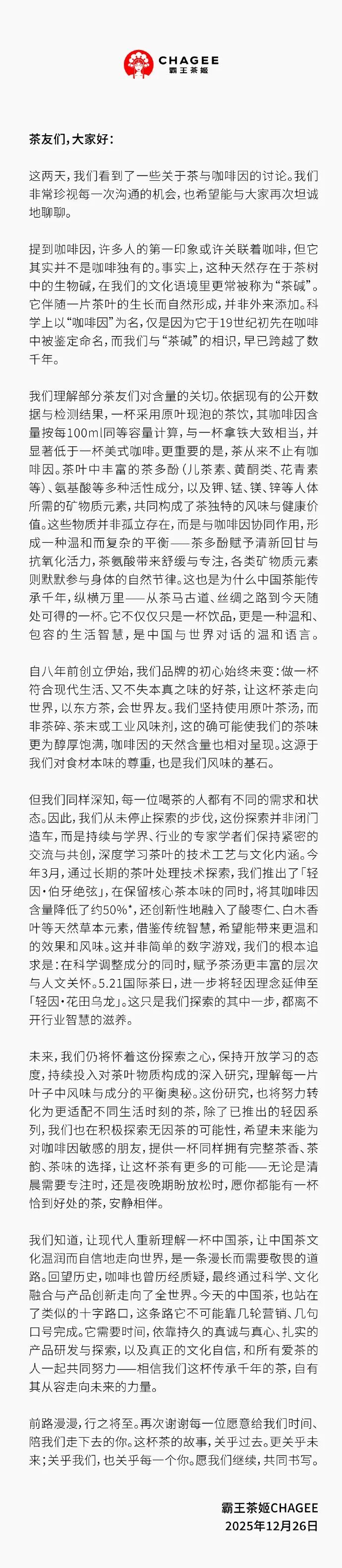
霸王茶姬发文回应
Xin Jing Bao· 2025-12-27 05:15
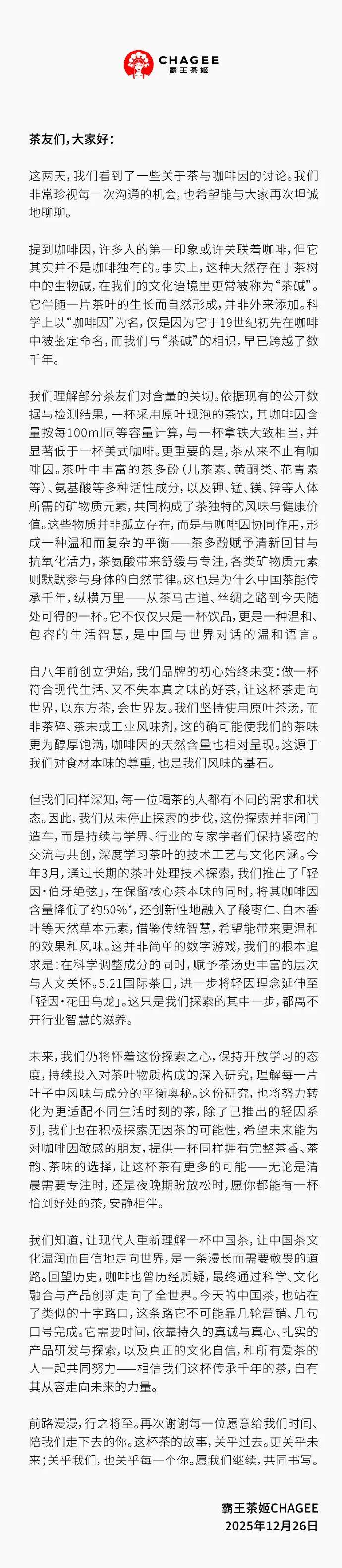
Core Viewpoint - The tea brand "霸王茶姬" (CHAGEE) has addressed concerns regarding caffeine content in its products, emphasizing that its tea drinks have caffeine levels comparable to lattes and significantly lower than American coffee, while also highlighting the health benefits of tea's various active components [2][4]. Group 1: Caffeine Content and Comparison - The company acknowledges the concerns of tea drinkers regarding caffeine levels, stating that a cup of its freshly brewed tea has caffeine content similar to that of a latte and significantly lower than that of an American coffee [2][4]. - The brand emphasizes that tea contains more than just caffeine, including rich polyphenols, amino acids, and essential minerals, which contribute to its unique flavor and health benefits [4][5]. Group 2: Product Innovation and Development - The company has introduced a product called "轻因 · 伯牙绝弦," which reduces caffeine content by approximately 50% while incorporating natural herbal elements, aiming to provide a milder effect and flavor [5][6]. - The brand is committed to ongoing research and development to create tea options that cater to different consumer needs, including exploring the possibility of caffeine-free tea [6][7]. Group 3: Cultural Significance and Future Vision - The company reflects on the historical journey of tea and its cultural significance, likening its current challenges to those faced by coffee in the past, and emphasizes the need for genuine product development and cultural confidence to promote Chinese tea globally [7][9]. - The brand expresses gratitude to its consumers for their support and emphasizes the importance of time and sincerity in building a lasting relationship with tea culture [7][9].

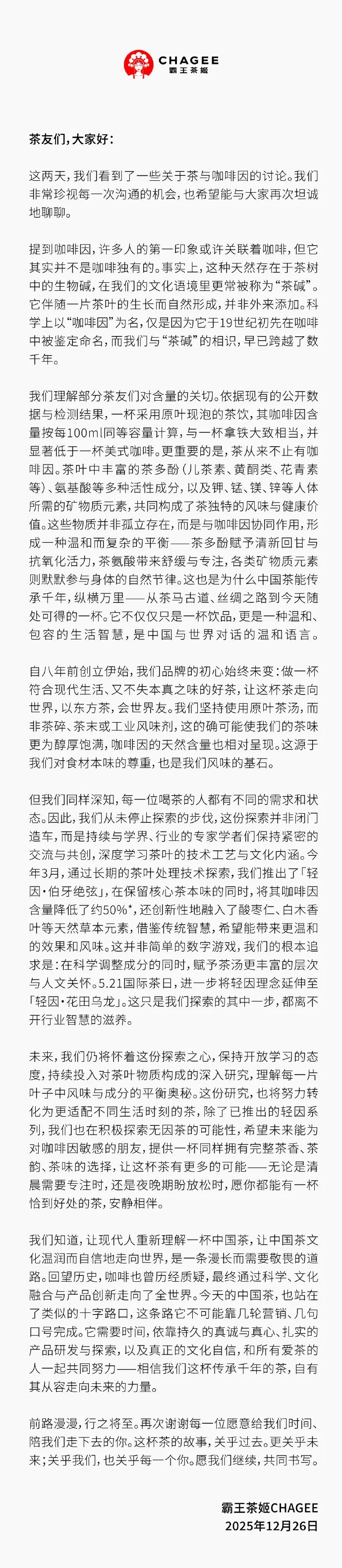
热搜第一!股价大跌,霸王茶姬回应“咖啡因”
中国基金报· 2025-12-27 03:53
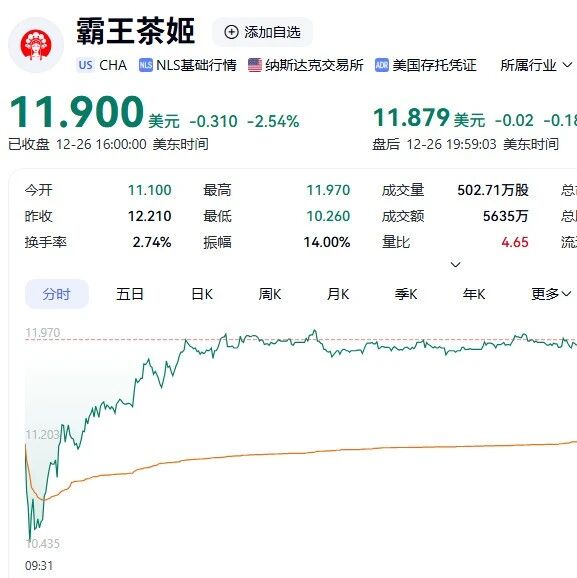
Core Viewpoint - The article discusses the recent controversy surrounding Bawang Chaji due to caffeine content in its beverages, which has led to a significant drop in the company's stock price, reaching an all-time low since its IPO [1][7]. Group 1: Caffeine Controversy - Bawang Chaji has faced criticism regarding the caffeine levels in its drinks, with some consumers reporting negative effects such as insomnia and palpitations after consumption [2][10]. - The topic of "Bawang Chaji caffeine" gained traction on social media, leading to widespread discussion and concern among consumers [2][4]. Group 2: Stock Performance - Following the controversy, Bawang Chaji's stock price fell sharply, with a pre-market drop of 10% and an intraday decline of nearly 16%, closing at $11.90 per share, which is over 64% lower than its price on the first day of trading in April [7][8]. Group 3: Company Response - In response to the allegations, Bawang Chaji stated that it is aware of the rumors and misinformation circulating about the company and is committed to protecting its rights legally [4][10]. - The company emphasized that the caffeine content in its tea drinks is comparable to that of a latte and significantly lower than that of an Americano, highlighting its commitment to using whole leaf tea rather than lower-quality ingredients [10][11]. - Bawang Chaji has introduced a product called "Light Caffeine · Boya Juexian," which reduces caffeine content by approximately 50%, and is exploring the possibility of creating caffeine-free tea options for sensitive consumers [10][13].

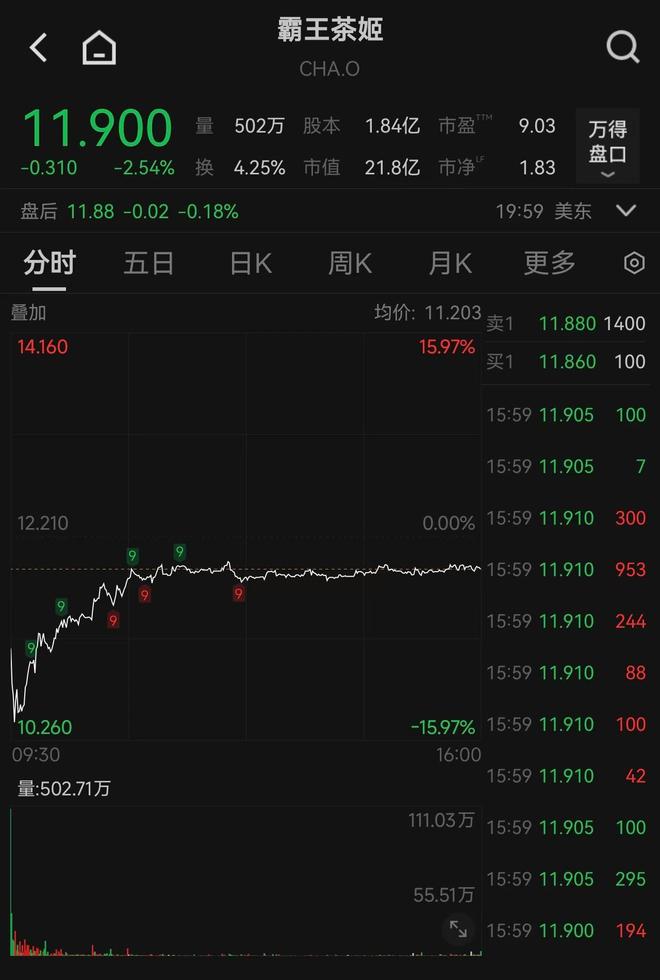
霸王茶姬大跌登顶热搜!周五美股盘中股价一度暴跌近16%创历史新低,深夜发长文回应“咖啡因”质疑,收盘跌幅收窄至2.54%
Jin Rong Jie· 2025-12-27 03:39
Core Viewpoint - The stock price of Bawang Chaji (霸王茶姬) fell sharply, reaching a new low since its listing, primarily due to a controversy surrounding caffeine content in its products, which has led to consumer complaints about health issues [1][3]. Stock Performance - On December 26, Bawang Chaji's stock opened down nearly 16%, closing at a 2.54% decrease, with a market capitalization of approximately 2.18 billion [1][2]. Consumer Concerns - A significant number of consumers have reported symptoms such as palpitations and insomnia after consuming Bawang Chaji's products, leading to accusations that the caffeine content is dangerously high [3]. Company Response - Bawang Chaji issued a statement addressing these concerns, asserting that the caffeine content in their tea is comparable to that of a latte and significantly lower than that of an Americano [5][6]. - The company emphasized that tea contains various beneficial compounds, including polyphenols and minerals, which contribute to its health benefits and flavor, and that caffeine is not the only active ingredient [7][8]. Product Innovation - The company has been exploring ways to reduce caffeine content, having introduced a product line that lowers caffeine by approximately 50% while maintaining the core flavor of tea [8][9]. - Bawang Chaji is also investigating the possibility of creating caffeine-free tea options to cater to consumers sensitive to caffeine [9]. Cultural Significance - The company highlighted the cultural importance of tea and its historical journey, drawing parallels with coffee's evolution and emphasizing the need for genuine product development and cultural confidence to promote Chinese tea globally [9][10].
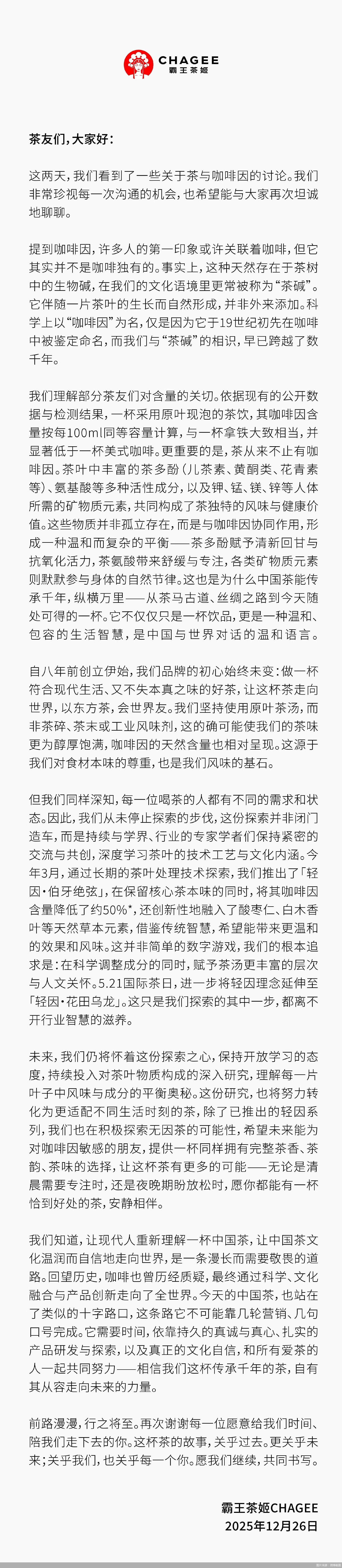
霸王茶姬回应咖啡因含量争议
Bei Jing Shang Bao· 2025-12-27 03:37
Core Viewpoint - The company BaWang Tea Ji emphasizes its commitment to using whole leaf tea instead of tea fragments or industrial flavorings, which contributes to a richer flavor and a natural caffeine content that is relatively lower than that of coffee [1][4]. Group 1: Caffeine Content - Caffeine is not exclusive to coffee; it is a natural alkaloid found in tea, often referred to as "theine" [1][3]. - A cup of freshly brewed whole leaf tea has a caffeine content comparable to that of a latte and significantly lower than that of an Americano when measured per 100ml [1][3]. Group 2: Health Benefits - Tea contains not only caffeine but also a variety of beneficial compounds such as polyphenols (catechins, flavonoids, anthocyanins), amino acids, and essential minerals like potassium, manganese, magnesium, and zinc, which contribute to its unique flavor and health benefits [1][4]. Group 3: Product Innovation - In March, BaWang Tea Ji launched "Light Caffeine: Bo Ya Jue Xuan," which reduces caffeine content by approximately 50% and incorporates natural herbal elements like sour jujube seed and white wood fragrance leaves for a milder effect and flavor [1][5]. - The company is committed to ongoing research into the composition of tea to create products that cater to different lifestyles and preferences, including caffeine-free options for those sensitive to caffeine [1][6].
热搜第一!股价大跌,霸王茶姬回应“咖啡因”
Zhong Guo Ji Jin Bao· 2025-12-27 03:14
Core Viewpoint - The stock price of Bawang Chaji has significantly dropped due to a caffeine controversy, reaching a new low since its IPO, which has sparked widespread discussion on social media [1][3][7]. Group 1: Stock Performance - On December 27, Bawang Chaji's stock was trending on Weibo, indicating heightened public interest and concern [2]. - The company's stock fell by nearly 16% during trading, closing at $11.90 per share, which is over 64% lower than its price on the first day of trading in April [7]. - The stock's 52-week high was $41.80, while the low was $10.26, reflecting significant volatility [8]. Group 2: Caffeine Controversy - The controversy began when a self-media personality suggested that high-caffeine beverages like Bawang Chaji's products are "skirting the edge of being a drug" [3]. - Many consumers reported adverse effects after consuming Bawang Chaji's drinks, including insomnia and palpitations [3]. - In response to the controversy, Bawang Chaji acknowledged the concerns and stated that they would take legal action against false information [5]. Group 3: Company Response and Future Plans - Bawang Chaji emphasized that their tea drinks have caffeine levels comparable to a latte and significantly lower than an Americano, while also highlighting the health benefits of tea [9][10]. - The company has introduced a product called "Light Caffeine · Boya Jue Xuan," which reduces caffeine content by approximately 50% while maintaining the core flavor of the tea [11]. - Bawang Chaji is exploring the possibility of creating caffeine-free tea options to cater to consumers sensitive to caffeine [9][12].

霸王茶姬美股大跌!公司深夜回应
证券时报· 2025-12-27 01:34
Core Viewpoint - The article discusses the recent stock performance and public response of Bawang Tea Ji, highlighting a significant drop in stock price and the company's efforts to address concerns regarding caffeine content in their products [1][10]. Stock Performance - On December 26, Bawang Tea Ji's stock price fell over 14% at one point, reaching a new low since its listing, and closed down 2.54% at $11.90 [1][2]. - The total market capitalization of Bawang Tea Ji is approximately $2.184 billion, with a price-to-earnings (P/E) ratio of 8.89 [2]. Caffeine Content Controversy - The company acknowledged public concerns regarding caffeine levels, stating that a cup of their tea has caffeine content comparable to a latte and significantly lower than that of an Americano [3][5]. - Bawang Tea Ji emphasized that caffeine is a naturally occurring compound in tea, not an additive, and is referred to as "theine" in cultural contexts [4][10]. Product Development and Innovation - The company has been exploring the development of low-caffeine and caffeine-free tea options, having already launched products that reduce caffeine content by approximately 50% [7][10]. - Bawang Tea Ji aims to maintain the authentic flavor of tea while catering to varying consumer needs, indicating a commitment to continuous research and collaboration with industry experts [8][10]. Legal Response to Misinformation - In response to negative online discussions and accusations regarding high caffeine levels, the company has initiated legal action against the spread of false information that could harm its reputation [10].

霸王茶姬美股大跌
Sou Hu Cai Jing· 2025-12-27 00:43
Core Viewpoint - The stock of BaWang Tea Ji fell over 14% on December 26, reaching a record low since its IPO, primarily due to concerns over high caffeine content in its products, which has sparked widespread discussion online [1][2]. Group 1: Caffeine Content Concerns - BaWang Tea Ji's products have been reported to contain caffeine levels as high as 220mg per cup, leading to adverse reactions such as palpitations and insomnia among consumers [1]. - In response to the caffeine controversy, BaWang Tea Ji stated that the caffeine content in their brewed tea is comparable to that of a latte and significantly lower than that of an Americano, based on existing public data and testing results [1][4]. Group 2: Product Innovation and Development - The company emphasizes its commitment to using whole leaf tea rather than tea fragments or industrial flavoring agents, which contributes to a richer flavor profile and a more natural caffeine content [5][6]. - In March, BaWang Tea Ji launched the "Light Caffeine · Bo Ya Jue Xuan" product, which reduces caffeine content by approximately 50% while incorporating natural herbal elements, aiming to provide a milder effect and flavor [2][6]. - The company is actively exploring the possibility of caffeine-free tea options to cater to consumers sensitive to caffeine, ensuring that the tea maintains its aromatic and flavorful qualities [6][7]. Group 3: Cultural and Market Positioning - BaWang Tea Ji aims to redefine the perception of Chinese tea and promote its cultural significance globally, recognizing that this requires time, genuine effort, and solid product development rather than mere marketing [7]. - The company acknowledges the historical challenges faced by coffee in gaining acceptance and draws parallels to the current situation of Chinese tea, emphasizing the need for cultural confidence and sustained innovation [7].
霸王茶姬发长文回应“咖啡因含量过高”
Xin Lang Cai Jing· 2025-12-26 15:55
Group 1 - The core issue revolves around the caffeine content in the tea products of the company, which has sparked widespread discussion among consumers, with some reporting insomnia and palpitations after consumption [1] - The company responded by clarifying that the caffeine content in their tea, when measured per 100ml, is roughly equivalent to that of a latte and significantly lower than that of an Americano [1] - The company emphasizes its commitment to using whole leaf tea rather than tea dust or industrial flavoring agents, which contributes to a richer flavor and a natural caffeine content [2] Group 2 - The company acknowledges the diverse needs of tea drinkers and has been actively exploring ways to cater to these varying demands through collaboration with experts in the field [3] - In March, the company launched a new product, "Light Caffeine · Boya Juexian," which reduces caffeine content by approximately 50% while incorporating natural herbal elements, aiming for a milder effect and flavor [3] - The company plans to extend the "Light Caffeine" concept to other products, such as "Light Caffeine · Huatian Oolong," as part of its ongoing exploration and innovation in tea [3]
霸王茶姬回应“咖啡因含量”争议
财联社· 2025-12-26 15:45
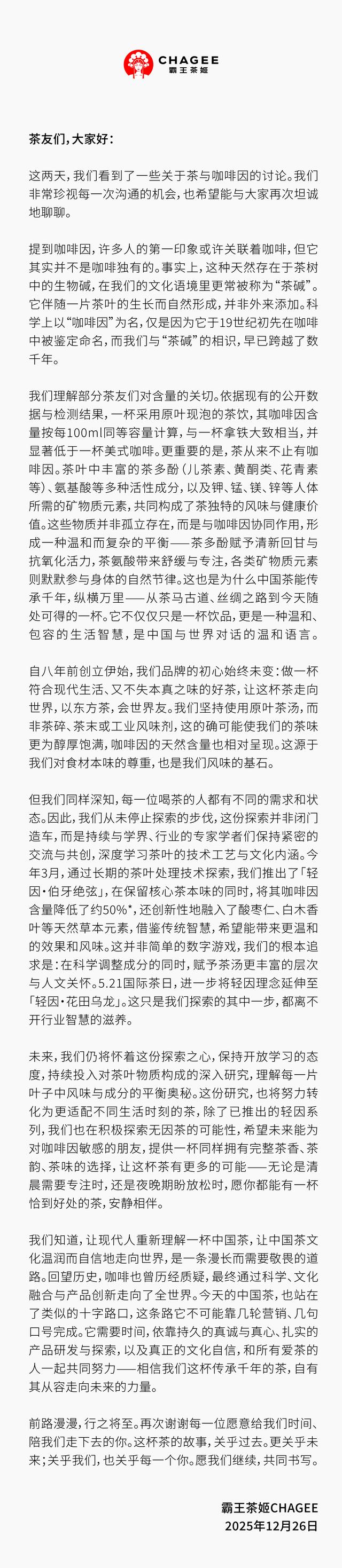
Core Viewpoint - The article discusses the controversy surrounding the caffeine content in "霸王茶姬" tea products, emphasizing the brand's commitment to using whole leaf tea and addressing consumer concerns about caffeine levels [1][3]. Group 1: Caffeine Content and Comparisons - The caffeine content in a cup of "霸王茶姬" tea, when calculated per 100ml, is comparable to that of a latte and significantly lower than that of an Americano [1][3]. - The brand acknowledges the natural presence of caffeine in tea, which is often referred to as "tea alkaloid" in cultural contexts, and emphasizes that it is not an additive [3][4]. Group 2: Product Innovation and Development - In March, the company launched "轻因·伯牙绝弦," which reduces caffeine content by approximately 50% while incorporating natural herbal elements like sour jujube seed and white wood fragrance leaves [5][6]. - The brand aims to create a balanced tea experience that caters to different consumer needs, including those sensitive to caffeine, and is exploring the possibility of caffeine-free tea options [6][7]. Group 3: Brand Philosophy and Future Direction - Since its inception eight years ago, the brand's mission has been to produce high-quality tea that aligns with modern lifestyles while preserving authentic flavors [4][5]. - The company emphasizes the importance of ongoing research and collaboration with experts to enhance the understanding of tea's composition and to innovate products that resonate with consumers [6][7].
霸王茶姬美股大跌,此前因“咖啡因”登上热搜
Di Yi Cai Jing· 2025-12-26 15:13
Core Viewpoint - The stock of BaWang Tea Ji fell over 14% on December 26, reaching a record low since its IPO, amid concerns over high caffeine content in its products, which has led to discussions on social media [1] Group 1: Caffeine Content Concerns - BaWang Tea Ji's products have been reported to contain caffeine levels as high as 220mg per cup, causing adverse reactions such as palpitations and insomnia among consumers [1] - In response to the caffeine controversy, BaWang Tea Ji stated that the caffeine content in their brewed tea is comparable to that of a latte and significantly lower than that of an Americano, based on existing public data and testing results [1][4] Group 2: Product Innovation and Development - The company has been actively exploring tea processing techniques and has collaborated with experts to develop new products, such as "Light Caffeine · Bo Ya Jue Xuan," which reduces caffeine content by approximately 50% while maintaining the core flavor of the tea [2][6] - BaWang Tea Ji emphasizes the use of whole leaf tea rather than tea fragments or industrial flavoring agents, which contributes to a richer taste and a more natural caffeine presence [5][6] Group 3: Future Directions and Cultural Significance - The company aims to continue its exploration of tea's composition and balance, with plans to develop caffeine-free tea options to cater to consumers sensitive to caffeine [6] - BaWang Tea Ji recognizes the importance of cultural confidence and the need for sustained product development and innovation to promote Chinese tea globally, drawing parallels with the historical journey of coffee [7][8]