运动品牌收购

Search documents
安踏李宁,争抢收购彪马?
3 6 Ke· 2025-11-30 08:35
Core Viewpoint - The German sports brand Puma is reportedly facing acquisition offers, with Anta Sports identified as a potential buyer among others, amid a backdrop of declining performance and market pressures [1][2][3]. Group 1: Acquisition Rumors - Anta Sports is one of the potential bidders for Puma, alongside Li Ning, Asics, Authentic Brands Group, and private equity firm CVC [2]. - Puma's stock experienced a significant surge, with an 18.91% increase in Germany and a 17.97% rise in the UK on November 27, marking the largest single-day gain in years [4]. - Puma's stock had previously fallen over 50% this year, reaching a decade-low due to intense competition and adverse market conditions [4][5]. Group 2: Financial Performance - Puma's financial struggles are evident, with a 6.6% increase in sales to €8.602 billion in 2023, but a 13.7% decline in net profit to €305 million [7]. - The company anticipates further declines, projecting a 2.0% drop in Q2 sales for 2025 and a net loss of €247 million [7][8]. - The new CEO, Arther Hold, has initiated measures to improve efficiency, including a workforce reduction of approximately 900 positions by the end of 2026 [8]. Group 3: Strategic Direction - Puma is shifting its focus back to core sports categories, emphasizing performance in football, running, and training [16]. - The company has partnered with the HYROX fitness competition to enhance its professional brand image, with plans to expand its presence in this segment [18][19]. - Despite its challenges, Puma remains a valuable brand, ranking fifth globally in brand value, according to GYBrand [23]. Group 4: Industry Implications - The potential acquisition of Puma could significantly alter the competitive landscape of the global sportswear industry, especially if a Chinese company like Anta successfully acquires it [27]. - This event is seen as a pivotal moment in the sportswear sector, with implications for market dynamics and international expansion strategies [27].




彪马待价而沽,阿迪达斯、中资企业、国际私募或上演“三国杀”
Mei Ri Jing Ji Xin Wen· 2025-09-18 11:28
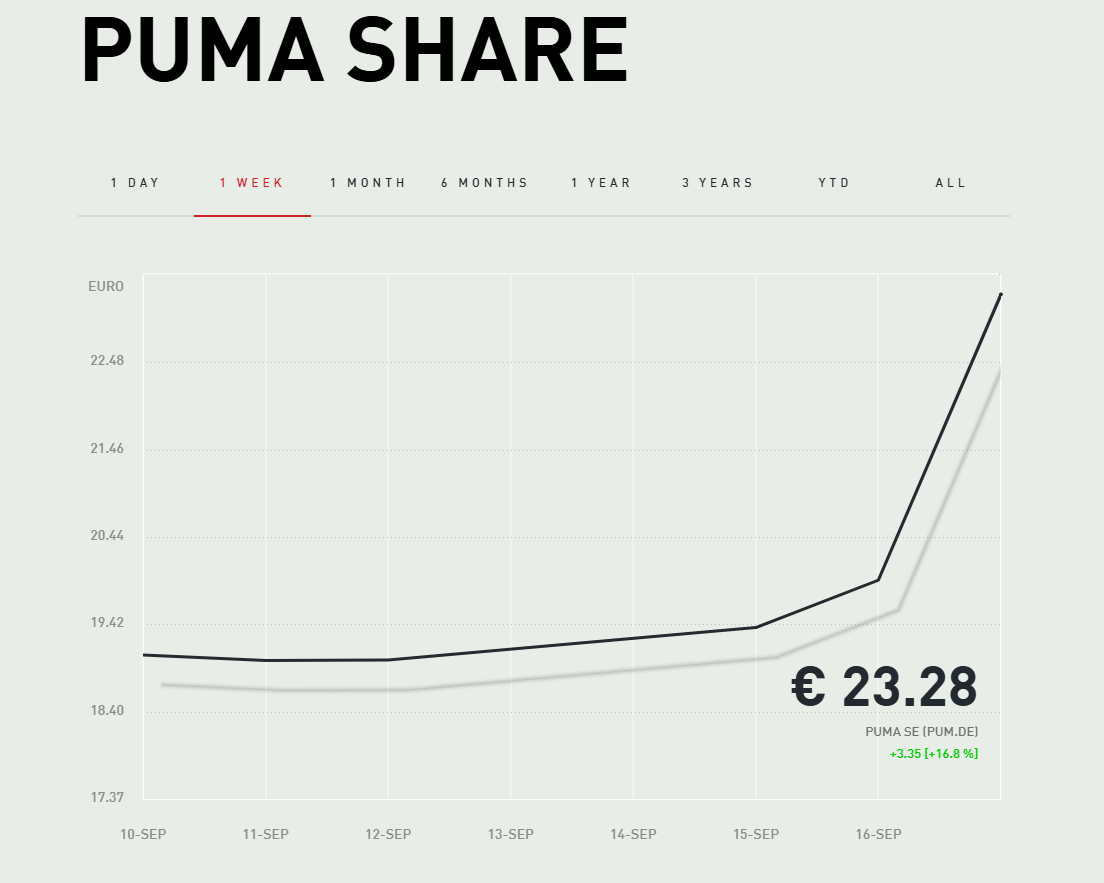
Core Viewpoint - The potential sale of Puma shares held by the Pinault family is generating significant interest in the capital market, with various buyers, including Adidas, Authentic Brands Group (ABG), and CVC Capital, expressing interest in acquiring the 29% stake [1][6][10] Group 1: Market Reactions and Stock Performance - Following speculation that Adidas might be a potential buyer, Puma's stock price rose by 2.9% on September 16 and surged by 16.8% on September 17, marking a total increase of over 19% in two days [1][9] - The stock price had previously experienced a decline of 23% earlier in the year due to macroeconomic challenges and a significant drop to a new low since 2016 [6][9] Group 2: Ownership Structure and Potential Buyers - The Pinault family, through their holding company Artémis, owns 29% of Puma, making them the largest single shareholder, while other institutional investors hold around 3% each [3][5] - If CVC acquires the 29% stake from Artémis, it would become the largest single shareholder in Puma [5] - ABG is known for acquiring and revitalizing struggling brands and has previously engaged in competitive bidding with CVC for other brands, indicating a strong interest in Puma [5][6] Group 3: Historical Context and Strategic Implications - The historical rivalry between Adidas and Puma dates back to their founding by the Dassler brothers in 1948, and a potential acquisition would symbolize a "family reunion" in the industry [8][9] - The combined revenue of Adidas and Puma could challenge Nike's market dominance, with projected revenues of approximately $514 billion for Nike, €236.8 billion for Adidas, and €88.17 billion for Puma [8][9] - The merger would allow for a dual-brand strategy, potentially covering a broader customer base from professional sports to fashion [8][9] Group 4: Challenges and Regulatory Concerns - The acquisition faces significant hurdles, including potential antitrust issues from the EU, particularly in overlapping markets like football sponsorship [9] - Maintaining brand identity and managing the competitive history between Adidas and Puma would also pose challenges [9]