运营数智化

Search documents
中伟新材(02579) - 海外监管公告
2026-03-30 14:51
香港交易及結算所有限公司及香港聯合交易所有限公司對本公告之內容概不 負 責,對 其 準 確 性 或 完 整 性 亦 不 發 表 任 何 聲 明,並 明 確 表 示,概 不 對 因 本 公 告 全部或任何部分內容而產生或因依賴該等內容而引致的任何損失承擔任何責 任。 CNGR Advanced Material Co., Ltd. 中偉新材料股份有限公司 (於 中 華 人 民 共 和 國 註 冊 成 立 的 股 份 有 限 公 司) (股 份 代 號:2579) 海外監管公告 本公告乃根據香港聯合交易所有限公司證券上市規則第13.10B條 而 作 出。 茲載列中偉新材料股份有限公司(「本公司」)在深圳證券交易所網站刊登的《2025 年 中 偉 新 材 料 股 份 有 限 公 司 可 持 續 發 展 報 告》,僅 供 參 閱。 特 此 公 告。 承董事會命 中偉新材料股份有限公司 董 事 長、執 行 董 事 兼 總 裁 鄧偉明先生 香 港,2026年3月30日 於 本 公 告 日 期,本 公 司 董 事 為:(i)執 行 董 事 鄧 偉 明 先 生、鄧 競 先 生、陶 吳 先 生、 廖 恆 星 先 生、李 衛 華 ...
从规模扩张到价值深耕:餐饮行业五大趋势与头部品牌价值分析
市值风云· 2026-01-23 12:55
Core Insights - The restaurant industry is undergoing a significant transformation, with a shift from rapid expansion to a focus on building long-term competitive advantages and differentiation [4][20] - The market is expected to see over 3 million store closures by 2025, with 161,000 closures in the first half of the year alone, indicating a severe contraction in the sector [3][4] Consumer Trends - Health-conscious dining is becoming a baseline requirement, with the health food market projected to exceed 1.8 trillion yuan by 2026, growing at over 30% annually [5][6] - Consumers are increasingly prioritizing value for money, with a significant shift towards mid-range pricing; over 64% of takeaway orders are priced between 20-39 yuan [8][9] - Personalized dining experiences are on the rise, with a growing demand for unique dining scenarios such as single-person meals and all-day dining options [10][11] Supply Chain and Operational Changes - New national standards for pre-prepared foods are set to enhance compliance and transparency in the industry, prompting major chains to adopt self-sufficient supply chains [12][13] - A quality revolution is underway, with brands implementing open kitchens and live cooking demonstrations to rebuild consumer trust [14] - The integration of smart cooking devices and digital monitoring systems is reshaping the restaurant ecosystem, improving efficiency and reducing labor costs [15][16] Market Dynamics - The chain restaurant penetration rate is increasing, projected to rise from 15% in 2020 to over 26% by 2026, with lower-tier markets becoming the main growth engine [17][20] - The focus on lower-tier markets is driven by a large population base and increasing disposable income, with these areas expected to account for over 60% of new store openings [17][21] - Digital transformation is becoming essential, with AI and data analytics tools enhancing operational efficiency and customer engagement [18][19] Conclusion - The restaurant industry is experiencing unprecedented structural changes, with a consensus on the need for value-driven strategies and deep market penetration to achieve sustainable growth [21][22]


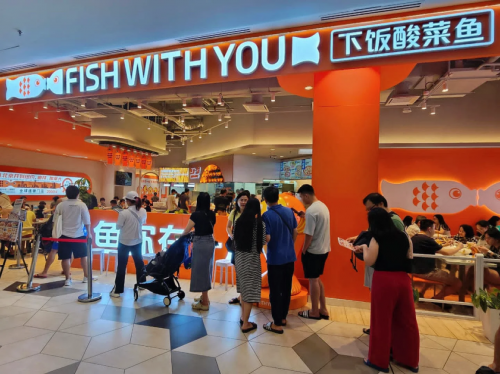
鱼你在一起靠谱吗?解码中餐出海破局的“供应链+数智化”双引擎
Zhong Guo Chan Ye Jing Ji Xin Xi Wang· 2025-05-14 07:04
Core Insights - The Chinese restaurant market is experiencing intense competition, leading many brands to explore overseas expansion as a second growth curve [1] - "Yu Ni Zai Yi Qi" has successfully opened over 2500 stores globally in 9 years by adopting a "sour fish fast-food" model, breaking category boundaries [1] Group 1: Supply Chain Management - "Yu Ni Zai Yi Qi" has established a comprehensive supply chain system as its core competitive advantage, including production bases for key ingredients and a cold chain network for overseas operations [3] - The company ensures 85% of core ingredients are supplied directly from headquarters, maintaining consistent taste and food safety across global outlets [3] Group 2: Franchise Support System - The brand offers a "nanny-level" support system for overseas franchisees, providing comprehensive assistance from site selection to operational guidance [5] - Digital tools like "Yu Dian Wei" and "Yu Dian Bao" are integrated into store management to enhance operational efficiency and data analysis [6] Group 3: Business Model Innovation - "Yu Ni Zai Yi Qi" employs a light asset model for overseas expansion, utilizing a "small store + light investment + franchising" approach to optimize operations [7] - The management structure is streamlined to enhance efficiency, and the brand is exploring smaller store formats to adapt to high labor costs and operational complexities in foreign markets [7] Group 4: Recognition and Market Position - The company has been recognized with two awards for "2025 Annual Value Enterprise" and "2025 Annual Value Brand," solidifying its position as a reliable choice for Chinese cuisine overseas [9] - With over 2500 franchise stores, "Yu Ni Zai Yi Qi" is seen as a "certain choice" for those looking to invest in the overseas Chinese restaurant market [9]