退保黑灰产

Search documents
退保黑灰产仍在“隐秘角落”顶风接单
Bei Jing Shang Bao· 2026-02-10 03:45
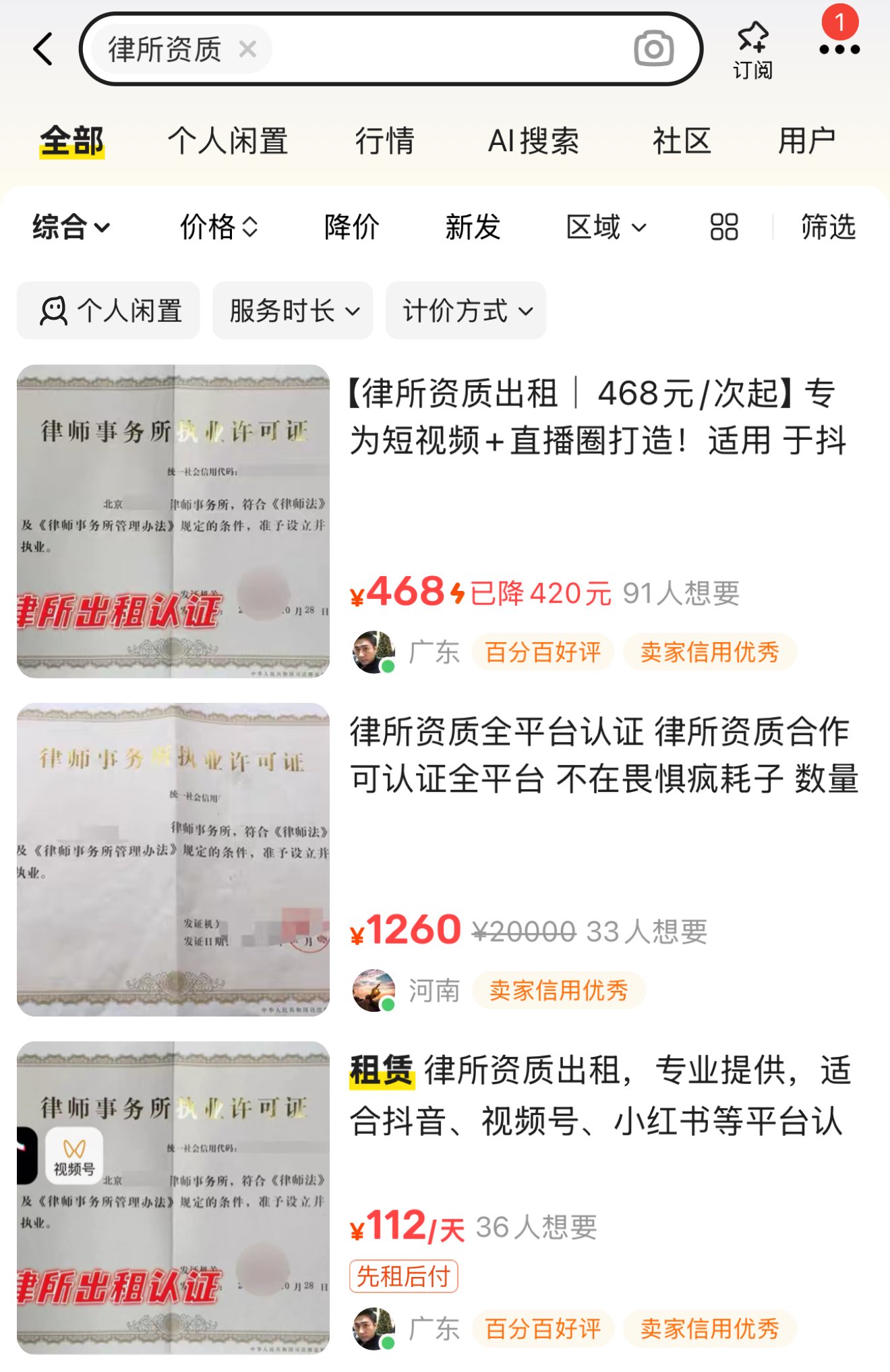
Core Viewpoint - The article highlights the ongoing issue of fraudulent "full refund" insurance schemes proliferating on short video platforms, despite regulatory warnings from financial authorities [1][7][9]. Group 1: Fraudulent Practices - Fraudulent accounts are using misleading claims of "full refund" services, often masquerading as legitimate law firms or legal consultants, to lure consumers into paying high fees for ineffective services [2][5]. - These schemes often involve a complex process where consumers are guided to create false complaints against insurance companies, with the promise of recovering a higher percentage of their premiums than the actual cash value [5][6]. Group 2: Regulatory Response - Five regulatory bodies have issued warnings about these fraudulent practices, emphasizing the need for consumers to report any suspicious activities to the authorities [7][9]. - Legal experts have pointed out that the cancellation of insurance contracts must adhere to mutual consent and that there is no legal basis for "full refunds" as claimed by these fraudulent entities [7][10]. Group 3: Consumer Risks - Consumers engaging with these fraudulent services face significant risks, including financial loss from high service fees and potential identity theft due to the personal information they are required to provide [8][10]. - The article notes that consumers may also lose their insurance coverage and face difficulties in obtaining new policies due to age or health changes after canceling their existing ones [8][12]. Group 4: Industry Challenges - The persistence of these fraudulent schemes is attributed to a lack of consumer education regarding insurance principles and the low legal risks associated with operating such scams [10][11]. - The article discusses the challenges faced by regulatory bodies in effectively monitoring and controlling these fraudulent activities, given the vast amount of content on social media platforms and the sophisticated methods used by scammers to evade detection [8][11].
退保黑灰产仍在“隐秘角落”顶风接单
Bei Jing Shang Bao· 2026-02-09 14:28
Core Viewpoint - The article highlights the ongoing issue of fraudulent "full refund" insurance schemes proliferating on short video platforms, despite regulatory warnings from financial authorities [1][9]. Group 1: Fraudulent Practices - Fraudulent accounts are using misleading claims of "full refund" services, often masquerading as law firms or professional legal teams to lure consumers [1][4]. - These accounts frequently employ deceptive tactics, such as changing terminology (e.g., "保费" to "葆费") to evade platform content filters [3][5]. - The schemes involve high fees for "legal consultation" services, with promises of recovering significantly more than the cash value of insurance policies [7][8]. Group 2: Regulatory Response - Five regulatory bodies have issued warnings about these fraudulent practices, emphasizing the need for consumer vigilance and reporting of suspicious activities [9][10]. - Legal experts assert that insurance contract cancellations must adhere to mutual consent principles, and there is no legal basis for "full refunds" as claimed by these schemes [9][12]. Group 3: Consumer Risks - Consumers engaging with these fraudulent services face multiple risks, including financial loss from high service fees and potential identity theft due to the sharing of personal information [10][11]. - The article stresses the importance of consumer education regarding insurance principles and legitimate channels for dispute resolution to mitigate the impact of these scams [14][15]. Group 4: Industry Challenges - The persistence of these fraudulent schemes is attributed to a complex "benefit transfer chain" that incentivizes both the scammers and some consumers to engage in unethical practices [11][12]. - Regulatory enforcement faces challenges due to the decentralized nature of these operations and the difficulty in tracking and prosecuting offenders across jurisdictions [9][12].


谁在围猎保险公司?
Xin Lang Cai Jing· 2025-12-17 01:17
Core Viewpoint - The emergence of a black market for insurance policy cancellations, driven by organized groups exploiting consumer vulnerabilities and regulatory mechanisms, poses significant risks to the insurance industry and consumer trust [1][2][6]. Group 1: Nature of the Black Market - The black market for insurance cancellations involves illegal intermediaries and individuals posing as "agents" or "consultants," using deceptive practices to induce consumers to cancel their policies for profit [7][33]. - This market has evolved from isolated cases to a more organized and professional network, with some insurance industry personnel colluding with these groups [7][34]. - The black market is characterized by high levels of concealment, specialization, and the ability to evade legal responsibilities [10][36]. Group 2: Methods and Operations - Since late 2019, organized groups have targeted consumers experiencing losses, advertising "full refunds" on social media and charging fees for "materials" to facilitate the cancellation process [4][30]. - These groups coach consumers on how to create false evidence and pressure insurance companies through mass complaints, leveraging the regulatory requirement for responses to complaints [5][31]. - The financial incentives are significant, with consumers receiving refunds and paying commissions of 15% to 50% to the groups, while the groups extract additional fees from the process [5][31]. Group 3: Industry Impact - The rise of the black market has led to a systemic threat to the insurance industry, with increasing numbers of malicious complaints and a significant financial burden on companies [6][48]. - In 2024, there were over 18,000 suspected malicious complaints involving policy amounts totaling 340 million yuan, indicating a trend towards industrialization and network expansion [9][36]. - The insurance industry is facing operational challenges, including the loss of premium income and increased pressure on agents, as legitimate business efforts are undermined by these black market activities [25][50]. Group 4: Regulatory and Consumer Implications - The black market exploits regulatory frameworks designed to protect consumers, leading to a cycle of distrust and misinformation about insurance products [17][51]. - Consumers who cancel policies may lose essential coverage, especially in long-term health or critical illness insurance, and may find it difficult to obtain new coverage under similar terms later [48][49]. - The black market's activities contribute to a broader erosion of trust in the insurance sector, complicating the relationship between consumers and legitimate insurance providers [26][51].
谁在围猎保险公司?
Xin Lang Cai Jing· 2025-12-17 00:49
Core Viewpoint - The insurance industry is facing a systemic threat from a growing black market for policy cancellations, where organized groups exploit consumer vulnerabilities to generate fraudulent claims for full refunds [5][32][53]. Group 1: Emergence of the Black Market - The black market for insurance cancellations began with seemingly ordinary consumer complaints about misleading sales practices, which were later found to be coordinated efforts from a single organization [1][28]. - Since late 2019, a group led by a figure named Hong has been targeting policyholders through social media, promoting full refunds to those who have incurred losses [2][29]. - The complaints submitted to regulatory bodies were not genuine but rather a strategy to exert pressure on insurance companies, leading to significant financial losses for these firms [3][30]. Group 2: Characteristics of the Black Market - The black market for policy cancellations has evolved into a structured industry characterized by high levels of professionalism and the ability to evade legal responsibilities [10][37]. - This industry operates through various methods, including partnerships with law firms and media companies to create a seamless process for soliciting clients and filing fraudulent claims [10][37]. - The scale of malicious complaints has surged, with over 18,000 reported cases in 2024, involving policy amounts totaling 340 million yuan [9][36]. Group 3: Impact on the Insurance Industry - The rise of the black market has led to a significant increase in non-normal policy cancellations, forcing insurance companies to refund premiums while struggling to recover the high commissions paid to agents [53]. - The industry is experiencing a crisis of trust, as black market intermediaries spread misinformation about insurance products, further complicating the relationship between consumers and legitimate insurers [54]. - The economic downturn has exacerbated the situation, with many consumers seeking to liquidate their policies as cash flow becomes tight, making them more susceptible to black market tactics [46][48]. Group 4: Regulatory and Industry Response - Insurance companies are now adopting a more aggressive stance against fraudulent claims, collecting evidence to contest suspicious cancellations rather than conceding to demands [53]. - The industry is also facing internal challenges, with a significant reduction in the number of licensed agents, leading to a loss of experienced personnel who may turn to the black market for income [47][20]. - The implementation of new regulations has reduced commissions for traditional insurance products, creating pressure on agents that may lead some to collude with black market operations [20][48].