
适航标准

Search documents
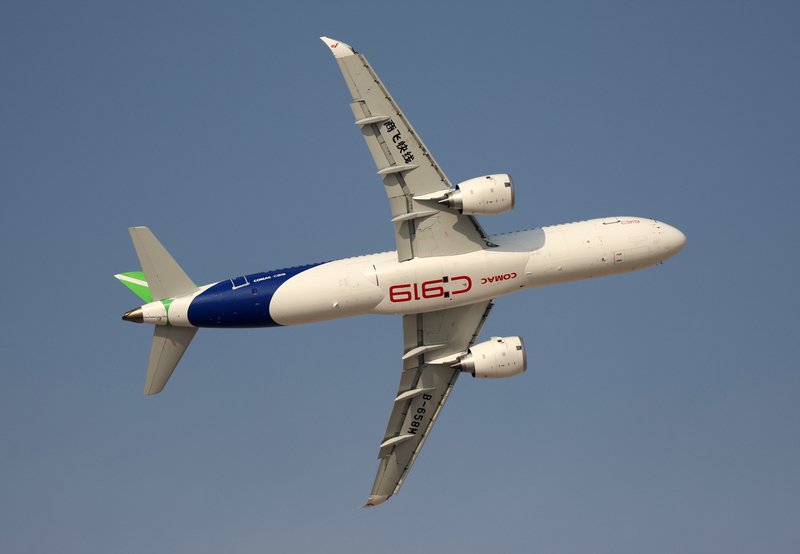
C919亮相迪拜上空,空客、波音发声
Guan Cha Zhe Wang· 2025-11-18 00:32
Core Viewpoint - The 2025 Dubai Airshow marks a significant event for the Chinese aviation industry, showcasing the C919 aircraft, which aims to enhance China's presence in the global aerospace sector [1][4]. Group 1: C919 Aircraft Overview - The C919 is China's first fully independently developed large passenger jet, designed to compete with Airbus A320Neo and Boeing B737Max, with a lower catalog price compared to its competitors [4][5]. - The aircraft made its Middle East debut at the Dubai Airshow, highlighting China's strategic ambitions in the aviation market [1][11]. - Despite previous exhibitions, the C919 and its variants have not yet received key certifications from Western regulatory bodies, which China is actively seeking to improve its international recognition [4][7]. Group 2: Market Position and Competition - Boeing and Airbus are currently facing delivery delays, providing an opportunity for Chinese manufacturers like COMAC to establish a foothold in the market [1][4]. - Boeing's commercial aircraft CEO welcomed the competition from COMAC, emphasizing that competition benefits the entire industry [1]. - Airbus's CEO acknowledged the presence of COMAC as a competitor rather than a threat, indicating a recognition of the evolving competitive landscape [2]. Group 3: Future Plans and Developments - COMAC is developing a "family of aircraft" to compete with various models from Boeing and Airbus, including an extended version of the C919 that can accommodate 210 passengers [5][9]. - The C909, China's first commercially produced jet, is also part of COMAC's offerings, with 170 units already delivered and operational in Southeast Asia [11]. - The company aims to enhance production capacity to meet growing demand, as the domestic market for similar aircraft is substantial, with over 3,200 planes in operation [9][11]. Group 4: Regulatory and Market Challenges - Recent regulatory changes in Brunei have allowed local airlines to operate Chinese-made aircraft, marking a step forward for COMAC in gaining international market access [7]. - Despite the challenges posed by trade disputes, there are signs of easing tensions, as the U.S. government has resumed exports of jet engines to COMAC [8][9]. - The company is focused on building strong relationships with global customers and partners while navigating the complexities of international aviation regulations [9].

文莱发布航空新规 正式认可中国民航局适航标准
Xin Hua She· 2025-10-24 03:56
Core Viewpoint - Brunei's Civil Aviation Authority has officially recognized the airworthiness standards of the Civil Aviation Administration of China, marking a significant step for Chinese aircraft manufacturers in accessing the Brunei market [1] Regulatory Changes - The Brunei Civil Aviation Authority published revised regulations on October 23, which include the acceptance of airworthiness certificates issued by the Civil Aviation Administration of China as valid design approval documents for aircraft registration and certification in Brunei [1] Market Implications - The regulatory update provides a crucial legal foundation for Chinese-manufactured jetliners to enter the Brunei market, reflecting a high level of recognition for China's aviation design capabilities and safety management systems [1]
文莱发布航空新规 正式认可中国民航局适航标准
Xin Hua She· 2025-10-24 02:21
Core Viewpoint - Brunei's Civil Aviation Authority has officially recognized the airworthiness standards of the Civil Aviation Administration of China, marking a significant step for Chinese-manufactured jet aircraft to enter the Brunei market [1] Regulatory Changes - The Brunei Civil Aviation Authority published revised regulations on October 23, which include the acceptance of airworthiness certificates issued by the Civil Aviation Administration of China as valid design approval documents for aircraft registration and certification in Brunei [1] Industry Impact - The CEO of Brunei's Ji Ji Aviation, Chi Cheng, stated that the regulatory revision establishes an important legal foundation for the entry of Chinese-produced jet aircraft into the Brunei market, reflecting a high level of recognition for China's aviation design capabilities and safety management systems [1]