民用航空

Search documents
去年全国新设经营主体2574.5万户
Xin Lang Cai Jing· 2026-02-27 07:05
Core Insights - The article highlights the significant growth in new business entities in China, with a total of 25.745 million new entities expected to be established by 2025, including 9.5 million new enterprises and 16.194 million new individual businesses [1] Group 1: New Business Entities - By 2025, the total number of new business entities in China is projected to reach 25.745 million, comprising 9.5 million new enterprises and 16.194 million individual businesses [1] - The trend indicates a shift towards new and high-quality development, contributing to the momentum for high-quality growth [1] Group 2: Emerging and Future Industries - There is a rapid increase in companies related to the "8 major emerging industries + 9 major future industries," with 1.134 million new entities established in 2025, marking a 9.9% increase from the previous year [1] - Notable growth is observed in cutting-edge fields such as humanoid robots, civil aviation, and generative artificial intelligence, which are leading the growth rates [1] Group 3: Consumer Sector - The consumer sector shows significant promise, driven by a robust domestic market that fosters new consumption scenarios [1] - In 2025, the number of entities related to "smart consumer device manufacturing" is expected to reach 78,000, with 5,000 new entities established [1] - The cultural tourism industry is projected to see 3.302 million new related enterprises in 2025, reflecting a 12.2% increase from the previous year [1] - The "silver economy" sector is also experiencing high growth, with 68,000 new related enterprises expected in 2025, representing a 17.1% increase [1]
新兴产业和未来产业相关企业增长迅猛 全国经营主体发展向新向优
Ren Min Ri Bao Hai Wai Ban· 2026-02-27 06:23
Group 1 - The core viewpoint of the articles highlights the significant growth in new business entities in China, with a total of 25.745 million new entities expected by 2025, including 9.5 million new enterprises and 16.194 million new individual businesses, indicating a trend towards high-quality development [1] - The emergence of new and future industries is accelerating, with 1.134 million new enterprises related to the "8 new emerging industries + 9 future industries" projected for 2025, reflecting a 9.9% increase from the previous year [1] - Key sectors such as humanoid robots, civil aviation, and generative artificial intelligence are experiencing notable growth, contributing to China's advancement in the global value chain [1] Group 2 - The consumer sector is showing remarkable highlights, with new supply creating new demand; for instance, the "smart consumer device manufacturing" sector is expected to grow to 78,000 entities, with 5,000 new establishments in 2025 [2] - The cultural tourism industry is projected to see 3.302 million new enterprises, marking a 12.2% increase year-on-year, driven by enhanced consumer experiences [2] - The "silver economy" is also expanding, with 68,000 new enterprises expected in 2025, reflecting a 17.1% growth, driven by aging population needs [2] Group 3 - The market regulatory authority emphasizes the need to focus on the development demands of business entities, aiming to improve market access and exit systems, and enhance the overall market environment to stimulate business vitality [3]
全国经营主体发展向新向优
Ren Min Ri Bao Hai Wai Ban· 2026-02-27 05:47
Group 1 - The core viewpoint of the articles highlights the significant growth in new business entities in China, with a total of 25.745 million new entities expected by 2025, including 9.5 million new enterprises and 16.194 million new individual businesses, indicating a trend towards high-quality development [1] - The emergence of new and future industries is driving rapid growth, with 1.134 million new enterprises related to "8 major emerging industries + 9 major future industries" expected by 2025, reflecting a 9.9% increase from the previous year [1] - Key sectors such as humanoid robots, civil aviation, and generative artificial intelligence are experiencing notable growth, contributing to the advancement of China's industrial system towards a higher position in the global value chain [1] Group 2 - The consumer sector is showing remarkable highlights, with new supply creating new demand; for instance, the "smart consumer device manufacturing" sector is expected to grow to 78,000 entities, with 5,000 new entities established [2] - The cultural tourism industry is also thriving, with 3.302 million new enterprises expected by 2025, marking a 12.2% increase from the previous year [2] - The "silver economy" is driving industry upgrades, with 68,000 new enterprises expected in this sector, reflecting a 17.1% growth [2] Group 3 - The quality of entrepreneurial talent remains stable, with a notable increase in young entrepreneurs in traditional sectors, particularly in wholesale and retail, reaching 1.729 million by the end of 2025, an 8.4% increase from 2021 [2] - Young entrepreneurs continue to dominate emerging fields, with 213,000 in scientific research and technical services and 526,000 in culture, sports, and entertainment [2] - The rapid growth of internet-based business entities is evident, with significant increases in new live-streaming enterprises and individual businesses expected by 2025 [2] Group 4 - The market regulatory authority emphasizes the need to focus on the development needs of business entities, aiming to improve market access and exit systems, and enhance the unified national market construction [3] - Efforts will be made to maintain a fair competitive market environment and optimize government services related to enterprises, further stimulating the vitality of various business entities [3]
发展向新向优!2025年全国新设经营主体2574.5万户
Zheng Quan Ri Bao Wang· 2026-02-26 12:17
Group 1 - The core viewpoint of the articles highlights the significant growth in new business entities in China, with a total of 25.745 million new entities expected by 2025, including 9.5 million new enterprises and 16.194 million new individual businesses, indicating a trend towards high-quality development [1] - Emerging and future industries are experiencing rapid growth, with 1.134 million new enterprises related to the "8 major emerging industries + 9 major future industries," representing a 9.9% increase from the previous year, particularly in fields like humanoid robots, civil aviation, and generative artificial intelligence [1] - The consumer sector shows notable growth, driven by strong domestic market demand, with new supply creating new demand; for instance, the "smart consumer device manufacturing" sector saw a total of 78,000 new entities, with 5,000 newly established [1] Group 2 - The scale of high-quality entrepreneurial talent remains stable, with an increase in youth entrepreneurs in traditional sectors, particularly in wholesale and retail, reaching 1.729 million by the end of 2025, an 8.4% increase from 2021 [2] - Youth entrepreneurs continue to dominate emerging fields, with 213,000 in scientific research and technical services and 526,000 in culture, sports, and entertainment [2] - The market regulatory authorities are focusing on the development needs of business entities, aiming to improve market access and exit systems, promote a unified national market, and enhance government services related to enterprises to stimulate the vitality of various business entities [2]
市场监管总局:2025年全国新设经营主体2574.5万户 发展态势向新向优
智通财经网· 2026-02-26 07:53
Core Insights - The total number of newly established business entities in China is projected to reach 25.745 million by 2025, including 9.5 million new enterprises and 16.194 million new individual businesses, indicating a trend towards quality development in the market [2][4]. Group 1: Emerging and Future Industries - The number of new enterprises related to the "8 emerging industries + 9 future industries" is expected to be 1.134 million, representing a 9.9% increase from the previous year, with significant growth in sectors such as humanoid robots, civil aviation, and generative artificial intelligence [3][4]. - The rapid growth in emerging industries is contributing to the advancement of China's industrial system towards a higher end of the global value chain [3]. Group 2: Consumer Sector Highlights - The consumer sector is experiencing notable growth, driven by strong domestic market demand, with new supply creating new demand. The number of new business entities in "intelligent consumer device manufacturing" is projected to reach 78,000, with an increase of 5,000 new entities [4]. - The cultural tourism industry is also thriving, with 3.302 million new related enterprises established in 2025, marking a 12.2% increase from the previous year [4]. - The "silver economy" is expanding, with 68,000 new enterprises related to aging population needs, reflecting a 17.1% growth, indicating a sustained high growth rate in this sector [4]. Group 3: Entrepreneurial Landscape - The scale of high-quality entrepreneurial talent remains stable, with a notable increase in young entrepreneurs in traditional sectors, particularly in wholesale and retail, which reached 1.729 million, an 8.4% increase from 2021 [5]. - Young entrepreneurs continue to dominate emerging fields, with 213,000 in scientific research and technical services and 526,000 in culture, sports, and entertainment [5]. - The growth of internet-based business models is evident, with a rapid increase in newly established live-streaming enterprises and individual businesses by 2025 [5]. Group 4: Regulatory Environment - Regulatory authorities are focusing on the development needs of business entities, aiming to improve market access and exit systems, promote a unified national market, and maintain a fair competitive environment [5].
在临港 打造青年创业理想城 “临港科创城”建设方案发布 建设国际科创中心重要基地
Jie Fang Ri Bao· 2026-01-22 01:31
Core Points - The "Lingang Science and Technology Innovation City" construction plan aims to leverage the innovative advantages of the new area, promoting innovation and entrepreneurship, and establishing Lingang as a key hub for technology transfer, emerging industries, and youth entrepreneurship [1] - The plan sets two phased goals for 2027 and 2030, including the establishment of at least 7 high-level laboratories and research institutions, maintaining R&D expenditure at over 5.5% of GDP, nurturing over 2,000 high-tech enterprises, and attracting over 40,000 innovative talents [1] Group 1: Goals and Communities - The plan outlines four benchmark science and technology innovation communities: 1. Dishui Lake AI Innovation Port focusing on digital culture, automotive electronics, and smart terminals 2. Dishui Lake IC Innovation Port concentrating on integrated circuits, brain-machine science, and new materials 3. Dishui Lake Financial Bay targeting overseas services and cross-border finance 4. Dishui Lake International Data Port emphasizing digital services and e-commerce live streaming [2] Group 2: Action Plans - Five major action plans are proposed: 1. Strengthening technology transfer by leveraging high-level research institutions and major scientific facilities, focusing on key industries like integrated circuits and civil aviation [3] 2. Leading frontier industries by nurturing future industry tracks such as fourth-generation semiconductors and controlled nuclear fusion [3] 3. Attracting innovative and entrepreneurial talent through the "Blue Whale Plan" targeting digital nomads and entrepreneurs [3] 4. Accelerating capital empowerment with a 600 million yuan fund to support innovative projects in civil aviation and biomedicine [3] 5. Building an innovation ecosystem by providing over 300,000 square meters of low-cost entrepreneurial space and 5,000 youth apartments within five years [4]

聚焦“从1到10”,临港未来5-10年建成国际一流科创城
Di Yi Cai Jing· 2026-01-21 14:34
Core Viewpoint - The establishment of the "Lingang Innovation City" aims to transform Lingang from an "industrial highland" to an "innovation and entrepreneurship highland," supporting Shanghai's development as an international technology innovation center [1][2]. Group 1: Development Goals - By the end of 2027, Lingang aims to establish at least 7 world-class research institutions, over 2,000 high-tech enterprises, and attract more than 40,000 innovative talents [3]. - By 2030, Lingang seeks to solidify its strategic technological capabilities and significantly enhance its technology transfer capabilities, becoming an important base for Shanghai's international technology innovation center [3]. Group 2: Unique Advantages - Lingang's strengths lie in its robust industrial foundation and open institutional environment, making it an ideal area for the transformation of results from "1 to 10" and the industrial expansion from "10 to 100" [2]. - The region contributes over 1/9 of the city's industrial output value, gathers about 1/5 of manufacturing fixed asset investment, and accounts for 2/5 of major advanced manufacturing projects [2]. Group 3: Solutions for Technology Transfer - Lingang proposes a solution characterized by "low cost, supportive environment, and practical scenarios" to facilitate technology transfer [4]. - The area offers attractive low-cost entrepreneurial spaces, with 100,000 square meters of "zero rent" incubation space and 200,000 square meters of low-cost development space [4]. Group 4: Financial Support and Ecosystem - A comprehensive financial support system covering the entire lifecycle of enterprise development has been established, including the Lingang Qihang Fund and various specialized support programs [4]. - The region encourages major enterprises to open application scenarios and engage in "challenge-based" initiatives to help startups quickly secure initial orders [4]. Group 5: Future Industry Layout - Lingang Innovation City has outlined five major action plans focusing on technology transfer, leading edge industries, talent aggregation, capital acceleration, and innovation ecosystem construction [6]. - The region aims to leverage its strengths in integrated circuits, civil aviation, smart vehicles, and high-end equipment to foster future industry sectors such as fourth-generation semiconductors and controlled nuclear fusion [6][7]. Group 6: Support for Emerging Technologies - Lingang will support existing successful models like the "photovoltaic hydrogen production and hydrogen integration" demonstration project to accelerate the application and commercialization of new technologies [7]. - A collaborative approach will be taken in the fourth-generation semiconductor field to establish specialized transformation platforms and industry clusters [8].
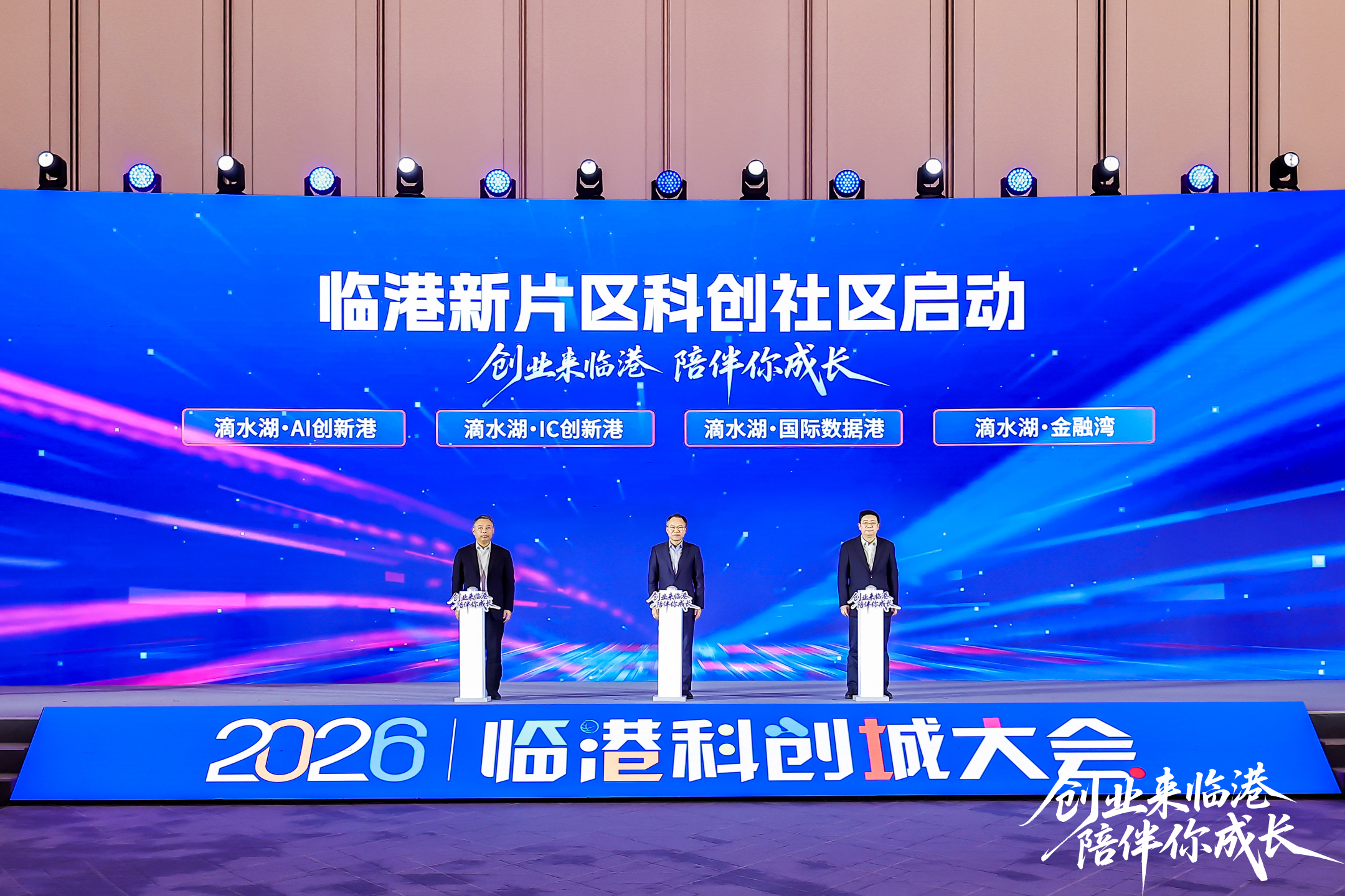
发布“一揽子”创新举措,2026临港科创城大会启幕
Guo Ji Jin Rong Bao· 2026-01-21 12:57
Group 1 - The "2026 Lingang Science and Technology Innovation City Conference" was held in Shanghai, focusing on creating an international first-class innovation city with lower costs, better ecology, and higher success rates for startups [1] - The conference introduced a comprehensive set of innovative measures, including the launch of the "Entrepreneurship Fund" and the establishment of a "Science and Technology Innovation Ecological Map" [1] Group 2 - The "Shanghai Lingang Science and Technology Innovation City Construction Plan" was officially released, aiming to strengthen the "1-10" link of technological innovation and become a key area for technology transfer and new industry development [2][3] - The plan outlines two goals to be achieved by the end of 2027, including the establishment of at least 7 international first-class research institutions and over 2,000 high-tech enterprises [4] Group 3 - The plan includes the establishment of four benchmark innovation communities, focusing on various industry sectors such as digital culture, integrated circuits, and cross-border finance [4] - Five major action plans were introduced to enhance technology transfer, cultivate future industry tracks, attract high-level talent, accelerate capital empowerment, and build an innovative ecosystem [5] Group 4 - Three major entrepreneurial funds were launched, including the Lingang Youth Innovation Fund, to support enterprises at different stages [8] - The conference also introduced new "Dew Lake Innovation Stations" to provide low-cost spaces and comprehensive services for entrepreneurs [9] Group 5 - The "Dew Lake Youth Innovation Community" was officially launched, offering a platform for entrepreneurs to connect and share resources through various activities [10] - A total of over 50 high-growth technology companies with valuations exceeding 1 billion yuan have emerged in Lingang, with more than 70% in later financing stages [10]



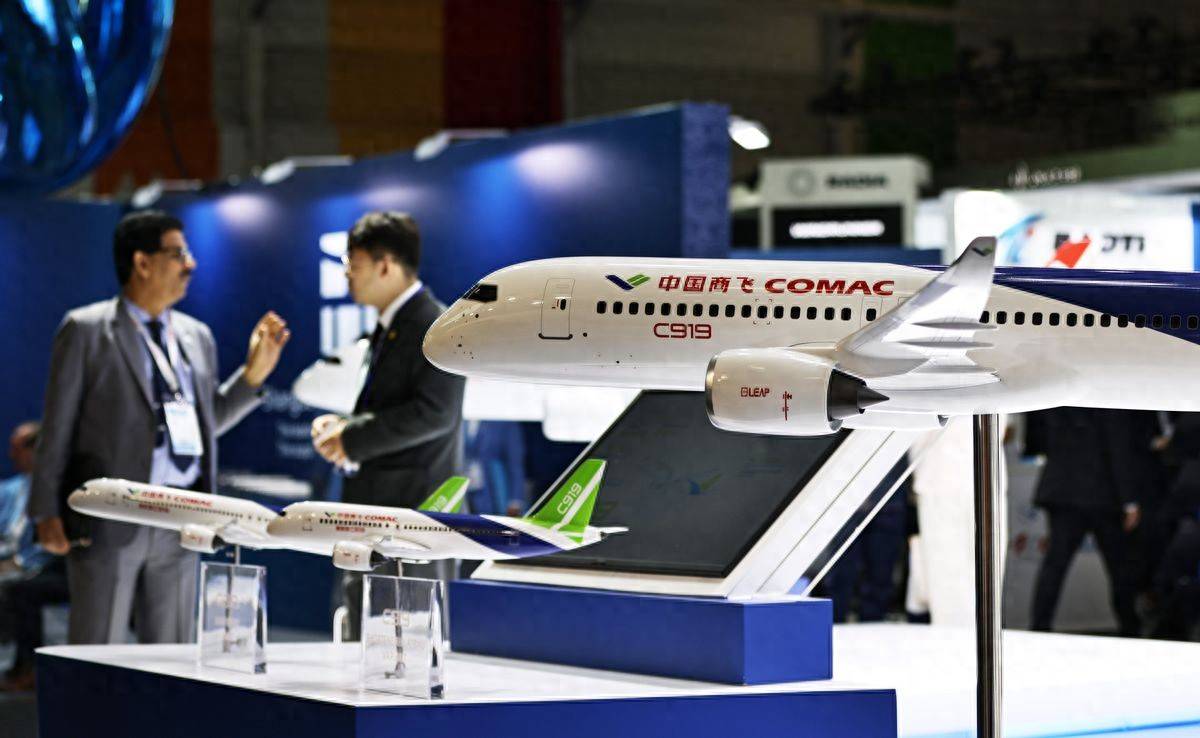
欧洲执意卡中方脖子!欧空局认可C919,但就是不发适航证
Sou Hu Cai Jing· 2026-01-17 06:17
Core Viewpoint - The successful acquisition of airworthiness certification from either Europe or the United States will allow China to officially enter the global commercial aircraft competition, with the C919 potentially benefiting millions of families worldwide [1][3]. Group 1: C919 Development and Evaluation - The European Union Aviation Safety Agency (EASA) has sent a team to Shanghai to conduct a comprehensive evaluation of the C919's test flights, which received high praise for safety and performance, with only minor software adjustments needed [1]. - China had previously submitted an application to the EASA for the C919's airworthiness certification to enter European airspace [1]. Group 2: Geopolitical Considerations - The rejection of China's application by Europe was unexpected, but the renewed evaluation of the C919 may indicate a need for mutual understanding between China and Europe, possibly influenced by U.S. pressure [3]. - The EASA's assessment of the C919 is viewed more as a political maneuver rather than a purely commercial evaluation, aimed at easing trade tensions between China and Europe [5]. Group 3: Market Dynamics and Competition - The EU may impose high barriers to entry for China to maintain the existing market structure dominated by Airbus and Boeing, as the C919 could quickly become the third-largest commercial aircraft manufacturer if successful in international markets [6]. - The rapid development of China in the industrial sector poses a threat to the high-profit industries of the U.S. and Europe, which may lead to reluctance in allowing the C919 to enter the market [8]. Group 4: Future Strategies - China is pursuing a low-altitude economic strategy, planning to introduce flying cars and small manned aircraft to end-users, indicating that the approval of foreign airworthiness certificates may not be a priority for China [10]. - If the U.S. and Europe were to understand China's development strategy and open their markets, it could lead to faster growth in the global civil aviation market, benefiting consumers with more affordable and higher-quality flight services [12].
新型储能纳入政府投资基金投向!国家首次作出系统规范
中关村储能产业技术联盟· 2026-01-13 12:15
Core Viewpoint - The article discusses the implementation of a new regulatory framework for government investment funds in China, aimed at optimizing their layout and guiding investment directions to support national strategies and industrial upgrades [2][3][4]. Group 1: Government Investment Fund Overview - Government investment funds are established by various levels of government to guide social capital in supporting industry development and innovation through market-oriented methods such as equity investment [2][12]. - The new framework includes a systematic approach to fund layout and investment direction, marking the first national-level regulation of government investment funds [2][4]. Group 2: Supported Investment Areas - The framework identifies key investment areas, including: - Emerging and future industries such as information technology, new energy, advanced manufacturing, and artificial intelligence [2][3]. - Upgrading traditional industries and supporting high-quality development in manufacturing [3][4]. - Promoting the digital economy through initiatives like "AI+" and the application of 5G technology [3][4]. Group 3: Policy Measures - The framework outlines 14 policy measures focusing on three main aspects: where to invest, how to invest, and who manages the funds [3][4]. - It emphasizes early, small, long-term investments in hard technology and aims to prevent homogeneous competition and crowding out of social capital [11][12]. Group 4: Evaluation Management - An evaluation management method has been established to assess the investment direction of government funds, focusing on compliance with national planning and industry directories [4][5]. - The evaluation system includes three main indicators: policy compliance (60% weight), optimization of productivity layout (30% weight), and policy execution capability (10% weight) [6][7]. Group 5: Specific Evaluation Indicators - The evaluation indicators cover aspects such as support for new productivity, technology innovation, green development, and the promotion of private investment [29][33]. - Specific metrics include the proportion of investments in encouraged industries, the effectiveness of fund management, and the impact on social welfare [29][33][40].