遛狗理论

Search documents
“低位布局”要多“低”?一文看懂当前ETF行业布局机会
Sou Hu Cai Jing· 2025-11-28 09:28
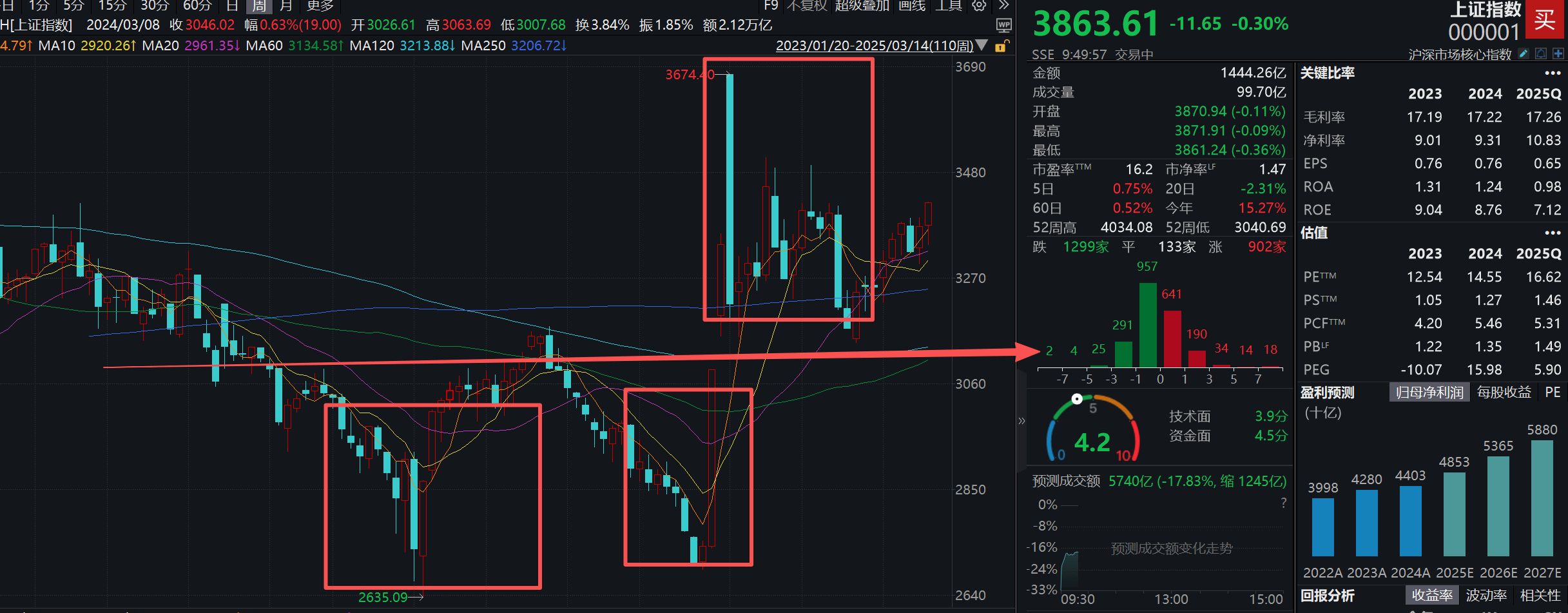
Group 1 - The concept of "buying low and selling high" is rooted in the market principle of "mean reversion," where prices eventually return to their intrinsic value [1] - The Shanghai Composite Index is expected to fluctuate around the 3000-point mark until 2025, suggesting that buying opportunities may arise below this level [1] - Current market conditions indicate that the index has reached 4000 points, raising questions about future investment strategies [1] Group 2 - Different industries exhibit varying degrees of valuation and profitability, with the AI sector currently valued at 40 times earnings, while consumer sectors are valued below 10 times [2] - Valuation percentiles are crucial for assessing whether an industry is at a low point, allowing investors to compare current valuations with historical data [2] - Non-bank financials and metals industries show strong growth in profitability while maintaining valuation percentiles below 35% [5] Group 3 - The performance of specific ETFs, such as the Guangfa CSI Hong Kong Stock Connect Non-Bank Financial ETF, has exceeded 40% returns this year, indicating strong performance within its category [5] - The E Fund CSI 300 Non-Bank Financial ETF has also performed well, achieving nearly 8% positive returns this year, placing it among the "billion club" ETFs [5] Group 4 - Historical data shows that market downturns can last significantly long, with the longest drop lasting 754 days, indicating the need for patience in identifying market bottoms [6][7] - Investors are encouraged to adopt a grid trading strategy to manage investments during volatile market conditions, allowing for systematic buying and selling based on price fluctuations [6][8] - Setting thresholds for incremental buying during market declines can help investors capitalize on potential recoveries, with suggested thresholds ranging from 5% to 25% [8]