
都市圈融合

Search documents
(长春振兴突破正当时)突围突破聚动能 长春三年之变书写振兴新篇章
Zhong Guo Xin Wen Wang· 2026-01-12 09:49
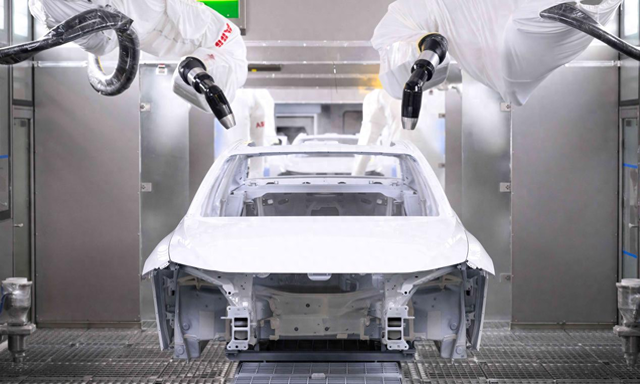
Core Insights - The article highlights the transformation of Changchun, an old industrial city, into a modern industrial hub driven by innovation, openness, green transformation, and urban integration, marking significant progress over the past three years [1][2][16]. Group 1: Innovation Leap - Innovation has become the most prominent feature of Changchun's industrial evolution, with the launch of Audi's electric vehicle production in December 2024 marking a key milestone in the city's electric vehicle strategy [3][6]. - The establishment of a comprehensive innovation ecosystem has been facilitated by national research institutions, leading to a significant increase in the number of specialized small and medium enterprises, from 39 to 54, representing a 38% growth over three years [7]. Group 2: Open Hub - Changchun has developed a multi-dimensional open system to overcome geographical limitations, with a 24.1% increase in total import and export volume from 2020 to 2024, and a 2.5 times increase in export volume [8]. - The city has established significant logistics infrastructure, including the first China-Europe freight train route in Jilin Province and a cross-border e-commerce pilot zone, enhancing its connectivity with global markets [7][8]. Group 3: Green Transformation - The city has integrated "green" into its industrial DNA, with a focus on electric and intelligent vehicles, energy-efficient equipment, and a growing share of new energy and materials in strategic emerging industries [9][12]. - Changchun has actively pursued a "waste-free city" initiative, achieving significant improvements in solid waste utilization and recycling rates, with air quality improving to an 89.6% good rate in 2024, a 3.6 percentage point increase year-on-year [11][12]. Group 4: Urban Circle Integration - The "Changchun Modern Urban Circle" has evolved from a conceptual plan to a tangible entity, enhancing regional collaboration and optimizing industrial division of labor [13][15]. - The development of intercity rapid transit networks has expanded the "one-hour commuting circle," facilitating better integration of industries and services across the urban area [15]. Group 5: Overall Development Logic - Changchun's transformation serves as a model for the revitalization of old industrial bases, emphasizing the importance of innovation, openness, green development, and regional collaboration in driving economic growth [16][17].

长三角地区首个国家级国土空间规划落地“融合+协同”赋予江苏发展新机遇
Xin Hua Ri Bao· 2025-12-14 23:13
Core Viewpoint - The State Council has officially approved the "Yangtze River Delta Land Spatial Planning (2023-2035)", marking the first national-level land spatial planning for the Yangtze River Delta region, which covers an area of 358,000 square kilometers and aims to create a new vision focused on "protecting bottom lines, optimizing patterns, driving innovation, and breaking institutional boundaries" [1] Group 1: Development Layout - The primary task of the planning is to establish a high-quality spatial bottom line, with three hard "red lines" set: by 2035, the arable land in the Yangtze River Delta must not be less than 161.48 million mu, with permanent basic farmland protection of at least 142.9 million mu; ecological protection red line area must not be less than 77,000 square kilometers; and total water usage must be strictly controlled within national targets [2] - Jiangsu has already taken the lead in fulfilling bottom line responsibilities, with the province's arable land area reaching 62.54 million mu in 2024, showing a stable increase and improving the protection pattern of quantity, quality, and ecology [2] Group 2: Urban Circles and Cross-Regional Collaboration - The planning emphasizes optimizing the spatial pattern led by urban circles, establishing a "one core, multiple circles" collaborative development pattern centered around Shanghai, enhancing the spatial integration of the Shanghai metropolitan area and the Suzhou-Wuxi-Changzhou metropolitan area [3] - The planning also focuses on strengthening cross-regional collaboration in the sci-tech industry, ensuring the spatial needs of key areas like the G60 Sci-Tech Corridor and the Yangtze River Delta's traditional industry layout are met, facilitating the orderly upgrade and transfer of traditional industrial clusters [3] Group 3: Development Opportunities for Jiangsu - Jiangsu is identified as a significant beneficiary of the planning, with the core circles of Suzhou-Wuxi-Changzhou and Nanjing positioned at the heart of spatial collaboration, enhancing the integration of transportation and resource flow between Jiangsu and Shanghai [5] - The deep integration of Suzhou-Wuxi-Changzhou with Shanghai is expected to create a collaborative model of "Shanghai R&D + Jiangsu Manufacturing," while the coordinated development of the Nanjing metropolitan area will enhance intercity infrastructure connectivity [6] Group 4: Mechanism Innovation and Regional Balance - To leverage development opportunities, Jiangsu should focus on upgrading carriers, industry gradients, and mechanism innovation, avoiding development pitfalls and establishing a high ground for integrated development in the Yangtze River Delta [8] - The planning encourages the establishment of an "innovation community" among key cities in Jiangsu and the creation of cross-regional pilot bases and achievement transformation platforms, particularly in high-tech sectors [9] - Mechanism innovation is crucial for overcoming collaborative barriers, with initiatives aimed at achieving comprehensive public service integration and establishing cross-regional talent evaluation recognition mechanisms [9][10]