
跨区域协同

Search documents
长三角地区首个国家级国土空间规划落地“融合+协同”赋予江苏发展新机遇
Xin Hua Ri Bao· 2025-12-14 23:13
Core Viewpoint - The State Council has officially approved the "Yangtze River Delta Land Spatial Planning (2023-2035)", marking the first national-level land spatial planning for the Yangtze River Delta region, which covers an area of 358,000 square kilometers and aims to create a new vision focused on "protecting bottom lines, optimizing patterns, driving innovation, and breaking institutional boundaries" [1] Group 1: Development Layout - The primary task of the planning is to establish a high-quality spatial bottom line, with three hard "red lines" set: by 2035, the arable land in the Yangtze River Delta must not be less than 161.48 million mu, with permanent basic farmland protection of at least 142.9 million mu; ecological protection red line area must not be less than 77,000 square kilometers; and total water usage must be strictly controlled within national targets [2] - Jiangsu has already taken the lead in fulfilling bottom line responsibilities, with the province's arable land area reaching 62.54 million mu in 2024, showing a stable increase and improving the protection pattern of quantity, quality, and ecology [2] Group 2: Urban Circles and Cross-Regional Collaboration - The planning emphasizes optimizing the spatial pattern led by urban circles, establishing a "one core, multiple circles" collaborative development pattern centered around Shanghai, enhancing the spatial integration of the Shanghai metropolitan area and the Suzhou-Wuxi-Changzhou metropolitan area [3] - The planning also focuses on strengthening cross-regional collaboration in the sci-tech industry, ensuring the spatial needs of key areas like the G60 Sci-Tech Corridor and the Yangtze River Delta's traditional industry layout are met, facilitating the orderly upgrade and transfer of traditional industrial clusters [3] Group 3: Development Opportunities for Jiangsu - Jiangsu is identified as a significant beneficiary of the planning, with the core circles of Suzhou-Wuxi-Changzhou and Nanjing positioned at the heart of spatial collaboration, enhancing the integration of transportation and resource flow between Jiangsu and Shanghai [5] - The deep integration of Suzhou-Wuxi-Changzhou with Shanghai is expected to create a collaborative model of "Shanghai R&D + Jiangsu Manufacturing," while the coordinated development of the Nanjing metropolitan area will enhance intercity infrastructure connectivity [6] Group 4: Mechanism Innovation and Regional Balance - To leverage development opportunities, Jiangsu should focus on upgrading carriers, industry gradients, and mechanism innovation, avoiding development pitfalls and establishing a high ground for integrated development in the Yangtze River Delta [8] - The planning encourages the establishment of an "innovation community" among key cities in Jiangsu and the creation of cross-regional pilot bases and achievement transformation platforms, particularly in high-tech sectors [9] - Mechanism innovation is crucial for overcoming collaborative barriers, with initiatives aimed at achieving comprehensive public service integration and establishing cross-regional talent evaluation recognition mechanisms [9][10]
跨区域协同破局 精益化管理提效
Qi Lu Wan Bao· 2025-11-27 21:56
Core Insights - The company focuses on external market lean management with goals of "project implementation, personnel performance, and training empowerment" [1] - The company has innovated communication methods and strengthened process control to enhance lean management levels [1] Group 1: Communication and Coordination - The company has adopted a "voice + video connection" remote supervision method to address the challenges of long distances and high offline communication costs in the Xinjiang region, effectively shortening the information transmission chain [1] - Key tasks such as problem diagnosis and difficulty discussions are integrated throughout the process to ensure precise and efficient remote supervision [1] Group 2: Performance Reporting and Experience Sharing - The company utilizes a "monthly reporting meeting" platform to include outstanding grassroots projects in special reports, promoting cross-regional experience sharing and collaborative problem-solving [1] - This approach ensures that project advancement is orderly and results are visible [1] Group 3: Data Verification and Management - The center implements a multi-faceted verification mechanism to ensure the authenticity of lean management data by cross-referencing real-time production system data, conducting random interviews with frontline employees, and comparing historical records [1] - This mechanism addresses issues of "data falsification" and "paper-based progress," making guidance more aligned with grassroots realities and focused on critical pain points [1] Group 4: Future Directions - The company plans to continue optimizing remote supervision processes and improving project reporting and communication mechanisms to deepen lean management at the grassroots level [2] - This initiative aims to support higher quality development of external market business through lean management empowerment [2]
政策“喂饭”,场景“狂飙”:氢能“黄金期”来了!下一个万亿风口官宣?
Zhong Guo Neng Yuan Wang· 2025-11-06 01:51
Core Insights - The Chinese government has identified hydrogen energy as a key future industry in its 14th Five-Year Plan, aiming to integrate it with traditional sectors and drive innovation in the green hydrogen industry [1][2] Industry Development - By the end of 2024, China's hydrogen production capacity is expected to exceed 50 million tons, with a consumption scale surpassing 36.5 million tons, making it the largest in the world [2] - Renewable energy-based hydrogen production capacity is projected to exceed 120,000 tons annually, with over 540 hydrogen refueling stations established and approximately 24,000 fuel cell vehicles promoted [2] - As of December 2024, hydrogen production prices are expected to drop to 28 yuan per kilogram, while consumption prices will fall to 48.6 yuan per kilogram, representing year-on-year decreases of 15.6% and 13.7%, respectively [2] Regional Initiatives - Local governments are playing a crucial role in the implementation of hydrogen energy projects, with cities like Foshan actively developing a comprehensive hydrogen industry ecosystem [3][4] - Foshan has established 17 hydrogen refueling stations and deployed 1,350 hydrogen buses, along with over 10,000 hydrogen-powered two-wheelers [4] - Shandong province is advancing a "Hydrogen into Thousands of Homes" initiative, expanding applications in ports, logistics, and industrial parks [4] Collaborative Efforts - The hydrogen industry is characterized by regional collaboration and innovation, with various local policies and technological advancements driving growth [5] - Experts emphasize the importance of cross-regional cooperation to build a robust green hydrogen industrial system [6] Challenges and Recommendations - Key challenges include the need for breakthroughs in core technologies, such as proton exchange membranes and hydrogen transport, which currently elevate green hydrogen costs [6] - The rapid growth of renewable energy installations in remote areas poses challenges for local consumption and green hydrogen development [6] - Future development should focus on systematic technological advancements and the integration of emerging technologies like AI and big data into the hydrogen sector [6]
下一个五年,氢能市场产值将超万亿元!
中国能源报· 2025-11-03 06:03
Core Insights - The article emphasizes that hydrogen energy has been identified as a future industry in China's 15th Five-Year Plan, indicating a transition from demonstration to large-scale commercialization [1][3][5] - Predictions suggest that by 2030, China's green hydrogen production could exceed 3 million tons, creating a market worth over 1 trillion yuan [3][5] Industry Development - As of the end of 2024, China's hydrogen production capacity is expected to surpass 50 million tons, with a consumption scale exceeding 36.5 million tons, making it the largest in the world [5] - Renewable energy-based hydrogen production capacity is projected to exceed 120,000 tons annually, with over 540 hydrogen refueling stations established and approximately 24,000 fuel cell vehicles promoted [5] - The price of hydrogen production is anticipated to drop to 28 yuan per kilogram, while consumption prices are expected to reach 48.6 yuan per kilogram, reflecting year-on-year decreases of 15.6% and 13.7% respectively [5] Regional Initiatives - Local governments are playing a crucial role in the implementation of hydrogen energy projects, with cities like Foshan developing comprehensive policy support systems and establishing a full hydrogen energy industry chain [6][7] - Foshan has activated various application scenarios, including 17 hydrogen refueling stations and the deployment of 1,350 hydrogen buses [6] - Shandong province is advancing a "Hydrogen into Thousands of Homes" initiative, while Baotou is working on becoming a national model for green hydrogen self-circulation [6] Collaborative Efforts - The article highlights the importance of cross-regional collaboration and the need for a unified approach to develop a robust hydrogen industrial system [8] - Experts suggest that addressing key technological challenges and leveraging emerging technologies like AI and big data will be essential for the future of the hydrogen industry [8]


武汉都市圈机器人产业全面起势
Chang Jiang Ri Bao· 2025-10-29 02:45
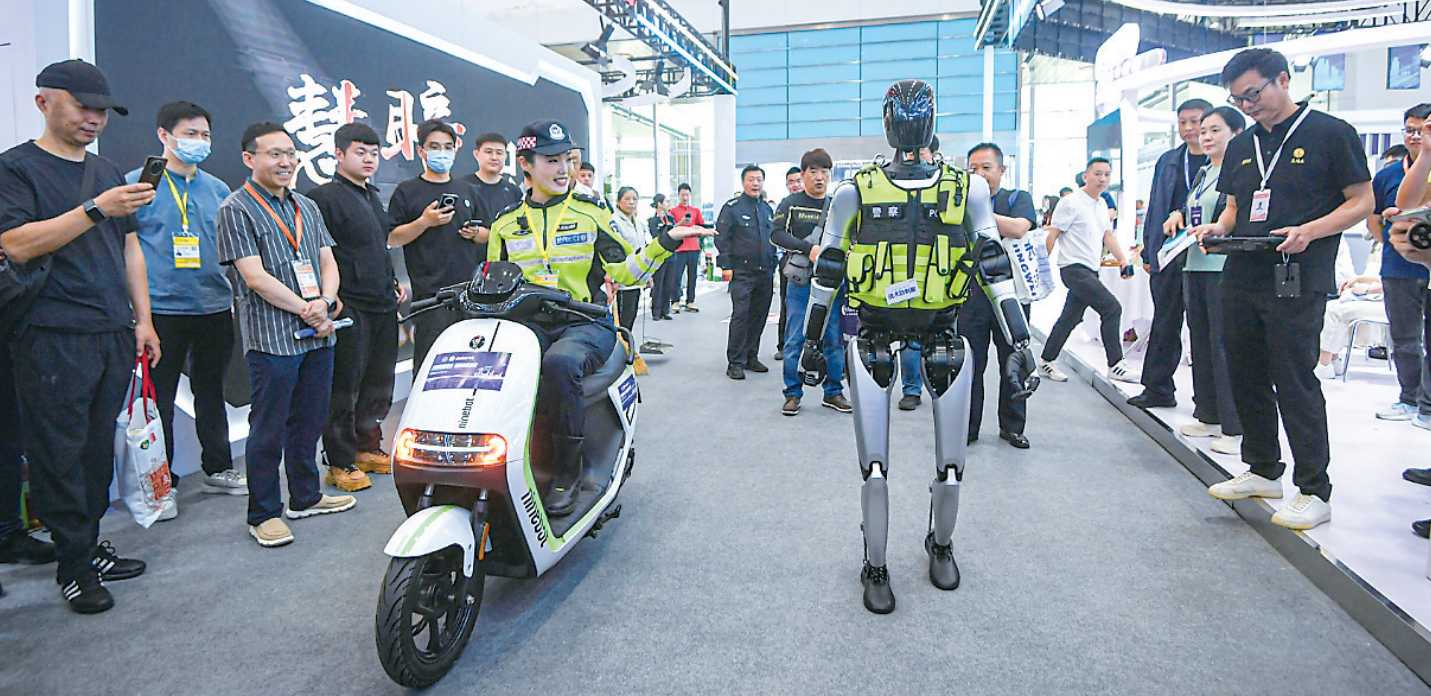
Core Insights - The Wuhan metropolitan area is leading the development of the humanoid robot industry, focusing on collaborative innovation and commercial application [1][5] - The region is establishing a comprehensive humanoid robot industry chain, with significant advancements in technology and production capacity [3][4] Industry Development - Wuhan is home to the most complete humanoid robot industry chain, with companies like Guanggu Dongzhi demonstrating independent production and R&D capabilities [3] - Guanggu Dongzhi has received orders for flexible material stacking and logistics packaging training, with a production capacity of 300 units per year, aiming to exceed 1,000 units next year [3] - The "Jingchu" series of humanoid robots has undergone four iterations since its launch, expanding into service and industrial applications [3] Policy Support - Wuhan has launched a three-year action plan for the humanoid robot industry, providing a roadmap and financial support for enterprises [4] - The plan includes five key actions: platform aggregation, scenario demonstration, leading machine action, component foundation, and ecosystem cultivation [4] - A 10 billion yuan investment fund for the humanoid robot industry has been established, alongside a 100 billion yuan provincial fund to support company listings [4] Regional Collaboration - Huangshi has announced a three-year action plan aiming to cultivate 100 industry chain enterprises and achieve a production value of 10 billion yuan by 2027 [7] - The Huangshi robot training center has been established to foster talent in the robot industry, focusing on practical skills and innovation [8] Technological Innovation - The Hubei Robot Control and Drive Technology Innovation Center aims to tackle key technologies in robotics, collaborating with universities and research institutions [10][11] - The center has already developed intelligent acupuncture robots and advanced joint technologies, enhancing the capabilities of humanoid robots [11][12] Market Growth - The Chinese robot industry is experiencing significant growth, with a 27.8% increase in revenue in the first half of the year [16] - Industrial and service robot production has also seen substantial growth, with increases of 35.6% and 25.5% respectively [16] - China remains the largest industrial robot application market globally, with a projected increase in industrial robot ownership to over 2 million units by 2024 [16]

聚势大湾区 链接长三角!广州邀沪企共拓生物医药新机遇
2 1 Shi Ji Jing Ji Bao Dao· 2025-08-30 04:01
Core Viewpoint - The biopharmaceutical industry in China is experiencing rapid growth, driven by government support, technological innovation, and increasing healthcare demands, with Guangzhou positioning itself as a strategic hub for this sector [1][2]. Group 1: Industry Development and Support - Guangzhou has identified "biopharmaceuticals and health" as a strategic industry cluster, planning to focus resources over the next five years to enhance its development [1]. - The city has established a comprehensive financial support ecosystem, with Guangzhou Financial Holdings Group setting up over 20 billion yuan in funds to support biopharmaceutical projects, having invested in 228 projects totaling over 7 billion yuan [3]. - The "Hong Kong-Macao Drug and Device Pass" policy has facilitated the approval of 120 urgently needed drugs and devices, benefiting over 13,000 patients and expanding market opportunities for biopharmaceutical companies [5]. Group 2: Innovation and Ecosystem - Guangzhou is home to over 6,500 biopharmaceutical and health enterprises, leading in enterprise quantity, industry scale, and innovation capabilities nationally [6]. - The city has developed a full industry chain ecosystem covering research, manufacturing, and services, which has successfully transitioned biopharmaceutical innovations from laboratories to production lines [6]. - A series of supportive policies, including talent rewards and funding for research and commercialization, have been implemented to promote high-quality development in the biopharmaceutical sector, with a maximum support amount of 5 billion yuan [6][7]. Group 3: Regional Collaboration and Future Outlook - The collaboration between the Guangdong-Hong Kong-Macao Greater Bay Area and the Yangtze River Delta is seen as a dual engine for national biopharmaceutical development, with calls for enhanced regional cooperation and policy exchange [7]. - The recent roadshow in Shanghai serves as a platform for Guangzhou to showcase its biopharmaceutical cluster advantages and attract investment, aiming to build a world-class biopharmaceutical industry group [8].
跨区域协同让援疆成果惠及新疆更广地域和群众
Xin Hua Wang· 2025-07-08 10:50
Group 1 - The cross-regional collaboration in Xinjiang's aid work enhances the comprehensive benefits of assistance, allowing the results to reach a broader region and more people [1][2] - The project by Guangdong Saixianyi Information Technology Co., Ltd. in Hetian is expected to create over 3,000 jobs and generate an annual industrial output value of over 3 billion yuan [2] - The establishment of the Pediatric Doctor Alliance in Kashgar by 56 pediatricians from 19 aid provinces addresses the weak pediatric foundation in Xinjiang, leading to successful medical interventions [3] Group 2 - The integration of resources and collaborative efforts among various aid teams has created an innovative model for nationwide aid cooperation, significantly improving the effectiveness of assistance [3] - The Shanghai aid initiatives include substantial investments in renewable energy projects, such as a 2 million kilowatt photovoltaic project and a 1.2 million kilowatt wind power project, contributing to local economic development [3]