
长三角一体化发展

Search documents
“新春第一会”里的三个关键词
Yang Shi Xin Wen· 2026-02-27 08:59
Group 1 - The core theme of the "New Spring First Meeting" across various provinces focuses on high-quality development, reflecting a commitment to the central government's directives [2][5] - Guangdong emphasizes the synergy between manufacturing and service industries, addressing the challenge of manufacturing being "large but not strong" and the need for deeper integration [3][4] - Jiangsu is focused on building a globally influential industrial technology innovation center and an advanced manufacturing base, highlighting its strengths in innovation, manufacturing, and openness [3][4] Group 2 - Fujian continues to engage with private economic representatives, showcasing the importance of private sector development for provincial economic growth [2] - Henan's focus on the construction of a national unified market aims to address challenges such as "involution" competition and local protectionism, integrating local development into a broader national context [6] - The concept of "adapting to local conditions" is emphasized as a scientific methodology and a key to unlocking high-quality development [4]
长三角三省一市医疗器械审评部门 联合发布区域医疗器械审评要点
Xin Lang Cai Jing· 2026-02-26 16:38
Core Viewpoint - The Long Triangle region's medical device regulatory departments have jointly released 12 technical review points for the registration of Class II medical devices, aiming to unify evaluation standards and support the quality and innovation of the medical device industry in the region [1][2]. Group 1: Regulatory Collaboration - The release of the review points is part of the "Long Triangle Regional Medical Device Technical Review Cooperation Agreement," developed through expert discussions and enterprise surveys, addressing the unique characteristics of the regional medical device industry [1]. - The review points cover key products such as dynamic electrocardiogram recorders and gene sequencing library preparation instruments, balancing compliance and innovation needs [1]. Group 2: Impact on Industry - The unified review standards and technical requirements aim to resolve issues related to "standard discrepancies and redundant preparations" faced by enterprises during cross-regional applications, thereby reducing application costs and improving efficiency [1]. - The introduction of cutting-edge product categories like cloud computing platforms and wearable devices aligns closely with the innovation trends of the province's medical device industry, providing robust technical support for the cultivation of high-end medical device industry clusters and the transformation of innovative achievements [1]. Group 3: Future Directions - The provincial drug review and inspection center will continue to uphold its responsibilities, enhance collaboration with regional review institutions, and actively participate in optimizing regional review standards and shared capabilities [2]. - The center aims to align with the actual development of the province's medical device industry, accurately meet enterprise innovation needs, and further optimize review processes to ensure the safety and effectiveness of medical devices, contributing to high-quality industry development [2].
推动城市高质量发展内涵式发展 市委中心组学习会举行
Jie Fang Ri Bao· 2026-02-26 01:37
Core Viewpoint - The meeting emphasized the importance of implementing Xi Jinping's important discourse on urban work, focusing on high-quality urban development and the construction of a modern socialist international metropolis in Shanghai [1][2]. Group 1: Urban Development Strategy - The report highlighted the need to understand the historical context of urban development in China and to explore a new path for urban modernization with Chinese characteristics [1][2]. - The city aims to optimize urban spatial layout and enhance the functions of both central urban areas and new cities, promoting coordinated development and service compatibility [2][3]. Group 2: Resource and Infrastructure Support - There is a focus on better gathering and allocating global resources, promoting flexible planning, and innovating urban construction financing models to improve the capacity of urban spaces for technology and industry [3]. - The city plans to enhance public services and accelerate the transformation towards a green and low-carbon urban environment, improving ecological quality and implementing ecological benefit projects [3]. Group 3: Cultural and Social Development - The city aims to enhance cultural soft power by promoting the heritage of red culture and improving the overall cultural quality of citizens [3]. - Efforts will be made to optimize the consumption and tourism environment, integrating cultural, commercial, and sports development [3]. Group 4: Governance and Safety - The strategy includes enhancing urban governance through technology, improving service efficiency, and integrating citizen participation into governance processes [4]. - There is a focus on risk prevention and enhancing urban resilience to ensure safety in key areas [4].
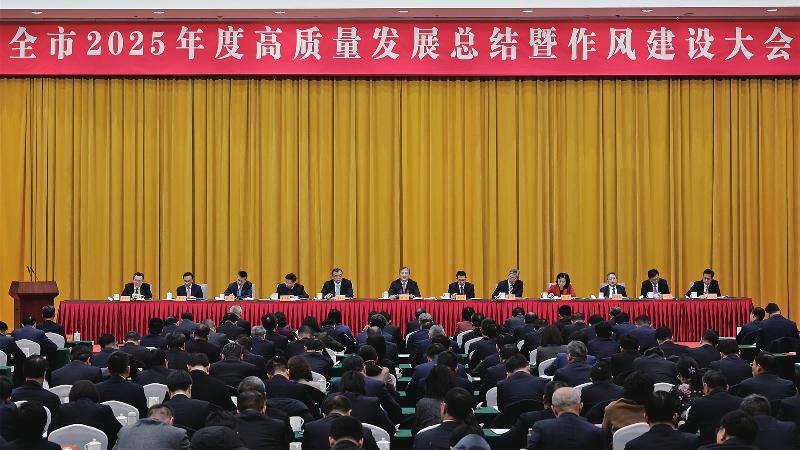
苏州市召开2025年度高质量发展总结暨作风建设大会 范波讲话 吴庆文主持 黄爱军朱民出席
Su Zhou Ri Bao· 2026-02-25 00:51
Core Viewpoint - The conference emphasized the importance of high-quality development in Suzhou, highlighting the need for strong work ethics and the implementation of national strategies to achieve modernization goals [1][2][3]. Group 1: High-Quality Development - The conference reported on the comprehensive assessment results for high-quality development in 2025, showcasing the achievements and efforts of various districts and units [2]. - The city aims to lead in the modernization process, focusing on the "Three Great Treasures" of Suzhou to enhance work ethics and drive high-quality development [2][3]. Group 2: Strategic Focus Areas - The city will concentrate on stabilizing growth, expanding investment, promoting consumption, and ensuring foreign trade, particularly in the first quarter [3][5]. - Emphasis will be placed on innovation, industrial development, and the integration of AI to foster new productive forces [3][4]. Group 3: Governance and Leadership - The leadership highlighted the need for strong political construction and the establishment of a correct performance view, alongside rectifying issues identified in inspections [4]. - There is a commitment to enhancing the capabilities of leadership teams and promoting a culture that encourages responsibility and practical action [4][5].

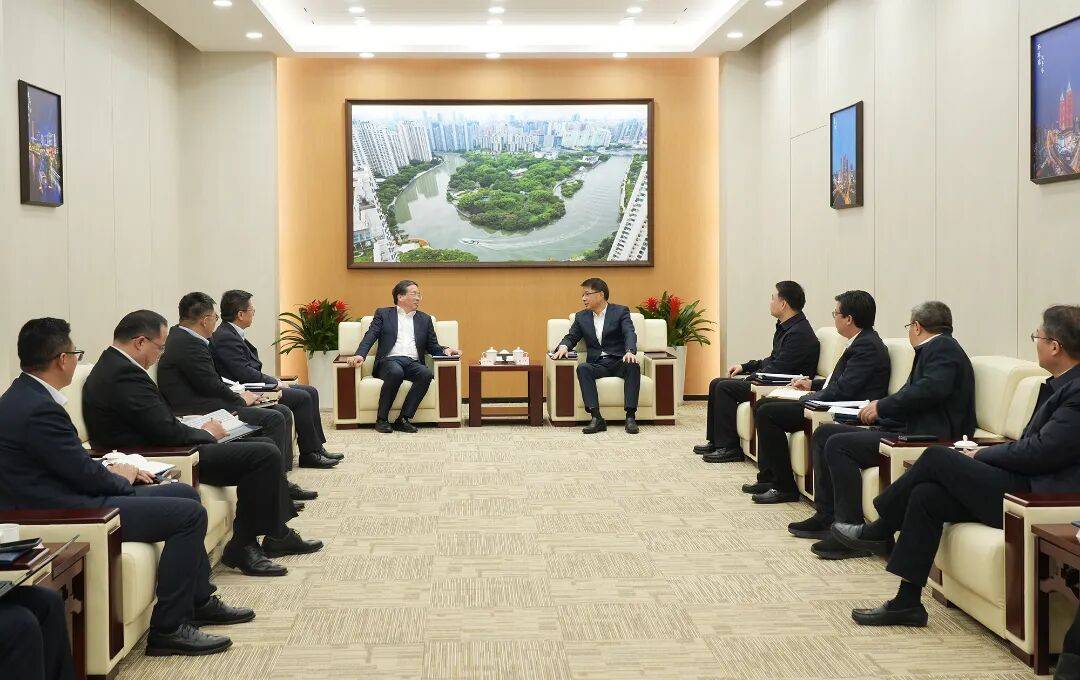
区领导接待国茂控股一行并召开政企座谈会
Sou Hu Cai Jing· 2026-02-24 22:03
Group 1 - The meeting between Putuo District and Guomao Holdings focused on deepening government-enterprise cooperation and advancing the construction of a bulk commodity trade industry system [1][3] - Guomao Holdings expressed gratitude for the support received from Putuo District and outlined its strategic focus on upstream resource investment, midstream supply chain management, and downstream industry layout [3] - The company aims to align with the Shanghai International Trade Center construction and integrate into the Yangtze River Delta's development strategy, enhancing collaboration with key enterprises and financial institutions [3] Group 2 - Putuo District is actively working to support the construction of the Shanghai-Nanjing industrial innovation belt and is focused on building a bulk commodity trade supply chain industry system [3] - The district aims to establish a regular communication mechanism with Guomao Holdings and accelerate the development of a digital trade platform, as well as explore the creation of a regionally influential bulk commodity price index [3] - Putuo District will continue to optimize the business environment to support enterprises in their development, promoting complementary advantages and win-win cooperation [3]
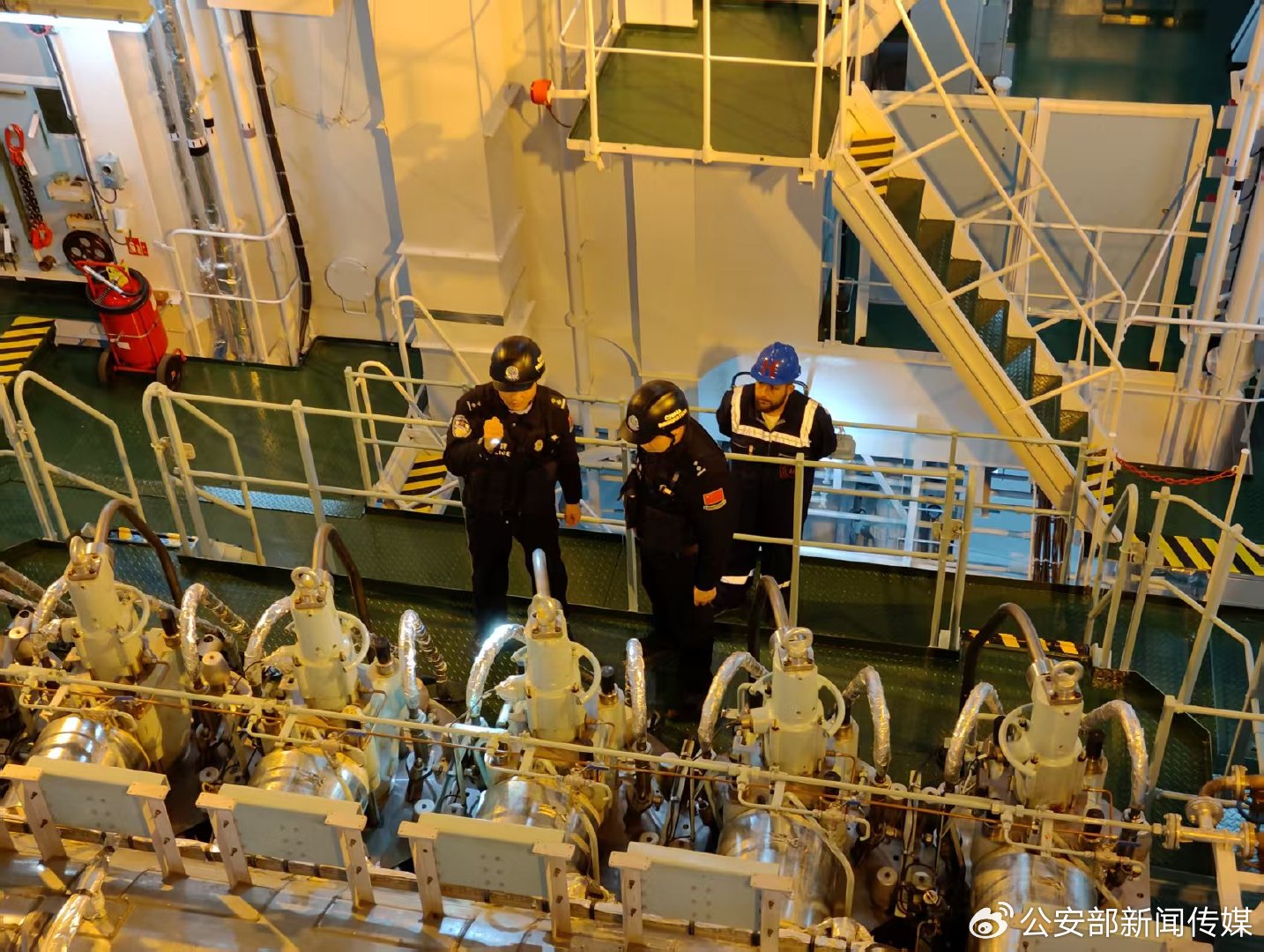
万里春潮千帆竞
Xin Lang Cai Jing· 2026-02-16 02:31
Core Viewpoint - The article highlights the busy operations at the Nantong Port, emphasizing the significant increase in the export of wind power blades, which is crucial for green energy development, and the proactive measures taken by border inspection authorities to facilitate this growth [1][4]. Group 1: Port Operations - On February 13, the Nantong Port experienced a surge in activity, with ships arriving and departing, including the Antigua and Barbuda-flagged "Lier" vessel, which was set to load 30 wind power blades for export [1]. - In the past year, the Nantong border inspection station checked 79 vessels carrying wind power blades, totaling 1,509 blades with a volume of approximately 201 million cubic meters and a value exceeding $6.37 billion, marking a year-on-year increase of 34.25% [1]. Group 2: Border Inspection Measures - The Nantong border inspection station has implemented a "one ship, one policy" approach and established a "green channel" to ensure smooth operations for vessels, thereby enhancing efficiency in the export process [4]. - During a meeting on February 10, the border inspection station committed to supporting the integration and development of the Yangtze River Delta and the Yangtze River Economic Belt, aiming to contribute to higher quality development in the region [4]. Group 3: Daily Operations and Community Engagement - Daily operations at the port include routine inspections, with officers actively engaging with foreign crew members and providing safety reminders as the Lunar New Year approaches [6]. - The Nantong border inspection station conducts thorough checks in designated areas and maintains a 24/7 service commitment to ensure safety and efficiency in port operations [6].
江底60米的跨年守护
Xin Lang Cai Jing· 2026-02-15 21:13
Core Viewpoint - The construction of the Haitai Yangtze River Tunnel, the world's longest underwater highway tunnel, is progressing rapidly despite the Chinese New Year, with a focus on overcoming significant engineering challenges [2][4]. Group 1: Project Overview - The Haitai Yangtze River Tunnel project features a total length of 39.07 kilometers, with the underwater section measuring 11.185 kilometers [3]. - The project employs two domestically produced shield machines, "Jianghai" and "Cangyuan," which are 16 meters in diameter and are crucial for the tunnel's construction [2][3]. - As of now, the right line of the tunnel has completed 4,196 meters of excavation, accounting for 45% of its total length, while the left line has reached 2,150 meters, or 23% of its total length [3]. Group 2: Workforce and Challenges - The average age of the workers operating the shield machines is only 28, highlighting the involvement of a young workforce in this significant infrastructure project [3]. - The project faces world-class challenges, including "super long distance, super large diameter, super high water pressure, and super deep burial" [3]. - The construction team has chosen to work through the Chinese New Year, with over 700 workers remaining on-site to ensure the project's progress during this critical phase [2][4]. Group 3: Impact and Significance - The completion of the Haitai Yangtze River Tunnel is expected to significantly reduce travel time across the Yangtze River, from over an hour to just 10 minutes, enhancing connectivity to Shanghai [4]. - The tunnel is a key component of the "Eight Dragons Crossing the River" strategy in Nantong, contributing to the integrated development of the Yangtze River Delta region [4].
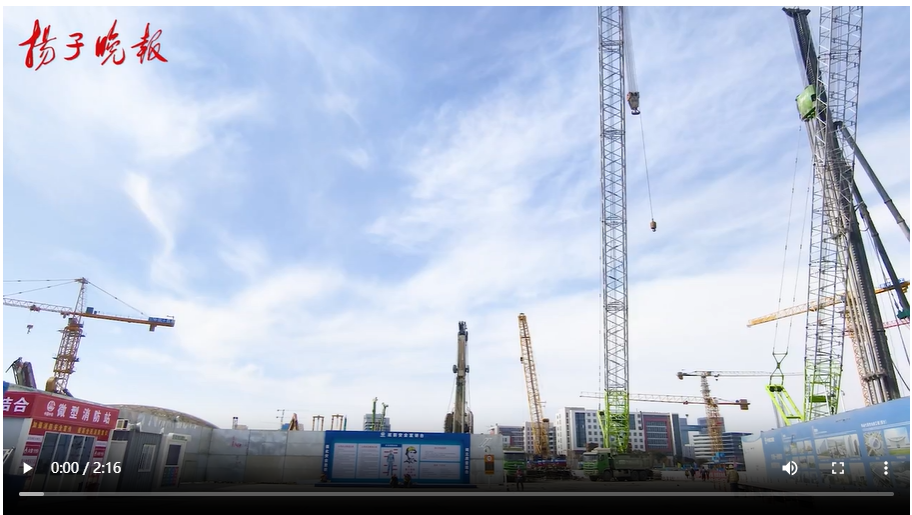
新春走基层︱我在工地挺好的!苏州东站冲刺基坑施工“最后一道撑”
Xin Lang Cai Jing· 2026-02-11 15:37
Core Viewpoint - The construction of Suzhou East Station, the first underground high-speed railway station in China designed for a speed of 350 km/h, is progressing rapidly with continuous work during the Spring Festival, involving around 350 workers on-site [2][3][16]. Group 1: Project Overview - Suzhou East Station is located in the core area of Suzhou Industrial Park and is set to be a major transportation hub integrating high-speed rail, intercity rail, urban rail, and city transit [3]. - The station is expected to be operational by 2027, coinciding with the opening of the Su-Jia-Ning high-speed railway, enhancing Suzhou's transportation network and supporting regional development [3][4]. Group 2: Construction Progress - The current focus is on the excavation of the S3 area and the construction of pile foundations in the S4 area, with over 600 workers and more than 100 pieces of machinery on-site [7]. - The construction site features a deep foundation pit reaching depths of 30 to 40 meters, equivalent to a 13-story building, with the completion of the fifth support structure being crucial for safety [9]. Group 3: Worker Welfare Initiatives - A health check-up event was organized for workers during the Spring Festival, providing various medical consultations and fostering a sense of community among the labor force [10][16]. - Workers expressed appreciation for the health services and the opportunity to celebrate the New Year together, highlighting the project's commitment to worker welfare [13][16]. Group 4: Future Development Plans - In 2026, the city plans to invest approximately 30 billion yuan in 83 comprehensive transportation projects, with 22 projects expected to be completed within the year [18]. - The ongoing construction efforts during the holiday season reflect a commitment to maintaining project timelines and ensuring steady progress in urban development [18].
2030“五个中心”再跃升,2035基本建成国际大都市!上海市“十五五”规划《纲要》出炉
Guo Ji Jin Rong Bao· 2026-02-11 12:58
Core Objectives - Shanghai's "15th Five-Year Plan" aims for significant advancements in urban capabilities and competitiveness by 2035, with a goal of doubling per capita GDP compared to 2020 levels [3][5] - The plan emphasizes the development of "five centers" to enhance global positioning and resource allocation capabilities [4][8] Development Goals - The plan outlines key tasks and objectives for the "15th Five-Year" period, focusing on technological innovation, reform and opening-up, national strategic alignment, and modern urban governance [4][6] - Specific targets include achieving decisive progress in high-level institutional openness and improving the quality of life for residents [4][6] Key Indicators - The "15th Five-Year Plan" sets 20 core indicators, with 14 being anticipatory and 6 being binding, aimed at guiding economic and social development [6] - Indicators focus on economic growth, efficiency improvement, structural optimization, and enhancing the functions of the "five centers" [6] Major Initiatives - The plan includes 13 major initiatives categorized under "new momentum," "new space," and "new quality," aimed at enhancing urban core functions and competitiveness [8][10] - Initiatives for the international economic center focus on building a modern industrial system and promoting the digital and green transformation of traditional industries [8][9] Regional Development - The plan emphasizes the integration of the Yangtze River Delta region, promoting collaborative development and innovation [10] - It aims to optimize urban-rural spatial layouts and enhance infrastructure systems within the city [10] Quality of Life Improvements - The plan prioritizes cultural, ecological, and governance improvements to ensure high-quality living standards for residents [11] - Goals include enhancing public services in employment, housing, education, and healthcare, while also ensuring ecological sustainability [11]
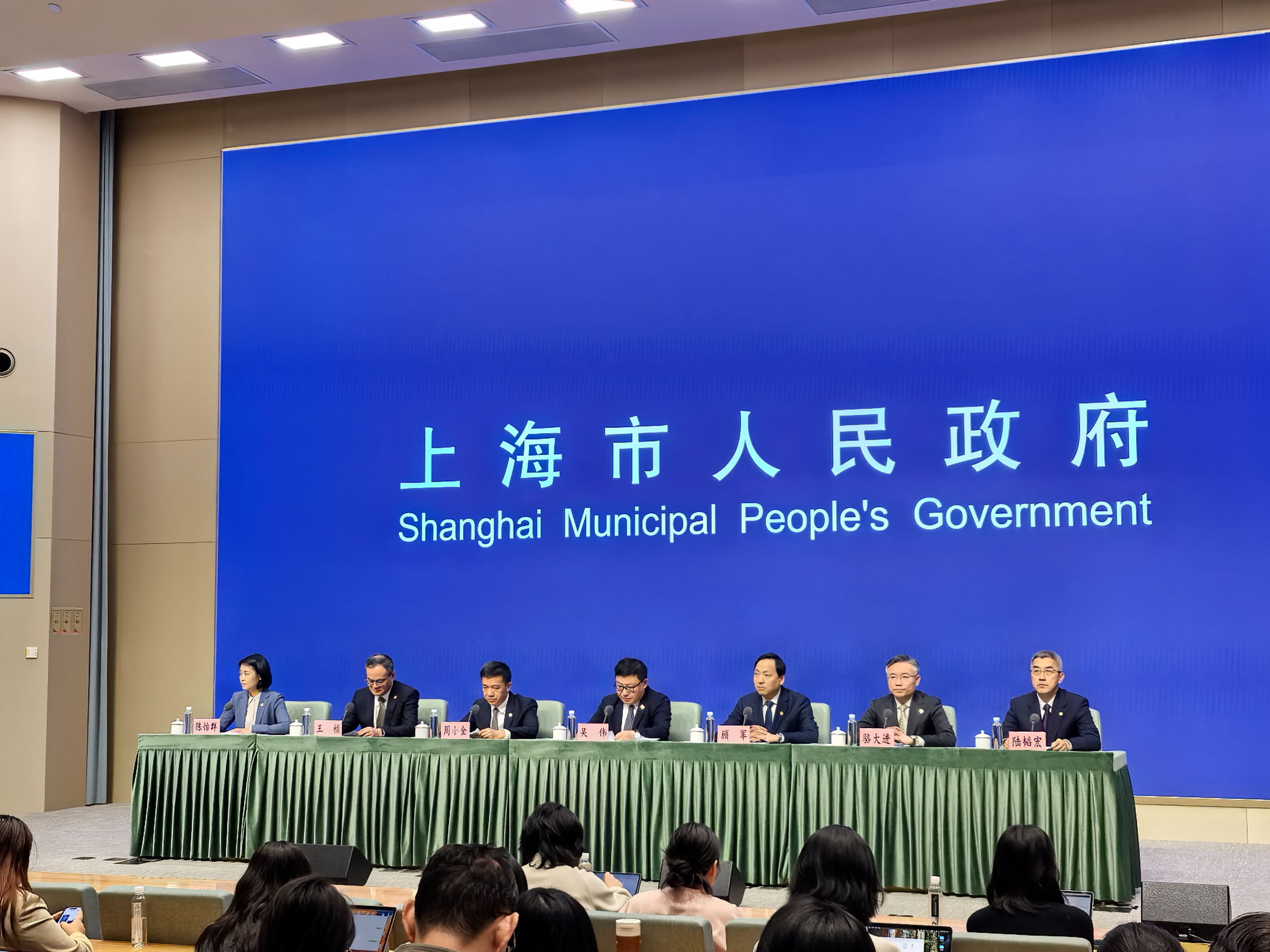
乘势而上、全面发力,上海“十五五”规划《纲要》来了
Xin Lang Cai Jing· 2026-02-11 04:44
Core Viewpoint - The "15th Five-Year Plan" for Shanghai aims to enhance the city's global influence and modernize its economy and society, focusing on innovation, reform, and sustainable development [1][2]. Summary by Sections General Overview - The "15th Five-Year Plan" outlines Shanghai's development goals and key tasks for the next five years, emphasizing the importance of aligning with national strategies and local directives [1][2]. Key Tasks and Measures - The plan is structured into three parts: a general overview, key tasks and measures across 13 areas, and implementation guarantees [2]. - The guiding ideology includes "Four Emphases" and "Two Promotions and One Assurance," focusing on technological innovation, reform, national strategies, and modern urban governance [2]. Development Goals - By 2030, Shanghai aims to enhance its five core functions, improve living standards, and achieve significant reforms in key areas [3]. - By 2035, the city targets to double its per capita GDP from 2020 levels and fully establish itself as a world-class socialist modern metropolis [3][4]. Specific Indicators - The plan sets 20 main indicators, including 14 expected and 6 binding indicators, to guide economic and social development [3][4]. - Key indicators focus on economic growth, employment, income, housing, and green development [4]. Major Initiatives - The "Three News" framework includes new driving forces, new spaces, and new qualities, focusing on enhancing urban core functions and promoting high-quality development [5][6]. - Specific initiatives include building a modern industrial system, enhancing financial services, and promoting international trade and shipping [5][6][7]. Regional Integration - The plan emphasizes the integration of the Yangtze River Delta region, enhancing collaborative development and innovation [7][8]. Quality of Life Improvements - The plan aims to improve cultural, ecological, and governance aspects, ensuring a high quality of life for residents [8][10]. - Key areas include cultural innovation, public services, ecological sustainability, and urban governance modernization [8][10]. Infrastructure Development - The plan outlines the need for modern infrastructure, including transportation, energy systems, and urban renewal projects [44][45]. - Specific targets include expanding public transport and enhancing energy efficiency [44][45]. Environmental Goals - Shanghai aims to peak carbon emissions before 2030 and increase the share of renewable energy in its energy consumption [52][53]. - The plan includes measures for pollution control and enhancing green spaces [52][53]. Governance and Implementation - The plan emphasizes the importance of legal and regulatory frameworks to ensure effective implementation and monitoring [57][59]. - It aims to enhance government efficiency and public service delivery through digital transformation [56][57].
