
酒店行业洗牌

Search documents
五星酒店降价拍卖难成交,各地为何还要“抢购”?背后藏那些原因
Sou Hu Cai Jing· 2025-10-29 07:30
Core Viewpoint - The current landscape of the domestic five-star hotel industry presents a stark contrast, with many luxury hotels facing auction challenges while various cities actively promote the establishment of new five-star hotels, reflecting a complex development trend influenced by market demand and local development considerations [1][3][20]. Group 1: Auction Challenges - Numerous luxury hotels are entering auction processes, with some failing to find buyers even after multiple attempts and price reductions, indicating a cooling market overall [1][3]. - For instance, the Quanzhou R&F Wanda Hotel is set to be auctioned with a starting price of 331 million yuan, which is 30% lower than the market price, while the Guangzhou R&F Airport Holiday Hotel faced two failed auctions, with the price dropping to 222 million yuan, only 56% of its assessed value [3][5]. - Over 80 hotels valued at over 100 million yuan are expected to be auctioned or listed for sale by mid-2025, but only about 6 have successfully changed hands, indicating that over 90% remain unsold [5][7]. Group 2: Local Government Initiatives - In contrast to the auction struggles, several cities are actively incentivizing the establishment of five-star hotels through subsidies and rewards, aiming to attract brands for urban development [3][9]. - For example, Kunming offers a 2% subsidy on fixed investments for new or expanded five-star hotels, with a cap of 30 million yuan per project, while Fuzhou provides a one-time reward of 1 million yuan for new five-star hotels [9][11]. - The rationale behind these investments is clear, as cities recognize the economic benefits, with hotel occupancy rates significantly increasing during events, leading to a multiplier effect on local consumption [11][13]. Group 3: Market Dynamics and Brand Strategies - The hotel industry is experiencing a shift, with younger consumers moving away from traditional luxury brands, leading to increased competition from mid-range brands like Atour and Qianxi [7][9]. - Hotel brands are adapting by focusing on second and third-tier cities, with major groups like Marriott and InterContinental signing numerous projects in these areas, while domestic brands are emphasizing the renovation of existing properties [17][19]. - The industry is undergoing a transformation where luxury is being redefined, with brands introducing lighter luxury concepts that prioritize experience over opulence, catering to a new demographic of travelers [19][22].

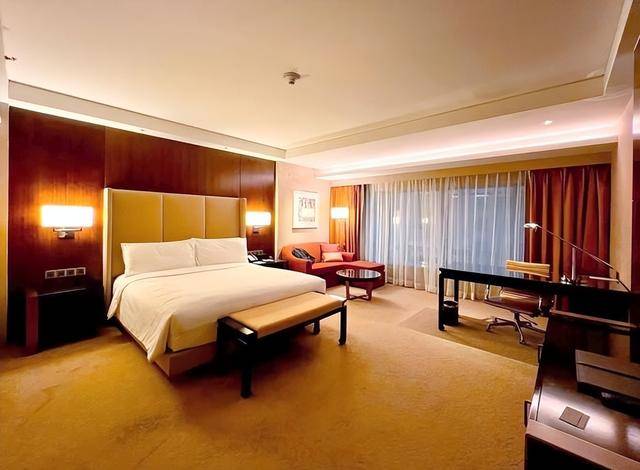
万豪酒店拖鞋被指重复使用,近年来加速扩张中国市场
Xin Jing Bao· 2025-09-22 13:17
针对拖鞋循环使用及卫生疑云,涉事的江苏常州万豪酒店方面随后回应称,其拖鞋实为"可循环使用"产 品,严格执行"一客一换一消毒",并解释"棉质材质在机洗后出现起球属正常现象"。但该说法并未平息 公众质疑。9月22日,新京报记者致电常州万豪酒店,对方表示"正在调查中,暂不回应";记者同时 就"拖鞋是否应循环使用"等问题向万豪国际集团提出采访,截至发稿前未获回复。 豪华酒店的棉质拖鞋可循环利用? 在高运营成本与激烈市场竞争的双重压力下,某些酒店企业为了控制成本或正在偷偷牺牲客房用品的质 量。9月21日,一位住客在网络上反映,江苏常州万豪酒店存在循环使用一次性拖鞋的情况,拖鞋表面 不仅起球,还粘着睫毛等异物,这引发公众对万豪酒店卫生管理的质疑。事件曝光后,常州市及新北区 卫生监督所迅速介入,表示将严格核查该酒店拖鞋是否属于一次性用品,以及其清洗消毒流程是否符合 规范。 独立酒店咨询师钟罗分析指出,不少酒店为吸引客源而降低房价,即 "牺牲房价,提高入住率"。"酒店 卫生问题屡禁不止的深层原因,往往在于为控制成本、简化流程。" 另一方面,本土酒店集团的快速崛起,正不断挤压国际品牌的市场空间。华住、锦江、亚朵等国内品牌 凭借 ...
