酶工程

Search documents
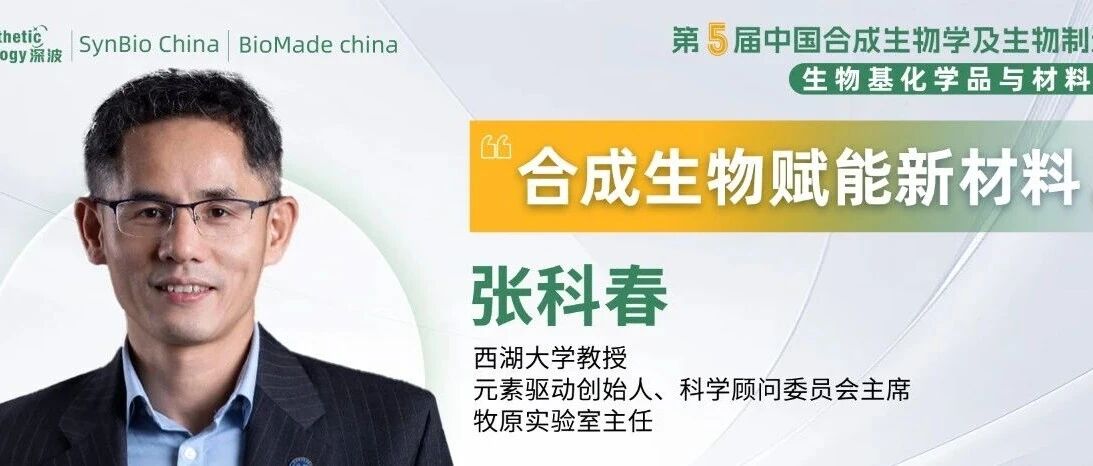
西湖大学教授、元素驱动创始人张科春老师担任联合发起人,并发表主题演讲:《合成生物赋能新材料》
synbio新材料· 2026-03-06 06:26
Group 1 - The "SynBio China Fifth China Synthetic Biology and Biomanufacturing Conference" will be held in Hangzhou on March 31 to April 1, 2026, featuring a special session on bio-based chemicals and materials [2][8] - Professor Zhang Kechun from Westlake University will be a co-initiator of the bio-based chemicals and materials session and will deliver a keynote speech titled "Synthetic Biology Empowering New Materials" [2][11] - Zhang Kechun has over 20 years of research experience in synthetic biology and has developed the first scalable production of elastic biodegradable polymer materials [3][5] Group 2 - Element Driven is a key incubation project of Westlake University's new productivity cultivation platform, recognized as a national high-tech enterprise [5] - The company has established the MiNT-X Platform, which integrates AI and biomanufacturing to develop efficient green biosynthesis of amino acids and new ecological materials [5] - Element Driven is collaborating with major companies like Muyuan Group and Vipshop to set up two large-scale production factories [5] Group 3 - The conference will accommodate around 1,000 participants and is organized by Synbio Deep Wave, with support from various media outlets [8] - The agenda includes multiple specialized sessions focusing on topics such as biomanufacturing technology, functional food, and bio-based chemicals [9][11] - The event will also provide opportunities for exhibitors from the synthetic biology and modern biotechnology sectors to showcase their innovations [18]

打造生物制造新增长引擎
Jing Ji Ri Bao· 2025-11-10 00:54
Core Insights - The 20th Central Committee's Fourth Plenary Session emphasizes the strategic importance of biomanufacturing as a key driver for economic transformation and high-quality development in China [1] Group 1: Strategic Importance of Biomanufacturing - Biomanufacturing is positioned as a critical sector for future economic growth, with a focus on core technology breakthroughs and the cultivation of an industrial ecosystem [1] - The approach to biomanufacturing should leverage China's unique conditions and institutional advantages, aiming for a comprehensive view of the entire industrial chain [1] Group 2: Characteristics of China's Biomanufacturing Industry - China's biomanufacturing industry showcases significant features such as integrated innovation, sustainability, and empowerment through the intersection of biotechnology and various fields [2] - The industry benefits from a complete industrial system and supply chain, allowing for effective engineering and market application of biomanufacturing technologies [2] Group 3: Challenges and Gaps - There are notable gaps in core technologies, original capabilities, and competitiveness in high-value products compared to international standards, particularly in high-end industrial enzymes and key equipment manufacturing [3] - A more systematic and forceful approach is needed to drive high-quality development in the biomanufacturing sector [3] Group 4: Recommendations for Development - Strengthening top-level design and strategic guidance is essential, including clearer long-term planning and prioritization of technology directions [3] - Establishing a collaborative innovation ecosystem that integrates industry, academia, and research institutions is crucial for overcoming challenges in transitioning from laboratory samples to industrial products [3] Group 5: Investment and Infrastructure - Diversifying investment and market mechanisms is necessary, including government funding and attracting social capital into biomanufacturing [4] - Building a robust foundation in talent and infrastructure is vital, with an emphasis on interdisciplinary talent cultivation and the establishment of major technological infrastructures [4]
张林山:打造生物制造新增长引擎
Jing Ji Ri Bao· 2025-11-10 00:10
Core Insights - The 20th Central Committee's Fourth Plenary Session has approved a proposal emphasizing the importance of future industries, particularly highlighting biomanufacturing as a key driver for economic transformation and high-quality development in China [1] Industry Overview - Biomanufacturing is defined as an advanced production method utilizing biological entities (such as microorganisms, cells, enzymes) to produce materials and provide services, characterized by disruptive technology and green low-carbon attributes [1] - The industry is penetrating critical sectors such as pharmaceuticals, chemicals, materials, energy, agriculture, and environmental protection, playing a vital role in ensuring food security, energy security, and achieving green low-carbon development [1] Global Comparison - Developed countries have elevated biomanufacturing to a national strategic level, with the U.S. leading in synthetic biology and gene editing, while the EU focuses on the green and circular aspects of biomanufacturing as part of the "European Green Deal" [2] - In contrast, China's biomanufacturing industry is marked by national strategic guidance, large-scale market applications, and collaborative advancement across the entire value chain, leveraging its complete industrial system and supply chain [2] Challenges and Gaps - China still faces gaps in core technologies, original capabilities, and competitiveness in high-value products, particularly in high-end industrial enzymes, core biological design software, and key equipment manufacturing [3] Strategic Recommendations - A clearer long-term national biomanufacturing development plan should be established, prioritizing technology directions and key product catalogs, while enhancing support for foundational technologies [3] - Encouragement of deep integration of "industry, academia, research, application, and finance" to form collaborative innovation ecosystems is essential [3] Investment and Infrastructure - The government should increase R&D investment while guiding social capital, especially long-term capital, into the biomanufacturing sector, including the establishment of a national biomanufacturing industry investment fund [4] - Strengthening interdisciplinary talent cultivation and building major technological infrastructures, data repositories, and strain banks are crucial for supporting industry innovation [4]
两部门发文:开展食品加工领域生物制造创新技术应用方向征集工作
Huan Qiu Wang· 2025-08-19 06:51
Group 1 - The Ministry of Industry and Information Technology and the National Health Commission of China have launched a notice to collect innovative applications of biological manufacturing technologies in the food processing sector, focusing on areas such as food raw materials, food additives, and food and beverage manufacturing [1] - The application directions should align with the goal of building a diversified food supply system and have significant promotional value for industry development, referencing safety evaluation requirements for genetically modified microorganisms [1] - Specific conditions for the applications include: products must be developed domestically and have entered small-scale trial production or mass production; products must have sufficient research results proving their safety or have been approved in other countries for food processing; and products must meet the criteria for "three new foods" in China but have not yet been approved [1] Group 2 - Huazhong Securities has released a research report indicating that frontier research in life sciences remains active, with a global biotechnology revolution accelerating its integration into economic and social development, providing new solutions for major challenges such as health, climate change, resource security, and food security [2] - The report suggests that the biological economy is emerging as a trillion-dollar sector, highlighting the potential for significant investment opportunities in this field [2]