金融资本主义

Search documents
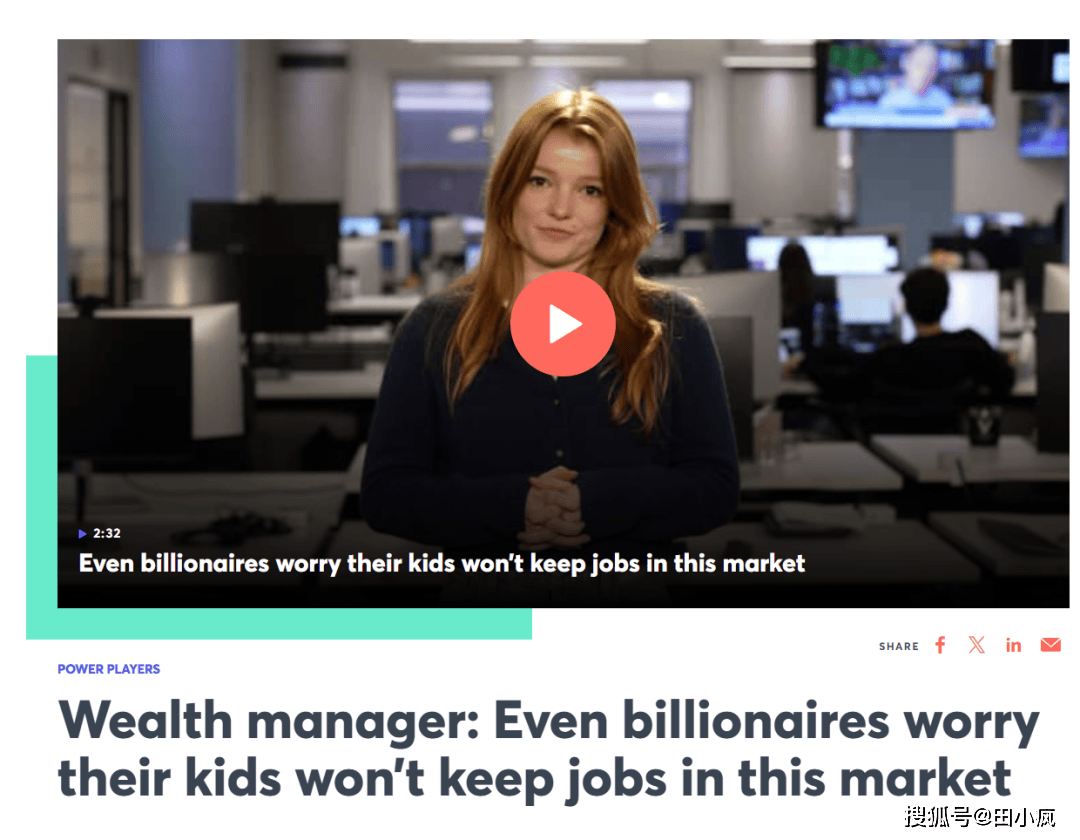
美国亿万富翁开始逼娃创业!就业崩了连顶层都慌。
Sou Hu Cai Jing· 2026-02-10 15:01
Group 1 - The article discusses the concerns of ultra-wealthy families regarding their children's job prospects in a challenging employment market, leading them to encourage entrepreneurship as a response to uncertainty [5][6][7] - Wealth management experts indicate that clients with a net worth between $100 million and $1 billion are particularly worried about their children aged 22-35 struggling to find stable careers in traditional sectors like technology, law, and healthcare [5][6] - The overall job market for young people is unfavorable, with a projected unemployment rate of 9.7% for college graduates in September 2024, marking the weakest hiring year since 2009, excluding the pandemic year of 2020 [5][6] Group 2 - The rise of artificial intelligence is identified as a potential factor contributing to the tightening job market, as existing employees are reluctant to leave their positions due to economic uncertainties, resulting in fewer entry-level job opportunities [5][6] - The article highlights a shift in strategy among wealthy families, moving away from traditional career paths towards encouraging their children to start businesses in their 20s and 30s, despite the high risks associated with entrepreneurship [6] - Michael Hans, Chief Investment Officer at Citizens Wealth, notes that while employment challenges do not threaten the basic living standards of the ultra-wealthy, there is still a desire to prevent their children from having to lower their living standards [6][7] Group 3 - The article introduces concepts such as "wealthy socialism," "technological feudalism," "financial capitalism," and "regulatory capitalism," which illustrate the distorted landscape of capitalism where resources disproportionately benefit the wealthy [9][10] - The concentration of wealth in the U.S. has returned to levels comparable to the "Roaring Twenties," with the top 1% of households holding 32% of the wealth by 2022, up from 23% in 1989 [12][13] - The article suggests that if the middle class is at risk of falling due to economic pressures, the ultra-wealthy may also face similar threats, as their wealth is often tied to volatile financial markets [13][14]


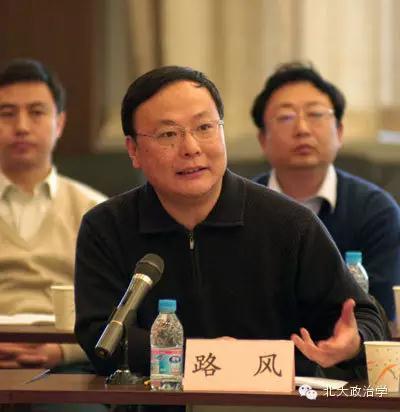
路风:美国发起对决,中国靠什么赢得世纪挑战?
Guan Cha Zhe Wang· 2025-05-29 03:26
Group 1 - The challenges facing the Chinese economy include a new wave of external shocks, particularly related to US-China relations and tariffs imposed by the Trump administration [2][4] - Trump's strategy aims to reshape US hegemony by dismantling the existing global economic system and transferring the costs of economic adjustments to other countries, especially targeting China as a primary threat [3][4] - The US has initiated measures against China, including increased tariffs on Chinese goods and restrictions on semiconductor exports, indicating a clear adversarial stance [4] Group 2 - The concept of "manufacturing return" promoted by Trump is unlikely to succeed due to the historical decline of US manufacturing, which began in the 1970s and is attributed to the pursuit of global hegemony [5][9] - The US's industrial decline is linked to its geopolitical strategies post-World War II, which prioritized maintaining hegemony over industrial growth [11][12] - The historical context shows that the US's industrial strength was built on existing technologies and innovations from other countries, making it difficult to reverse the trend of deindustrialization [8][9] Group 3 - The notion that manufacturing can simply be "transferred" back to the US is flawed; industrial capabilities are inherently organizational and cannot be easily relocated [18][19] - China's industrialization is not a result of "industry transfer" but rather a product of its own comprehensive industrial system developed over decades [20][21] - The success of Chinese companies, such as North Huachuang in the semiconductor sector, illustrates the strength of China's domestic industrial capabilities, which have been built over time [23][24] Group 4 - The US's attempts to revitalize its manufacturing sector through foreign investments, such as those from TSMC and Samsung, do not equate to genuine industrialization [26][28] - The labor market in the US has shifted significantly, with a high-cost, low-skill workforce that is ill-suited for manufacturing, contrasting with China's low-cost, high-skill labor force [28][29] - The challenges of re-industrialization in the US are compounded by decades of industrial decline, making it more difficult than the initial industrialization process [29][30] Group 5 - China's industrial development must avoid self-imposed limitations, particularly the "binary thinking" that separates traditional and high-tech industries, as both are essential for economic growth [30][31] - The suppression of traditional industries in favor of new technologies has led to inefficiencies and a lack of balance in the industrial structure, which is detrimental to overall economic health [33][34] - The historical context of China's industrialization shows that a complete industrial system is necessary for sustainable growth, and the current policies must reflect this understanding [20][21][43]