钠电池规模化应用

Search documents
钠电池产业迈向“规模化应用”,重视各材料环节投资机会
Jianghai Securities· 2025-12-02 11:44
Investment Rating - The industry rating is "Overweight" (maintained) [5] Core Insights - The sodium-ion battery industry is transitioning from "industrialization year" to "scale application year" in 2025, with significant growth expected in various applications such as energy storage, start-stop systems, two-wheeled vehicles, and mid-low range electric vehicles [5][37] - The average price of sodium battery cells in 2025 is projected to be 0.52 yuan/Wh, expected to drop to 0.25 yuan/Wh by 2030 [5][37] - The global sodium battery market is anticipated to reach a scale of 1,051 GWh by 2030, with substantial contributions from energy storage and automotive sectors [5][39][40] Summary by Sections 1. Sodium-Ion Battery Material Segments - Key materials for sodium-ion batteries include layered oxides, polyanions, and Prussian blue, with polyanions expected to dominate the market by 2030 [5][16][51] - The production process for sodium-ion batteries is similar to that of lithium-ion batteries, with specific adjustments in material handling and processing [5][33][34] 2. Market Application Potential - The energy storage sector shows immense potential for sodium batteries, particularly in large-scale storage systems due to their long cycle life and safety features [5][37] - In the automotive sector, sodium batteries are expected to dominate the A00/A0 class microcars and economical family cars, with a projected market size of 410 GWh by 2030 [5][40][41] 3. Material Shipment Forecasts - For 2025, the total shipment of sodium battery positive materials is expected to reach 15,000 tons, with polyanion materials surpassing layered oxides in shipment volume [5][51] - The shipment of sodium battery negative materials is projected to be 141.9 million tons by 2030, with hard carbon remaining the mainstream choice [5][54] - The sodium battery electrolyte market is expected to see a shipment of 157.7 million tons by 2030, with prices decreasing from 28,000 yuan/ton in 2025 to 15,000 yuan/ton by 2030 [5][58] 4. Key Company Developments - CATL launched its sodium battery products in 2025, achieving energy densities of 175 Wh/kg and over 10,000 cycles, marking a significant advancement in battery technology [5][61] - BYD reported a sodium battery cell capacity of 200 Ah and a cycle life exceeding 10,000 cycles, showcasing superior performance compared to existing lithium batteries [5][64] - Transart Technology is expanding its sodium battery production capacity, targeting applications in electric two-wheelers and other sectors [5][66] - Weike Technology is focusing on the development and production of sodium battery products, emphasizing their application in energy storage and start-stop systems [5][67]




固态、钠电竞速,电池新能源产业迎增长新动能
Zhong Guo Jing Ji Wang· 2025-11-13 09:22
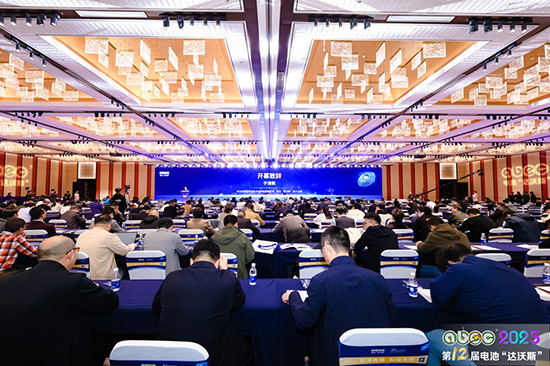
Core Insights - China has established itself as the "world battery factory" due to its comprehensive advantages in technology research and supply chain integration, while facing both short-term challenges and long-term restructuring in the battery new energy industry [1][20] Industry Developments - The 12th China (Suzhou) International Summit Forum on Battery New Energy Industry was held from November 11 to 13, focusing on "Innovation and Adaptation to Reshape Value," gathering over 500 representatives from various sectors to explore development paths and high-quality growth in the industry [3] - The battery new energy industry has transitioned from a phase of scale expansion to a new cycle of value creation, although it is still undergoing deep adjustments with ongoing price wars and uncertainties from international trade barriers and raw material price fluctuations [5][6] Technological Innovations - Solid-state and sodium-ion battery technologies are crucial for overcoming competition and profit pressures in the battery new energy sector, with a focus on technological breakthroughs and strategic innovation [7][20] - Solid-state batteries are recognized for their high safety, energy density, and long cycle life, with demand expected to reach 156 GWh by 2030 as the technology matures and costs decrease [11] - Sodium-ion batteries are gaining traction due to their cost advantages, projected to be 30% lower than lithium batteries, and the growing market for electric two- and three-wheelers in China [20] Market Trends - The battery technology landscape is diversifying, with trends indicating that both ternary and lithium iron phosphate batteries will coexist in the long term, and high energy density batteries will be essential for advanced electric vehicles and eVTOLs [25] - The industry is witnessing a shift towards proactive safety technologies that aim to detect risks early, contrasting with traditional methods that react post-incident [31] Strategic Focus - Companies are urged to prioritize technology, market orientation, supply chain integration, and ecological sustainability to navigate industry challenges and capitalize on new opportunities [31]