固态电池技术突破

Search documents
1分钟,封死涨停!美国,突传重磅!这类股票被带飞
券商中国· 2026-03-13 04:08
Core Viewpoint - The recent surge in the new energy sector, particularly in lithium battery materials, is driven by the U.S. decision not to impose tariffs on Chinese battery materials, which is seen as a significant positive for the market [1][2]. Group 1: Market Reaction - On March 13, the lithium battery index rose by 3%, with notable stocks like Jinzhengdai hitting the limit up within a minute of opening. A total of 35 stocks in the sector saw gains exceeding 5% [2]. - The U.S. International Trade Commission (USITC) ruled that imports of key battery components from China did not harm domestic industries, leading to a positive market response [2]. Group 2: Tariff Impact - The U.S. decision means that previously imposed high tariffs on Chinese anode materials, which were as high as 93.5% for specific exporters, will not be applied, benefiting the negative electrode materials the most [2][3]. - The previous tariffs included a 160.32% to 169.58% cash deposit requirement for importers, which will now be lifted, enhancing the competitiveness of Chinese battery materials [3]. Group 3: Future Trends - Starting in 2025, the lithium battery midstream sector is expected to enter a "recovery-prosperity" phase, driven by a new round of capacity expansion and breakthroughs in solid-state battery technology [3]. - The demand for lithium batteries is projected to reach 2,280.5 GWh globally by 2025, with energy storage accounting for 29% of this demand. By 2026, demand is expected to rise to 3,016 GWh, with energy storage projected at 1,090 GWh [4][5]. Group 4: Industry Dynamics - The supply-demand dynamics in the lithium battery materials sector have changed significantly compared to two years ago, with cautious capacity expansion in upstream materials expected to lead to over 80% utilization by the end of 2025 [4]. - The overall industry is entering a proactive inventory replenishment phase, with a decline in power battery inventory and an increase in energy storage inventory [3].




未知机构:深度东吴电新固态电池技术突破装车在即太空领域打开想象空间-20260224
未知机构· 2026-02-24 02:35
Summary of Conference Call on Solid-State Batteries Industry Overview - The focus is on the solid-state battery industry, which is expected to undergo significant advancements and commercialization in the coming years, particularly in 2025 and 2026 [1][1]. Key Points and Arguments - **Road Testing Phase**: Solid-state batteries are entering the road testing phase in 2026, with a shift in focus from cell technology to pack technology. The progress of vehicle road tests is crucial [1][1]. - **Commercialization Acceleration**: In 2025, the solid-state battery industry is expected to accelerate, with vehicle-grade cells being produced in the first half and pilot lines established in the second half, leading to two major market upswings [1][1]. - **Critical Year 2026**: The year 2026 is identified as a pivotal period, with vehicle-grade packs expected to be produced in the first half, initiating road test validations, and mass production lines anticipated in the second half. The core catalyst for 2026 is the tendering of GWh-level production lines and road tests of related vehicle models, which could lead to significant market movements similar to those seen in 2025 [1][1]. Space Industry Adaptation - **Suitability for Space Applications**: Solid-state batteries are naturally suited for space applications due to their wide temperature range, high energy density, and safety features. They can operate in extreme conditions from -200°C to +150°C, unlike liquid batteries which function only between -20°C and +60°C [2][2]. - **Market Demand in Space**: The demand for solid-state batteries in satellite applications is projected to reach tens to hundreds of GWh annually, with potential uses in deep space probes and lunar bases, expanding the market's imagination [2][2]. Investment Recommendations - **First Line**: Recommend investing in the battery segment with the highest barriers to entry, highlighting companies like CATL, and monitoring others such as Guoxuan High-Tech and Jinlongyu [2][2]. - **Second Line**: Focus on equipment manufacturers, recommending companies like Xianhui Technology, Naconor, and Xian Dao Intelligent, while keeping an eye on others like Honggong Technology and Lingge Technology [2][2]. - **Third Line**: Suggest investing in materials, particularly lithium sulfide and electrolytes, with top picks including Shanghai Xiba, Xiamen Tungsten, and Dangsheng Technology [2][2]. - **Fourth Line**: Monitor new technology firms, including Zhongyi Technology and Yuanhang Precision [2][2]. Risk Factors - **Technological Progress Risks**: There is a risk that advancements in new technologies may not meet expectations, which could impact the overall market and investment outlook [3][3].

碳酸锂期货又陷“跌停风云”!电池ETF汇添富(159796)跌超2%,连续5日逆势吸金超1.8亿元!全固态电池催化密集落地,产业化进程提速!
Sou Hu Cai Jing· 2026-02-02 10:17
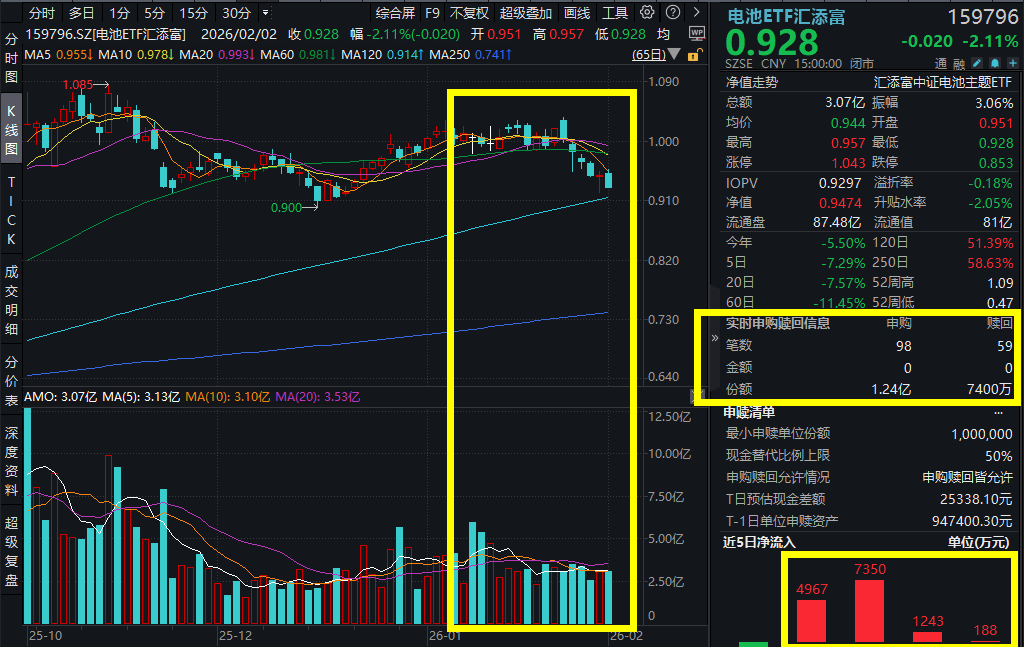
Market Overview - On February 2, the A-share market experienced a volatile pullback, with over 4,600 stocks declining, and the leading battery ETF, Huatai-PineBridge (159796), fell over 2% while attracting a net subscription of 50 million shares, totaling over 180 million yuan in inflows over the past five days [1][3]. Battery Sector Performance - The majority of the index component stocks for the battery ETF saw declines, with Gree falling over 5%, and companies like Xindong Intelligent and Xinwangda dropping over 3%. Other notable declines included Sunshine Power and Guoxuan High-Tech, which fell over 1% [3][4]. Key Component Stocks - The top ten component stocks of the battery ETF include: - Sanhua Intelligent (002050): -0.39% - Sunshine Power (300274): -1.32% - Ningde Times (300750): -0.29% - Yihui Lithium Energy (300014): -1.35% - Xindong Intelligent (300450): -3.47% - Gree (002340): -5.69% - Tianqi Materials (002709): -1.65% - Research and Development (002074): -1.16% - Xinshijia (300207): -3.07% - Cangjian Duo (002407): -2.07% [4]. Company Announcements - Gree announced an expected net profit of 1.429 billion to 1.735 billion yuan for 2025, representing a year-on-year growth of 40% to 70% [6]. - Xindong Intelligent stated that its HJT and perovskite stacked equipment can meet the production requirements for lightweight and radiation-resistant batteries [7]. Policy Developments - A new notification was released regarding the establishment of an independent new energy storage capacity pricing mechanism, which is expected to provide stable income expectations for storage projects and improve business models [7]. - New regulations on battery recycling will take effect on April 1, 2026, which will accelerate industry consolidation and benefit compliant recycling companies [7]. Industry Trends - Lithium carbonate prices have continued to decline, with futures dropping by 13.99% on February 2 [8]. - The solid-state battery sector is experiencing rapid policy and market catalysts, with significant advancements expected in the coming years. Major automotive manufacturers are accelerating the integration of solid-state batteries into their vehicles, with plans for mass production by 2027 [8]. Export Tax Policy Changes - The export tax rate for photovoltaic products will be reduced from 9% to 6% from April 1 to December 31, 2026, and will be completely eliminated starting January 1, 2027. This change is expected to increase export costs and compress profit margins amid intensifying competition [9]. Investment Strategy - The battery ETF Huatai-PineBridge (159796) has a significant focus on energy storage, with 18.7% of its index comprising energy storage components, which is substantially higher than similar indices. The ETF also has a solid-state battery component of 45%, indicating strong growth potential [10][12]. - The ETF's management fee is the lowest in its category at 0.15% per year, aiming to provide a favorable investment experience [15].


固态电池新突破!电池ETF(561910)逆市飘红,亿纬锂能、恩捷股份、阳光电源领涨
Sou Hu Cai Jing· 2026-01-30 06:54
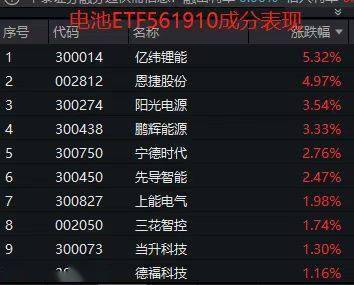
Group 1 - The battery ETF (561910) showed positive performance against the backdrop of market fluctuations, with leading stocks like Yiwei Lithium Energy, Enjie Co., and Sungrow Power performing strongly [1][2] - Key stocks in the battery sector experienced notable gains, with Yiwei Lithium Energy up by 5.32%, Enjie Co. by 4.97%, and Sungrow Power by 3.54% [2] - The strong performance of the battery sector is attributed to a combination of short-term earnings certainty and long-term technological revolution prospects [2][3] Group 2 - A significant breakthrough in solid-state battery materials has been achieved, with a new high-performance silicon anode developed by the Qingdao Institute of Energy, which shows excellent performance in specific capacity, expansion rate (only 37.8%, much lower than pure silicon's 300%), and cycle life (capacity retention of 81.7% after 1000 cycles) [3] - This advancement is expected to accelerate the commercialization of next-generation high-energy-density solid-state batteries, marking a critical turning point for the industry and opening up new growth opportunities [3] - Recent earnings forecasts from over 400 companies indicate a strong performance outlook, with more than 40 companies reporting a doubling of net profits, reflecting high demand in certain high-end manufacturing sectors [3]

研报 | 人形机器人迈向商用化,固态电池技术将成为突破动力瓶颈的关键
TrendForce集邦· 2026-01-28 09:01
Core Insights - The article highlights the increasing importance of solid-state batteries as humanoid robots approach commercialization in 2026, with a projected demand for solid-state batteries exceeding 74 GWh by 2035, representing a growth of over 1,000 times from 2026 levels [2][5]. Group 1: Current Battery Technology - Currently, humanoid robots primarily use liquid lithium batteries, with most models having a battery capacity below 2 kWh and a runtime of 2 to 4 hours [6][8]. - High-nickel ternary lithium batteries (NMC/NCA) are the mainstream choice for robot batteries due to their relatively high energy density, while lithium iron phosphate batteries (LFP) are used for lower endurance applications [6]. Group 2: Future Developments - To achieve a runtime of 5 to 8 hours, strategies such as battery swapping technology are being explored, allowing for continuous operation without rebooting [7]. - The adoption of high energy density battery technology, such as solid-state batteries, is expected to significantly enhance the runtime of humanoid robots to over 4 hours [7]. Group 3: Challenges in Battery Development - The development of humanoid robot batteries faces two main challenges: the rapid iteration of core technologies affecting battery customization and the current focus on finding scalable commercial applications rather than improving battery life [8]. - Despite these challenges, the demand for high energy density, high discharge rate, and high safety batteries presents an opportunity for solid-state batteries to demonstrate their advantages [8].

SPIR:2026-2030全球固态电池行业研究报告正式发布!
起点锂电· 2026-01-26 03:43
Core Viewpoint - The all-solid-state battery industry chain is transitioning from technology validation to mass production, with a critical window for product breakthroughs and commercialization from 2026 to 2030, driven by advancements in materials, processes, and applications [2][5]. Group 1: Industry Structure and Dynamics - The all-solid-state battery industry chain exhibits a "dumbbell" structure, with high value and barriers in upstream materials and downstream applications, while the midstream manufacturing and equipment are crucial for mass production [2]. - The core logic of the industry is based on technological breakthroughs leading to process maturity, application scenarios, cost reduction, and scale expansion [2][25]. - The industry is expected to experience explosive growth from 2026 to 2028, driven by the scaling of semi-solid and quasi-solid batteries, with full commercialization anticipated between 2028 and 2035 [2][5]. Group 2: Key Materials and Technologies - Upstream key materials include high-nickel ternary, lithium-rich manganese-based, and sodium-layered oxide for positive electrodes, while silicon-based and lithium metal are prominent for negative electrodes [3][12]. - Solid-state electrolytes are primarily sulfide-based, with a significant market share expected to grow from 25.4 tons in 2025 to 130,000 tons by 2035 [19]. - The development trends for positive electrode materials indicate a shift from high-nickel ternary to lithium-rich manganese-based materials, with innovations in interface engineering and structural design [8][9]. Group 3: Market Projections and Applications - The global solid-state battery market is projected to grow from approximately 0.05 GWh in 2025 to 325 GWh by 2035, with key applications in military aerospace, high-end consumer electronics, drones, long-range electric vehicles, and humanoid robots [5][12]. - By 2030, the solid-state battery penetration rate is expected to increase significantly, with initial commercial shipments projected to reach 10 GWh [5]. - The market for solid-state batteries is anticipated to see a surge in demand from high-end electric vehicles and energy storage systems, particularly between 2028 and 2030 [25]. Group 4: Technological Innovations and Challenges - Key technological innovations include interface engineering to reduce solid-solid interface resistance, structural design to enhance performance, and composite materials to lower costs [9][10][22]. - The transition from graphite to silicon-based and lithium metal anodes is expected to occur, with silicon-based anodes projected to dominate in the short to medium term [12][13]. - The industry faces challenges such as lithium dendrite formation and interface stability, which are critical for the successful commercialization of lithium metal anodes [15][22]. Group 5: Policy and Investment Trends - Various countries are incorporating solid-state battery technology into strategic initiatives, with performance and safety standards expected to be established by 2026, accelerating the commercialization process [25]. - Investment interest remains high, particularly in upstream materials and specialized equipment, with a focus on leading companies in the sector [25]. - The industry structure is reinforcing a "dumbbell" model, emphasizing high-value upstream materials and applications while transforming midstream manufacturing processes [25].

对话基金经理汤戈:储能需求爆发叠加固态电池加速,看好锂电设备投资机会
Sou Hu Cai Jing· 2026-01-15 08:53
Core Viewpoint - The A-share market is expected to reach a total market value of 100 trillion yuan by 2025, with the Shanghai Composite Index breaking 4,000 points, marking a nearly ten-year high. The focus for 2026 will be on identifying new investment opportunities across various sectors, particularly in the context of the ongoing trends in the lithium battery industry [1]. Group 1: Market Performance and Trends - The active start of 2026 is influenced by the market momentum from 2025, driven primarily by margin trading and private equity funds that favor growth themes, leading to increased market activity [4]. - Short-term thematic trading, while lively, is often unsustainable, and the market is expected to shift towards sectors with long-term industrial trends and solid performance support [4][5]. - The current market environment is characterized by rapid rotation of hot topics, with funds likely to shift focus to new sectors after the initial excitement fades [4]. Group 2: Investment Opportunities in Lithium Industry - Investment opportunities in the lithium battery sector are seen as a complex interplay of "cyclical" and "growth" factors, with improvements in supply-demand dynamics and new demands from energy storage and solid-state batteries [1]. - The equipment segment is favored for its direct reflection of expansion expectations, offering the highest valuation elasticity but also experiencing significant volatility [2]. - Continuous demand for energy storage and advanced cooling solutions driven by AI is a key focus area for investment [3]. Group 3: Solid-State Battery Insights - The solid-state battery market has transitioned from experimental phases to engineering stages, with significant investment opportunities emerging in equipment and materials [5][6]. - The equipment segment is expected to have the greatest elasticity due to clear order expectations once technology routes are confirmed, while the materials segment offers both performance and elasticity benefits [6]. - Solid-state batteries are anticipated to coexist with traditional lithium batteries, serving different market needs, with high-end applications likely to adopt solid-state technology first [7]. Group 4: Investment Strategy and Recommendations - The investment strategy should focus on long-term trends and sectors with improving fundamentals rather than chasing short-term market fads [5][8]. - Investors are advised to have a clear logic behind their investments, focusing on sectors driven by industrial trends and price-volume changes, while being cautious of valuation risks [8].
科创新能源ETF(588830)涨超1.1%,固态电池产业化加速
Xin Lang Cai Jing· 2026-01-15 02:47
Group 1 - The solid-state battery industry is accelerating its commercialization, with the Ministry of Industry and Information Technology emphasizing the need to enhance the self-controllable capabilities of the supply chain and to expedite breakthroughs in solid-state battery technologies [1] - Major battery manufacturers are focusing on GWh equipment bidding, particularly on solutions for solid-solid interfaces and self-generating anodes, with the timeline for vehicle installation remaining unchanged for 2027 and more information expected to emerge in 2026 [1] - As of January 15, 2026, the Shanghai Stock Exchange Sci-Tech Innovation Board New Energy Index (000692) rose by 1.17%, with significant gains in constituent stocks such as ShenHui Technology (up 10.45%), High Measurement Co. (up 6.70%), and Xiamen Tungsten New Energy (up 5.60%) [1] Group 2 - The Sci-Tech Innovation New Energy ETF (588830) closely tracks the Shanghai Stock Exchange Sci-Tech Innovation Board New Energy Index, which selects 50 large-cap stocks from the photovoltaic, wind power, and new energy vehicle sectors to reflect the overall performance of representative new energy companies in the Sci-Tech Innovation Board market [1] - As of December 31, 2025, the top ten weighted stocks in the Shanghai Stock Exchange Sci-Tech Innovation Board New Energy Index (000692) include JinkoSolar, Aotai, Trina Solar, Rongbai Technology, Daqo New Energy, Xiamen Tungsten New Energy, Jiayuan Technology, Tiannai Technology, Funeng Technology, and Goodwe, collectively accounting for 46.84% of the index [1]
左涨价右固态 锂电中游涨价全梳理+固态电池行情解读
2025-11-19 01:47
Summary of Key Points from Conference Call Industry Overview - The conference call primarily discusses the lithium battery materials industry, focusing on key components such as solvents, lithium hexafluorophosphate (LiPF6), and solid-state batteries [1][2][3]. Key Insights and Arguments 1. **Price Increases in Key Materials**: - Solvent prices have risen significantly, with EC (Ethylene Carbonate) increasing by 11% to 5,200 RMB/ton, EMC (Ethyl Methyl Carbonate) rising to 7,200 RMB/ton, and DMC (Dimethyl Carbonate) reaching 5,000 RMB/ton, reflecting increases of 6% and 5% respectively [1][2][3]. - VC (Vinylene Carbonate) prices have surged to 132,500 RMB/ton, a 150%-160% increase from the bottom price, indicating a tight supply-demand situation [1][3]. 2. **Supply and Demand Dynamics**: - The industry is experiencing a supply reduction due to production halts for maintenance, expected to impact market supply by 300,000 to 350,000 tons in Q4 [2][3]. - The demand for VC is projected to reach 100,000 to 110,000 tons by 2026, with supply around 120,000 tons, maintaining a high operating rate [4][5]. 3. **Market Outlook for 2026**: - The average price for lithium hexafluorophosphate is expected to be around 120,000 RMB/ton in 2026, with major companies like Tianji and Duofluo anticipated to have significant production outputs and market capitalizations [5][8]. - The solid-state battery sector is expected to achieve technological breakthroughs and small-scale production by 2027, with key companies like Honggong Technology and Naknor highlighted for their potential [18][19]. 4. **Investment Recommendations**: - Investors are advised to focus on leading companies in the solvent and VC markets, such as Huasheng Lithium Battery and Haike New Source, which are expected to have substantial market capitalizations [4][5]. - The lithium hexafluorophosphate sector is also recommended for investment due to its strong market position and high operating rates [5]. Additional Important Insights - The diaphragm industry is characterized by high barriers to entry and concentration, with leading companies maintaining high operating rates and stable supply to major clients [11]. - The copper foil and aluminum foil industries are facing supply pressures, with expected price increases and limited new capacity in the coming year [12][13]. - The solid-state battery materials sector is seeing increased interest, particularly in lithium sulfide and lithium anode technologies, with several companies identified as key players [20]. Conclusion - The lithium battery materials industry is poised for growth driven by increasing demand and supply constraints, with several key players expected to benefit significantly. Investors are encouraged to focus on leading companies within this sector to capitalize on emerging opportunities [21][22].
固态、钠电竞速,电池新能源产业迎增长新动能
Zhong Guo Jing Ji Wang· 2025-11-13 09:22
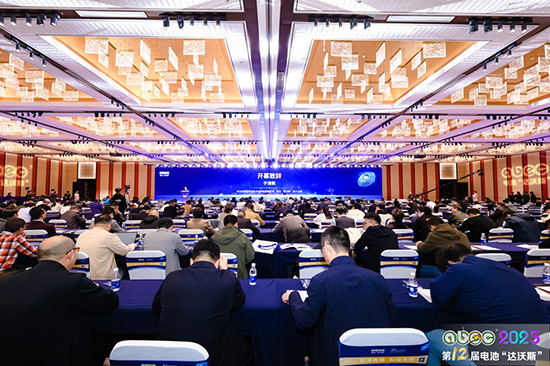
Core Insights - China has established itself as the "world battery factory" due to its comprehensive advantages in technology research and supply chain integration, while facing both short-term challenges and long-term restructuring in the battery new energy industry [1][20] Industry Developments - The 12th China (Suzhou) International Summit Forum on Battery New Energy Industry was held from November 11 to 13, focusing on "Innovation and Adaptation to Reshape Value," gathering over 500 representatives from various sectors to explore development paths and high-quality growth in the industry [3] - The battery new energy industry has transitioned from a phase of scale expansion to a new cycle of value creation, although it is still undergoing deep adjustments with ongoing price wars and uncertainties from international trade barriers and raw material price fluctuations [5][6] Technological Innovations - Solid-state and sodium-ion battery technologies are crucial for overcoming competition and profit pressures in the battery new energy sector, with a focus on technological breakthroughs and strategic innovation [7][20] - Solid-state batteries are recognized for their high safety, energy density, and long cycle life, with demand expected to reach 156 GWh by 2030 as the technology matures and costs decrease [11] - Sodium-ion batteries are gaining traction due to their cost advantages, projected to be 30% lower than lithium batteries, and the growing market for electric two- and three-wheelers in China [20] Market Trends - The battery technology landscape is diversifying, with trends indicating that both ternary and lithium iron phosphate batteries will coexist in the long term, and high energy density batteries will be essential for advanced electric vehicles and eVTOLs [25] - The industry is witnessing a shift towards proactive safety technologies that aim to detect risks early, contrasting with traditional methods that react post-incident [31] Strategic Focus - Companies are urged to prioritize technology, market orientation, supply chain integration, and ecological sustainability to navigate industry challenges and capitalize on new opportunities [31]