
铁路基础设施建设

Search documents
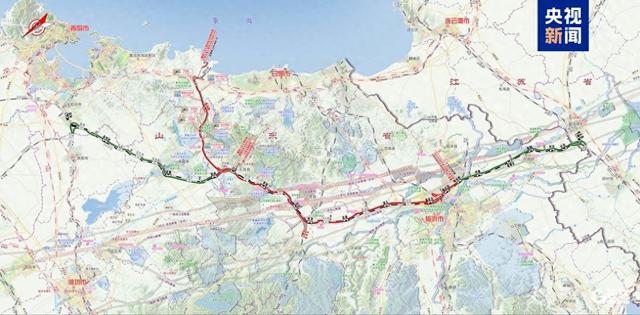
董家口至五莲铁路及胶新铁路扩能改造工程开工建设
Xin Lang Cai Jing· 2025-12-31 13:45
Core Insights - The Qingdao Dongjiakou to Rizhao Wulian Railway and the Jiaoxin Railway expansion project has commenced construction, marking a significant investment in railway infrastructure in Shandong Province [1][2] - The project aims to enhance the efficiency of cargo transportation from the Dongjiakou Port area, with an expected increase in annual railway cargo throughput of approximately 80 million tons [2] Group 1: Project Overview - The project starts from Dongjiakou South Station and spans approximately 196.3 kilometers, including 62 kilometers of new railway and 133 kilometers of upgraded existing railway [1] - The total investment for the project is around 17.577 billion yuan, with a planned construction period of two and a half years, making it the largest freight railway project in Shandong in recent years [1] Group 2: Strategic Importance - Upon completion, the project will significantly improve the cargo collection and distribution efficiency at the Qingdao Port, serving as a major transportation artery [2] - The connection to major trunk railways such as Wari and Xinhe Yanzhi will create rapid transport channels between the port area and key hinterlands, supporting the development of Qingdao as an international shipping center [2]

前11月全国铁路完成固定资产投资7538亿元
Ren Min Ri Bao· 2025-12-10 22:30
Core Viewpoint - The China National Railway Group has reported a fixed asset investment of 753.8 billion yuan in the railway sector for the first 11 months of the year, reflecting a year-on-year growth of 5.9% [1] Group 1: Investment and Growth - The total fixed asset investment in railways reached 753.8 billion yuan, indicating a 5.9% increase compared to the previous year [1] - The company is focusing on serving national strategies and regional economic and social development while advancing railway planning and construction in an orderly manner [1] Group 2: Project Progress - Several key engineering projects have made significant progress since November, including the opening of the Panxian to Xingyi high-speed railway and the trial operation phases of the Xi'an to Yan'an, Guangzhou to Zhanjiang, and Hangzhou to Quzhou high-speed railways [1] Group 3: Future Plans - The company plans to accelerate the construction of a modern railway infrastructure system, optimize construction organization, and ensure high-quality completion of the annual railway construction investment tasks [1]
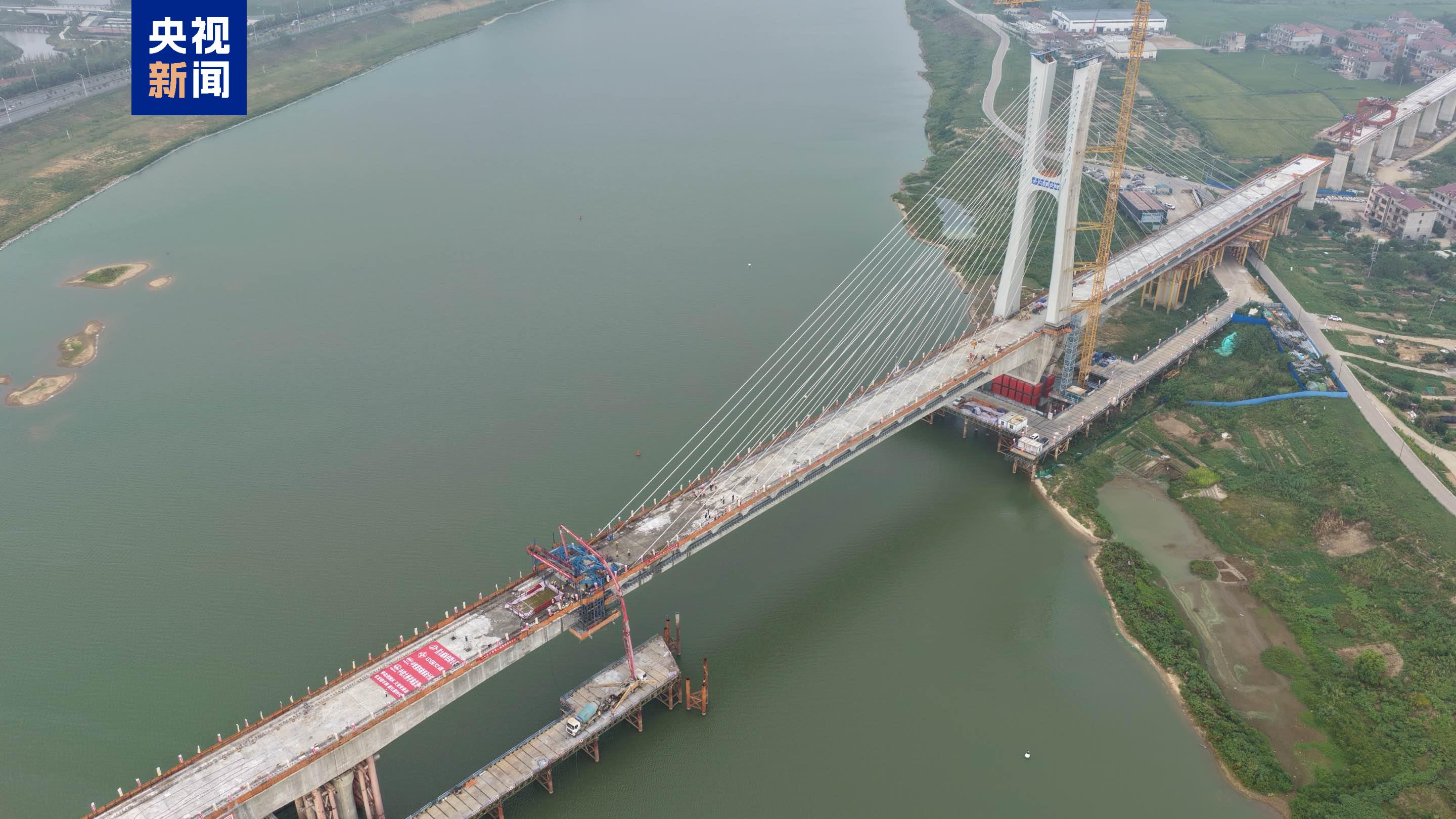
昌九高铁南昌扬子洲赣江公铁大桥主桥顺利合龙
Yang Shi Xin Wen· 2025-09-18 01:48
Core Points - The completion of the last concrete pouring for the Chang-Jiu High-Speed Railway's Ganjiang Public-Rail Bridge marks the successful closure of all three main bridges across the Ganjiang River, laying a solid foundation for the entire bridge's connectivity [1][3] Group 1: Bridge Specifications and Achievements - The Ganjiang South Main Bridge is a concrete single-tower cable-stayed bridge, measuring 510 meters in total length with a main span of 240 meters and a tower height of 108 meters, currently the world's largest single-tower concrete cable-stayed bridge designed for a speed of 350 km/h [3] - The Chang-Jiu High-Speed Railway Ganjiang Public-Rail Bridge is a large-scale project integrating 14 channels, including high-speed rail and urban expressways, with a total length of 19 kilometers, crossing three tributaries of the Ganjiang River [3] - The project has set multiple world records, with the middle and west main bridges having completed closure in January and May of this year, respectively [3] Group 2: Economic and Infrastructure Impact - The completion of the bridge is expected to alleviate urban traffic congestion and reshape the regional economic landscape [3] - The Chang-Jiu High-Speed Railway is a key component of the national "Eight Vertical and Eight Horizontal" high-speed rail network, connecting Nanchang and Jiujiang in Jiangxi Province, with a total length of 138 kilometers and a design speed of 350 km/h [7] - Upon completion, the railway will enhance the connectivity of urban clusters in the middle reaches of the Yangtze River, the Poyang Lake area, and surrounding cities in the Yangtze River Delta and Guangdong-Hong Kong-Macau regions, significantly contributing to the development of the Yangtze Economic Belt and improving transportation infrastructure in Jiangxi Province [7]
增长5.6%!前8月全国铁路完成固定资产投资5041亿元
Sou Hu Cai Jing· 2025-09-15 01:19
Core Insights - The National Railway Group reported a fixed asset investment of 504.1 billion yuan in railway construction from January to August this year, representing a year-on-year increase of 5.6%, which has effectively stimulated overall social investment and contributed to the recovery of the economy [2] Investment and Construction Progress - The National Railway Group has implemented the decisions of the central government, utilizing resources to accelerate railway construction, achieving positive progress that supports regional economic and social development [2] - Key projects completed include the Chongqing to Xiamen high-speed railway segment, Zhengzhou to Kaifeng intercity railway, and the renovation of Shanghai South Station, enhancing regional transportation networks [2] - Major projects such as the Shenyang to Jiamusi high-speed railway and the Wuhan to Yichang segment of the Huhuo-Chengdu high-speed railway have successfully entered the equipment testing phase [2] - Preliminary work on projects like the Yining to Aksu railway and Wenzhou to Fuzhou high-speed railway is progressing smoothly, laying a solid foundation for future construction [2] Future Plans - The railway sector will continue to implement the central government's decisions, focusing on national strategies and regional economic development, while efficiently advancing key railway projects [2] - There is a commitment to accelerate the construction of a modern railway infrastructure system to ensure the successful completion of the "14th Five-Year Plan" for railways [2]
铁路完成固定资产投资5041亿元
Ren Min Ri Bao· 2025-09-14 20:28
Group 1 - The core point of the article highlights that from January to August this year, China's national railway completed fixed asset investment of 504.1 billion yuan, representing a year-on-year increase of 5.6%, which effectively stimulates social investment and injects new momentum into the domestic demand and economic recovery [1] - The National Railway Group has made significant progress in railway construction, with several key projects completed, including the Chongqing to Xiamen high-speed railway and the Zhengzhou to Kaifeng intercity railway, enhancing regional transportation networks [1] - Ongoing construction projects are advancing smoothly, with a focus on safety, quality, and environmental protection, exemplified by the breakthrough of the Dabieshan Tunnel in Hubei and the progress of the Maolingjiang Bridge in Guangxi [1] Group 2 - The National Railway Group plans to continue focusing on serving national strategies and regional economic development, aiming to efficiently advance key railway projects and ensure the successful completion of the "14th Five-Year Plan" for railways [2]
1至8月,全国一大批铁路工程有了新进展!
Bei Jing Ri Bao Ke Hu Duan· 2025-09-14 04:01
Core Insights - The railway construction in China has seen a fixed asset investment of 504.1 billion yuan from January to August this year, marking a year-on-year increase of 5.6%, which has effectively stimulated overall social investment and contributed to the recovery of the economy [1] Investment and Infrastructure Development - New railway projects completed include the Chongqing to Xiamen high-speed railway segment from Chongqing East to Qianjiang, the Zhengzhou to Kaifeng intercity railway segment from Songcheng Road Station to Kaifeng Station, and the renovation of Shanghai South Station, enhancing regional network layout and providing convenience for local residents [1] - Major projects such as the Shenyang to Jiamusi high-speed railway segment from Shenyang to Baihe, the Wuhan to Yichang segment of the Huhuo-Chongqing high-speed railway, and the Chongzuo to Pingxiang segment of the Nanning to Pingxiang high-speed railway have successfully completed main construction and are now in the equipment debugging phase [1] - Preliminary work on projects like the Yining to Aksu railway in Xinjiang and the Wenzhou to Fuzhou high-speed railway is progressing smoothly, laying a solid foundation for early commencement of construction [1] Future Plans - The China National Railway Group plans to continue promoting high-quality and efficient construction of key railway projects, accelerating the establishment of a modern railway infrastructure system, and ensuring the successful completion of the railway "14th Five-Year Plan" [1]
全球与中国铁路信号市场现状及未来发展趋势
QYResearch· 2025-08-04 08:48
Core Viewpoint - The railway signaling system is a comprehensive technology system that integrates safety control, scheduling management, and information transmission, ensuring train operation safety and improving transportation efficiency [1] Global Railway Signaling Market Overview - The global railway signaling market is projected to reach $12.453 billion in 2024 and $16.162 billion by 2031, with a compound annual growth rate (CAGR) of 3.78% [3] - The Chinese market is expected to grow from $4.768 billion in 2024 to $6.969 billion by 2031, with a CAGR of 5.85%, driven by government policies supporting rail transport and infrastructure [3] Product Types and Market Applications - Railway signaling system products include CBTC systems, I-CBTC systems, and FAO systems, with CBTC being the mainstream product [5] - In 2024, the global market share for mainline railway applications is expected to reach 62.76%, indicating a concentrated market with over 84.10% of the market held by the top five companies [5] Industry Development Opportunities - Urban rail transit is a key focus for infrastructure development in China, driven by urbanization and traffic congestion, leading to increased demand for new lines and upgrades [7] - Governments worldwide are increasing investments in railway infrastructure, particularly high-speed and intercity railways, to promote regional connectivity and economic development [8] - There is a rising demand for intelligent upgrades of existing lines, as traditional technologies struggle to meet modern operational requirements [9] Challenges Facing the Industry - The industry faces a shortage of specialized talent, which is crucial for rapid technological advancement [11] - Changes in the financing environment for railway projects may slow down development, as local governments face tighter fiscal constraints [12] - International market expansion is hindered by standard barriers and geopolitical tensions, complicating the adaptation of different railway technologies [13] - High R&D costs and long return periods pose challenges for companies, especially amid fluctuating government investment and project approval timelines [14] Key Players and Market Analysis - Major companies in the railway signaling market include China Railway Signal & Communication Corp, Alstom, Hitachi, Siemens, and CAF, among others [17] - The report provides detailed analysis of market size, shares, and competitive landscape for both global and Chinese markets [17]

马来西亚最长铁路隧道贯通
Zhong Guo Xin Wen Wang· 2025-07-13 02:37
Group 1 - The successful completion of the 16.39-kilometer Genting Tunnel marks a significant milestone in the East Coast Rail Link (ECRL) project, with all 41 tunnel excavation works now completed [1][2] - The Genting Tunnel is recognized as the longest railway tunnel in Malaysia and the highest covered railway tunnel, located over 750 meters beneath the mountain [1] - The construction utilized a combination of Tunnel Boring Machine (TBM) and drilling-blasting methods to address the complex geological conditions along the tunnel route [1] Group 2 - The CEO of Malaysia Rail Link (MRL) highlighted the achievement as a testament to the project team's technical capabilities and strong execution, especially given the challenging geological environment of the Titiwangsa mountain range [1] - The ECRL project is now moving into the next phase, which includes track laying, electrification systems, signaling and communication systems installation, and internal station works, all progressing according to the overall schedule [1] - The ECRL is expected to be fully completed by the end of 2026 and will begin phased passenger services in January 2027, reducing travel time from Kota Bharu to Kuala Lumpur to approximately four hours [2]