
锂离子电池微观机理研究

Search documents
中国空间站开展锂离子电池在轨实验
中关村储能产业技术联盟· 2026-01-08 02:41
Group 1 - The project "In-situ Electrochemical Optical Research of Lithium-ion Batteries for Space Applications" has been initiated aboard the Chinese space station, with astronauts from the Shenzhou 21 mission conducting experiments [2] - Lithium-ion batteries are considered the "energy heart" of modern space missions due to their high energy density, long cycle life, and safety reliability [4] - The research focuses on the distribution of chemical substances within the electrolyte, which is a core factor determining battery power and lifespan [4] Group 2 - The unique microgravity environment of space allows for a clearer study of the internal processes of batteries, such as ion transport and insertion/extraction, which are difficult to isolate on Earth due to the intertwining of gravitational and electric fields [4] - The project aims to observe and analyze the impact of microgravity on key processes within the battery, providing scientific evidence to enhance the efficiency of spacecraft energy systems [5] - The experiment involves in-situ optical observation of lithium-ion batteries under microgravity, capturing the entire growth process of lithium dendrites and ensuring precise execution and monitoring of the experiments [4][5] Group 3 - The advancement of this experiment is expected to break through the cognitive bottleneck of the coupling effects between gravitational and electric fields, further developing electrochemical fundamental theories [5] - The findings will provide a basis for optimizing current on-orbit battery systems and designing the next generation of high-energy, high-safety space batteries [5]

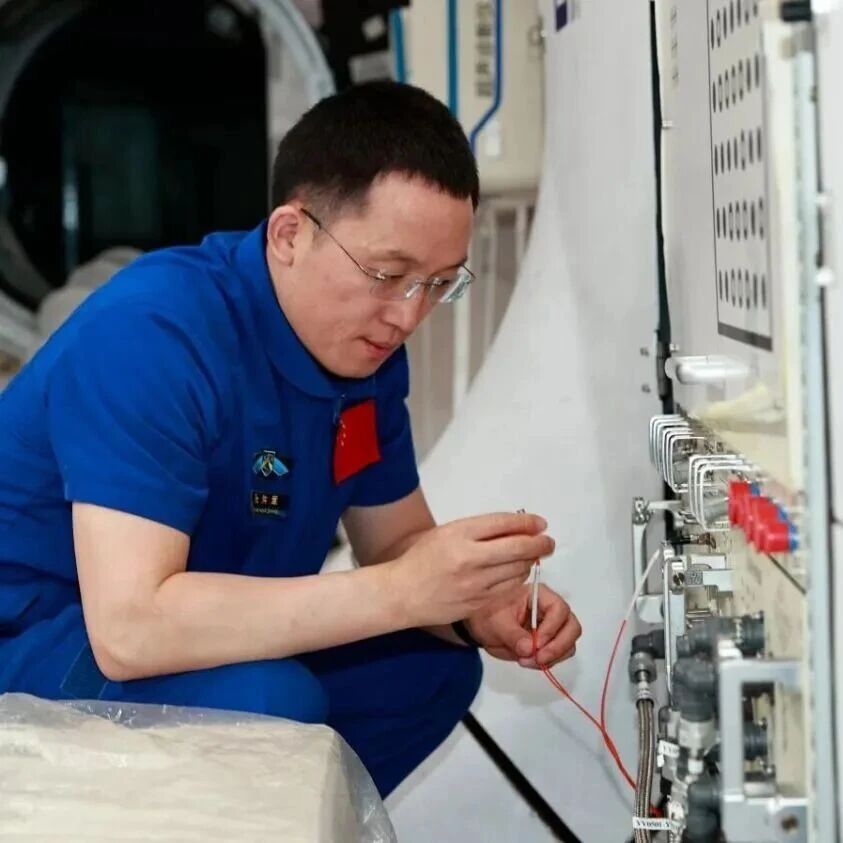
中国空间站开展锂离子电池在轨实验
中国能源报· 2026-01-07 03:55
Core Viewpoint - The project "In-situ Electrochemical Optical Research of Lithium-ion Batteries for Space Applications" has commenced aboard the Chinese space station, aiming to study the effects of microgravity on battery performance and internal processes [1][2]. Group 1: Project Overview - The project is being conducted by astronauts aboard the Shenzhou 21 spacecraft, with researcher Zhang Hongzhang serving as the payload expert [1]. - Lithium-ion batteries are crucial for modern space missions due to their high energy density, long cycle life, and safety [1]. Group 2: Research Significance - The research focuses on the distribution of chemical substances within the electrolyte, which is a key factor influencing battery power and lifespan [1]. - Microgravity provides an ideal environment to study ion transport and insertion/extraction processes in batteries, free from the confounding effects of gravity [1][2]. Group 3: Experimental Challenges and Goals - The unique microgravity environment presents challenges, such as significant differences in liquid behavior within the battery compared to ground conditions, potentially affecting performance and safety [1]. - The project aims to directly observe and analyze the impact of microgravity on critical battery processes, providing scientific evidence to enhance spacecraft energy systems [1][2]. Group 4: Expected Outcomes - The experiment is expected to overcome the cognitive bottleneck of the interaction between gravitational and electric fields, advancing the fundamental theory of electrochemistry [2]. - It will provide insights for optimizing current battery systems in orbit and designing the next generation of high-energy, high-safety space batteries [2].

中国空间站开展锂离子电池在轨实验
Xin Lang Cai Jing· 2026-01-07 01:01
Core Viewpoint - The project "In-situ Electrochemical Optical Research of Lithium-ion Batteries for Space Applications" has commenced aboard the Chinese space station, aiming to study the effects of microgravity on battery performance and internal processes [1][3]. Group 1: Project Overview - The project is being conducted by the Shenzhou 21 astronaut crew, with researcher Zhang Hongzhang serving as the payload expert [1][3]. - Lithium-ion batteries are critical for modern space missions due to their high energy density, long cycle life, and safety [1][3]. Group 2: Research Significance - The research focuses on the distribution of chemical substances in the electrolyte, which is a key factor influencing battery power and lifespan [1][3]. - Microgravity provides an ideal environment to study ion transport and insertion/extraction processes without the interference of gravity [1][3]. Group 3: Experimental Challenges and Innovations - The microgravity environment presents new challenges, as the behavior of liquids within the battery differs significantly from ground conditions, potentially affecting performance and safety [1][3]. - The project aims to directly observe and analyze the impact of microgravity on critical internal processes of the battery, providing scientific basis for enhancing spacecraft energy systems [1][3]. Group 4: Experimental Process - The payload expert will conduct in-situ optical observation experiments, capturing the entire growth process of lithium dendrites and ensuring precise execution and monitoring of the experiments [2][4]. - The active involvement of the payload expert is crucial for discovering new phenomena and achieving significant results [2][4]. Group 5: Future Implications - The advancement of this experiment is expected to break through the cognitive bottleneck of the interaction between gravitational and electric fields, further developing electrochemical theory [5]. - The findings will aid in optimizing current battery systems in orbit and designing the next generation of high-energy, high-safety space batteries [5].