长尾需求

Search documents
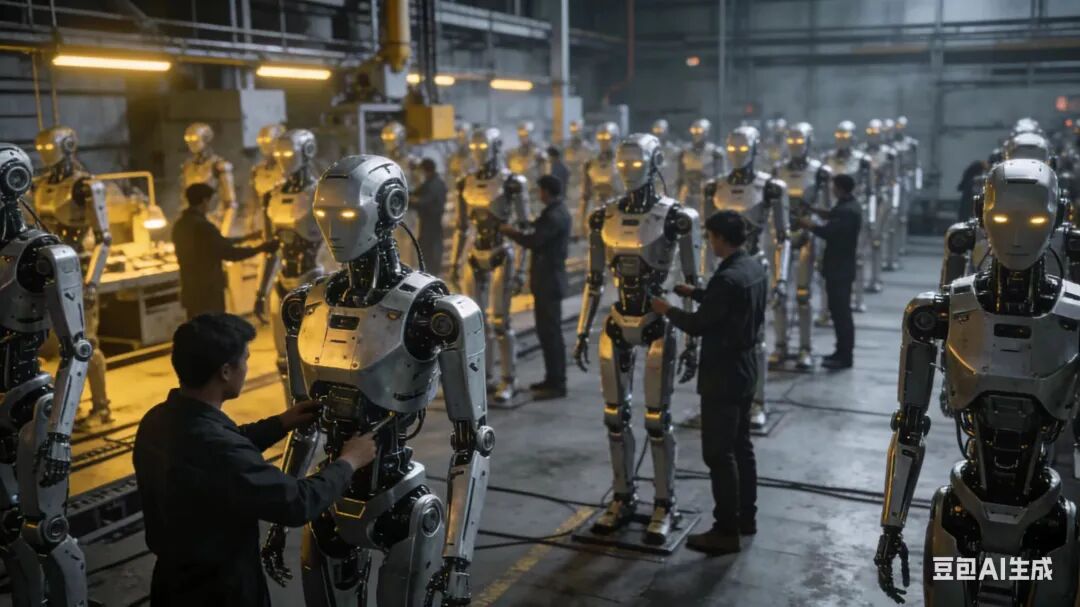
机器人干活,人类不必对“AI替代潮”过度焦虑丨每经热评
Mei Ri Jing Ji Xin Wen· 2026-02-26 11:14
Core Viewpoint - The report by Citrini Research highlights that artificial intelligence is fundamentally reshaping the relationship between labor, technology, and capital, leading to a potential restructuring of traditional economic growth paradigms [3] Group 1: Impact of AI on Labor and Economy - AI is expected to eliminate traditional friction in commercial systems, which could lead to a significant transformation in labor dynamics, allowing companies to invest savings from labor costs into robotics [3][6] - The notion that the total amount of work in society is fixed is a misconception; AI can create new demands and opportunities that were previously unaffordable [7] - Historical context shows that technological advancements, like those during the Industrial Revolution, led to the establishment of labor laws and social security systems, which can be adapted to address the changes brought by AI [8] Group 2: Wealth Distribution and Taxation - The core concern regarding AI is the disruption of wealth circulation, where productivity gains primarily benefit those who own computational power, while existing tax systems rely heavily on human labor [9] - Discussions around implementing a "robot tax" suggest a shift in taxation from human labor to machines, potentially leading to a more equitable income distribution system [9] Group 3: Human Experience and Future Growth - The reduction in costs and time due to AI will likely redirect human spending towards authentic experiences and interpersonal connections, indicating a shift in consumer behavior [11] - Future economic growth is anticipated to emerge from sectors that emphasize human interaction and cultural experiences, moving away from monotonous labor towards more meaningful work [10][11] - The ultimate vision of technological advancement is to have machines handle labor while humans focus on living, suggesting a new equilibrium in economic structures [11]


润本股份的儿童护肤品好起来了,驱蚊液却疲软了
Xin Lang Cai Jing· 2025-08-21 07:10
Core Viewpoint - The performance of Runben Co., a company specializing in mosquito repellent products, was below expectations in Q2, despite a seasonal peak for such products and the emergence of the Chikungunya virus in mainland China [1][3]. Group 1: Financial Performance - In Q2, Runben's revenue from mosquito repellent products grew by 14% year-on-year to 332 million yuan, while total revenue and net profit attributable to shareholders increased by 13.46% and decreased by 0.85%, respectively, significantly lower than Q1's growth rates of 44.00% and 24.60% [1][3]. - The overall revenue and net profit growth for the first half of 2025 were notably lower than previous years [1]. Group 2: Business Segments - Runben's baby care segment outperformed its mosquito repellent business, achieving a growth rate of 23% in Q2, surpassing the mosquito repellent segment [3]. - The baby care business has become the largest segment for Runben since 2022, with revenue growth rates of 80%, 34%, 32%, and 39% from 2022 to the first half of 2025, projecting a potential revenue close to 1 billion yuan for the full year of 2025 [5][3]. Group 3: Market Strategy - Runben's strategy focuses on capturing niche demands and light innovation, similar to its initial approach in the mosquito repellent market, allowing it to identify and create smaller market needs [7][8]. - The company has introduced over 40 new products in the first half of 2025, with a total of 223 product links available on its Tmall flagship store, significantly more than competitors [10]. Group 4: Marketing and Sales - Runben's marketing expenses increased by 43% to 183 million yuan in the first half of 2025, leading to a sales expense growth of 38.23%, which exceeded revenue growth [11]. - The company primarily relies on online marketing, with over 70% of its revenue coming from online sales, utilizing social media and short video content for promotion [11].