长期合同

Search documents
NACCO Industries(NC) - 2025 Q4 - Earnings Call Transcript
2026-03-05 14:32
Financial Data and Key Metrics Changes - The company reported a fourth quarter operating profit increase of 95% year-over-year and almost 12% sequentially, with Adjusted EBITDA rising 59% year-over-year to $14.3 million [5][12] - Consolidated gross profit for the fourth quarter was $12 million, a 42% increase year-over-year, while revenues increased by 5% to $66.8 million [12][13] - The company recognized a net loss of $3.8 million for the fourth quarter, compared to a net income of $7.6 million in the previous year [13] Business Line Data and Key Metrics Changes - The utility coal mining segment reported an operating profit of $7.2 million, significantly up from $2 million in the prior year, with Adjusted EBITDA increasing to $9.7 million from $4.2 million [13][14] - The contract mining segment saw a 9% revenue growth year-over-year, driven by higher part sales, although operating profit remained comparable to the prior year at $900,000 [14][15] - The minerals and royalty segment experienced year-over-year growth in revenues and operating profit due to increased royalty revenues from natural gas, despite lower oil prices impacting results [15][16] Market Data and Key Metrics Changes - The Mississippi Lignite Mining Company is expected to see improvements in 2026 due to an anticipated increase in the contractually determined price per ton, although demand may be affected by maintenance outages at the customer's power plant [8][14] - The company anticipates meaningful year-over-year improvements in consolidated operating profit, net income, and EBITDA in 2026, despite potential commodity price fluctuations due to geopolitical events [16] Company Strategy and Development Direction - The company is focused on long-term contracts and investments to drive future growth, with significant capital investments planned for 2026 [10][11] - The reestablishment of the National Coal Council is expected to reinforce the strategic role of coal in U.S. energy policy, which aligns with the company's growth opportunities [18] Management's Comments on Operating Environment and Future Outlook - Management expressed confidence in the company's trajectory and long-term opportunities, emphasizing the importance of reliable energy sources [18][19] - The company is entering 2026 with clear opportunities to build on the momentum from 2025, focusing on execution and operational discipline [11][19] Other Important Information - The company completed the termination of its pension plan, resulting in a non-cash pension settlement charge of $7.8 million [13] - Total liquidity at year-end was $124.2 million, consisting of $49.7 million in cash and $74.5 million available under the revolving credit facility [17] Q&A Session Summary Question: Can you quantify how much the step down in Sabine work is? - The company has not quantified that number [23] Question: Is there a seasonal element to the price index benefit? - There is no seasonal component to price, but deliveries may have seasonal variations [30] Question: How substantial is the Army Corps of Engineers contract? - It is a significant contract, providing an opportunity to apply skills in a new market [40] Question: What is the timing for the Army Corps of Engineers project to reach full production? - Production is already ramping up throughout the year [41] Question: Is most of the revenue in the unallocated line from Mitigation Resources? - Yes, most of the revenue in the unallocated line is from Mitigation Resources [63] Question: How does the company feel about the growth of Mitigation Resources? - The company expects Mitigation Resources to reach profitability and grow from there [66]

NACCO Industries(NC) - 2025 Q4 - Earnings Call Transcript
2026-03-05 14:32
Financial Data and Key Metrics Changes - The company reported a 95% increase in fourth quarter operating profit year-over-year, reaching almost 12% sequentially [5] - Consolidated gross profit for the fourth quarter was $12 million, a 42% increase year-over-year, while revenues increased by 5% to $66.8 million [12] - Adjusted EBITDA rose 59% to $14.3 million compared to $9 million for the same period last year [12][13] - The company recorded a net loss of $3.8 million for the fourth quarter, compared to a net income of $7.6 million in the previous year [13] Business Line Data and Key Metrics Changes - The utility coal mining segment reported an operating profit of $7.2 million, significantly up from $2 million in the fourth quarter of 2024, with Adjusted EBITDA increasing to $9.7 million from $4.2 million [13][14] - The contract mining segment's revenues grew by 9% year-over-year, driven by higher part sales, while operating profit remained comparable to the prior year at $900,000 [15] - The minerals and royalty segment experienced year-over-year growth in revenues and operating profit due to increased royalty revenues from natural gas, despite lower oil prices impacting results [15][16] Market Data and Key Metrics Changes - The Mississippi Lignite Mining Company is expected to see improvements in 2026 due to an anticipated increase in the contractually determined price per ton, although demand may be affected by maintenance outages at the customer's power plant [8][14] - The company expects meaningful year-over-year improvements in consolidated operating profit, net income, and EBITDA in 2026 [16] Company Strategy and Development Direction - The company is focused on long-term contracts and investments to drive future growth, with significant capital investments planned for 2026 [10][11] - The reestablishment of the National Coal Council is expected to reinforce the strategic role of coal in U.S. energy policy, which aligns with the company's growth opportunities [18] Management's Comments on Operating Environment and Future Outlook - Management expressed confidence in the company's trajectory and long-term opportunities, emphasizing the importance of uninterrupted energy and the strengthening fundamentals for natural resources [18][19] - The company is entering 2026 with clear opportunities to build on the momentum from 2025, with a focus on operational discipline and delivering long-term returns for shareholders [11][19] Other Important Information - The company successfully settled all future pension obligations, resulting in a $6 million after-tax termination charge [5][13] - Cash from operations for the full year 2025 was $50.9 million, compared to $22.3 million in 2024, with total liquidity at $124.2 million [17] Q&A Session Summary Question: Can you quantify how much the step down in Sabine work is? - The company has not quantified that number [23] Question: Is there a seasonal element to the price index benefit? - There is no seasonal component to price, but there is a seasonal component to deliveries [30] Question: How large is the Army Corps of Engineers contract? - It is a significant contract, and the company is excited about the opportunity [40] Question: What is the timing for the Army Corps of Engineers project? - Production is already ramping up throughout the year [41] Question: Is most of the revenue in the unallocated line from Mitigation Resources? - Yes, most of the revenue in the unallocated line is from Mitigation Resources [63] Question: How does the company feel about the growth of Mitigation Resources? - The company expects Mitigation Resources to reach profitability and grow from there [64]
NACCO Industries(NC) - 2025 Q3 - Earnings Call Transcript
2025-11-06 14:30
Financial Data and Key Metrics Changes - The third quarter operating profit was almost $7 million, an improvement from the second quarter's break-even results [4] - Q3 2025 EBITDA increased to $12.5 million, up from $9.3 million in Q2 [4] - Consolidated revenues were $76.6 million, up 24% year over year, while gross profit improved 38% to $10 million [10] - Net income for Q3 2025 was $13.3 million, or $1.78 per share, compared to $15.6 million, or $2.14 per share in 2024 [11] - EBITDA for Q3 2025 was $12.5 million versus $25.7 million for the same period last year [11] Business Line Data and Key Metrics Changes - Utility coal mining segment's results were impacted by contractual pricing mechanics, leading to a reduced per ton sales price [4] - Contract mining segment saw tons delivered grow 20% year over year and 3% sequentially, driven by higher customer demand [5] - Minerals and royalties segment's operating profit increased due to improved earnings from equity investments and higher royalty revenues [14] Market Data and Key Metrics Changes - The Mississippi Lignite Mining Company's results were affected by a reduced contractually determined per ton sales price in 2025 [11] - The contract mining segment is positioned as a core driver of future growth, with a strong pipeline of potential new deals [6] Company Strategy and Development Direction - The long-term strategy aims for $150 million of annual EBITDA in the next five to seven years [8] - The company is focused on execution, operational discipline, and driving long-term returns for shareholders [18] - Recent government support is strengthening all business segments [18] Management's Comments on Operating Environment and Future Outlook - Management expressed confidence in the trajectory and future growth, citing strong demand for energy and services [18] - Anticipated improvements in profitability for 2026, driven by expected improvements in sales price and cost per ton delivered [12] Other Important Information - The company is terminating its pension plan, which will trigger a non-cash settlement charge [15] - Total debt outstanding decreased to $80.2 million from $95.5 million at June 30 [16] - The company is forecasting up to $44 million in capital spending for the remainder of the year and up to $70 million in 2026 [17] Q&A Session Summary Question: Inquiry about contract mining segment's ROIC - Management indicated that the current ROIC is affected by both past and future projects, with a mismatch between assets and current profitability [22][24] Question: Preference between drag line and surface work - Management stated that they are flexible and can provide various mining services, emphasizing the importance of finding long-term partners [29][30] Question: Status of solar project - Management confirmed that they are diligently working on getting solar projects safe harbored for tax credit purposes [53]
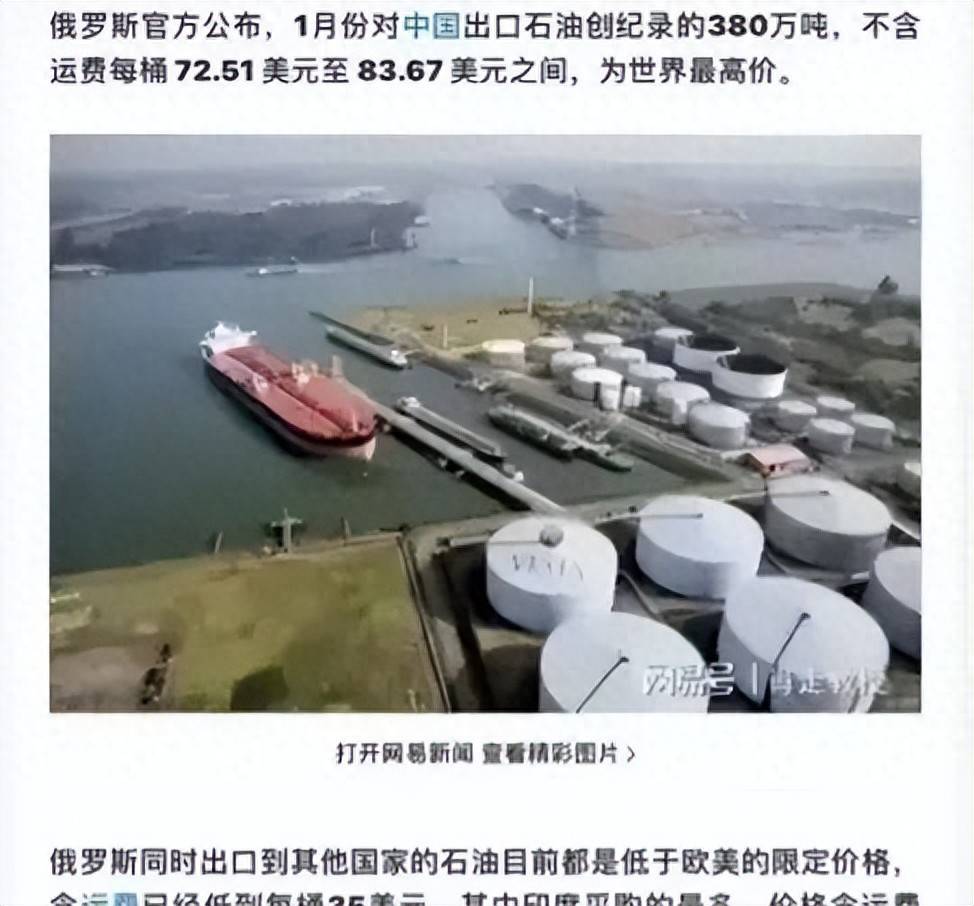
80是兄弟价格卖给中国,30是市场价卖给印度,中国贵有3个原因
Sou Hu Cai Jing· 2025-10-03 09:31
Core Viewpoint - The article discusses the significant price differences in Russian oil exports to China and India following the sanctions imposed by Western countries after the Russia-Ukraine conflict, highlighting the strategic and commercial factors behind these disparities. Group 1: Price Discrepancies - China imports Russian oil at prices ranging from $70 to $80 per barrel, while India benefits from discounts, purchasing oil at around $35 per barrel [2][3]. - The average price of Russian crude oil imported by China in the first half of 2024 is projected to be $78, compared to India's average of $42 [4]. Group 2: Quality of Oil - The quality of oil is a major factor in the price difference; China predominantly imports high-quality ESPO crude oil, while India mainly imports lower-quality Ural crude oil [3][5]. - ESPO oil, favored by Chinese refineries, has a higher API gravity and lower sulfur content, making it more efficient for refining and yielding higher-value products [3][6]. Group 3: Settlement Methods - China has shifted to using the yuan for oil transactions with Russia, which accounts for over 90% of their oil trade in 2023, reducing exposure to dollar fluctuations and transaction costs [6][9]. - In contrast, India primarily uses the dollar for transactions, which exposes it to currency risks and higher costs [9]. Group 4: Contractual Agreements - China has long-term contracts with Russia, established in 2014 and upgraded in 2022, ensuring stable pricing and supply, while India relies on short-term spot contracts that can lead to volatile pricing [9][11]. - The long-term agreement with China is valued at $117.5 billion, covering the entire oil and gas supply chain, while India's contracts are less stable and more susceptible to market fluctuations [11]. Group 5: Strategic Implications - The price differences reflect broader geopolitical dynamics, with China securing energy security through stable contracts, while India faces potential risks due to its reliance on short-term deals [11][12]. - The article concludes that the price disparity is not merely a market anomaly but a reflection of the industrial capabilities and strategic priorities of both countries [12].