
长江文物和文化遗产保护

Search documents
数据里的中国|10年,长江经济带的故事更“绿”更“新”
Xin Lang Cai Jing· 2026-01-07 04:51
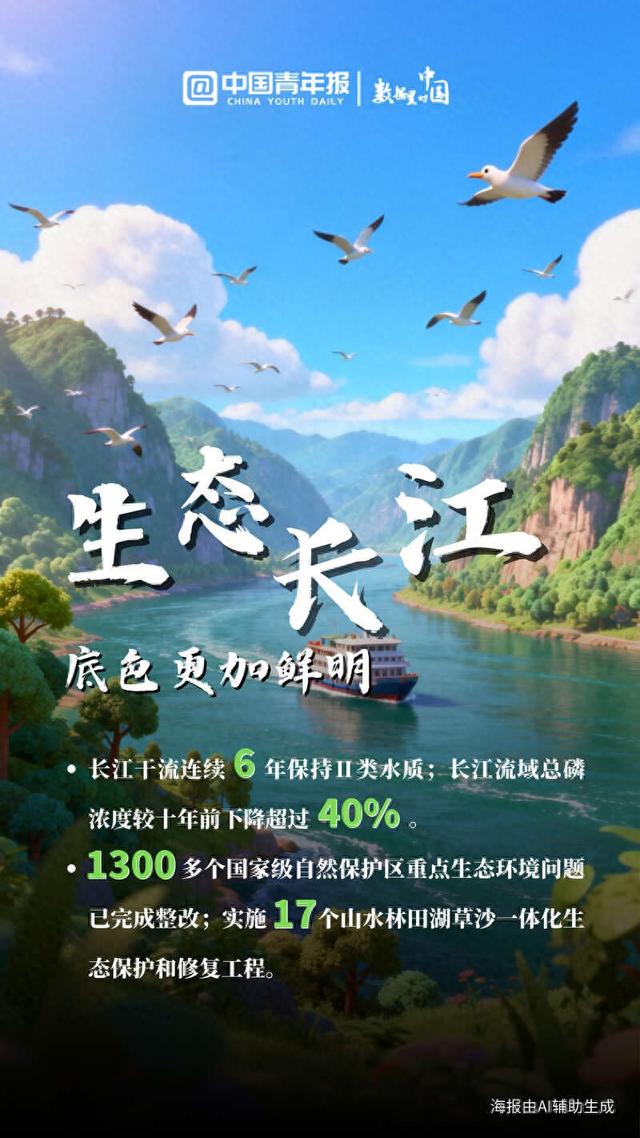
Core Viewpoint - The Yangtze River Economic Belt has made significant progress over the past decade, balancing ecological protection with economic development, contributing nearly half of China's GDP while accounting for about one-third of the country's energy consumption and carbon emissions [1]. Group 1: Economic Development - The Yangtze River Economic Belt has contributed nearly 50% of China's GDP over the past decade [1]. - The cargo throughput of major ports along the Yangtze River has increased by 100%, reaching 2.7 billion tons, maintaining its position as the world's leading inland river [10]. - The number of national-level advanced manufacturing clusters has reached 4, while strategic emerging industry clusters have reached 30, accounting for 51% and 45% of the national total, respectively [4]. Group 2: Ecological Protection - The implementation of the "Ten-Year Fishing Ban Plan" on the Yangtze River has provided support for 231,000 retired fishermen, with 12,000 difficult fishermen included in the social security system [15]. - The South-to-North Water Diversion Project has delivered over 84 billion cubic meters of water, benefiting 48 cities and 195 million people along the route [16]. Group 3: Cultural Heritage - The Longzhou Ancient City Ruins have been successfully listed as a World Cultural Heritage site, and the archaeological discoveries at Sanxingdui have garnered global attention [11]. - The establishment of the Yangtze National Cultural Park aims to protect and utilize cultural heritage along the river [11].

保护好、传承好、弘扬好长江文化
Ren Min Ri Bao· 2025-07-21 22:12
Core Viewpoint - The development of the Yangtze River Economic Belt is crucial for advancing China's modernization and cultural heritage, emphasizing the need for cultural protection, inheritance, and promotion to support high-quality economic growth [1][2]. Group 1: Cultural Significance - The Yangtze River is a vital cultural and historical symbol for the Chinese nation, representing a shared memory and spiritual home for the Chinese people [2]. - The integration of culture and economy is increasingly important, with cultural heritage providing a strong foundation for economic development [2]. Group 2: Protection of Cultural Heritage - Systematic protection of cultural relics and heritage along the Yangtze River is essential, as these artifacts are witnesses to history and must be preserved and utilized effectively [3]. - The establishment of a comprehensive protection mechanism for cultural heritage is prioritized in the construction of the Yangtze National Cultural Park [3]. Group 3: Integration with Modern Life - There is a need to connect traditional Yangtze culture with modern life to meet the growing demands of the people for a better quality of life [4]. - Initiatives to integrate cultural elements into public services and local celebrations can enhance public recognition and appreciation of Yangtze culture [4]. Group 4: Technology and Cultural Fusion - The integration of culture and technology is essential for the digital empowerment and transformation of cultural construction [5]. - Utilizing digital technologies can enhance the impact and dissemination of Yangtze culture, addressing contemporary challenges in cultural development [5].