
长江国家文化公园建设

Search documents
岳阳代表团力推5件全团建议
Xin Lang Cai Jing· 2026-02-05 13:06
Group 1: National Agricultural High-Tech Industry Demonstration Zone - The construction of the National Agricultural High-Tech Industry Demonstration Zone is a significant decision by the central government to accelerate the implementation of the agricultural power strategy and achieve high-level agricultural technological self-reliance by 2030, with plans to establish around 20 new zones [2] - The current phase of the Yueyang National Agricultural High-Tech Zone has achieved some results but still faces challenges. It is suggested that provincial-level support and collaboration among different administrative levels are crucial for the successful approval of the agricultural high-tech zone [4] Group 2: Yangtze River National Cultural Park - The Yangtze River National Cultural Park is the fifth major cultural project promoted at the national level, with Yueyang being a key location due to its rich cultural heritage and geographical advantages [4][6] - Recommendations include enhancing top-level design, promoting key projects, and deepening cultural interpretation and brand building to accelerate the construction of the Yangtze River National Cultural Park [6] Group 3: Han-Yue-Chang Economic and Technological Corridor - The Han-Yue-Chang Economic and Technological Corridor is seen as a significant historical opportunity for high-quality development, with a focus on collaboration among urban clusters in the region [7][9] - The proposal emphasizes the importance of building the corridor to optimize the regional development pattern and enhance the integration of the Yangtze River middle reaches urban agglomeration [9] Group 4: Dongting Lake Flood Control and Drainage Projects - Yueyang is a key area for flood control due to its complex water systems, and recent years have seen improvements in flood prevention capabilities [10] - Recommendations include accelerating the construction of various flood control and drainage projects to enhance safety levels in the region [12] Group 5: Development of Shipping Logistics at Chenglingji Port - The Chenglingji Port is crucial for the logistics network in central China, serving as a key hub for import and export activities [13] - The proposal advocates for comprehensive support for the high-quality development of Chenglingji Port, aiming to establish it as a modern shipping logistics center for the Yangtze River middle reaches [13]

焦点访谈|以文化为纽带 长江经济带书写高质量发展新篇章
Yang Shi Wang· 2026-01-07 13:14
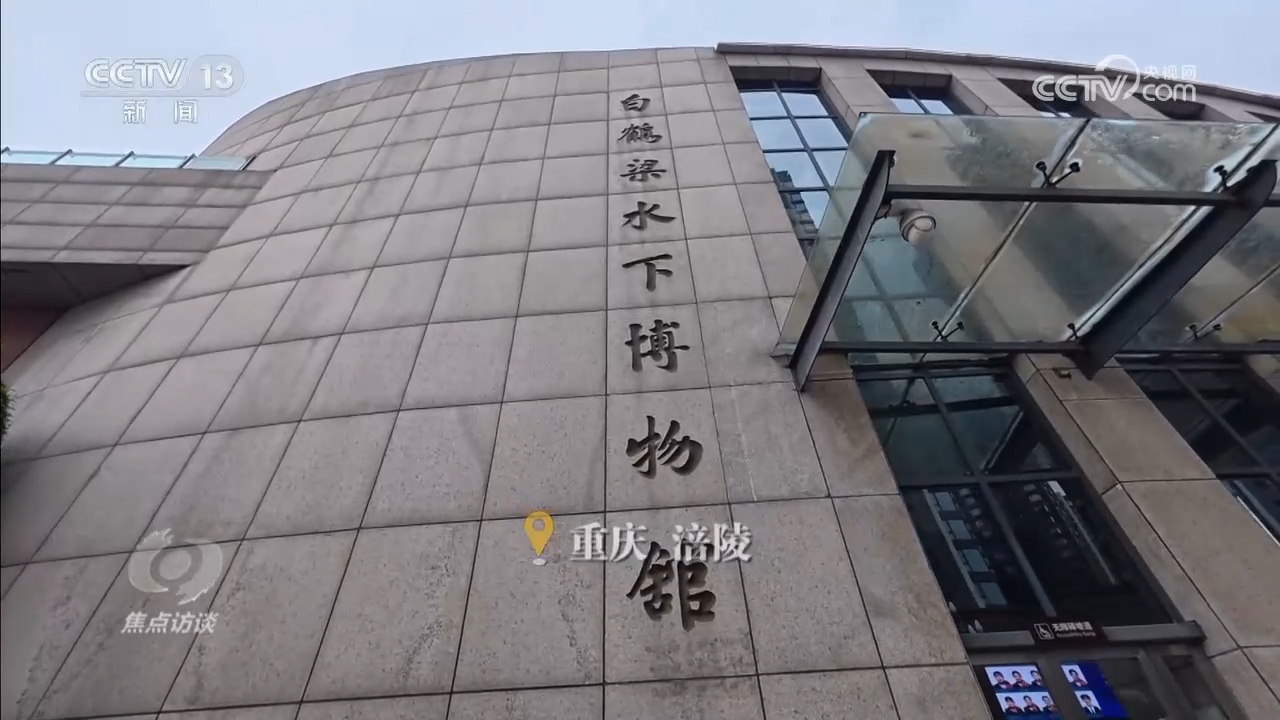
Core Viewpoint - The development of the Yangtze River Economic Belt over the past decade has been significantly influenced by cultural protection and transmission, showcasing a transformation that integrates historical heritage with modern technology and tourism [1][12]. Group 1: Cultural Heritage Protection - The Baidong Liang underwater museum has implemented innovative protection methods for ancient inscriptions, utilizing a "pressure-free container" principle to preserve cultural artifacts in situ [3][5]. - Over the past ten years, 1,335 cultural heritage protection projects have been completed in the Three Gorges area, with over 200,000 artifacts unearthed and 34 museums established [5][9]. - The integration of technology has enhanced the visibility and clarity of cultural relics, allowing for better public engagement and understanding of historical significance [5][12]. Group 2: Cultural Tourism Development - The Yangtze River cruise industry has evolved, with larger vessels and a more international tourist demographic, emphasizing cultural exploration along the river [7][9]. - The establishment of the "Beautiful Yangtze River Three Gorges Cultural Tourism Industry Alliance" aims to connect various districts along the river, promoting cultural tourism and enhancing visitor experiences [7][9]. - The construction of the Yangtze National Cultural Park has begun, integrating natural landscapes with historical narratives, particularly in cities like Jiujiang [9][10]. Group 3: Innovation in Traditional Crafts - The traditional craft of iron painting in Wuhu has seen a revival, with modern design techniques being introduced by younger artisans, leading to increased tourist interest and economic growth [10][12]. - The past decade has seen a shift from traditional apprenticeship to institutional training for crafts, with nearly 700 students trained in iron painting techniques [12][14]. - Various regions have explored innovative paths for intangible cultural heritage, integrating traditional crafts with modern market demands, thus ensuring their sustainability and relevance [14]. Group 4: Cultural Integration and Future Prospects - The Yangtze River culture reflects a blend of diverse traditions, showcasing the continuous evolution and innovation of Chinese civilization over the past 5,000 years [14]. - The ongoing cultural initiatives aim to create a vibrant cultural landscape that resonates with both historical significance and contemporary relevance, fostering a shared national identity [14].
数据里的中国|10年,长江经济带的故事更“绿”更“新”
Xin Lang Cai Jing· 2026-01-07 04:51
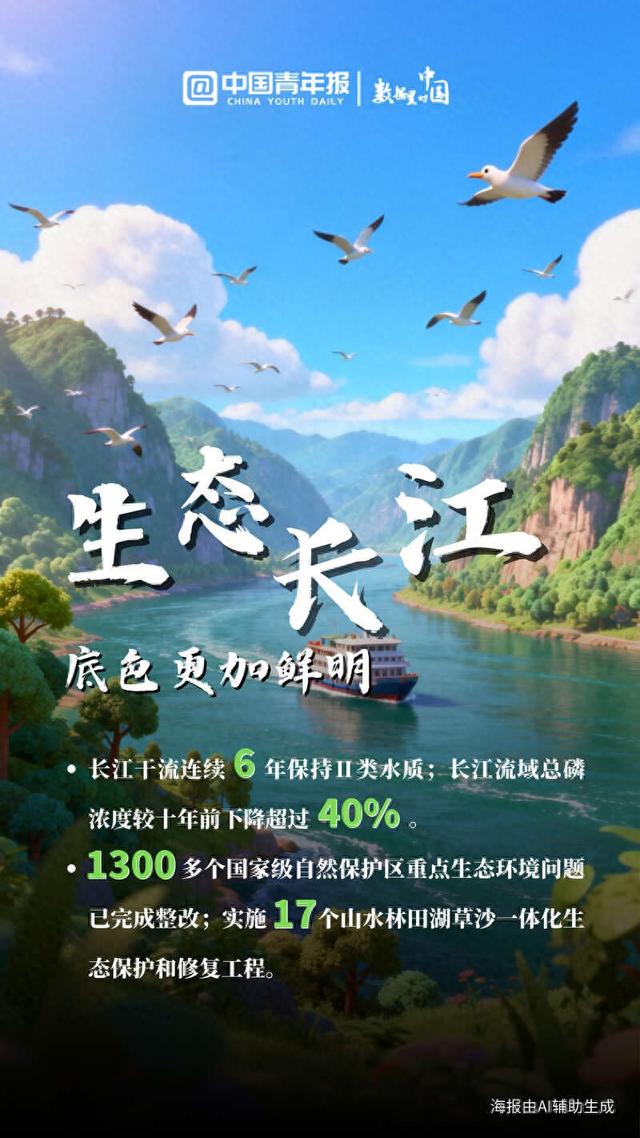
Core Viewpoint - The Yangtze River Economic Belt has made significant progress over the past decade, balancing ecological protection with economic development, contributing nearly half of China's GDP while accounting for about one-third of the country's energy consumption and carbon emissions [1]. Group 1: Economic Development - The Yangtze River Economic Belt has contributed nearly 50% of China's GDP over the past decade [1]. - The cargo throughput of major ports along the Yangtze River has increased by 100%, reaching 2.7 billion tons, maintaining its position as the world's leading inland river [10]. - The number of national-level advanced manufacturing clusters has reached 4, while strategic emerging industry clusters have reached 30, accounting for 51% and 45% of the national total, respectively [4]. Group 2: Ecological Protection - The implementation of the "Ten-Year Fishing Ban Plan" on the Yangtze River has provided support for 231,000 retired fishermen, with 12,000 difficult fishermen included in the social security system [15]. - The South-to-North Water Diversion Project has delivered over 84 billion cubic meters of water, benefiting 48 cities and 195 million people along the route [16]. Group 3: Cultural Heritage - The Longzhou Ancient City Ruins have been successfully listed as a World Cultural Heritage site, and the archaeological discoveries at Sanxingdui have garnered global attention [11]. - The establishment of the Yangtze National Cultural Park aims to protect and utilize cultural heritage along the river [11].
长江国家文化公园江西段建设保护规划出台
Ren Min Ri Bao· 2025-07-29 21:51
Core Viewpoint - The Jiangxi Province has issued a plan for the construction and protection of the Yangtze National Cultural Park, emphasizing high-quality development and cultural heritage preservation [1] Group 1: Planning and Scope - The plan covers 46 counties (cities, districts) across 11 prefecture-level cities in Jiangxi Province, focusing on significant cultural heritage along the Yangtze River and its tributaries [1] - The primary task is to ensure the holistic and systematic protection of cultural heritage [1] Group 2: Development Philosophy - The plan adheres to the principles of "coordinated major protection, no major development" and "ecological priority, green development" [1] - It aims to integrate the protection of cultural heritage, ecological environment, and urban-rural landscape [1] Group 3: Cultural and Tourism Integration - The plan seeks to enhance thematic displays and create a distinctive Yangtze cultural exhibition system with local characteristics [1] - It promotes the innovative integration of culture and tourism, aiming to develop a shining pearl on the international golden tourism belt of the Yangtze River [1] Group 4: Future Goals - By 2027, the plan aims to establish a cultural heritage protection supervision system and a mechanism for the protection of cultural heritage [1] - By 2035, it envisions a clear responsibility and efficient management model for comprehensive and systematic protection of cultural heritage, positioning Jiangxi as a core area for inheriting and promoting Yangtze culture [1]
我国加快推进长江国家文化公园建设 取得积极成效
news flash· 2025-07-19 03:05
Core Viewpoint - The Yangtze National Cultural Park is a significant cultural project initiated by the state, which has seen positive outcomes in the systematic protection of the Yangtze culture since its launch in 2021 [1] Group 1 - The project began construction in 2021 and has involved various provinces and cities along the Yangtze River [1] - A series of practical explorations have been conducted to fully activate cultural resources in the river basin [1] - Positive results have been achieved in the systematic protection of the Yangtze culture [1]