
门前三包

Search documents
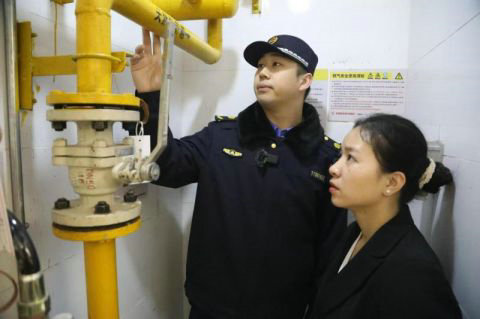
年味拉满更要安全感拉满!海淀城管加强商圈执法检查工作
Xin Lang Cai Jing· 2026-02-07 23:55
Core Viewpoint - The article highlights the proactive measures taken by Haidian District to ensure safety and order in commercial areas during the upcoming Spring Festival, focusing on gas safety inspections for restaurants and maintaining cleanliness in public spaces [1][3]. Group 1: Gas Safety Inspections - Haidian District has initiated gas safety inspections for restaurants in major commercial areas to ensure safe operations during the Spring Festival [1]. - Enforcement officers checked fire extinguishers, explosion-proof equipment, forced ventilation fans, and daily inspection records in restaurant gas rooms, emphasizing the need for compliance with safety regulations [2]. - Restaurant owners were reminded to ensure that all electrical appliances in gas rooms have "EX" labels and to maintain clear access to gas rooms [2]. Group 2: Environmental Hygiene and Safety Measures - The enforcement team urged commercial property managers to maintain cleanliness by promptly cleaning up litter, such as fruit peels, to create a pleasant environment for customers [3]. - Property managers were advised to prepare snow removal tools and to respond to snowfall by minimizing the use of de-icing agents while ensuring timely snow and ice removal [3]. - In light of frequent winter winds, property managers were instructed to check the stability of outdoor advertising signs and to conduct inspections during windy conditions [3]. Group 3: Focus on High Traffic Areas - The enforcement efforts will be concentrated in high-traffic commercial areas during the Spring Festival, with increased inspections of restaurant gas safety and adherence to environmental hygiene regulations [3].

11.2万人次上街扫雪铲冰
Bei Jing Ri Bao Ke Hu Duan· 2026-01-18 23:11
Summary of Key Points Core Viewpoint - The city experienced its first snowfall of 2026 from January 17 to 18, with significant snowfall accumulation and a comprehensive response from city management and sanitation workers to clear snow and ensure public safety and accessibility [1][8]. Group 1: Snowfall Details - The average snowfall in the city was recorded at 1.2 millimeters, with the maximum snowfall reaching 9.9 millimeters in Fengtai District [1]. - Snow depth varied across regions, with areas like Fangshan, Mentougou, Shijingshan, Haidian, and Fengtai experiencing depths of 10 to 20 centimeters, while other areas had depths of 0 to 4 centimeters [1]. Group 2: Response and Operations - A total of 112,000 personnel were deployed for snow removal, along with over 9,000 vehicles and more than 10,000 pieces of mechanical snow removal equipment [7]. - The city adopted a "one snow, one plan" approach, continuously adjusting snow removal strategies based on changing weather forecasts [8][10]. - The sanitation workers utilized a combination of mechanical and manual methods to clear snow, focusing on key areas such as medical, educational, scenic, and commercial zones [8]. Group 3: Community Involvement - Community members, including local residents and business owners, actively participated in snow removal efforts, enhancing the effectiveness of the city's response [9]. - The revised "three-package" management method, effective from January 15, mandated that all responsible units begin snow removal by 10 AM, encouraging community engagement in the process [9]. Group 4: Snow Management Strategy - The city emphasized a balanced approach to snow management, advocating for leaving snow in areas where it enhances the aesthetic experience while ensuring safe passage on roads [10]. - Strategies for snow disposal included pushing clean snow into green spaces for natural melting and managing snow containing de-icing agents through compression and transportation [10].
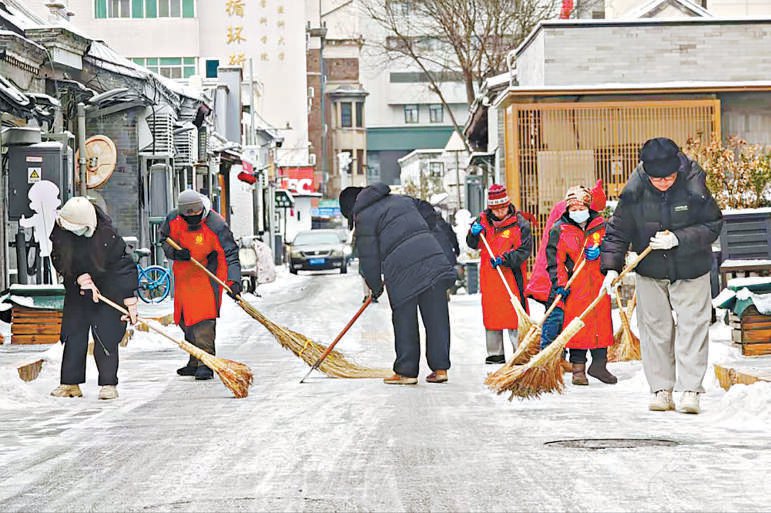
直击除雪第一线 | 从扫雪铲冰到“与雪共舞”
Bei Jing Ri Bao Ke Hu Duan· 2026-01-18 14:40
Core Viewpoint - The recent snowfall in Beijing has prompted significant snow removal efforts, showcasing the city's commitment to maintaining public safety and accessibility during winter weather conditions [8][10]. Group 1: Snowfall Impact - The snowfall from January 17 to 18 resulted in snow depths ranging from 0 to 6 centimeters in most areas, while the Shijingshan district experienced depths of 9 to 20 centimeters [1]. - The snow's fluffy structure contributed to its accumulation, leading to a higher than expected snow depth in Shijingshan [8]. Group 2: Snow Removal Efforts - A total of 112,000 personnel and over 9,000 snow removal vehicles were deployed across the city by January 18 at 10 AM, with more than 10,000 pieces of mechanical snow removal equipment utilized [10]. - Shijingshan district implemented a dual approach of mechanical and manual snow removal, focusing on major traffic routes and ensuring at least a one-meter-wide passage in back alleys [8][10]. Group 3: Community Involvement - Local residents and businesses actively participated in snow removal efforts, with community volunteers and professional teams working together to clear streets and sidewalks [14][16]. - The "door responsibility" initiative encouraged shop owners to take responsibility for clearing snow in front of their establishments, fostering a collaborative community spirit [16][18]. Group 4: Tourism and Aesthetic Appeal - The snowfall has enhanced the aesthetic appeal of historical and cultural areas, such as the Modekou Historical and Cultural District, attracting visitors for snow viewing [12][22]. - The city promoted various scenic spots for snow appreciation, including the Bada Chu and Shougang Park, encouraging tourism and local engagement [22].
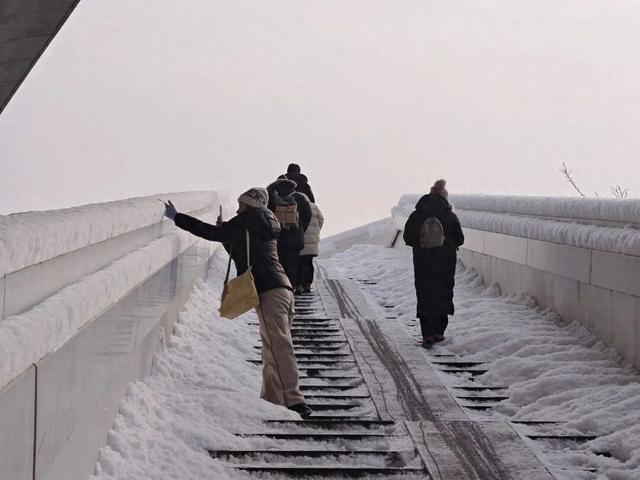
北京多部门积极应对今年首场降雪
Xin Hua Wang· 2026-01-18 11:17
Group 1 - Beijing experienced its first snowfall of the year from January 17 to the morning of January 18, prompting multiple departments to take action to ensure public safety and orderly city operations [1] - Snow removal operations began on January 17, with 5,711 personnel and 1,069 vehicles deployed by the Beijing sanitation group by January 18 at 10 AM [2] - The snowfall distribution was uneven, with the Shijingshan District receiving significant snowfall, with depths reaching 10 to 20 centimeters [4] Group 2 - The Shijingshan District employed a combination of mechanical and manual snow removal methods, focusing on key areas such as medical, educational, scenic, and commercial zones to ensure accessibility [4] - The revised "Three Guarantees" management measures were implemented on January 15, leading to active participation from local businesses and communities in snow removal efforts [4][5] - Following the snowfall, a blue wind warning was issued, and the city management committee organized meetings to ensure heating and snow removal operations were effectively managed [8]
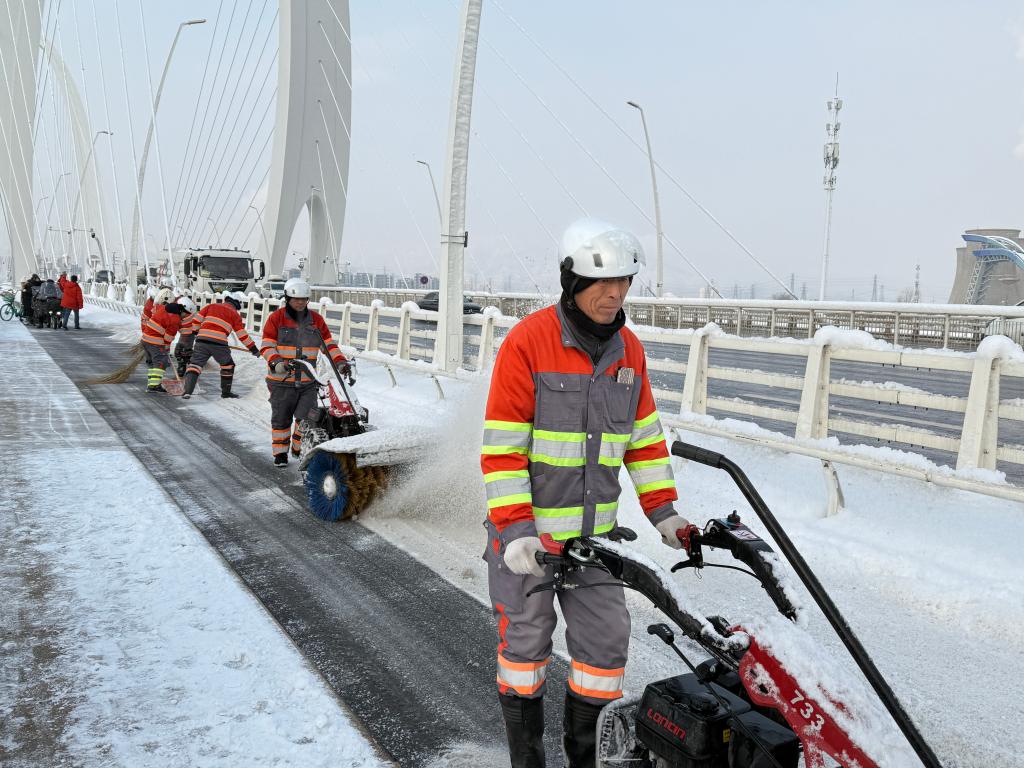
北京已累计出动扫雪铲冰人员9.1万人次 人员与车辆投入翻番
Bei Jing Shang Bao· 2026-01-18 03:28
Group 1 - The Beijing Municipal Management Committee reported that as of January 18, 9.1 million personnel were deployed for snow removal, with 4.6 million being professional workers and 4.5 million from streets and towns [1] - Over 8,600 vehicles and 9,800 pieces of equipment were utilized, indicating a doubling of personnel and vehicle input compared to previous efforts [1] - The snow quality was described as fluffy, making it challenging to manage the volume, necessitating strategies to push clean snow into green spaces and compress snow containing melting agents before transportation [1] Group 2 - The revised "Three Guarantees" management measures began implementation on January 15, requiring all units to perform snow removal in front of their premises [2] - Due to January 18 being a Sunday with fewer workers, the snow removal time was adjusted, mandating all responsible units to start their duties by 10 AM [2] - The Beijing government encouraged all party and government officials to report to communities to assist with snow removal efforts, especially since many units were not operational on January 18 [2]
北京9.1万人次上街扫雪铲冰,人员及车辆投入翻一番
Xin Lang Cai Jing· 2026-01-18 02:58
Group 1 - The city has mobilized a total of 91,000 personnel and over 8,600 vehicles for snow removal efforts in response to the recent snowfall [1] - The snow removal plan is being adjusted continuously based on changing weather forecasts, with a focus on preventing road icing to ensure traffic safety [1] - The revised "Three Guarantees" management method for snow removal will be implemented starting January 15, requiring all responsible units to clear snow from their designated areas by 10 AM [1] Group 2 - The recent snowfall is characterized by its fluffy nature, making it more challenging to manage due to the large volume of snow [2] - The city aims to utilize green spaces for snow disposal to minimize transportation needs and will compress snow containing de-icing agents before removal [2] - The city is prioritizing snow removal today to ensure clear roads for vehicles and pedestrians by tomorrow morning, with a focus on maintaining at least a one-meter-wide passage in less accessible areas [2]
“门前三包”赋码 扫码可报乱象
Xin Lang Cai Jing· 2026-01-15 22:30
Core Viewpoint - The newly revised "Three Packages" management measures in Beijing aim to enhance urban governance by involving citizens in reporting issues related to public space maintenance, with a focus on cleanliness, appearance, and orderliness. Group 1: Key Changes in the Management Measures - The responsibility scope has been updated from "maintaining hygiene, greenery, and social order" to "ensuring cleanliness, maintaining a tidy appearance, and promoting an orderly environment" [2] - Merchants are now only required to cooperate within their capacity, such as cleaning up garbage and waste, rather than managing greenery, which is now the responsibility of the landscaping department [2] - The new measures prohibit merchants from setting up unauthorized barriers like locks and railings, ensuring public spaces remain clean and accessible [2] Group 2: Inclusion of Subway Stations - Subway station entrances are now included in the "Three Packages" responsibility framework, addressing previous management ambiguities [3] - The management responsibilities for subway entrances include maintaining cleanliness, tidiness of structures, and preventing illegal parking [3] - The subway management units are tasked with addressing issues like improper parking of shared bikes and stalls that disrupt the environment [3] Group 3: Responsibilities of Shared Mobility and Delivery Services - Shared bike companies must appoint personnel to manage parking and ensure timely removal of bikes obstructing public spaces [4] - Delivery platforms and operators are required to supervise their personnel to ensure proper parking practices [4] Group 4: Citizen Engagement and Reporting Mechanism - A new QR code system allows citizens to report issues related to the "Three Packages" directly, facilitating community involvement in urban management [6] - The QR code provides access to report problems such as littering, snow removal, and unauthorized installations, with options to upload photos and pinpoint locations on a map [6] - The initiative is currently being piloted in several districts, with plans for citywide implementation [6]
地铁站口首次纳入“门前三包”
Xin Lang Cai Jing· 2026-01-15 19:28
Core Viewpoint - The newly revised "Beijing Door Responsibility System" aims to enhance urban governance by including various stakeholders in the management of public spaces, particularly around subway stations, thereby improving the overall order and cleanliness of the city [1][2]. Group 1: Revision of the Responsibility System - The revised regulations clarify the responsibilities of businesses, shifting from "maintaining hygiene, greenery, and social order" to "ensuring cleanliness, maintaining a tidy appearance, and ensuring an orderly environment" [2][3]. - Businesses are now only required to avoid damaging existing greenery and facilities, as maintenance of these is the responsibility of specialized urban management units [3]. Group 2: Inclusion of Subway Stations - For the first time, subway station entrances are included in the "Door Responsibility" framework, with specific responsibilities outlined for cleanliness, appearance, and order [4]. - The regulations mandate that subway management units must address issues such as illegal parking and improper placement of shared bicycles, with a duty to report unresolved issues to relevant authorities [4]. Group 3: Promotion of Community Participation - The new regulations encourage community involvement through a "co-governance code," allowing citizens to report issues directly via a mobile platform, thus transforming them into active participants in urban management [5][6]. - The initiative has already been implemented in several districts, with plans for city-wide expansion, enhancing the ease of reporting and monitoring urban issues [6].
地铁站口被首次纳入 北京“门前三包”新规正式实施
Bei Jing Shang Bao· 2026-01-15 07:33
Core Viewpoint - The newly revised "Beijing's Responsibility System for the Three Packages in Front of the Door" aims to enhance urban management by redefining responsibilities and including new areas such as subway entrances [1][2] Group 1: Revised Responsibilities - The responsibilities have shifted from "maintaining hygiene, greenery, and social order" to "ensuring cleanliness, maintaining a tidy appearance, and creating an orderly environment" [1] - The new regulations prohibit the unauthorized installation of barriers such as locks and bollards in public spaces, specifically targeting behaviors that occupy parking spaces [1] Group 2: Inclusion of Subway Entrances - Subway entrances are now included in the "Three Packages" responsibility area, defined by the subway land boundary [1] - Responsibilities at subway entrances include timely removal of garbage, waste, and snow, as well as maintaining the cleanliness of building facades and outdoor advertising [1] Group 3: Shared Mobility and Delivery Responsibilities - Shared bicycle companies must manage vehicle parking and ensure timely removal of improperly parked bikes from public areas [2] - Delivery platforms are required to supervise their personnel to ensure proper parking practices [2] Group 4: Community Participation and Reporting - The regulations promote a "co-construction, co-governance, and sharing" approach, encouraging merchants and citizens to participate in urban management [2] - Citizens can report issues via a QR code system, which is being expanded citywide, facilitating both reporting and management inspections [2]
村民“包”了!化州新塘村“颜值”飙升有妙招 | 众说百千万⑥
Nan Fang Nong Cun Bao· 2025-07-16 02:31
Core Viewpoint - The article highlights the successful implementation of a community governance model in Xintang Village, which has led to significant improvements in the village's infrastructure and cleanliness through resident participation and responsibility-sharing initiatives [8][47]. Group 1: Community Initiatives - Xintang Village has adopted the "Three Responsibilities at the Door" system, which encourages residents to maintain cleanliness and order in front of their homes, resulting in a cleaner environment [12][45]. - The village has implemented a star rating system for households based on their adherence to cleanliness standards, rewarding them with points that can be exchanged for goods and services [16][17]. - The community has collectively installed 17 streetlights, transforming previously dark pathways into well-lit areas, enhancing safety and visibility for residents [21][23]. Group 2: Infrastructure Development - The village has completed the hardening of 900 meters of village roads, significantly reducing construction costs by approximately 50% through community labor and resource sharing [24]. - A wastewater resource treatment project has been initiated with a budget of 1.55 million yuan, involving local residents in the planning and management processes [29][30]. - The establishment of a "grid member + resident" management system ensures regular monitoring and maintenance of the village's infrastructure, promoting long-term sustainability [31]. Group 3: Community Engagement - The involvement of external villagers through a WeChat group has facilitated financial contributions for community projects, demonstrating a strong connection and commitment to the village's development [40][42]. - The governance model encourages all residents to participate actively in village maintenance, fostering a sense of ownership and responsibility among the community [46].
