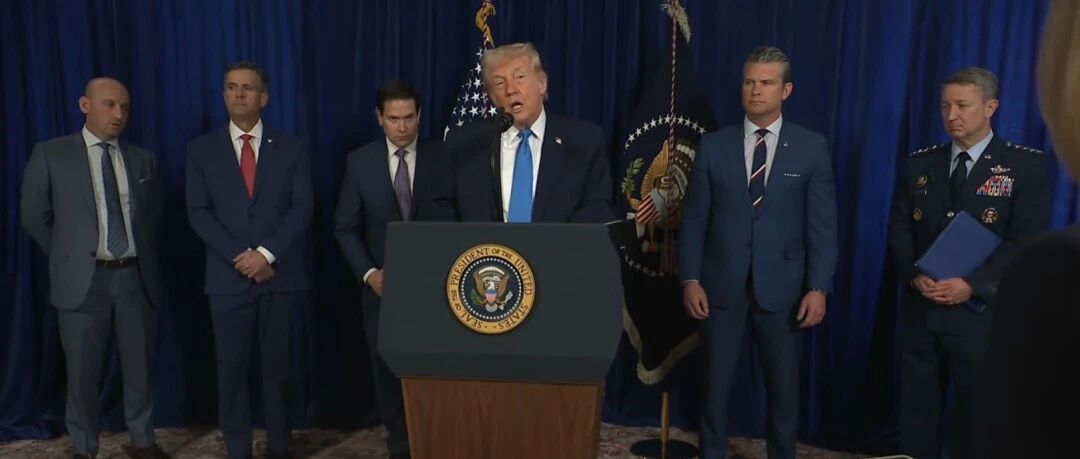
门罗主义的‘特朗普推论’

Search documents
蒂亚戈·诺加拉:唐罗主义阴影下,“反华”已成为某些拉美精英的“投名状”
Xin Lang Cai Jing· 2026-02-16 01:31
Core Viewpoint - The article discusses the increasing tensions between the United States and China regarding influence in Latin America, particularly focusing on the U.S. concerns over Chinese investments in critical infrastructure, such as ports, which are perceived as threats to national sovereignty and security in the region [1][2]. Group 1: U.S. Concerns and Actions - The U.S. State Department expressed concerns over Peru potentially losing control of the Chancay port to a "predatory" Chinese owner, emphasizing support for Peru's sovereignty over critical infrastructure [1]. - The U.S. has escalated its rhetoric against Chinese investments in Latin America, framing them as a threat to regional security and sovereignty, and has proposed high tariffs on Chinese goods entering through these ports [2]. - U.S. Southern Command officials have continuously highlighted the dangers posed by Chinese infrastructure projects in Latin America, aiming to create a political and legal environment to hinder Chinese operations [2]. Group 2: Strategic Responses and Political Dynamics - The U.S. has been actively promoting alternative investments in Peruvian ports to counterbalance China's growing presence, particularly in strategic areas like the Panama Canal [2]. - The U.S. strategy has included legal actions against Chinese interests in ports, as seen in Panama, where the government sought to revoke port concessions amid U.S. pressure [3]. - The rise of conservative forces in Latin America, influenced by U.S. narratives against China, has not fully translated into a complete shift away from Chinese economic partnerships, indicating a complex political landscape [5]. Group 3: China's Position and Influence - Despite U.S. efforts, China has solidified its position as a key trade partner for countries like Venezuela, providing substantial loans without political conditions, which contrasts with U.S. strategies that often involve sanctions and pressure [9]. - China's support for countries facing U.S. sanctions, such as Cuba and Venezuela, highlights its role as a reliable partner in the region, countering U.S. narratives of Chinese predation [7][9]. - The article argues that the U.S. framing of Chinese investments as a geopolitical threat is misleading, as these relationships are based on mutual agreements rather than coercion [10].

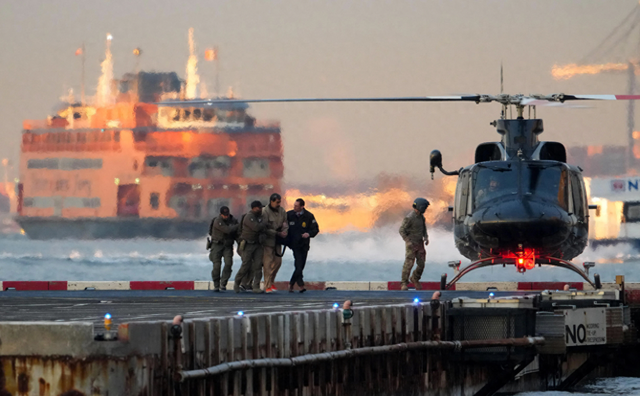
美国的本质转变,必须清醒认知
Xin Lang Cai Jing· 2026-01-05 15:37
Core Viewpoint - The recent events in Venezuela, including the capture of President Maduro by U.S. forces, signify a shift in U.S. foreign policy, indicating a move towards a more aggressive stance in its "backyard" rather than a genuine acceptance of a multipolar world [4][5][21]. Group 1: U.S. Foreign Policy Shift - The U.S. has acknowledged the long-term nature of great power competition and the decentralization of global power in its new National Security Strategy, but this does not imply humility [8][21]. - The concept of a "Western Hemisphere security fortress" suggests a more aggressive approach to maintaining control over Latin America, viewing it as an extension of U.S. territory [10][12]. - The "Trump Corollary" to the Monroe Doctrine indicates that any deviation from U.S. influence in Latin America is seen as a direct threat to U.S. security [9][10]. Group 2: Hybrid Warfare Strategy - The U.S. has employed a hybrid warfare strategy against Venezuela, combining military, economic, and psychological tactics to undermine the Maduro regime [14][15][16]. - This strategy includes cutting off Venezuela's financial channels, spreading disinformation, and criminalizing political issues to justify military actions [18][19]. - The swift recognition of opposition leaders as "transitional presidents" after Maduro's capture demonstrates the effectiveness of the U.S. in executing its proxy war strategy [20]. Group 3: Implications for Emerging Powers - The events in Venezuela serve as a warning to emerging powers about the dangers of underestimating U.S. resolve in maintaining its hegemony, even in a purportedly multipolar world [30][31]. - The notion that U.S. strategic withdrawal equates to a decline in interventionist behavior is misleading; it is more about resource reallocation to strengthen its core interests [22][30]. - Emerging nations must enhance their capabilities and regional security autonomy to navigate the challenges posed by U.S. actions, which are likely to intensify in a multipolar context [33][32].

抓捕马杜罗,特朗普意欲何为?
对冲研投· 2026-01-04 01:14
Group 1 - The article focuses on the event of Venezuelan President Maduro and his wife being captured by U.S. forces, marking a significant escalation in U.S.-Venezuela relations [5][7]. - The deterioration of relations between the Trump administration and Maduro has been ongoing since Trump's first term, with actions such as freezing Venezuelan assets and labeling Maduro's regime as undemocratic [9][10]. - The U.S. military operation to capture Maduro is seen as a practical application of the "Trump Corollary" to the Monroe Doctrine, aiming to deter other non-compliant Latin American countries with minimal cost [14][15]. Group 2 - The article highlights the strategic importance of Venezuela due to its vast natural resources, particularly its oil reserves, which are the largest in the world, estimated at 303.2 billion barrels [16]. - The geopolitical implications of Maduro's capture could lead to a shift in Latin America towards right-wing governments, as evidenced by recent political trends in countries like Argentina and Chile [18][19]. - The potential rise of opposition leader Maria Corina Machado, if she assumes power, could significantly impact China's interests in Venezuela, as the current regime has been more favorable towards Chinese investments [21][22]. Group 3 - The article concludes that the U.S. aims to strengthen its influence in Latin America by promoting right-wing governments and controlling key resources, which could lead to increased geopolitical risks for China in the region [23][24][26].