唐罗主义

Search documents
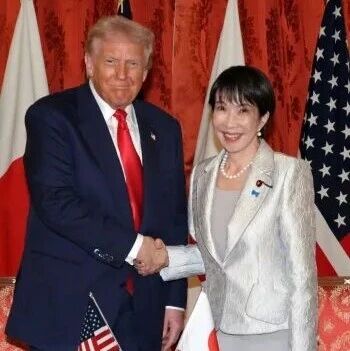
高市早苗和特朗普首脑会谈谈什么?
日经中文网· 2026-03-19 02:50
Core Viewpoint - The article discusses the upcoming summit between Japanese Prime Minister Fumio Kishida and U.S. President Donald Trump, highlighting the importance of U.S.-Japan relations amid regional security concerns and economic cooperation [1][3]. Group 1: Diplomatic Coordination - The summit aims to coordinate diplomatic strategies between Japan and the U.S., especially in light of Trump's delayed visit to China [1][3]. - Kishida seeks to clarify Japan's position on regional security issues, particularly regarding China's military expansion and North Korea's nuclear development [3][5]. Group 2: Economic Cooperation - A significant topic of discussion will be the U.S.-Japan investment projects, with a previous agreement of $550 billion in investments reached in July 2025 [5]. - Japan has announced three initial investment projects, including natural gas power generation and artificial diamond production, with further projects under negotiation [5][6]. - The article mentions Japan's inquiry about operating advanced display factories in the U.S. and potential projects in nuclear power and copper refining [5]. Group 3: Trade and Tariffs - The article highlights the ongoing discussions regarding tariffs, particularly after the U.S. Supreme Court's ruling on tariffs, which led to the implementation of a 10% additional tariff by Trump [5][6]. - Kishida is expected to advocate for tariff reductions not exceeding the agreed levels in the 2025 U.S.-Japan agreement [5]. Group 4: Security Concerns - The potential military actions by the U.S. and Israel against Iran will be a significant topic, with Kishida previously criticizing Iran's actions while avoiding direct comments on U.S. military strategies [6]. - The article notes Japan's precarious position regarding its defense spending, with a target of 2% of GDP by 2025, amid U.S. calls for increased defense budgets from allies [6].

美国想赶走中国,结果自己连1000亿都掏不出!拉美看透了
Sou Hu Cai Jing· 2026-02-23 03:36
Core Viewpoint - The article discusses the implications of a military operation ordered by President Trump to kidnap Venezuelan President Maduro, highlighting the aggressive nature of U.S. foreign policy in Latin America and its impact on U.S.-China relations in the region [1][3]. Group 1: U.S. Foreign Policy and Latin America - Trump's military action against Maduro is seen as a manifestation of his "America First" doctrine, aiming to assert U.S. dominance in the Americas and diminish the influence of China and Russia [1]. - Following the kidnapping, Trump pressured several Latin American countries to reconsider or halt their cooperation with China, with varying degrees of compliance among nations like Panama and Canada [3]. - The U.S. lacks the financial resources and execution capabilities to match China's extensive investments in Latin America, which have addressed significant infrastructure gaps in the region [4]. Group 2: Investment Challenges and Regional Dynamics - Despite Trump's call for U.S. oil companies to invest in Venezuela post-kidnapping, the high investment costs and political instability deterred them from engaging, revealing the limitations of Trump's approach [5]. - A paradox arises where Trump's aggressive stance may lead to military interventions that destabilize target countries, ultimately increasing investment risks for the U.S. and hindering the realization of a U.S.-led industrial base in the region [6]. - The long-term effect of Trump's policies may encourage Latin American countries to seek a balanced approach between U.S. and Chinese interests rather than fully aligning with one side [6].

蒂亚戈·诺加拉:唐罗主义阴影下,“反华”已成为某些拉美精英的“投名状”
Xin Lang Cai Jing· 2026-02-16 01:31
Core Viewpoint - The article discusses the increasing tensions between the United States and China regarding influence in Latin America, particularly focusing on the U.S. concerns over Chinese investments in critical infrastructure, such as ports, which are perceived as threats to national sovereignty and security in the region [1][2]. Group 1: U.S. Concerns and Actions - The U.S. State Department expressed concerns over Peru potentially losing control of the Chancay port to a "predatory" Chinese owner, emphasizing support for Peru's sovereignty over critical infrastructure [1]. - The U.S. has escalated its rhetoric against Chinese investments in Latin America, framing them as a threat to regional security and sovereignty, and has proposed high tariffs on Chinese goods entering through these ports [2]. - U.S. Southern Command officials have continuously highlighted the dangers posed by Chinese infrastructure projects in Latin America, aiming to create a political and legal environment to hinder Chinese operations [2]. Group 2: Strategic Responses and Political Dynamics - The U.S. has been actively promoting alternative investments in Peruvian ports to counterbalance China's growing presence, particularly in strategic areas like the Panama Canal [2]. - The U.S. strategy has included legal actions against Chinese interests in ports, as seen in Panama, where the government sought to revoke port concessions amid U.S. pressure [3]. - The rise of conservative forces in Latin America, influenced by U.S. narratives against China, has not fully translated into a complete shift away from Chinese economic partnerships, indicating a complex political landscape [5]. Group 3: China's Position and Influence - Despite U.S. efforts, China has solidified its position as a key trade partner for countries like Venezuela, providing substantial loans without political conditions, which contrasts with U.S. strategies that often involve sanctions and pressure [9]. - China's support for countries facing U.S. sanctions, such as Cuba and Venezuela, highlights its role as a reliable partner in the region, countering U.S. narratives of Chinese predation [7][9]. - The article argues that the U.S. framing of Chinese investments as a geopolitical threat is misleading, as these relationships are based on mutual agreements rather than coercion [10].

高市拟以压倒性胜利为杠杆推动外交
日经中文网· 2026-02-13 02:46
Group 1 - The core viewpoint of the article emphasizes the strategic diplomatic approach of Japan's Prime Minister, Kishi Nobuo, who aims to strengthen ties with the Trump administration while maintaining a firm stance against China [2][6][8] - Kishi's overwhelming victory in the House of Representatives election is seen as a foundation for enhancing Japan's diplomatic leverage, particularly in relation to the United States and its policies in the Asia-Pacific region [4][6] - The article discusses the potential implications of Kishi's policies on Japan-China relations, highlighting concerns that his hardline stance may lead to increased tensions and pressure from China [7][8] Group 2 - Kishi's government plans to discuss diplomatic strategies with the U.S. ahead of Trump's visit to China, aiming to prevent any negotiations on Taiwan that exclude Japan [6][8] - The article notes that Kishi intends to use public support from the recent election to push forward defense policies that may cause societal divisions, including enhancing Japan's military capabilities [7] - There is a focus on Kishi's reference to former Prime Minister Abe's diplomatic methods as a model, indicating a continuity in Japan's approach to foreign relations with neighboring countries [2][6]
南美巨变,看中国如何破解
Sou Hu Cai Jing· 2026-02-12 08:41
Core Viewpoint - The emergence of "Trumpism" as an upgraded version of Monroe Doctrine signifies a strategic shift in U.S. policy aimed at consolidating influence in Latin America, posing a direct threat to China's growing interests in the region [1][3]. Economic Influence - China's economic ties with Latin America have deepened, particularly in sectors like oil from Venezuela, copper and cherries from Chile, beef from Argentina, and soybeans from Brazil, with significant material flows directed towards China [1]. - The U.S. is increasing its military and economic influence in Latin America, which threatens China's strategic investments and market expansion in the region [1][5]. - The U.S. faces challenges in controlling Latin American resources without a viable market to sell them, as evidenced by the situation in Venezuela where U.S. efforts to control oil resources have led to a loss of the primary buyer, China [5][10]. Geopolitical Dynamics - The geographical distance between China and Latin America complicates direct confrontation with the U.S., making it difficult for China to exert military influence or compel Latin American countries to choose sides [3][5]. - The U.S. strategy of leveraging its influence in Latin America is hindered by its own economic vulnerabilities, including a reliance on financial hegemony and a lack of sufficient domestic demand to absorb Latin American resources [5][10]. Resource Management - Venezuela's oil quality and high extraction costs limit its attractiveness to the U.S., especially when cheaper alternatives are available from Canada [7]. - China's ability to adjust its purchasing patterns for agricultural and mineral resources gives it leverage over Latin American countries, which may face market access issues if they oppose Chinese interests [8][11]. Strategic Implications - The U.S. must navigate a complex landscape where it seeks to reassert control over Latin American resources while facing the reality of China's entrenched economic position in the region [10][11]. - The potential collapse of Venezuela's economy could create significant challenges for the U.S., including increased risks related to migration, drug trafficking, and terrorism [8]. - The U.S. strategy of re-engagement in Latin America may ultimately prove ineffective unless it can break the region's economic dependency on China or decisively defeat China in financial warfare [11].
全球市场观察:唐罗主义与经济再平衡
Zhao Yin Guo Ji· 2026-02-09 06:09
Global Macro Strategy - The report highlights a global economic rebalancing driven by various factors including increased fiscal expansion in the US, Japan, and Europe, and China's focus on stabilizing real estate and promoting consumption [1][2] - The US economy is expected to see GDP growth decrease from 2.2% last year to 2% this year, with PCE inflation projected to drop from 2.5% to 2.3% [1][4] - The report anticipates that risk assets may reach new highs, with cyclical and value stocks outperforming tech and growth stocks [1][2] United States - The US housing market is expected to see an increase in sales volume while prices remain stable, with existing home sales projected to grow by 10% and new home sales by 5% in 2026 [7] - The fiscal deficit is projected to rise from 5.4% last year to 6.2% this year, with significant tax cuts expected to stimulate the economy [11] - The report predicts that the Federal Reserve will only cut rates once in June, with the 10-year Treasury yield expected to rise from 4.18% to 4.3% by year-end [12][14] United Kingdom - The UK economy is expected to experience a slight slowdown, with GDP growth forecasted to decrease from 1.4% last year to 1.2% this year [19][20] - The unemployment rate is projected to rise from 4.4% to 5.1% as the job market cools, while wage growth is expected to normalize [20] - The report anticipates that the Bank of England will cut rates twice in 2026, bringing the policy rate down to 3.25% [24] Eurozone - The Eurozone's GDP growth is expected to slow from 1.4% last year to 1.2% this year, with inflation projected to stabilize around the target level [1][2] - The report indicates that the European Central Bank's rate-cutting cycle has ended, with policy rates expected to remain unchanged [1][2] Japan - Japan's GDP growth is forecasted to decline significantly from 1.3% last year to 0.7% this year, with inflation also expected to decrease [1][2] - The report suggests that the Bank of Japan may raise rates twice, with the 10-year government bond yield expected to rise from 2.07% to 2.45% [1][2] China - China's GDP growth is projected to slow from 5% last year to 4.6% this year, with a focus on stabilizing the real estate market and promoting consumption [1][2] - The report anticipates that the People's Bank of China will implement two rate cuts totaling 20 basis points and one reserve requirement ratio cut of 50 basis points [2]
何伟文:美国“唐罗主义”对中国有干扰、有冲击 但中拉合作前景不会变
Xin Lang Cai Jing· 2026-02-08 06:09
Core Viewpoint - The Trump administration's "America First" strategy is increasing trade cooperation risks in Latin America, prompting Chinese companies to adopt more cautious strategies in the region [1][2][3] Trade and Investment - China-Latin America bilateral trade has exceeded $500 billion, with cumulative investment stock also surpassing $500 billion [3][4] - Political barriers, particularly Trump's "America First" policy, are seen as the main obstacles to economic cooperation, rather than economic ones [3][4] Corporate Strategy - Chinese companies' investments in Latin America align with local economic development needs, contributing to job creation and fiscal revenue [6][7] - Smaller enterprises may find it easier to seize opportunities in Latin America due to a less scrutinized political environment [7][8] - Different scales of enterprises require tailored strategies for overseas expansion, with larger firms focusing on substantial projects and smaller firms integrating into supply chains [8][9] Government Support and Agreements - Establishing intergovernmental agreements can provide necessary protections for Chinese enterprises operating in Latin America, addressing risks and ensuring mutual benefits [9][10] - The importance of maintaining stable relations with the U.S. while actively pursuing cooperation with Latin American countries is emphasized [10][11] Free Trade Agreements - There is a strong push for expanding free trade agreements with Latin American countries, with existing agreements already in place with five nations [11][12] - Despite challenges, the historical trend of cooperation between China and Latin America is expected to continue [12]
特朗普“唐罗主义”阴影下,拉美“选边站”还是“求生战”?
Feng Huang Wang Cai Jing· 2026-02-04 13:42
Group 1 - The core viewpoint of the articles revolves around the increasing pressure from the Trump administration on Latin American countries, compelling them to choose sides amid geopolitical tensions [1][2][3] - The U.S. has historically intervened in Latin America, with 34% of its military interventions targeting this region since 1776, indicating a long-standing pattern of influence and control [1] - The Trump administration's "Monroe Doctrine" is being reasserted, focusing on the Western Hemisphere and aiming to limit the autonomy of Latin American nations [1][2] Group 2 - Economic agreements have been established between the U.S. and several Latin American countries, indicating a shift towards dollarization and increased economic dependency on the U.S. [2] - Military agreements have been signed with countries like Paraguay and Ecuador, allowing U.S. military presence and operations in the region, further solidifying U.S. influence [2] - Colombia, once a staunch ally of the U.S., is now facing tensions under President Petro, who has criticized U.S. interventions, reflecting a shift in the dynamics of U.S.-Latin America relations [3][4] Group 3 - The response from various Latin American countries has been mixed, with some like Brazil criticizing U.S. actions while others, such as Argentina, aligning more closely with U.S. interests [4][5][8] - The political landscape in Latin America is shifting, with right-leaning governments gaining traction, which aligns with U.S. interests and strategies [8][9] - The U.S. is actively working to undermine Chinese influence in the region, as seen in the recent legal actions against Chinese companies operating in Panama [9][10]

228亿遭明抢!美国挥刀收割,李嘉诚这时才明白,谁是真正的靠山
Sou Hu Cai Jing· 2026-02-03 15:44
Core Viewpoint - The article discusses the significant loss of $22.8 billion in assets for Li Ka-shing due to a court ruling in Panama, which is perceived as a manifestation of U.S. hegemony and a warning for foreign investors in the region [1][3][5]. Group 1: Impact on Li Ka-shing - The court ruling in Panama has resulted in the forced takeover of a core port project owned by Li Ka-shing's Cheung Kong Holdings, marking a devastating blow to his business empire [3][5]. - The port was a crucial part of Li's strategy in Latin America, representing years of investment and effort, and its loss signifies a major setback in his overseas ambitions [5][11]. - This incident highlights the vulnerability of even the largest business empires in the face of geopolitical power dynamics, emphasizing that without a strong national backing, wealth and dreams can be easily undermined [5][15]. Group 2: U.S. Hegemony and Global Implications - The article frames the court's decision as part of a broader trend of U.S. hegemony, particularly under the Trump administration, which is characterized by aggressive actions against foreign investments [7][9]. - The ruling is seen as a direct reflection of a new form of U.S. foreign policy that prioritizes national interests over international norms, suggesting that foreign capital is at risk in regions under U.S. influence [7][9]. - Historical parallels are drawn to previous U.S. actions, such as the detention of Huawei's executive, indicating a pattern of using legal and political means to suppress foreign entities [9][11]. Group 3: Lessons for Chinese Enterprises - Li Ka-shing's experience serves as a cautionary tale for Chinese companies and investors, illustrating the risks of relying on Western legal systems for protection [11][17]. - The article argues that a strong national foundation is essential for overseas ventures, contrasting Li's situation with Huawei's resilience due to its backing from China [13][19]. - It emphasizes the importance of recognizing the geopolitical landscape and the necessity for Chinese enterprises to align closely with their home country's strengths to safeguard their interests abroad [15][19].
中资港口,面临惊涛骇浪……
Bei Jing Wan Bao· 2026-02-03 02:00
Core Viewpoint - Recent political pressures have led to significant challenges for Chinese-operated overseas ports, particularly in Australia and Panama, reflecting a broader strategy by the U.S. to undermine Chinese influence in global port operations [1][15]. Group 1: Australia and Darwin Port - The Australian government announced plans to reclaim the Darwin Port, previously operated by China's Landbridge Group, citing national interest, which violates the spirit of the original contract [1][3]. - Landbridge Group invested over 1 billion AUD to upgrade the port, increasing its annual throughput from 5 million tons to over 30 million tons, and generating significant tax revenue for the Northern Territory government [2]. - The push to reclaim the port is seen as a strategic alignment with U.S. interests, particularly with the upcoming deployment of U.S. nuclear submarines in Australia, which heightens the military significance of the Darwin Port [3][15]. Group 2: Panama and the Ports - The Panama Supreme Court ruled that the contract allowing Hong Kong's CK Hutchison to operate two ports at either end of the Panama Canal was unconstitutional, effectively ending their operational rights [5][6]. - CK Hutchison had invested over 1.8 billion USD in port infrastructure and technology over nearly 30 years, significantly enhancing Panama's logistics capabilities [5]. - The ruling came shortly after U.S. Secretary of State Rubio visited Panama, indicating U.S. pressure on the Panamanian government to distance itself from Chinese investments [6][7]. Group 3: U.S. Strategy and Global Implications - The U.S. is intensifying its efforts to control strategic ports globally, viewing Chinese port investments as a threat to its hegemony [10][12]. - Trump's administration is actively promoting a "de-China" strategy in global ports, aiming to reclaim control over key logistics nodes in Latin America and the Indo-Pacific regions [11][15]. - The strategy includes establishing a "Port Security Information Sharing Platform" to monitor high-risk investments and promoting exclusive networks among allied ports to counter Chinese influence [13][14]. Group 4: Economic Considerations - The U.S. strategy not only aims to diminish China's geopolitical influence but also seeks to capitalize on profitable assets previously developed by Chinese companies, effectively transferring these assets to U.S. or allied interests [17][18]. - The ongoing "port reclamation" efforts are expected to expand beyond Darwin and Panama, potentially impacting other critical ports globally [19].