
阿尔茨海默症药物研发

Search documents
泰恩康(301263) - 2026年1月22日投资者关系活动记录表
2026-01-22 12:18
Group 1: Clinical Research and Development - The company has initiated a Phase II clinical trial for CKBA cream for pediatric vitiligo, with the application accepted by the National Medical Products Administration in November 2025 [2][3]. - The exploratory study included 30 pediatric patients aged 2-12 years, showing a significant improvement in VASI scores with a 56.53% change in the treatment group compared to a 16.67% change in the control group (P=0.0029) [3]. - The Phase II clinical trial is expected to begin patient enrollment in Q2 2026, with a goal to complete it by mid-2027 [4]. Group 2: Market Potential and Demand - There are currently no approved drugs for pediatric vitiligo (ages 2-12) globally, indicating a significant unmet clinical need [5]. - The estimated market size for pediatric vitiligo treatment in China exceeds 100 billion CNY, with annual treatment costs ranging from 15,000 to 20,000 CNY per patient [6]. - CKBA is expected to achieve annual peak sales exceeding 5 billion CNY once approved for pediatric use [6]. Group 3: Additional Clinical Developments - The company has completed Phase II trials for CKBA in adult vitiligo and plans to optimize the Phase III trial protocol, with an application expected in Q1 2026 [7]. - CKBA is also being developed for other indications, including rosacea and Alzheimer's disease, with clinical trials for rosacea expected to start in Q1 2026 [7]. Group 4: Business Growth and Future Plans - The company anticipates significant revenue growth in 2026 and explosive growth in 2027, driven by the approval of several core products [8]. - Key products expected to be approved include a combination capsule of finasteride and tadalafil, and a lidocaine and prilocaine aerosol, among others [8].
FDA加速批准渤健阿尔茨海默药上市引争议,药物后期临床效益仍需验证
Mei Ri Jing Ji Xin Wen· 2025-11-24 07:52
Core Viewpoint - The FDA has approved Aduhelm (Aducanumab) for the treatment of early Alzheimer's disease, marking the first approval of an Alzheimer's drug since 2003, despite controversies surrounding its clinical trial data and efficacy [1] Group 1: FDA Approval - The approval of Aduhelm is seen as a significant development for Alzheimer's patients, providing a new treatment option [1] - The decision has sparked debate due to the drug's bypassing of phase II trials and the contradictory results from its clinical studies [1] Group 2: Regulatory Requirements - The FDA has mandated that the manufacturer, Biogen, conduct new randomized controlled trials to confirm the clinical benefits of Aduhelm under the "accelerated approval" pathway [1] - If the new trials fail to validate the drug's clinical efficacy, the FDA may initiate procedures to revoke its approval [1]

社保基金大举建仓!泰恩康布局阿尔茨海默症千亿蓝海,业绩进入高增长期
Zheng Quan Shi Bao Wang· 2025-11-07 07:08
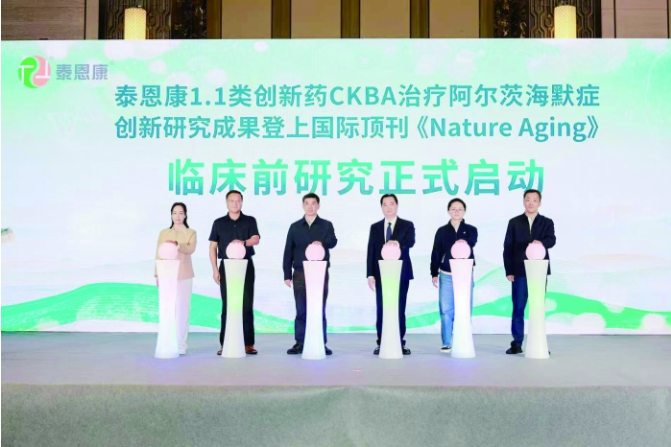
Core Viewpoint - The company, TianKang, has officially announced the initiation of preclinical research for its innovative drug CKBA targeting Alzheimer's disease (AD), based on significant findings from a research team at Shanghai Jiao Tong University [1][2]. Group 1: Drug Development and Mechanism - CKBA is a first-in-class innovative drug that targets the newly identified MFE-2 pathway, which plays a crucial role in the lipid metabolism and neuroinflammation associated with AD [2][4]. - The drug demonstrates a differentiated advantage by being orally administered and capable of crossing the blood-brain barrier, showing improvements in cognitive function, reduction of neuroinflammation, and decreased Aβ plaque accumulation in AD model mice [4]. Group 2: Market Potential and Financial Outlook - The Alzheimer's drug market in China is projected to grow from approximately 6 billion yuan in 2023 to over 26 billion yuan by 2030, with a compound annual growth rate (CAGR) of 19.2%, while the global market is expected to reach 31.44 billion USD [4]. - The company anticipates submitting its phase I clinical application for CKBA in the second half of 2026, supported by cash flow from its existing generic drug business [4]. Group 3: Broader Product Pipeline and Growth Strategy - In addition to AD, CKBA is part of a broader pipeline that includes treatments for vitiligo and rosacea, with ongoing clinical trials showing promising results [5]. - The company is also expanding its generic and modified drug segments, with several products in the pipeline expected to contribute to revenue growth [5][6]. Group 4: Institutional Support and Market Confidence - The company has gained recognition from institutional investors, with significant increases in holdings from the basic pension insurance fund, indicating confidence in the company's growth potential [7][9]. - Management has shown commitment to the company's long-term success, with no plans for share reduction post-lockup and active participation in shareholding [9].

阿尔茨海默病“神药”甘露特钠,已命悬一线
Hu Xiu· 2025-08-15 02:04
Core Viewpoint - The domestic Alzheimer's drug, Ganluo Sodium, developed by Green Valley Pharmaceutical, has faced regulatory challenges, failing to obtain re-registration approval from the National Medical Products Administration (NMPA) [2][11]. Regulatory Status - On August 12, the NMPA issued a notification regarding Ganluo Sodium, indicating that it did not receive a corresponding approval number, suggesting that the drug did not gain re-registration approval [2]. - Ganluo Sodium's registration certificate expired after five years, necessitating a new application for market approval, which Green Valley submitted in 2024 [2][5]. Product Background - Ganluo Sodium, also known as "Jiuyiqi" or "971," is the first domestically developed innovative drug for Alzheimer's disease, conditionally approved for market entry in November 2019 [2][4]. - The drug is derived from algae and targets the gut-brain axis to improve cognitive function by reshaping gut microbiota and reducing neuroinflammation [5]. Controversies and Challenges - The drug has been controversial since its launch, with debates surrounding its mechanism of action and the reliability of its clinical trials, particularly the shortened duration of its Phase III trials [6]. - Following the conditional approval, the NMPA required Green Valley to continue research on the drug's pharmacological mechanisms and long-term safety and efficacy [6]. Market Impact - Reports of drug shortages began in early 2023, leading to public outcry as patients faced difficulties obtaining Ganluo Sodium [7][8]. - The price of Ganluo Sodium surged on e-commerce platforms, with some listings reaching up to 5,000 yuan per box due to supply issues [8]. Patient Perspective - Despite criticisms, many patients and their families reported that Ganluo Sodium was effective, highlighting the lack of alternative affordable treatments for Alzheimer's [9]. - The drug was included in the national medical insurance directory, significantly reducing its price from 895 yuan to 296 yuan per box, making it a more accessible option compared to newer drugs costing 200,000 to 300,000 yuan annually [9]. Future Outlook - With the expiration of Ganluo Sodium's registration, Green Valley faces significant operational challenges, including a reported plan to cut nearly 80% of its workforce [12].
博济医药:公司有为客户提供阿尔茨海默症药物的研发服务
Zheng Quan Ri Bao Wang· 2025-07-29 10:42
Core Viewpoint - The company Boji Pharmaceutical (300404) is actively engaged in providing research and development services for Alzheimer's disease medications [1] Group 1 - The company responded to investor inquiries on July 29, indicating its involvement in Alzheimer's drug development [1]
