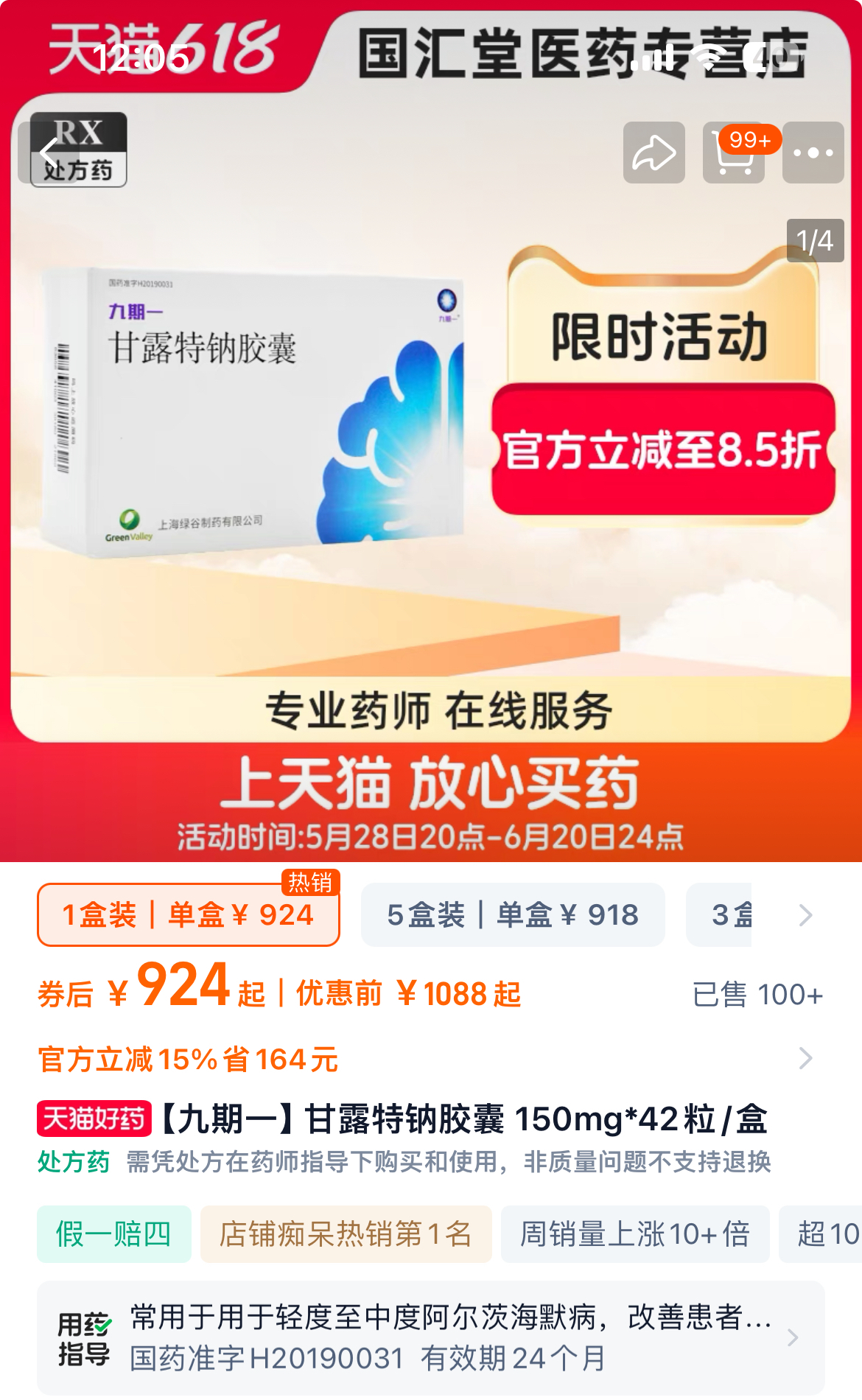
九期一(甘露特钠胶囊)

Search documents
复星医药万字回复九期一争议收购
Xin Lang Cai Jing· 2025-12-23 12:41
Core Viewpoint - GV-971 (also known as "Jiuyiqi"), an Alzheimer's disease drug, is facing challenges in its clinical validation and regulatory approval process, with significant market reactions following the announcement of its acquisition by Fosun Pharma [1][3]. Group 1: Clinical Research and Approval Status - GV-971's confirmatory clinical research plan has been approved by the drug review center, with 580 patients enrolled so far, and the acquisition funds will be used to advance clinical trials [1][3]. - The drug received conditional approval in November 2019 but failed to complete the necessary post-marketing confirmatory clinical studies, leading to its inability to achieve full approval by the expiration of its registration certificate in November 2024 [3][10]. - The drug's post-marketing confirmatory clinical trial, which began in October 2022, has faced delays, with only 580 out of the targeted 1,312 patients enrolled as of December 2023, indicating significant progress issues [10][11]. Group 2: Market Reaction and Investor Sentiment - Following the announcement of the acquisition plan on December 15, Fosun Pharma's A-shares fell over 4% and H-shares dropped more than 5% by December 16, reflecting investor skepticism regarding the drug's future [1][3]. - The trading volume and value on December 16 were the highest in a week, indicating heightened market activity and concern [1]. Group 3: Research Design and Methodology - The real-world study required for long-term safety and efficacy has been submitted, but the duration of the data collected is only 48 weeks, half of the originally designed 96 weeks, which raises concerns about its adequacy [7][9]. - The confirmatory clinical trial design has been updated to include 1,950 patients and extend the double-blind treatment period from 36 weeks to 48 weeks, aligning it more closely with international standards for Alzheimer's drug trials [11][12].

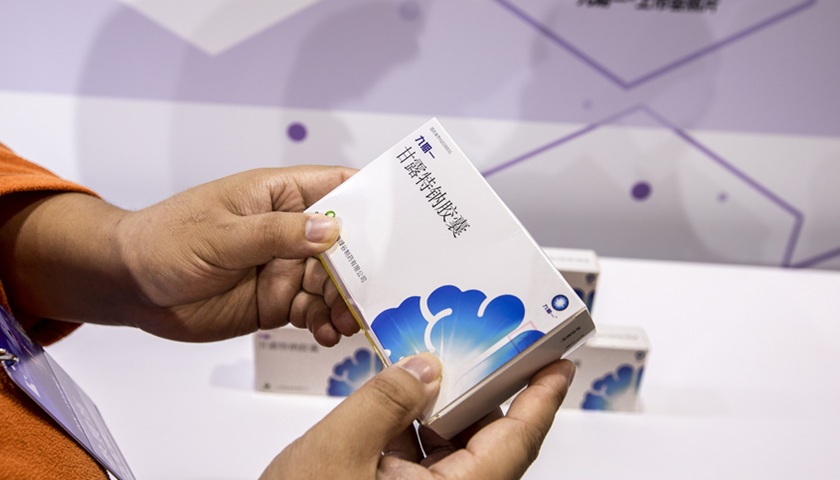
复星医药收购绿谷制药,14亿豪赌阿尔茨海默病市场
Guan Cha Zhe Wang· 2025-12-18 13:53
Core Viewpoint - The acquisition of Green Valley Pharmaceutical by Fosun Pharma is a strategic move to gain control over the Alzheimer's drug "Jiuyiqi" (Mannose Sodium Capsules), which has faced regulatory challenges and production halts, reflecting both potential opportunities and significant risks in the CNS disease market [1][3][4]. Company Summary - Fosun Pharma plans to invest approximately 1.412 billion RMB to acquire a 53% stake in Green Valley Pharmaceutical, which will be consolidated into Fosun's financial statements post-acquisition [1]. - The core asset of this acquisition is the drug "Jiuyiqi," which has been halted from commercial production due to regulatory issues, specifically the expiration of its drug registration certificate in November 2024 [1][4]. - Green Valley's revenue for the first three quarters of 2025 was only 102 million RMB, with a net loss of 67.61 million RMB, indicating a significant decline in its financial health [1][4]. Industry Summary - The Alzheimer's drug market is characterized by high unmet clinical needs, with approximately 17 million patients in China and projected social costs reaching 3.2 trillion RMB by 2030 [9]. - "Jiuyiqi" has been surrounded by controversy regarding its efficacy and regulatory compliance, leading to a halt in its production and a rise in black market activity due to supply shortages [4][5]. - The acquisition is part of Fosun's broader strategy to enhance its portfolio in the CNS disease sector, which includes investments in diagnostic and therapeutic technologies [6][7].
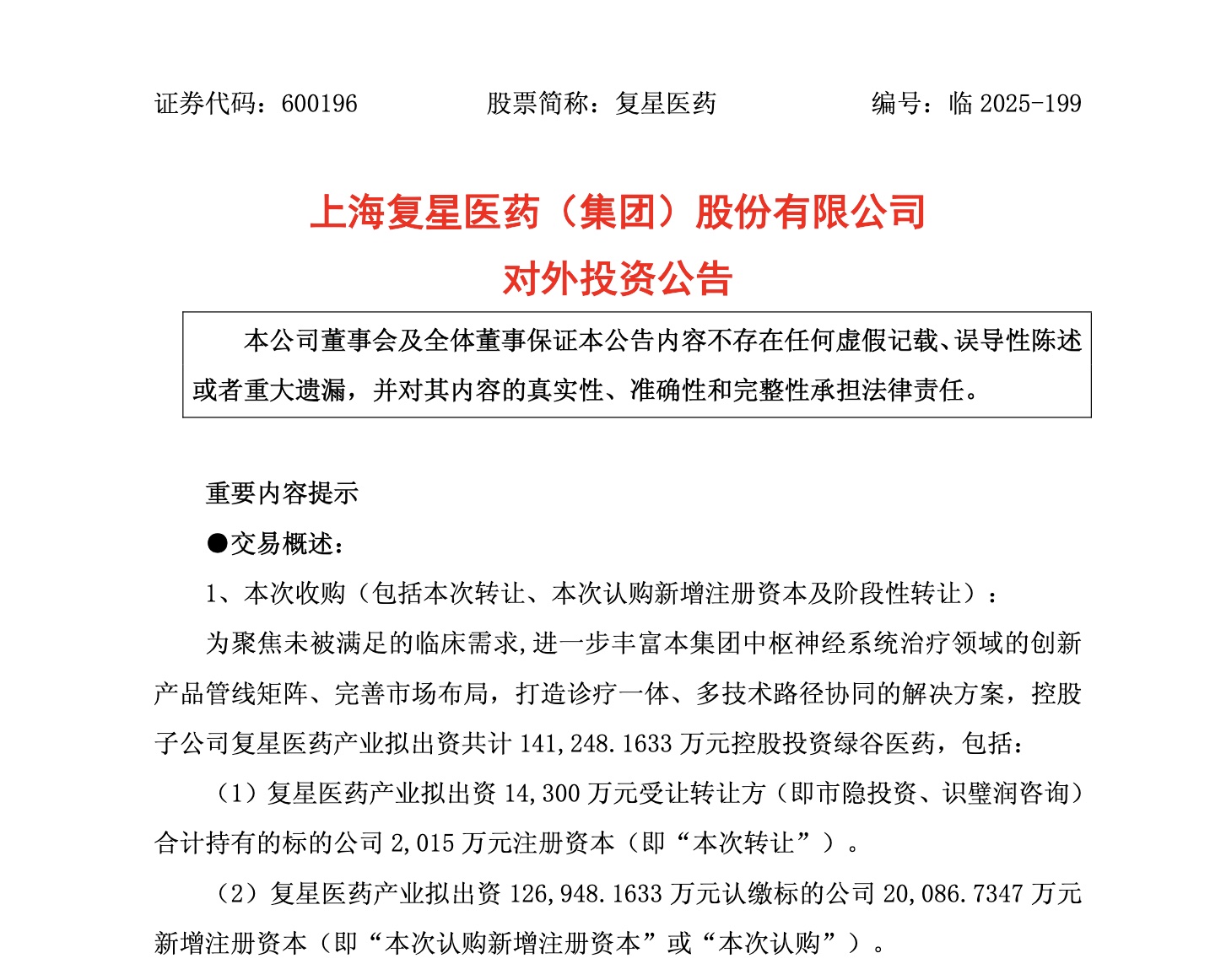
14.12亿接手争议“神药”,复星医药收购绿谷医药是机遇还是风险?
Xin Lang Cai Jing· 2025-12-16 09:15
Core Viewpoint - Fosun Pharma announced plans to invest approximately 1.412 billion yuan to acquire a controlling stake in Green Valley Pharmaceutical, focusing on the controversial Alzheimer's drug "Jiuyi Yi" (Guanlu Sodium Capsules) amidst Green Valley's negative net profit and production halt due to expired drug registration [1][6]. Financial Summary - As of the valuation reference date, Green Valley's total assets amounted to 806 million yuan, with liabilities of 795 million yuan, resulting in a mere equity of 10.36 million yuan [2][7]. - Fosun Pharma's total investment of 1.412 billion yuan will grant it a 53% stake in Green Valley, with the latter's valuation reaching 1.674 billion yuan post-transaction [2][7]. Regulatory and Compliance Issues - Green Valley has faced regulatory penalties for commercial bribery, with a fine of 400,000 yuan for conducting 587 illegal meetings to promote drug sales, involving a total of 833,400 yuan [2][7]. Market Reaction - Following the acquisition announcement, Fosun Pharma's stock fell by 5.81% in Hong Kong and 4.22% in A-shares, indicating investor skepticism regarding the acquisition [3][8]. Strategic Considerations - The Alzheimer's market presents significant potential, with nearly 17 million patients in China and a lack of effective treatment options. Fosun Pharma aims to enhance its pipeline in the central nervous system sector through this acquisition [4][10]. - Prior to its production halt, "Jiuyi Yi" had benefited hundreds of thousands of patients, with some doctors having practical prescription experience, suggesting a potentially high market acceptance if the product can be relaunched [4][10]. Risks and Challenges - The acquisition carries substantial clinical and regulatory risks, as "Jiuyi Yi" is still under conditional approval and must complete post-marketing confirmatory clinical trials to resume production [4][10]. - Financial and integration pressures are significant, with Green Valley on the brink of insolvency and Fosun Pharma needing to invest further in clinical trials while managing potential R&D failures [4][10]. - The drug has been embroiled in controversy, with doubts about its efficacy, which could impact Fosun Pharma's overall strategy and brand reputation in the central nervous system domain if regulatory approval is not achieved [5][11].
因“九期一”学术营销违规 绿谷医药被处罚40万元
Zhong Guo Jing Ying Bao· 2025-11-02 04:15
Core Points - The Shanghai Pudong New District Market Supervision Administration has imposed an administrative penalty of 400,000 RMB on Green Valley (Shanghai) Pharmaceutical Technology Co., Ltd. for commercial bribery related to the promotion of the drug "Jiuqi Yi" (Mannitol Capsules) [1][2] - The company engaged in systematic and covert practices to influence doctors' prescription decisions by providing "lecture fees" and hosting banquets, starting from July 2022 until July 2024 [1][2] Summary by Sections Administrative Penalty - Green Valley Pharmaceutical was fined 400,000 RMB for violating the Pharmaceutical Administration Law by providing improper benefits to physicians [2] - The company conducted 587 academic meetings during the two-year period, with total payments amounting to 609,800 RMB for lecture fees and 223,600 RMB for dining expenses [2] Regulatory Findings - The regulatory body found no direct correlation between the payments made and the procurement amounts of "Jiuqi Yi" at the hospitals involved, leading to no recognition of illegal gains [2] - The actions of Green Valley Pharmaceutical were deemed to constitute commercial bribery, violating Article 88 of the Pharmaceutical Administration Law [2] Mitigating Factors - The regulatory authority considered the duration and severity of the violations, but also noted that this was the company's first offense and that it cooperated with the investigation and ceased the illegal payments [2] - The penalty was determined to be lighter due to the company's corrective actions following the incident [2] Operational Changes - In June 2023, Green Valley Pharmaceutical announced the closure of offices and production areas related to Mannitol Capsules, with operations halted as of May 30, 2025, due to the expiration of the drug's registration certificate [3]
阿尔茨海默病“神药”甘露特钠,已命悬一线
Hu Xiu· 2025-08-15 02:04
Core Viewpoint - The domestic Alzheimer's drug, Ganluo Sodium, developed by Green Valley Pharmaceutical, has faced regulatory challenges, failing to obtain re-registration approval from the National Medical Products Administration (NMPA) [2][11]. Regulatory Status - On August 12, the NMPA issued a notification regarding Ganluo Sodium, indicating that it did not receive a corresponding approval number, suggesting that the drug did not gain re-registration approval [2]. - Ganluo Sodium's registration certificate expired after five years, necessitating a new application for market approval, which Green Valley submitted in 2024 [2][5]. Product Background - Ganluo Sodium, also known as "Jiuyiqi" or "971," is the first domestically developed innovative drug for Alzheimer's disease, conditionally approved for market entry in November 2019 [2][4]. - The drug is derived from algae and targets the gut-brain axis to improve cognitive function by reshaping gut microbiota and reducing neuroinflammation [5]. Controversies and Challenges - The drug has been controversial since its launch, with debates surrounding its mechanism of action and the reliability of its clinical trials, particularly the shortened duration of its Phase III trials [6]. - Following the conditional approval, the NMPA required Green Valley to continue research on the drug's pharmacological mechanisms and long-term safety and efficacy [6]. Market Impact - Reports of drug shortages began in early 2023, leading to public outcry as patients faced difficulties obtaining Ganluo Sodium [7][8]. - The price of Ganluo Sodium surged on e-commerce platforms, with some listings reaching up to 5,000 yuan per box due to supply issues [8]. Patient Perspective - Despite criticisms, many patients and their families reported that Ganluo Sodium was effective, highlighting the lack of alternative affordable treatments for Alzheimer's [9]. - The drug was included in the national medical insurance directory, significantly reducing its price from 895 yuan to 296 yuan per box, making it a more accessible option compared to newer drugs costing 200,000 to 300,000 yuan annually [9]. Future Outlook - With the expiration of Ganluo Sodium's registration, Green Valley faces significant operational challenges, including a reported plan to cut nearly 80% of its workforce [12].
绿谷制药回应阿尔茨海默病药物GV-971停产断供问题
Guo Ji Jin Rong Bao· 2025-06-11 06:43
Core Viewpoint - The prescription drug GV-971 (brand name "Jiuyiqi") for Alzheimer's disease has been discontinued, leading to a significant price increase and supply shortages, raising concerns about the company's future and the drug's efficacy [1][3][4]. Group 1: Company Situation - Green Valley Pharmaceutical Technology is facing severe cash flow issues, having notified all employees of a three-month leave starting in June, with salaries reduced to 2,600 yuan per month [3][4]. - The company has indicated that the drug's production halt is due to the expiration of its drug registration certificate, with new approvals pending [5][6]. - There have been over 9,300 patient requests for the drug, and more than 1,200 doctors have urged the company to ensure the supply of GV-971 [6][7]. Group 2: Drug Efficacy and Controversy - GV-971 has been subject to academic controversy, with former president of Capital Medical University, Rao Yi, questioning the authenticity of the research and the drug's effectiveness, alleging research misconduct [4][8]. - The drug was conditionally approved by the National Medical Products Administration in November 2019, and it was included in the medical insurance list in 2021 at a price of 296 yuan per box [4][7]. - Despite the controversies, the company claims that the drug has shown improvements in cognitive function in patients during clinical studies, with results expected to be presented at international academic conferences [7][10]. Group 3: Market Dynamics - The price of GV-971 has surged to between 830 yuan and 1,033 yuan per box due to supply shortages, compared to its original price of 296 yuan [1][4]. - The drug has sold 2.13 million boxes in 2024 alone, indicating a significant market presence despite the ongoing controversies [4][11]. - The approval process for new drugs in the Alzheimer's treatment space is generally slow, with industry insiders suggesting that the ongoing efficacy debates may be contributing to the delays in GV-971's new registration [6][8].